Allan Collins – författare
Visar alla böcker från författaren Allan Collins. Handla med fri frakt och snabb leverans.
11 produkter
11 produkter
Häftad, Engelska, 2017
376 kr
Skickas inom 5-8 vardagar
Renowned cognitive scientist Allan Collins proposes a school curriculum that will fit the needs of our modern era. Examining how advances in technology, communication, and the dissemination of information are reshaping the world, Collins offers guidelines to help schools foster flexible, self-directed learners who will succeed in the global workplace.
Inbunden, Engelska, 2017
1 078 kr
Skickas inom 11-20 vardagar
Renowned cognitive scientist Allan Collins proposes a school curriculum that will fit the needs of our modern era. Examining how advances in technology, communication, and the dissemination of information are reshaping the world, Collins offers guidelines to help schools foster flexible, self-directed learners who will succeed in the global workplace.
Häftad, Engelska, 2018
350 kr
Skickas inom 5-8 vardagar
The digital revolution in education is well under way, with more and more learners plugged into the online world. How can schools make the most of both the technology and the learning potential of today’s “born digital” students? In this new edition of their groundbreaking book, Collins and Halverson argue that new technologies have transformed our workplaces, our lives, and our culture and it is time we take the next step to transform learning—in and out of schools. The authors show how, over time, public schooling was so successful that it became synonymous with education. But new technologies risk making schools obsolete and this book explains why and how today’s educators, policymakers, and communities must adapt to provide all learners with access to the new learning tools of the 21st century.
Inbunden, Engelska, 2022
1 167 kr
Skickas inom 7-10 vardagar
More than 30 years after its initial publication, this new edition of The Cognitive Structure of Emotions refines and updates Ortony, Clore, and Collins's OCC model of emotions. Starting from a three-way classification of construals of the world--events, the attribution of responsibility for events, and objects--the authors propose a systematic account of emotion differentiation. Rejecting the oft-favored features of bodily feelings, emotion-related behaviors, and facial expressions as too intensity-dependent and insufficiently diagnostic, they provide a detailed analysis of emotion differentiation in terms of the cognitive underpinnings of emotion types. Using numerous examples, they explain how different variables influence emotion intensity, and show how emotions can be formalized for computational purposes. Now with a contributed chapter describing the OCC model's influence, this book will interest a wide audience in cognitive, clinical, and social psychology, as well as in artificial intelligence and affective computing, and other cognitive science disciplines.
Häftad, Engelska, 2022
357 kr
Skickas inom 7-10 vardagar
More than 30 years after its initial publication, this new edition of The Cognitive Structure of Emotions refines and updates Ortony, Clore, and Collins's OCC model of emotions. Starting from a three-way classification of construals of the world--events, the attribution of responsibility for events, and objects--the authors propose a systematic account of emotion differentiation. Rejecting the oft-favored features of bodily feelings, emotion-related behaviors, and facial expressions as too intensity-dependent and insufficiently diagnostic, they provide a detailed analysis of emotion differentiation in terms of the cognitive underpinnings of emotion types. Using numerous examples, they explain how different variables influence emotion intensity, and show how emotions can be formalized for computational purposes. Now with a contributed chapter describing the OCC model's influence, this book will interest a wide audience in cognitive, clinical, and social psychology, as well as in artificial intelligence and affective computing, and other cognitive science disciplines.
E-bok
PDF, Engelska, 2022431 kr
Läs direkt efter köp
More than 30 years after its initial publication, this new edition of The Cognitive Structure of Emotions refines and updates Ortony, Clore, and Collins''s OCC model of emotions. Starting from a three-way classification of construals of the world––events, the attribution of responsibility for events, and objects––the authors propose a systematic account of emotion differentiation. Rejecting the oft-favored features of bodily feelings, emotion-related behaviors, and facial expressions as too intensity-dependent and insufficiently diagnostic, they provide a detailed analysis of emotion differentiation in terms of the cognitive underpinnings of emotion types. Using numerous examples, they explain how different variables influence emotion intensity, and show how emotions can be formalized for computational purposes. Now with a contributed chapter describing the OCC model''s influence, this book will interest a wide audience in cognitive, clinical, and social psychology, as well as in artificial intelligence and affective computing, and other cognitive science disciplines.
E-bok
PDF, Engelska, 2011310 kr
Läs direkt efter köp
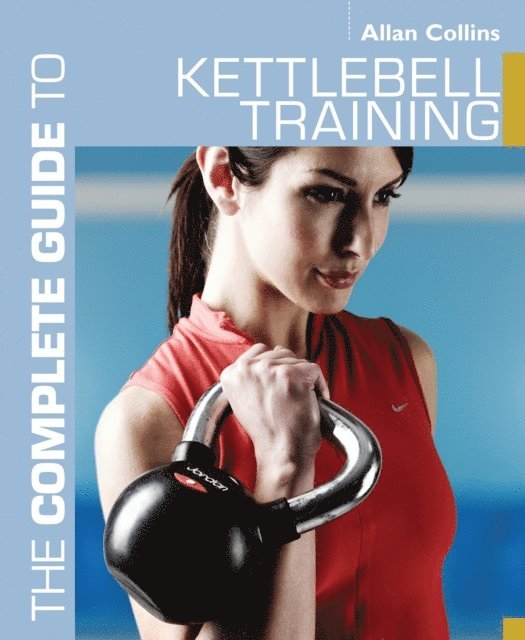
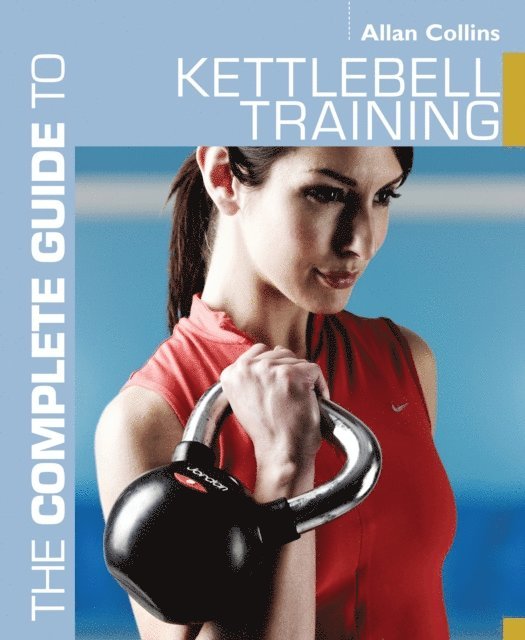
A kettlebell is a weight that looks like a cannonball with a handle. Originating from Russia, kettlebell training is now a global phenomenon with clubs, gyms and individuals investing in equipment and training. Weights range from 4kg to 48kg. They differ from dumbbells and barbells in that the centre of mass is offset from the handle, so the weight constantly pulls against your hand, improving coordination and anaerobic fitness and strengthening your core muscles. Kettlebells can be used for a variety of purposes - from weight loss to strength training - by people with a range of fitness levels. Popular with celebrities such as Penelope Cruz and Sylvester Stallone, they are also used for training players at Chelsea and Liverpool football clubs, and in 2010 the British Army got on board when their PTI corp (responsible for the Army''s physical training) signed up to a 30-day course designed and implemented by the author. The book includes information on the benefits of kettlebell training and how to use the equipment safely, and provides warm-ups, drills and training programmes for beginner, intermediate and advanced levels. From buying a kettlebell to training for weight loss, it''s a comprehensive guide to a popular new fitness tool.
E-bok
Engelska, 2015310 kr
Läs direkt efter köp
The perfect introduction to kettlebell training, a hugely popular piece of equipment with tried and tested results.A kettlebell is a weight that looks like a cannonball with a handle. Originating from Russia, kettlebell training is now a global phenomenon with clubs, gyms and individuals investing in equipment and training. Weights range from 4kg to 48kg. They differ from dumbbells and barbells in that the centre of mass is offset from the handle, so the weight constantly pulls against your hand, improving coordination and anaerobic fitness and strengthening your core muscles. Kettlebells can be used for a variety of purposes - from weight loss to strength training - by people with a range of fitness levels. Popular with celebrities such as Penelope Cruz and Sylvester Stallone, they are also used for training players at Chelsea and Liverpool football clubs, and in 2010 the British Army got on board when their PTI corp (responsible for the Army''s physical training) signed up to a 30-day course designed and implemented by the author. The book includes information on the benefits of kettlebell training and how to use the equipment safely, and provides warm-ups, drills and training programmes for beginner, intermediate and advanced levels. From buying a kettlebell to training for weight loss, it''s a comprehensive guide to a popular new fitness tool.
E-bok
PDF, Engelska, 2012310 kr
Läs direkt efter köp
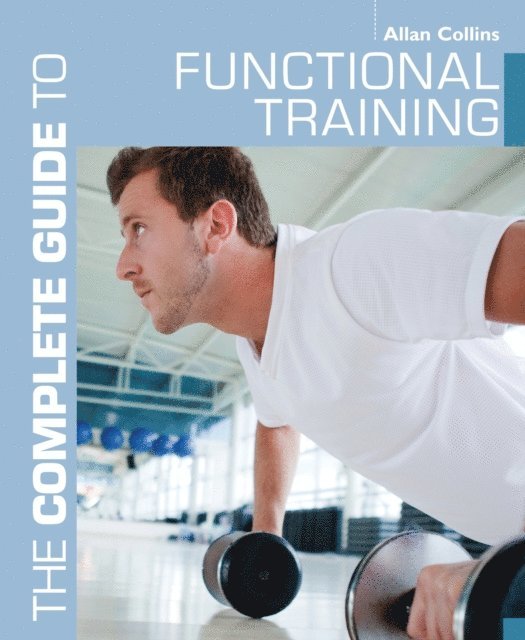
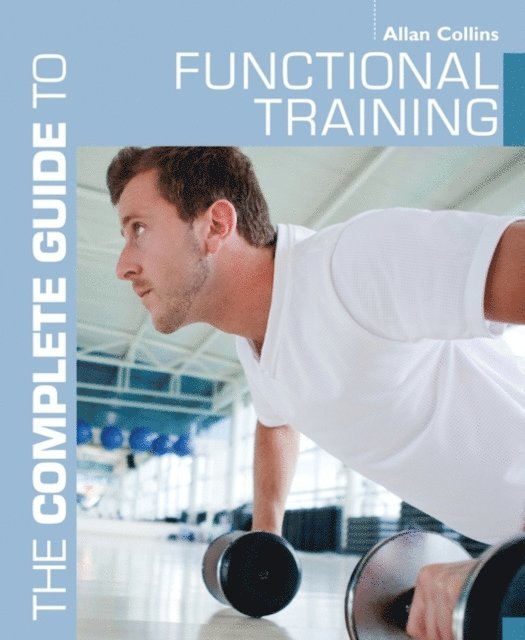
As well as being the concept in fitness and strength and conditioning, functional training is also probably the most poorly understood concept in fitness. Functional training is any exercise that improves your ability to perform tasks required in your day to day life, job or chosen sport - so that each movement included as part of your workout mimics a range of motion or engages muscles that are necessary to impact on performance - whether it be on the rugby pitch or simply the ability to lift small children out of car seats. Includes over 100 functional exercises and detailed pictures and descriptions of all the techniques show you clearly how to apply them into your training programme.
E-bok
Engelska, 2015310 kr
Läs direkt efter köp
As well as being the concept in fitness and strength and conditioning, functional training is also probably the most poorly understood concept in fitness. Functional training is any exercise that improves your ability to perform tasks required in your day to day life, job or chosen sport - so that each movement included as part of your workout mimics a range of motion or engages muscles that are necessary to impact on performance - whether it be on the rugby pitch or simply the ability to lift small children out of car seats. Includes over 100 functional exercises and detailed pictures and descriptions of all the techniques show you clearly how to apply them into your training programme.
E-bok
PDF, Engelska, 2013952 kr
Läs direkt efter köp
Readings in Cognitive Science: A Perspective from Psychology and Artificial Intelligence brings together important studies that fall in the intersection between artificial intelligence and cognitive psychology. This book is composed of six chapters, and begins with the complex anatomy and physiology of the human brain. The next chapters deal with the components of cognitive science, such as the semantic memory, similarity and analogy, and learning. These chapters also consider the application of mental models, which represent the domain-specific knowledge needed to understand a dynamic system or natural physical phenomena. The remaining chapters discuss the concept of reasoning, problem solving, planning, vision, and imagery. This book is of value to psychologists, psychiatrists, neurologists, and researchers who are interested in cognition.