Alois Ferscha – författare
Visar alla böcker från författaren Alois Ferscha. Handla med fri frakt och snabb leverans.
11 produkter
11 produkter
Inbunden, Engelska, 2016
1 427 kr
Skickas inom 5-8 vardagar
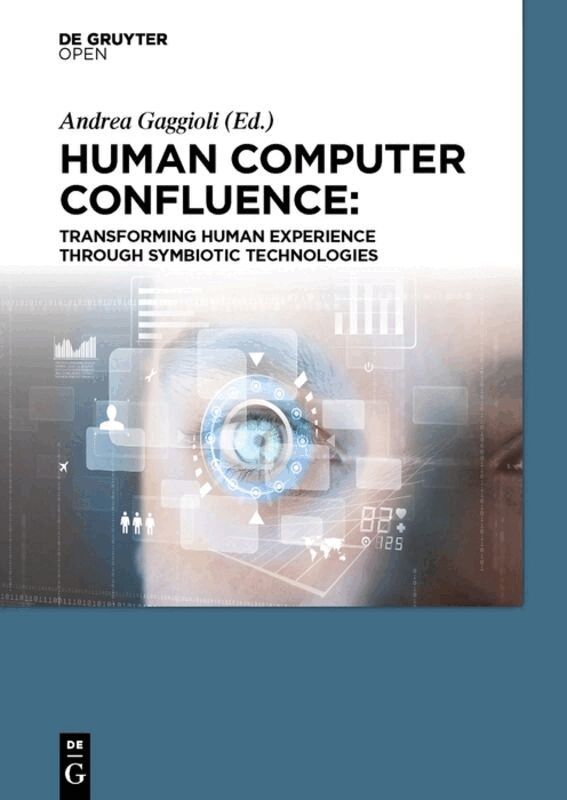
Human-computer confluence refers to an invisible, implicit, embodied or even implanted interaction between humans and system components. New classes of user interfaces are emerging that make use of several sensors and are able to adapt their physical properties to the current situational context of users.A key aspect of human-computer confluence is its potential for transforming human experience in the sense of bending, breaking and blending the barriers between the real, the virtual and the augmented, to allow users to experience their body and their world in new ways. Research on Presence, Embodiment and Brain-Computer Interface is already exploring these boundaries and asking questions such as: Can we seamlessly move between the virtual and the real? Can we assimilate fundamentally new senses through confluence? The aim of this book is to explore the boundaries and intersections of the multidisciplinary field of HCC and discuss its potential applications in different domains, including healthcare, education, training and even arts.
Häftad, Engelska, 2004
562 kr
Skickas inom 10-15 vardagar
nd Welcome to the proceedings of PERVASIVE 2004, the 2 International C- ference on Pervasive Computing and the premier forum for the presentation and appraisal of the most recent and most advanced research results in all - undational and applied areas of pervasive and ubiquitous computing. Consi- ring the half-life period of technologies and knowledge this community is facing, PERVASIVE is one of the most vibrant, dynamic, and evolutionary among the computer-science-related symposia and conferences. The research challenges, e?orts, and contributions in pervasive computing have experienced a breathtaking acceleration over the past couple of years, mostly due to technological progress, growth, and a shift of paradigms in c- puter science in general. As for technological advances, a vast manifold of tiny, embedded, and autonomous computing and communication systems have st- ted to create and populate a pervasive and ubiquitous computing landscape, characterized by paradigms like autonomy, context-awareness, spontaneous - teraction, seamless integration, self-organization, ad hoc networking, invisible services, smart artifacts, and everywhere interfaces. The maturing of wireless networking, miniaturized information-processing possibilities induced by novel microprocessor technologies, low-power storage systems, smart materials, and technologies for motors, controllers, sensors, and actuators envision a future computing scenario in which almost every object in our everyday environment will be equipped with embedded processors, wireless communication facilities, and embedded software to perceive, perform, and control a multitude of tasks and functions.
E-bok
PDF, Engelska, 2004734 kr
Läs direkt efter köp
nd Welcome to the proceedings of PERVASIVE 2004, the 2 International C- ference on Pervasive Computing and the premier forum for the presentation and appraisal of the most recent and most advanced research results in all - undational and applied areas of pervasive and ubiquitous computing. Consi- ring the half-life period of technologies and knowledge this community is facing, PERVASIVE is one of the most vibrant, dynamic, and evolutionary among the computer-science-related symposia and conferences. The research challenges, e?orts, and contributions in pervasive computing have experienced a breathtaking acceleration over the past couple of years, mostly due to technological progress, growth, and a shift of paradigms in c- puter science in general. As for technological advances, a vast manifold of tiny, embedded, and autonomous computing and communication systems have st- ted to create and populate a pervasive and ubiquitous computing landscape, characterized by paradigms like autonomy, context-awareness, spontaneous - teraction, seamless integration, self-organization, ad hoc networking, invisible services, smart artifacts, and everywhere interfaces. The maturing of wireless networking, miniaturized information-processing possibilities induced by novel microprocessor technologies, low-power storage systems, smart materials, and technologies for motors, controllers, sensors, and actuators envision a future computing scenario in which almost every object in our everyday environment will be equipped with embedded processors, wireless communication facilities, and embedded software to perceive, perform, and control a multitude of tasks and functions.
E-bok
PDF, Engelska, 20081 486 kr
Läs direkt efter köp
A foreword for the present workshop proceedings cannot be provided without first looking at the larger context of the AMI conference in which the workshops were organized. The AMI 2007 conference has roots in preceding events, but in many respects, AMI can be called a novel conference format and hence a premiere. Among the several aims that inspired and shaped this new conference format, the following two are particularly worth considering: (1) to provide a forum for the ambient intel- gence flavor of research on the Post-PC era of computer science, complementing the ubiquitous computing and pervasive computing flavors emphasized by alrea- existing conferences; (2) to offer an event that attracts contributions from all over the globe yet emphasizes European strengths – with particular reference to the Infor- tion Society Technologies (IST) branch of the EU research framework programs (FPs), which carry the same label as the conference. The workshop organization chairs reflected these unique characteristics of the new AMI conference series in the call for workshop proposals using two corresponding measures: (1) by particularly soliciting workshops on in-depth topics corresponding to the above-mentioned ambient intelligence flavor of Post-PC research; (2) by offering two different workshop threads: one ‘usual’ thread for advanced topics (called “SW workshops”) and one thread for workshops related to concrete EU FP6 and FP7 p- jects (called “EU workshops”).
Inbunden, Engelska, 2009
1 670 kr
Skickas inom 10-15 vardagar
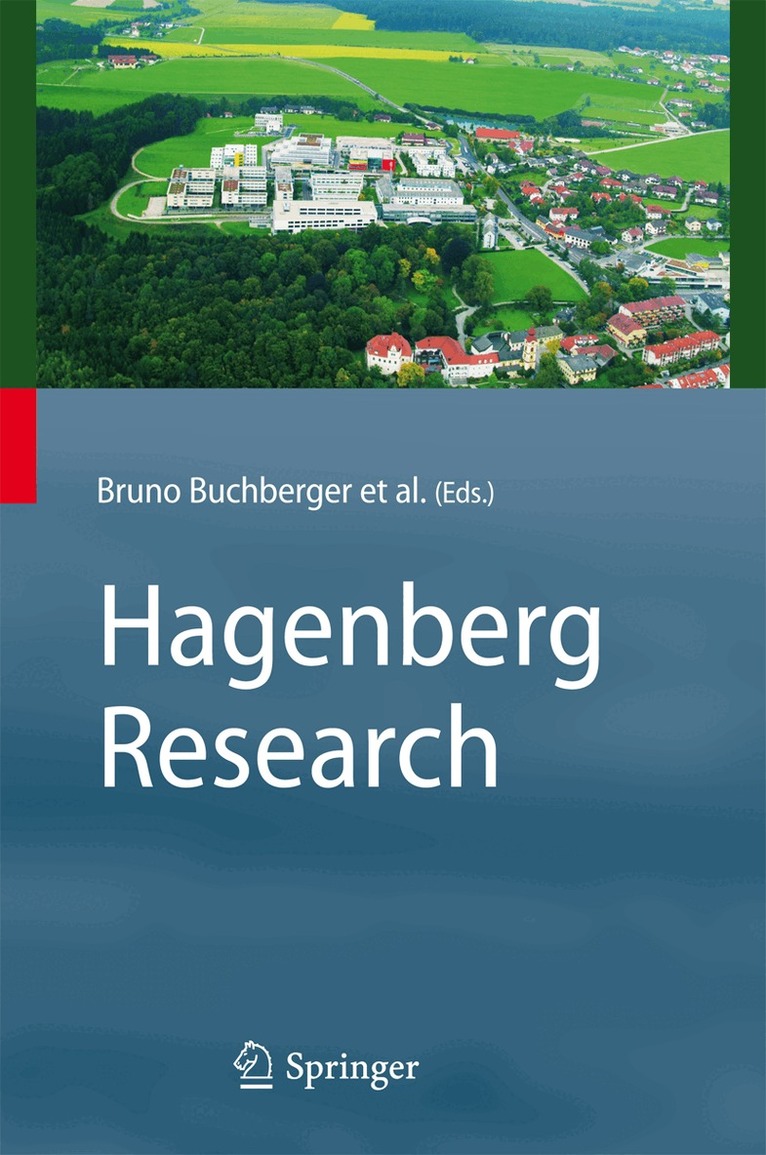
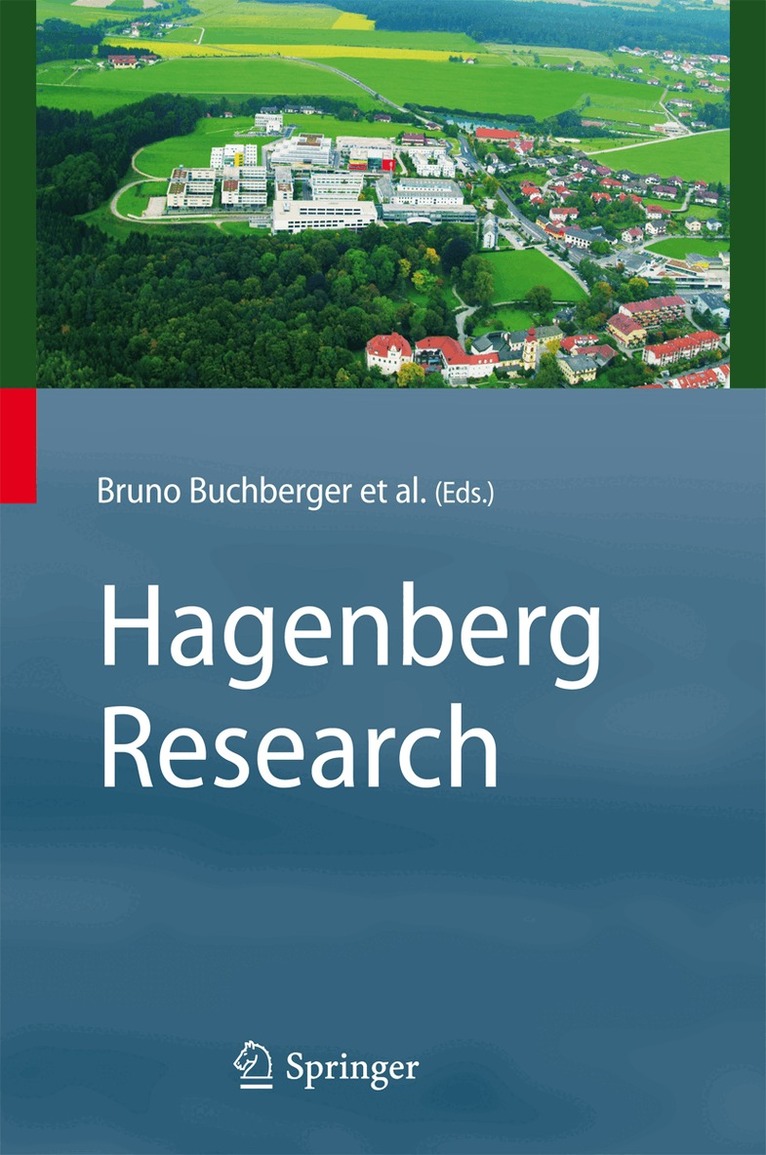
BrunoBuchberger This book is a synopsis of basic and applied research done at the various re search institutions of the Softwarepark Hagenberg in Austria. Starting with 15 coworkers in my Research Institute for Symbolic Computation (RISC), I initiated the Softwarepark Hagenberg in 1987 on request of the Upper Aus trian Government with the objective of creating a scienti?c, technological, and economic impulse for the region and the international community. In the meantime, in a joint e?ort, the Softwarepark Hagenberg has grown to the current (2009) size of over 1000 R&D employees and 1300 students in six research institutions, 40 companies and 20 academic study programs on the bachelor, master’s and PhD level. The goal of the Softwarepark Hagenberg is innovation of economy in one of the most important current technologies: software. It is the message of this book that this can only be achieved and guaranteed long term by “watering the root”, namely emphasis on research, both basic and applied. In this book, we summarize what has been achieved in terms of research in the various research institutions in the Softwarepark Hagenberg and what research vision we have for the imminent future. When I founded the Softwarepark Hagenberg, in addition to the “watering the root” principle, I had the vision that such a technology park can only prosper if we realize the “magic triangle”, i.e. the close interaction of research, academic education, and business applications at one site, see Figure 1.
E-bok
PDF, Engelska, 20092 110 kr
Läs direkt efter köp
BrunoBuchberger This book is a synopsis of basic and applied research done at the various re search institutions of the Softwarepark Hagenberg in Austria. Starting with 15 coworkers in my Research Institute for Symbolic Computation (RISC), I initiated the Softwarepark Hagenberg in 1987 on request of the Upper Aus trian Government with the objective of creating a scienti?c, technological, and economic impulse for the region and the international community. In the meantime, in a joint e?ort, the Softwarepark Hagenberg has grown to the current (2009) size of over 1000 R&D employees and 1300 students in six research institutions, 40 companies and 20 academic study programs on the bachelor, master’s and PhD level. The goal of the Softwarepark Hagenberg is innovation of economy in one of the most important current technologies: software. It is the message of this book that this can only be achieved and guaranteed long term by “watering the root”, namely emphasis on research, both basic and applied. In this book, we summarize what has been achieved in terms of research in the various research institutions in the Softwarepark Hagenberg and what research vision we have for the imminent future. When I founded the Softwarepark Hagenberg, in addition to the “watering the root” principle, I had the vision that such a technology park can only prosper if we realize the “magic triangle”, i.e. the close interaction of research, academic education, and business applications at one site, see Figure 1.
Häftad, Engelska, 2010
1 670 kr
Skickas inom 10-15 vardagar
BrunoBuchberger This book is a synopsis of basic and applied research done at the various re search institutions of the Softwarepark Hagenberg in Austria. Starting with 15 coworkers in my Research Institute for Symbolic Computation (RISC), I initiated the Softwarepark Hagenberg in 1987 on request of the Upper Aus trian Government with the objective of creating a scienti?c, technological, and economic impulse for the region and the international community. In the meantime, in a joint e?ort, the Softwarepark Hagenberg has grown to the current (2009) size of over 1000 R&D employees and 1300 students in six research institutions, 40 companies and 20 academic study programs on the bachelor, master’s and PhD level. The goal of the Softwarepark Hagenberg is innovation of economy in one of the most important current technologies: software. It is the message of this book that this can only be achieved and guaranteed long term by “watering the root”, namely emphasis on research, both basic and applied. In this book, we summarize what has been achieved in terms of research in the various research institutions in the Softwarepark Hagenberg and what research vision we have for the imminent future. When I founded the Softwarepark Hagenberg, in addition to the “watering the root” principle, I had the vision that such a technology park can only prosper if we realize the “magic triangle”, i.e. the close interaction of research, academic education, and business applications at one site, see Figure 1.
Häftad, Engelska, 2012
562 kr
Skickas inom 10-15 vardagar
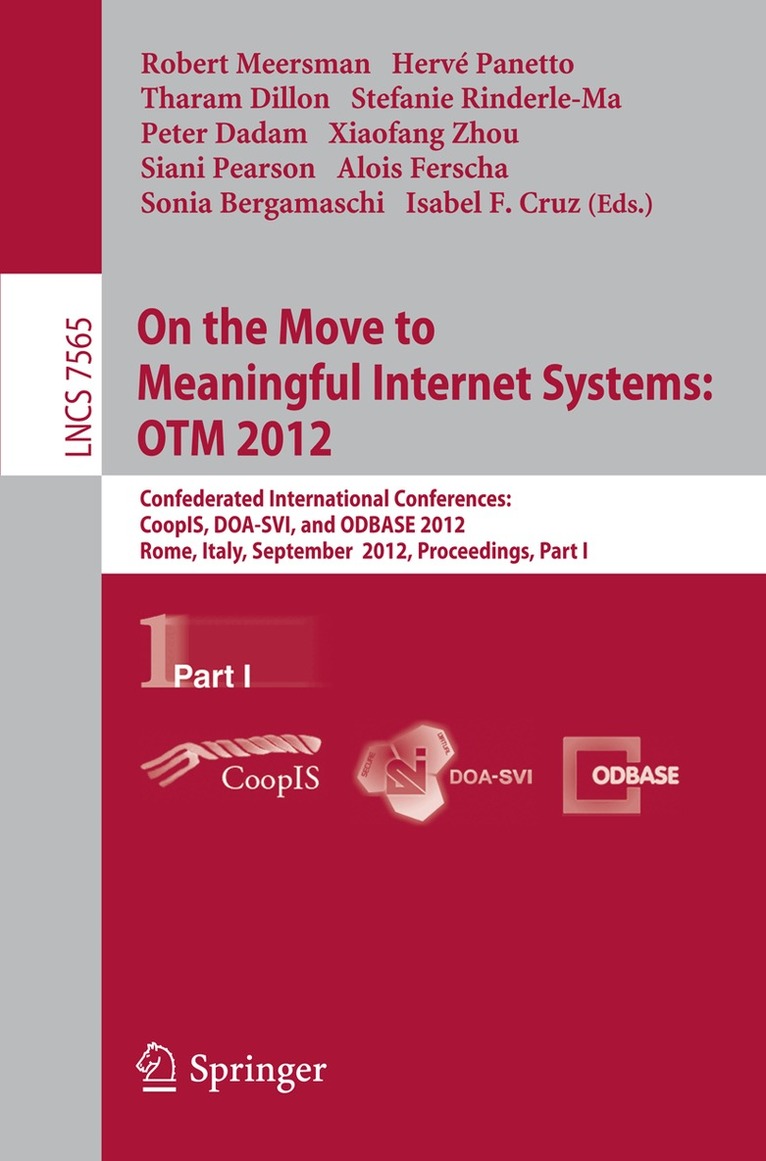
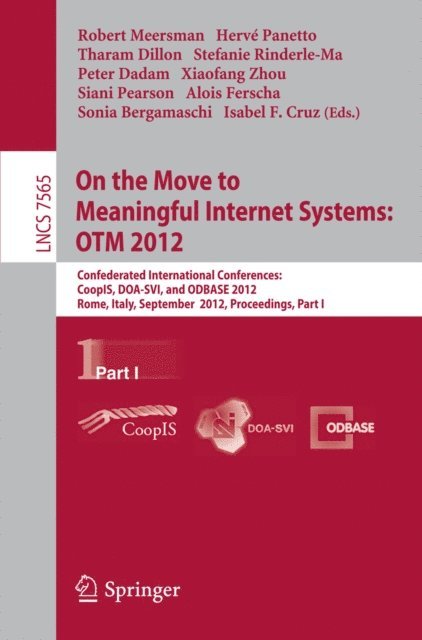
The two-volume set LNCS 7565 and 7566 constitutes the refereed proceedings of three confederated international conferences: Cooperative Information Systems (CoopIS 2012), Distributed Objects and Applications - Secure Virtual Infrastructures (DOA-SVI 2012), and Ontologies, DataBases and Applications of SEmantics (ODBASE 2012) held as part of OTM 2012 in September 2012 in Rome, Italy. The 53 revised full papers presented were carefully reviewed and selected from a total of 169 submissions. The 22 full papers included in the first volume constitute the proceedings of CoopIS 2012 and are organized in topical sections on business process design; process verification and analysis; service-oriented architectures and cloud; security, risk, and prediction; discovery and detection; collaboration; and 5 short papers.
E-bok
PDF, Engelska, 2013734 kr
Läs direkt efter köp
The two-volume set LNCS 7565 and 7566 constitutes the refereed proceedings of three confederated international conferences: Cooperative Information Systems (CoopIS 2012), Distributed Objects and Applications - Secure Virtual Infrastructures (DOA-SVI 2012), and Ontologies, DataBases and Applications of SEmantics (ODBASE 2012) held as part of OTM 2012 in September 2012 in Rome, Italy. The 53 revised full papers presented were carefully reviewed and selected from a total of 169 submissions. The 22 full papers included in the first volume constitute the proceedings of CoopIS 2012 and are organized in topical sections on business process design; process verification and analysis; service-oriented architectures and cloud; security, risk, and prediction; discovery and detection; collaboration; and 5 short papers.
Häftad, Engelska, 2012
562 kr
Skickas inom 10-15 vardagar
The two-volume set LNCS 7565 and 7566 constitutes the refereed proceedings of three confederated international conferences: Cooperative Information Systems (CoopIS 2012), Distributed Objects and Applications - Secure Virtual Infrastructures (DOA-SVI 2012), and Ontologies, DataBases and Applications of SEmantics (ODBASE 2012) held as part of OTM 2012 in September 2012 in Rome, Italy. The 53 revised full papers presented were carefully reviewed and selected from a total of 169 submissions. The 31 full papers included in the second volume constitute the proceedings of DOA-SVI 2012 with 10 full papers organized in topical sections on privacy in the cloud; resource management and assurance; context, compliance and attack; and ODBASE 2012 with 21 full papers organized in topical sections on using ontologies and semantics; applying probalistic techniques to semantic information; exploiting and querying semantic information; and managing and storing semantic information.
E-bok
PDF, Engelska, 2013734 kr
Läs direkt efter köp
The two-volume set LNCS 7565 and 7566 constitutes the refereed proceedings of three confederated international conferences: Cooperative Information Systems (CoopIS 2012), Distributed Objects and Applications - Secure Virtual Infrastructures (DOA-SVI 2012), and Ontologies, DataBases and Applications of SEmantics (ODBASE 2012) held as part of OTM 2012 in September 2012 in Rome, Italy. The 53 revised full papers presented were carefully reviewed and selected from a total of 169 submissions. The 31 full papers included in the second volume constitute the proceedings of DOA-SVI 2012 with 10 full papers organized in topical sections on privacy in the cloud; resource management and assurance; context, compliance and attack; and ODBASE 2012 with 21 full papers organized in topical sections on using ontologies and semantics; applying probalistic techniques to semantic information; exploiting and querying semantic information; and managing and storing semantic information.