1 247 kr
Skickas inom 5-8 vardagar
1 247 kr
Skickas inom 5-8 vardagar
1 575 kr
Skickas inom 5-8 vardagar
1 559 kr
Skickas inom 5-8 vardagar
888 kr
Skickas inom 7-10 vardagar
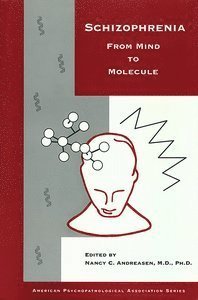
Researchers in schizophrenia are beginning to uncover the secrets that have long puzzled clinicians and scientists alike. Research continues and treatment progresses to improve and stabilize the lives of patients with schizophrenia.
Schizophrenia: From Mind to Molecule presents a change in the scientific understanding and outlook regarding this devastating disorder. It provides a thorough look at schizophrenia that includes neurobehavioral studies, traditional and emerging technologies, psychosocial and medical treatments, and future research opportunities.
446 kr
Skickas inom 5-8 vardagar
316 kr
Skickas inom 5-8 vardagar
187 kr
Skickas inom 5-8 vardagar
356 kr
Skickas inom 5-8 vardagar
187 kr
Skickas inom 5-8 vardagar
273 kr
Skickas inom 5-8 vardagar
460 kr
Skickas inom 5-8 vardagar
345 kr
Skickas inom 5-8 vardagar
1 099 kr
Skickas inom 5-8 vardagar
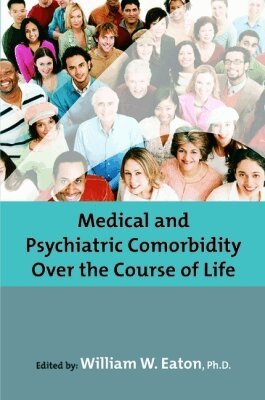
Compiled from presentations given at the 2004 American Psychopathological Association (APPA) annual meeting, Medical and Psychiatric Comorbidity Over the Course of Life reviews the comorbidity of mental and chronic physical syndromes in an epidemiological and life course context, offering fresh insights and identifying crucial clues-gleaned from the overlapping areas or areas of mutual pathogenesis linking disparate realms of knowledge—to the etiology and nosological distinctiveness of both physical and mental disorders.
Once relatively ignored, the study of lifetime comorbidity has the potential to suggest etiological clues and to advance our ability to prevent secondary disorders by increasing our knowledge about the course and pathology of the primary disease.
The etiologically relevant period, beginning with the earliest causal action and ending with diagnosis, helps us understand this potential and thus is vital to the study of comorbidity. Divided into five main sections (epidemiology, risk factors, mood disorders, emotions and health, and schizophrenia), Medical and Psychiatric Comorbidity Over the Course of Life discusses critical aspects of the life course characteristics of the etiologically relevant period: • It can be long, e.g., temperament, a relatively enduring emotional predisposition, may situate an individual more or less permanently at high risk, culminating in irreversibility only after decades of induction. The action of identical genes produces different disorders that may occur at different stages of life, such as the comorbidity of panic disorder and cystitis.• It may involve critical stages, i.e., relatively narrow periods during development, such as fetal growth and puberty, to which the action of a given cause is limited. Critical periods of varying durations may exist throughout the course of life.• It may have a cumulative quality to it, in which years or even decades of accumulation are required to reach the point of irreversibility, e.g., the years-long burden of lower class life, or of increased allostatic burden, for the causal nexus to reach sufficiency.• It may involve multiple causes, representing different disciplines and different spheres of action spread throughout the life course.
Medical and Psychiatric Comorbidity Over the Course of Life will prove invaluable for practitioners in general and consultation-liaison psychiatry, family practice and internal medicine, and psychosomatics, behavioral medicine, and health psychology.
893 kr
Skickas inom 5-8 vardagar
1 165 kr
Skickas inom 5-8 vardagar
Recognizing that favorable clinical outcomes are associated with earlier initiation of treatment-and even more ideally with prevention—this volume addresses the current status of early intervention in, and prevention of, major mental and substance use disorders. A team of distinguished participants addresses this problem at many levels—from the DNA molecule to public policy—in order to show how prevention efforts should be informed by a better understanding of etiology and by a knowledge of indicators of vulnerability.
In considering the current standing of etiological knowledge, Recognition and Prevention of Major Mental and Substance Use Disorders addresses issues that are critical precursors to the prevention of mental disorders and offers an understanding of factors that contribute to the disorders' development. The contributors review genetic methodologies and current findings in mental disorders, with an emphasis on schizophrenia, and then show how biological and psychosocial environmental variables may affect vulnerability. Chapters devoted specifically to lessons in prevention drawn from recent research into schizophrenia discuss the implications of prodromal studies and relationships between stress, critical periods, and the development of the disorder. The book includes contributions from NIH representatives on how basic scientific understanding of mental disorders can be translated into public policy. It also features chapters that describe cutting-edge projects in prevention research for Alzheimer's disease, drug dependence, antisocial behavior, and posttraumatic stress disorder—each providing compelling accounts of how existing knowledge can be adapted to promising prevention efforts. Among the volume's contributions: • New data on the role of substance abuse—particularly marijuana and psychostimulants—in increasing vulnerability to schizophrenia• Review of vulnerability factors for several relevant disorders, examining stress and its concomitant psychobiological responses and the contribution of cognitive factors to vulnerability to depression• Intriguing approach for translating successful treatment methods for schizophrenia into efforts to prevent the transition from the prodrome of the disorder to the full-blown illness• Program for prevention of antisocial behavior that can be implemented as early as the first grade• Secondary prevention efforts for posttraumatic stress disorder, with a focus on pharmacological interventions
Each chapter reviews clinical implications of the research presented, contributing to a volume that will benefit clinicians and researchers who share the goal of preventing these debilitating conditions. This multidimensional, interdisciplinary work represents a major step toward cutting the social costs of these disorders—and, more important, their untold cost in human suffering.
1 247 kr
Skickas inom 5-8 vardagar
1 575 kr
Skickas inom 5-8 vardagar
1 559 kr
Skickas inom 5-8 vardagar
888 kr
Skickas inom 7-10 vardagar
Researchers in schizophrenia are beginning to uncover the secrets that have long puzzled clinicians and scientists alike. Research continues and treatment progresses to improve and stabilize the lives of patients with schizophrenia.
Schizophrenia: From Mind to Molecule presents a change in the scientific understanding and outlook regarding this devastating disorder. It provides a thorough look at schizophrenia that includes neurobehavioral studies, traditional and emerging technologies, psychosocial and medical treatments, and future research opportunities.
446 kr
Skickas inom 5-8 vardagar
316 kr
Skickas inom 5-8 vardagar
187 kr
Skickas inom 5-8 vardagar
356 kr
Skickas inom 5-8 vardagar
187 kr
Skickas inom 5-8 vardagar
273 kr
Skickas inom 5-8 vardagar
460 kr
Skickas inom 5-8 vardagar
345 kr
Skickas inom 5-8 vardagar
1 099 kr
Skickas inom 5-8 vardagar
Compiled from presentations given at the 2004 American Psychopathological Association (APPA) annual meeting, Medical and Psychiatric Comorbidity Over the Course of Life reviews the comorbidity of mental and chronic physical syndromes in an epidemiological and life course context, offering fresh insights and identifying crucial clues-gleaned from the overlapping areas or areas of mutual pathogenesis linking disparate realms of knowledge—to the etiology and nosological distinctiveness of both physical and mental disorders.
Once relatively ignored, the study of lifetime comorbidity has the potential to suggest etiological clues and to advance our ability to prevent secondary disorders by increasing our knowledge about the course and pathology of the primary disease.
The etiologically relevant period, beginning with the earliest causal action and ending with diagnosis, helps us understand this potential and thus is vital to the study of comorbidity. Divided into five main sections (epidemiology, risk factors, mood disorders, emotions and health, and schizophrenia), Medical and Psychiatric Comorbidity Over the Course of Life discusses critical aspects of the life course characteristics of the etiologically relevant period: • It can be long, e.g., temperament, a relatively enduring emotional predisposition, may situate an individual more or less permanently at high risk, culminating in irreversibility only after decades of induction. The action of identical genes produces different disorders that may occur at different stages of life, such as the comorbidity of panic disorder and cystitis.• It may involve critical stages, i.e., relatively narrow periods during development, such as fetal growth and puberty, to which the action of a given cause is limited. Critical periods of varying durations may exist throughout the course of life.• It may have a cumulative quality to it, in which years or even decades of accumulation are required to reach the point of irreversibility, e.g., the years-long burden of lower class life, or of increased allostatic burden, for the causal nexus to reach sufficiency.• It may involve multiple causes, representing different disciplines and different spheres of action spread throughout the life course.
Medical and Psychiatric Comorbidity Over the Course of Life will prove invaluable for practitioners in general and consultation-liaison psychiatry, family practice and internal medicine, and psychosomatics, behavioral medicine, and health psychology.
893 kr
Skickas inom 5-8 vardagar
1 165 kr
Skickas inom 5-8 vardagar
Recognizing that favorable clinical outcomes are associated with earlier initiation of treatment-and even more ideally with prevention—this volume addresses the current status of early intervention in, and prevention of, major mental and substance use disorders. A team of distinguished participants addresses this problem at many levels—from the DNA molecule to public policy—in order to show how prevention efforts should be informed by a better understanding of etiology and by a knowledge of indicators of vulnerability.
In considering the current standing of etiological knowledge, Recognition and Prevention of Major Mental and Substance Use Disorders addresses issues that are critical precursors to the prevention of mental disorders and offers an understanding of factors that contribute to the disorders' development. The contributors review genetic methodologies and current findings in mental disorders, with an emphasis on schizophrenia, and then show how biological and psychosocial environmental variables may affect vulnerability. Chapters devoted specifically to lessons in prevention drawn from recent research into schizophrenia discuss the implications of prodromal studies and relationships between stress, critical periods, and the development of the disorder. The book includes contributions from NIH representatives on how basic scientific understanding of mental disorders can be translated into public policy. It also features chapters that describe cutting-edge projects in prevention research for Alzheimer's disease, drug dependence, antisocial behavior, and posttraumatic stress disorder—each providing compelling accounts of how existing knowledge can be adapted to promising prevention efforts. Among the volume's contributions: • New data on the role of substance abuse—particularly marijuana and psychostimulants—in increasing vulnerability to schizophrenia• Review of vulnerability factors for several relevant disorders, examining stress and its concomitant psychobiological responses and the contribution of cognitive factors to vulnerability to depression• Intriguing approach for translating successful treatment methods for schizophrenia into efforts to prevent the transition from the prodrome of the disorder to the full-blown illness• Program for prevention of antisocial behavior that can be implemented as early as the first grade• Secondary prevention efforts for posttraumatic stress disorder, with a focus on pharmacological interventions
Each chapter reviews clinical implications of the research presented, contributing to a volume that will benefit clinicians and researchers who share the goal of preventing these debilitating conditions. This multidimensional, interdisciplinary work represents a major step toward cutting the social costs of these disorders—and, more important, their untold cost in human suffering.