Anastassia Obydenkova - Böcker
Visar alla böcker från författaren Anastassia Obydenkova. Handla med fri frakt och snabb leverans.
10 produkter
10 produkter
Global Governance and Interaction between International Institutions
Eurasian International Organizations in the World Politics and Economy
Inbunden, Engelska, 2023
2 100 kr
Skickas inom 10-15 vardagar
This book builds on theory of authoritarian regionalism and is the first attempt to analyse the interaction of authoritarian regional organizations in Eurasia with their global and regional counterparts (NATO, EU, WTO, IMF etc.). It analyses three decades of the development of post-Soviet regional organizations prior to the tectonic geopolitical and security changes of 2022.Eurasian regional organizations created by Russia have been frequently perceived as attempts to establish ‘alternatives’ to the global governance institutions and to compete with other regional organizations like, for example, the European Union (EU). They are seen as a pronounced example of ‘authoritarian regionalism’, i.e., regional organizations established by non-democracies. The way they interact with global and regional institutions has, however, remained understudied. This book aims to close this gap. It places Eurasia within a global context and considers similar trends world-wide as well as outlines the agenda for future studies of global versus regional governance. The book sheds light on long-term strategies of Russia in Eurasia, in global economy and in world politics, and on the interaction between Russia and other post-Soviet states.With an extended introduction and conclusion, this book is an insightful resource for scholars; advanced students; and researchers of politics, international relations, and Eurasian area-studies. The chapters in this book were originally published as a special issue of Post-Communist Economies.
Global Governance and Interaction between International Institutions
Eurasian International Organizations in the World Politics and Economy
Häftad, Engelska, 2024
574 kr
Skickas inom 10-15 vardagar
This book builds on theory of authoritarian regionalism and is the first attempt to analyse the interaction of authoritarian regional organizations in Eurasia with their global and regional counterparts (NATO, EU, WTO, IMF etc.). It analyses three decades of the development of post-Soviet regional organizations prior to the tectonic geopolitical and security changes of 2022.Eurasian regional organizations created by Russia have been frequently perceived as attempts to establish ‘alternatives’ to the global governance institutions and to compete with other regional organizations like, for example, the European Union (EU). They are seen as a pronounced example of ‘authoritarian regionalism’, i.e., regional organizations established by non-democracies. The way they interact with global and regional institutions has, however, remained understudied. This book aims to close this gap. It places Eurasia within a global context and considers similar trends world-wide as well as outlines the agenda for future studies of global versus regional governance. The book sheds light on long-term strategies of Russia in Eurasia, in global economy and in world politics, and on the interaction between Russia and other post-Soviet states.With an extended introduction and conclusion, this book is an insightful resource for scholars; advanced students; and researchers of politics, international relations, and Eurasian area-studies. The chapters in this book were originally published as a special issue of Post-Communist Economies.
2 100 kr
Skickas inom 10-15 vardagar
This book examines the main environmental challenges and their management in post-Soviet Eurasia and China. It uncovers international, national, and subnational dimensions in sustainable development and aims to facilitate understanding of pressing environmental problems in the region.While supporting the values and goals of sustainable development at the international level, states might employ very different strategies at the national, regional and local levels. The goal of this edited book is twofold. First, it aims to advance our understanding of different strategies, paying special attention to China and Russia at global, national, and sub-national levels. Thus, analysis of their strategies across different levels presents a more rounded picture. The second goal is to identify at least a few of the most pressing challenges of sustainable development across post-Soviet Eurasia and China (e.g. nuclear supply chain, emissions, environmental conflict management) and to attempt to understand their triggers, outcomes, and potential solutions. This book reflects the state-of-the-art before the invasion in Ukraine took place. It aspires to develop a better dialogue across different sets of literature in area studies, environmental politics, and international relations to improve our understanding of obstacles to sustainable development in Eurasia.The chapters in this book were originally published as a special issue of Post-Communist Economies.
628 kr
Skickas inom 10-15 vardagar
This book examines the main environmental challenges and their management in post-Soviet Eurasia and China. It uncovers international, national, and subnational dimensions in sustainable development and aims to facilitate understanding of pressing environmental problems in the region.While supporting the values and goals of sustainable development at the international level, states might employ very different strategies at the national, regional and local levels. The goal of this edited book is twofold. First, it aims to advance our understanding of different strategies, paying special attention to China and Russia at global, national, and sub-national levels. Thus, analysis of their strategies across different levels presents a more rounded picture. The second goal is to identify at least a few of the most pressing challenges of sustainable development across post-Soviet Eurasia and China (e.g. nuclear supply chain, emissions, environmental conflict management) and to attempt to understand their triggers, outcomes, and potential solutions. This book reflects the state-of-the-art before the invasion in Ukraine took place. It aspires to develop a better dialogue across different sets of literature in area studies, environmental politics, and international relations to improve our understanding of obstacles to sustainable development in Eurasia.The chapters in this book were originally published as a special issue of Post-Communist Economies.
Global Environmental Politics and International Organizations
The Eurasian and European Experience
Inbunden, Engelska, 2024
2 100 kr
Skickas inom 10-15 vardagar
The literature on environmental politics and regional governance has mainly been dedicated to the role played by the European Union (EU). The analysis of environmental agenda and politics of other regional international organisations (IOs) and banks remained in the shadows compared to studies of European actors. This book aims to address the following questions: How do various actors (such as regional IOs) matter in promoting an environmental agenda? What challenges do they face?The first perspective developed in this book investigates European IOs (e.g., the EU, the European Bank for Reconstruction and Development) and newly emerged Eurasian IOs (e.g., the Eurasian Economic Union, the Asian Infrastructure Investment Bank). The second perspective unfolds various environmental issues within the EU and across post-Communist EU members and candidate states (e.g., in Serbia, Latvia, Hungary). The analysis of these two perspectives discloses multiple dimensions in the impact of the EU and other regional and non-regional IOs on sustainable development. The book aspires to shed more light on the nexus of political and economic developments, and to contribute to better understanding of the role of a variety of IOs in sustainable development in Europe and Eurasia.The chapters in this book were originally published as a special issue of Post-Communist Economies.
Global Environmental Politics and International Organizations
The Eurasian and European Experience
Häftad, Engelska, 2025
628 kr
Skickas inom 10-15 vardagar
The literature on environmental politics and regional governance has mainly been dedicated to the role played by the European Union (EU). The analysis of environmental agenda and politics of other regional international organisations (IOs) and banks remained in the shadows compared to studies of European actors. This book aims to address the following questions: How do various actors (such as regional IOs) matter in promoting an environmental agenda? What challenges do they face?The first perspective developed in this book investigates European IOs (e.g., the EU, the European Bank for Reconstruction and Development) and newly emerged Eurasian IOs (e.g., the Eurasian Economic Union, the Asian Infrastructure Investment Bank). The second perspective unfolds various environmental issues within the EU and across post-Communist EU members and candidate states (e.g., in Serbia, Latvia, Hungary). The analysis of these two perspectives discloses multiple dimensions in the impact of the EU and other regional and non-regional IOs on sustainable development. The book aspires to shed more light on the nexus of political and economic developments, and to contribute to better understanding of the role of a variety of IOs in sustainable development in Europe and Eurasia.The chapters in this book were originally published as a special issue of Post-Communist Economies.
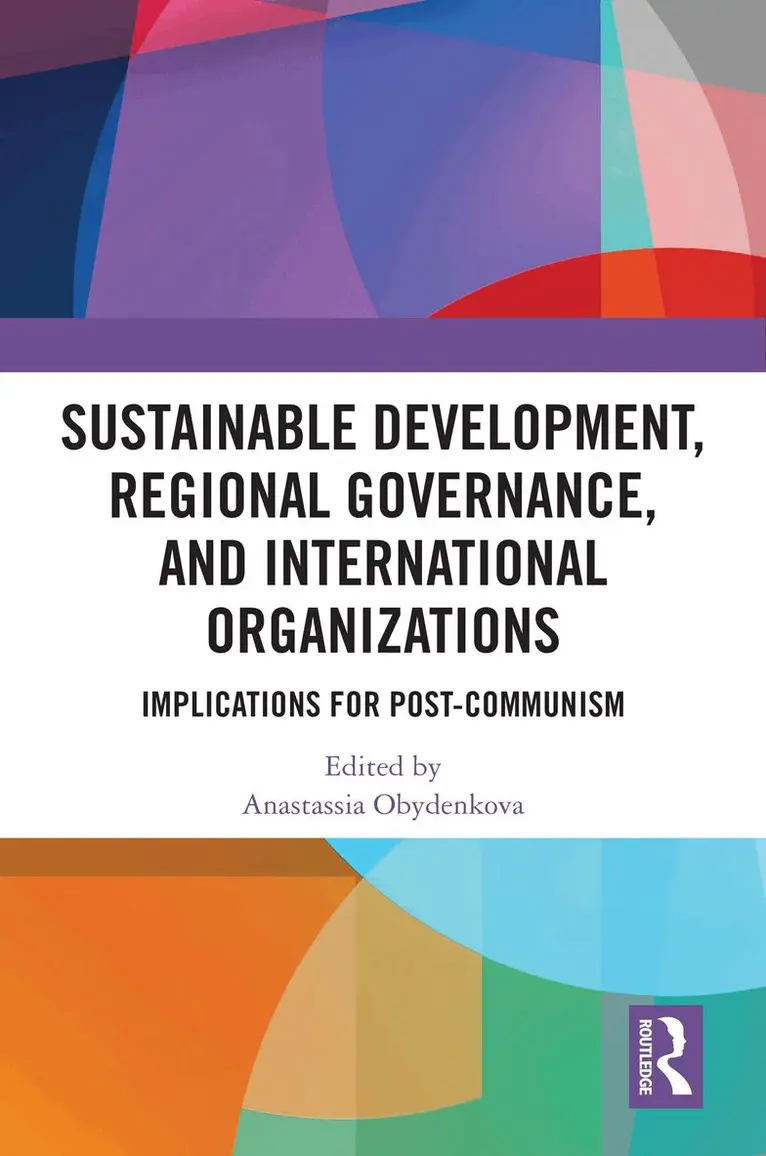
Sustainable Development, Regional Governance, and International Organizations
Implications for Post-Communism
Inbunden, Engelska, 2024
2 162 kr
Skickas inom 10-15 vardagar
This book aspires to establish a dialogue among the studies of sustainable development, global environmental politics, comparative regionalism, and area studies of Eurasia. The chapters in this book reflect deep knowledge of the authors of the main trends in environmental politics at global, international, and national levels before the invasion in Ukraine in 2022. First, the book looks into the role and impact of international organizations such as the European Union (EU), European Bank for Reconstruction and Development (EBRD), Arctic Council (AC,) and Global Forums on Climate Action on post-Communist states, but also the role of nation-states (e.g., Russia, Kazakhstan, and China). Second, the book explores relatively new international organizations, such as the Eurasian Economic Union (EAEU), the Eurasian Development Bank, and the Shanghai Cooperation Organization (SCO). How do the EAEU, EDB, and the SCO matter, if at all, in promoting an environmental agenda? How do the EU, EBRD, and the AC advance the environmental agenda across the post-Communist region? This book aspires to answer these questions and to shed more light on the challenges to sustainable development in post-Communist Europe, Central Asia, and Eurasia.With a new foreword and afterword, this book will appeal to students, scholars and researchers of political science, international relations, area-studies as well as practitioners and policymakers working in international organizations and dealing with challenges of sustainable development. The other chapters were originally published as a special issue of Problems of Post-Communism.
Sustainable Development, Regional Governance, and International Organizations
Implications for Post-Communism
Häftad, Engelska, 2025
648 kr
Skickas inom 10-15 vardagar
This book aspires to establish a dialogue among the studies of sustainable development, global environmental politics, comparative regionalism, and area studies of Eurasia. The chapters in this book reflect deep knowledge of the authors of the main trends in environmental politics at global, international, and national levels before the invasion in Ukraine in 2022. First, the book looks into the role and impact of international organizations such as the European Union (EU), European Bank for Reconstruction and Development (EBRD), Arctic Council (AC,) and Global Forums on Climate Action on post-Communist states, but also the role of nation-states (e.g., Russia, Kazakhstan, and China). Second, the book explores relatively new international organizations, such as the Eurasian Economic Union (EAEU), the Eurasian Development Bank, and the Shanghai Cooperation Organization (SCO). How do the EAEU, EDB, and the SCO matter, if at all, in promoting an environmental agenda? How do the EU, EBRD, and the AC advance the environmental agenda across the post-Communist region? This book aspires to answer these questions and to shed more light on the challenges to sustainable development in post-Communist Europe, Central Asia, and Eurasia.With a new foreword and afterword, this book will appeal to students, scholars and researchers of political science, international relations, area-studies as well as practitioners and policymakers working in international organizations and dealing with challenges of sustainable development. The other chapters were originally published as a special issue of Problems of Post-Communism.
Peripheral Elites at the Core
Power, Representation, and Central Institutions
Inbunden, Engelska, 2026
2 258 kr
Kommande
This book examines the often-overlooked dynamics of how political actors from peripheral regions engage with central authorities to shape national policymaking. While territorial movements advocating autonomy or independence have been widely studied, this work addresses a critical gap by exploring the complex interactions between regional elites and central political actors and institutions.By intersecting with three subfields of political science—regional studies, the sociology of elites, and ethnic studies—the chapters in this volume provide a thorough analysis of the persistence of subnational characteristics in modern states. They highlight the role of peripheral elites in negotiating with central power, the tensions faced by political actors balancing regional and central identities, and patterns of convergence and divergence among peripheral elites across diverse political regimes and regions. Drawing on case studies from California and Texas (United States), the United Kingdom, Spain, Morocco, Argentina, and China, this collective work offers both theoretical and empirical insights that enrich the center–periphery debate.This book is an essential resource for students, scholars and practitioners in Political Science, Sociology, and Regional Studies and those interested in understanding the complex relationships between regional and central political actors. It will particularly appeal to readers exploring themes of governance, elite sociology, ethnic politics, and the territorial margins of contemporary states.The chapters in this book were originally published as a special issue of Territory, Politics, Governance.
2 100 kr
Skickas inom 10-15 vardagar
As the Ukrainian Crisis shows both political regimes and national borders in Eurasia are still in a state of flux. Bringing together literatures on the external influences of democratization, the post-Soviet space and support for autocracy Autocratic and Democratic External influences in Post-Soviet Eurasia provides a comprehensive overview of the interaction of domestic and international politics during times of regime transition. Demonstrating the interplay of these forces the book explores the rich variation in motives and channels of autocratic and democratic influences. International scholars consider two channels of external influence on regime transition; the role of supranational organizations established by non-democracies and the role of non-governmental organizations and through a set of carefully chosen case studies offer a new theoretical discussion on the phenomenon of multi-level regime transition.