and Public Policy Committee on Science, Engineering – författare
1 141 kr
Skickas
671 kr
Skickas
438 kr
Läs direkt efter köp
179 kr
Skickas
163 kr
Läs direkt efter köp
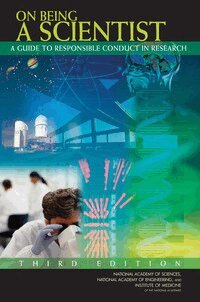
The scientific research enterprise is built on a foundation of trust. Scientists trust that the results reported by others are valid. Society trusts that the results of research reflect an honest attempt by scientists to describe the world accurately and without bias. But this trust will endure only if the scientific community devotes itself to exemplifying and transmitting the values associated with ethical scientific conduct.On Being a Scientist was designed to supplement the informal lessons in ethics provided by research supervisors and mentors. The book describes the ethical foundations of scientific practices and some of the personal and professional issues that researchers encounter in their work. It applies to all forms of research—whether in academic, industrial, or governmental settings-and to all scientific disciplines. This third edition of On Being a Scientist reflects developments since the publication of the original edition in 1989 and a second edition in 1995. A continuing feature of this edition is the inclusion of a number of hypothetical scenarios offering guidance in thinking about and discussing these scenarios.On Being a Scientist is aimed primarily at graduate students and beginning researchers, but its lessons apply to all scientists at all stages of their scientific careers.
268 kr
Läs direkt efter köp
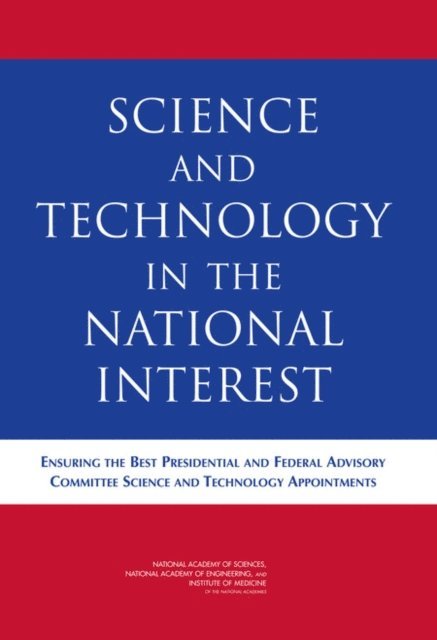
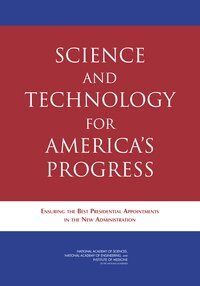
The new Obama administration and the 110th Congress elected in November 2008 will face immediate challenges. Events will not permit a leisurely leadership transition. The prompt appointment of a Presidential science adviser and the nomination of top officials in the new administration with the knowledge and experience to address complex problems will be essential. The concerns of the nation regarding jobs and economic growth, health care, national security, energy, and the environment demand informed action. Each of these concerns-from national security, economic development, health care, and the environment, to education, energy, and natural resources-is touched in essential ways by the nation''s science and technology enterprise.This is the fourth in a series of books from the National Academies on the presidential appointment process, each delivered during a presidential election year with the goal of providing recommendations to the President-elect about appointing his senior science and technology leadership and pursuing sustained improvements in the appointments process.
379 kr
Läs direkt efter köp
This guide offers helpful advice on how teachers, administrators, and career advisers in science and engineering can become better mentors to their students. It starts with the premise that a successful mentor guides students in a variety of ways: by helping them get the most from their educational experience, by introducing them to and making them comfortable with a specific disciplinary culture, and by offering assistance with the search for suitable employment. Other topics covered in the guide include career planning, time management, writing development, and responsible scientific conduct. Also included is a valuable list of bibliographical and Internet resources on mentoring and related topics.
665 kr
Läs direkt efter köp
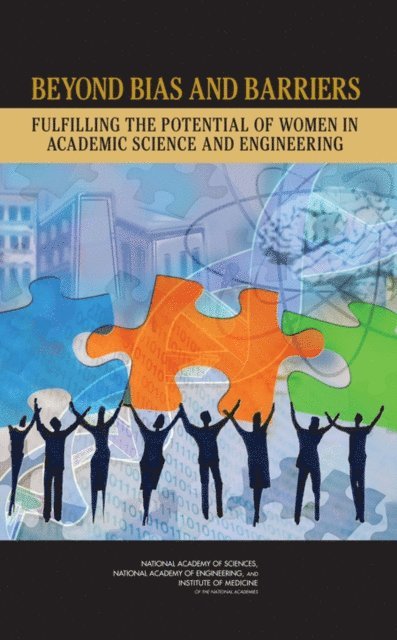
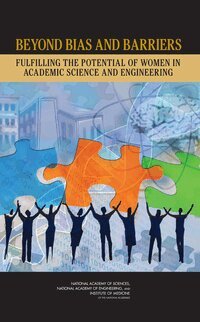
Beyond Bias and Barriers explains that eliminating gender bias in academia requires immediate overarching reform, including decisive action by university administrators, professional societies, federal funding agencies and foundations, government agencies, and Congress. If implemented and coordinated across public, private, and government sectors, the recommended actions will help to improve workplace environments for all employees while strengthening the foundations of America's competitiveness.
438 kr
Läs direkt efter köp
As digital technologies are expanding the power and reach of research, they are also raising complex issues. These include complications in ensuring the validity of research data; standards that do not keep pace with the high rate of innovation; restrictions on data sharing that reduce the ability of researchers to verify results and build on previous research; and huge increases in the amount of data being generated, creating severe challenges in preserving that data for long-term use.
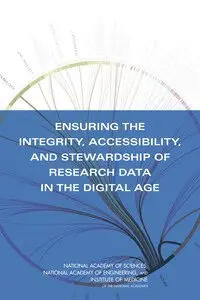
Ensuring the Integrity, Accessibility, and Stewardship of Research Data in the Digital Age examines the consequences of the changes affecting research data with respect to three issues - integrity, accessibility, and stewardship-and finds a need for a new approach to the design and the management of research projects. The report recommends that all researchers receive appropriate training in the management of research data, and calls on researchers to make all research data, methods, and other information underlying results publicly accessible in a timely manner. The book also sees the stewardship of research data as a critical long-term task for the research enterprise and its stakeholders. Individual researchers, research institutions, research sponsors, professional societies, and journals involved in scientific, engineering, and medical research will find this book an essential guide to the principles affecting research data in the digital age.
260 kr
Läs direkt efter köp
The scientific research enterprise is built on a foundation of trust. Scientists trust that the results reported by others are valid. Society trusts that the results of research reflect an honest attempt by scientists to describe the world accurately and without bias. But this trust will endure only if the scientific community devotes itself to exemplifying and transmitting the values associated with ethical scientific conduct.On Being a Scientist was designed to supplement the informal lessons in ethics provided by research supervisors and mentors. The book describes the ethical foundations of scientific practices and some of the personal and professional issues that researchers encounter in their work. It applies to all forms of research—whether in academic, industrial, or governmental settings-and to all scientific disciplines. This third edition of On Being a Scientist reflects developments since the publication of the original edition in 1989 and a second edition in 1995. A continuing feature of this edition is the inclusion of a number of hypothetical scenarios offering guidance in thinking about and discussing these scenarios.On Being a Scientist is aimed primarily at graduate students and beginning researchers, but its lessons apply to all scientists at all stages of their scientific careers.
584 kr
Läs direkt efter köp
As digital technologies are expanding the power and reach of research, they are also raising complex issues. These include complications in ensuring the validity of research data; standards that do not keep pace with the high rate of innovation; restrictions on data sharing that reduce the ability of researchers to verify results and build on previous research; and huge increases in the amount of data being generated, creating severe challenges in preserving that data for long-term use.
Ensuring the Integrity, Accessibility, and Stewardship of Research Data in the Digital Age examines the consequences of the changes affecting research data with respect to three issues - integrity, accessibility, and stewardship-and finds a need for a new approach to the design and the management of research projects. The report recommends that all researchers receive appropriate training in the management of research data, and calls on researchers to make all research data, methods, and other information underlying results publicly accessible in a timely manner. The book also sees the stewardship of research data as a critical long-term task for the research enterprise and its stakeholders. Individual researchers, research institutions, research sponsors, professional societies, and journals involved in scientific, engineering, and medical research will find this book an essential guide to the principles affecting research data in the digital age.
503 kr
Läs direkt efter köp
In order for the United States to maintain the global leadership and competitiveness in science and technology that are critical to achieving national goals, we must invest in research, encourage innovation, and grow a strong and talented science and technology workforce. Expanding Underrepresented Minority Participation explores the role of diversity in the science, technology, engineering and mathematics (STEM) workforce and its value in keeping America innovative and competitive. According to the book, the U.S. labor market is projected to grow faster in science and engineering than in any other sector in the coming years, making minority participation in STEM education at all levels a national priority.
Expanding Underrepresented Minority Participation analyzes the rate of change and the challenges the nation currently faces in developing a strong and diverse workforce. Although minorities are the fastest growing segment of the population, they are underrepresented in the fields of science and engineering. Historically, there has been a strong connection between increasing educational attainment in the United States and the growth in and global leadership of the economy. Expanding Underrepresented Minority Participation suggests that the federal government, industry, and post-secondary institutions work collaboratively with K-12 schools and school systems to increase minority access to and demand for post-secondary STEM education and technical training.
The book also identifies best practices and offers a comprehensive road map for increasing involvement of underrepresented minorities and improving the quality of their education. It offers recommendations that focus on academic and social support, institutional roles, teacher preparation, affordability and program development.
678 kr
Läs direkt efter köp
682 kr
Läs direkt efter köp
Advances in science and engineering increasingly require the collaboration of scholars from various fields. This shift is driven by the need to address complex problems that cut across traditional disciplines, and the capacity of new technologies to both transform existing disciplines and generate new ones. At the same time, however, interdisciplinary research can be impeded by policies on hiring, promotion, tenure, proposal review, and resource allocation that favor traditional disciplines.
This report identifies steps that researchers, teachers, students, institutions, funding organizations, and disciplinary societies can take to more effectively conduct, facilitate, and evaluate interdisciplinary research programs and projects. Throughout the report key concepts are illustrated with case studies and results of the committee''s surveys of individual researchers and university provosts.
618 kr
Läs direkt efter köp
This report is the proceedings of a 2003 symposium on "Electronic Scientific, Technical, and Medical Journal Publishing and Its Implications," which brought together experts in STM publishing, both producers and users of these publications, to: (1) identify the recent technical changes in publishing, and other factors, that influence the decisions of journal publishers to produce journals electronically; (2) identify the needs of the scientific, engineering, and medical community as users of journals, whether electronic or printed; (3) discuss the responses of not-for-profit and commercial STM publishers and of other stakeholders in the STM community to the opportunities and challenges posed by the shift to electronic publishing; and (4) examine the spectrum of proposals that has been put forth to respond to the needs of users as the publishing industry shifts to electronic information production and dissemination.
585 kr
Läs direkt efter köp
The Symposium on Electronic Scientific, Technical, and Medical (STM) Journals and Its Implications addressed five key areas. The first two areas addressed—costs of publication and publication business models and revenue—focused on the STM publishing enterprise as it exists today and, in particular, how it has evolved since the advent of electronic publishing. The following section reviewed copyright and licensing issues of concern to the authors and to universities. The final two sessions looked toward the future, specifically, at what publishing may be in the future and what constitutes a publication in the digital environment.
379 kr
Läs direkt efter köp
652 kr
Läs direkt efter köp
268 kr
Läs direkt efter köp
Fourth in a series of annual reports, this study provides observations on the Administration''s FY 2002 budget proposal for federal science and technology (FS&T) programs. The report comments first on approaches to tabulating federal spending on FS&T and endorses the Administration''s method for developing an FS&T budget cross-tabulation for inclusion in its budget proposal. The report then provides observations on the FY 2002 FS&T budget proposal, identifying changes in FS&T investments by federal agencies from the prior year; and assessing the longer-term impacts of these FS&T proposals in various fields.
779 kr
Läs direkt efter köp
568 kr
Läs direkt efter köp
The concept of postdoctoral training came to science and engineering about a century ago. Since the 1960s, the performance of research in the United States has increasingly relied on these recent PhDs who work on a full-time, but on a temporary basis, to gain additional research experience in preparation for a professional research career.
Such experiences are increasingly seen as central to careers in research, but for many, the postdoctoral experience falls short of expectations. Some postdocs indicate that they have not received the recognition, standing or compensation that is commensurate with their experience and skills. Is this the case? If so, how can the postdoctoral experience be enhanced for the over 40,000 individuals who hold these positions at university, government, and industry laboratories?
This new book offers its assessment of the postdoctoral experience and provides principles, action points, and recommendations for enhancing that experience.
599 kr
Läs direkt efter köp
In 1995, the National Academy of Sciences, National Academy of Engineering, Institute of Medicine, and National Research Council issued a report entitled Allocating Federal Funds for Science and Technology, which recommended tracking of federal investments in the creation of new knowledge and technologies—what the report referred to as the federal science and technology (FS&T) budget.
Observations on the President''s Fiscal Year 2001 Federal Science and Technology Budget, the third annual report, identifies potential impacts of the President''s proposed FS&T budget. This report does not make recommendations about specific spending levels, but rather identifies aspects of the proposed budget as they affect the health of the nation''s research enterprise.
1 136 kr
Läs direkt efter köp
How can the federal government gauge the overall health of scientific research—as a whole and in its parts—and determine whether national funding adequately supports national research objectives? It is feasible to monitor US performance with field-by-field peer assessments. This might be done through the establishment of independent panels consisting of researchers who work in a field, individuals who work in closely related fields, and research "users" who follow the field closely. Some of these individuals should be outstanding foreign scientists in the field being examined. This technique of comparative international assessments is also known as international benchmarking.
Experiments in International Benchmarking of U.S. Research Fields evaluates the feasibility and utility of the benchmarking technique. In order to do this, the report internationally benchmarks three fields: mathematics, immunology, and materials science and engineering, then summarizes the results of these experiments.
702 kr
Läs direkt efter köp
Although the United States is currently capitalizing on its investment in science and technology effectively, there remains much room for improvement. This volume identifies the ingredients for success in capitalizing on such investments to produce national benefits, assesses current U.S. performance, and identifies future challenges. The book cites specific examples and examines several cross-cutting issues. It explores the possibility that the national research portfolio is losing diversity as a result of less long-term research in critical fields such as networking and materials. It also examines the implications of imbalances in the supply of and demand for science and engineering talent in emerging interdisciplinary fields such as bioinformatics.
617 kr
Läs direkt efter köp
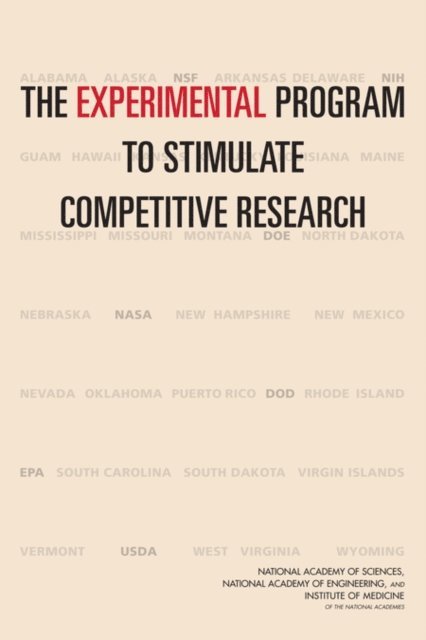
The Government Performance and Results Act (GPRA), passed by Congress in 1993, requires that federal agencies write five-year strategic plans with annual performance goals and produce an annual report that demonstrates whether the goals have been met. The first performance reports are due in March 2000.
Measuring the performance of basic research is particularly challenging because major breakthroughs can be unpredictable and difficult to assess in the short term. This book recommends that federal agencies use an "expert review" method to examine the quality of research they support, the relevance of that research to their mission, and whether the research is at the international forefront of scientific and technological knowledge. It also addresses the issues of matching evaluation measurements to the character of the research performed, improving coordination among agencies when research is in the same field, and including a human resource development component in GPRA strategic and performance plans.
268 kr
Läs direkt efter köp
In this report, the Committee on Science, Engineering, and Public Policy (COSEPUP) provides its observations on the federal science and technology (FS&T) portion of the president''s fiscal year (FY) 1999 submission. The FS&T budget (see box) reflects the federal investment in the creation of new knowledge and technologies and excludes such activities as the testing and evaluating of new weapons systems.
316 kr
Läs direkt efter köp
As science and technology advance, the needs of employers change, and these changes continually reshape the job market for scientists and engineers. Such shifts present challenges for students as they struggle to make well-informed education and career choices. Careers in Science and Engineering offers guidance to students on planning careers—particularly careers in nonacademic settings—and acquiring the education necessary to attain career goals. This booklet is designed for graduate science and engineering students currently in or soon to graduate from a university, as well as undergraduates in their third or fourth year of study who are deciding whether or not to pursue graduate education. The content has been reviewed by a number of student focus groups and an advisory committee that included students and representatives of several disciplinary societies.
Careers in Science and Engineering offers advice on not only surviving but also enjoying a science- or engineering-related education and career—how to find out about possible careers to pursue, choose a graduate school, select a research project, work with advisers, balance breadth against specialization, obtain funding, evaluate postdoctoral appointments, build skills, and more. Throughout, Careers in Science and Engineering lists resources and suggests people to interview in order to gather the information and insights needed to make good education and career choices. The booklet also offers profiles of science and engineering professionals in a variety of careers. Careers in Science and Engineering will be important to undergraduate and graduate students who have decided to pursue a career in science and engineering or related areas. It will also be of interest to faculty, counselors, and education administrators.
633 kr
Läs direkt efter köp
892 kr
Läs direkt efter köp
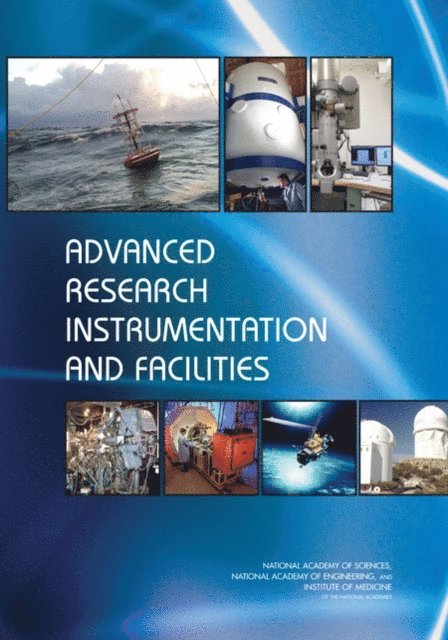
In recent years, the instrumentation needs of the nation''s research communities have changed and expanded. The need for particular instruments has become broader, crossing scientific and engineering disciplines. The growth of interdisciplinary research that focuses on problems defined outside the boundaries of individual disciplines demands more instrumentation. Instruments that were once of interest only to specialists are now required by a wide array of scientists to solve critical research problems. The need for entirely new types of instruments—such as distributed networks, cybertools, and sensor arrays—is increasing. Researchers are increasingly dependent on advanced instruments that require highly specialized knowledge and training for their proper operation and use. The National Academies Committee on Science, Engineering, and Public Policy Committee on Advanced Research Instrumentation was asked to describe the current programs and policies of the major federal research agencies for advanced research instrumentation, the current status of advanced mid-sized research instrumentation on university campuses, and the challenges faced by each. The committee was then asked to evaluate the utility of existing federal programs and to determine the need for and, if applicable, the potential components of an interagency program for advanced research instrumentation.
714 kr
Läs direkt efter köp