Anders Uhlin – författare
Visar alla böcker från författaren Anders Uhlin. Handla med fri frakt och snabb leverans.
17 produkter
17 produkter
Häftad, Svenska, 2021
501 kr
Skickas
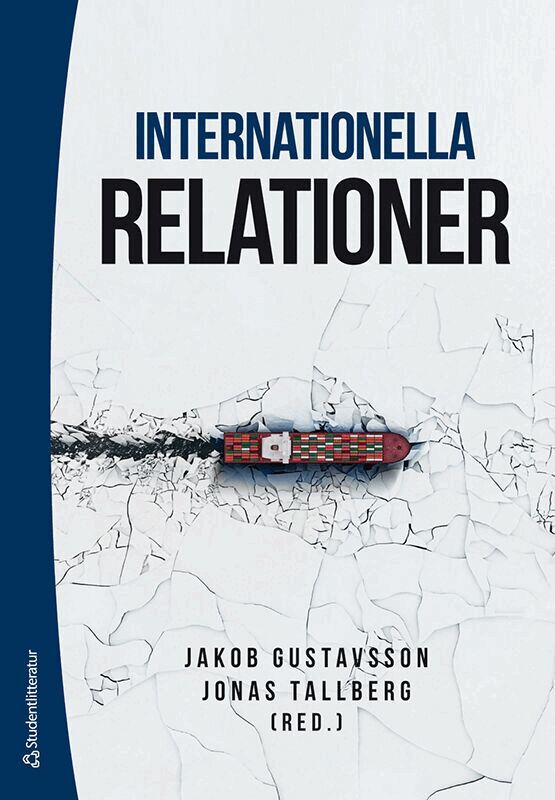
I denna heltäckande grundbok ges en introduktion till studiet av internationella relationer. Boken redogör för de dominerande teoretiska perspektiven inom internationella relationer, för de processer som formar den internationella fördelningen av makt och resurser, samt för de mest framträdande politikområdena i världspolitiken idag. Genom sitt breda anslag behandlar boken frågor som: Varför uppstår krig? Vad har globaliseringen för politiska effekter? Vem har makt i internationell politik? Hur kan utvecklingsländerna hävas ur fattigdom? Vilka motiv driver transnationella terroristnätverk? När har normer och internationella institutioner betydelse? Under vilka omständigheter får nationella identiteter genomslag i världspolitiken?I boken medverkar många av de främsta forskarna inom internationell politik i Sverige. Alla är experter inom sina respektive områden, och är väl integrerade i den internationella forskningsmiljön. På ett pedagogiskt sätt introducerar de centrala perspektiv och begrepp och knyter samtidigt an till aktuella exempel och illustrationer. Flera exempel hämtas från en svensk kontext och boken belyser därmed på ett unikt sätt Sveriges relationer med omvärlden. I denna fjärde upplaga har samtliga kapitel uppdaterats. Boken vänder sig i första hand till introduktionskurser i internationell politik eller internationella relationer vid universitet och högskolor.
Häftad, Svenska, 2023
409 kr
Skickas
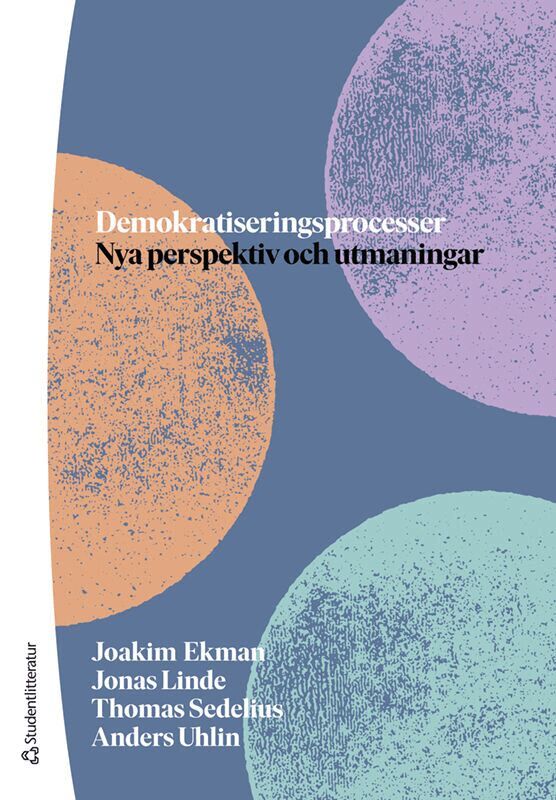
Varför utvecklas vissa länder men inte andra till väl fungerande demokratier? Är det ekonomisk utveckling, en viss uppsättning institutioner, en gynnsam medborgarkultur, civilsamhället, stödjande internationella förutsättningar eller samarbetande politiska eliter som avgör? Kan alla länder i världen bli demokratier, eller är vissa stater dömda att för alltid styras av auktoritära regimer? I denna uppdaterade tredje upplaga av Demokratiseringsprocesser presenteras och granskas de viktigaste teoretiska och empiriska bidragen inom forskningen om demokratiseringsprocesser. Författarna introducerar centrala begrepp som demokrati, modernisering, transition, konsolidering och diffusion, samt visar hur forskningen har utvecklats från den tidiga efterkrigstiden fram till idag. Även demokratins tillbakagång och olika varianter av samtida auktoritära styrelseskick diskuteras. Boken inleds med ett förord av professor Li Bennich-Björkman.Demokratiseringsprocesser är särskilt lämplig för kurser i statsvetenskap, sociologi, internationella relationer, utvecklingsstudier, Europastudier samt freds- och konfliktforskning.
Inbunden, Engelska, 2022
1 443 kr
Skickas inom 5-8 vardagar
This is an open access title available under the terms of a CC BY-NC-ND 4.0 International licence. It is free to read at Oxford Scholarship Online and offered as a free PDF download from OUP and selected open access locations.The legitimacy of global governance institutions is both contested and defended in contemporary global politics. Legitimation and Delegitimation in Global Governance explores processes of legitimation and delegitimation of such institutions. How, why, and with what impact on audiences, are global governance institutions legitimated and delegitimated? The book develops a comprehensive theoretical framework for studying processes of (de)legitimation in governance beyond the state. It provides broad comparative analyses to uncover previously unexplored patterns of (de)legitimation processes. A diverse set of global and regional governmental and nongovernmental institutions in different policy fields are included. Variation across these institutions is explained with reference to institutional set-up, policy field characteristics, and broader social structures, as well as to the qualities of agents of (de)legitimation. The approach builds on a mixed-methods research design that uses quantitative and qualitative new empirical data. Three main interlinked elements of processes of legitimation and delegitimation are at the center of the analysis: the varied practices employed by different agents that may boost or challenge the legitimacy of institutions; the normative justifications that these agents draw on when engaging in legitimation and delegitimation practices; and the different audiences that may be impacted by legitimation and delegitimation. This results in a dynamic interplay between legitimation and delegitimation in contestation over the legitimacy of GGIs.
Inbunden, Engelska, 2010
544 kr
Skickas inom 10-15 vardagar
Combining case studies with normative theory, this book analyzes the democratic credentials of transnational actors participating in global governance, ranging from corporations and philanthropic foundations to NGOs and social movements. This leads to innovative interpretations of democratic legitimacy in a transnational context.
Inbunden, Engelska, 2003
2 151 kr
Skickas inom 10-15 vardagar
This book provides new perspectives on transnational activism with a specific regional focus on Asia. By offering an innovative approach, its theoretical chapters and empirical case studies examine macro as well as micro aspects of power and how cross-border activities of civil society groups are related to problems of democracy.
Inbunden, Engelska, 2005
1 321 kr
Skickas inom 10-15 vardagar
The development of civil society has varied greatly across the former Soviet Union. The Baltic states have achieved a high level of integration with the West and European Union membership, while some regions in Russia lag far behind.Now for the first time there is a comparative study of civil society and democratization across post-Soviet national borders. Acknowledging the enormous variation throughout the region, the book offers unique data on developments in Russia, Estonia, Latvia and Lithuania. Applying an innovative analytical framework derived from theories of democratization, civil society, social movements and transnational relations, the researchers have formulated broader comparisons and generalisations without neglecting the specific post-Soviet context. The book provides a systematic comparison across sectors as well as nations, and includes chapters on NGOs, the state and conflict, and transnationalisation. Quantitative survey data is combined with qualitative interviews and case study research to both confirm previous findings about the weakness of post-communist civil society and to qualify previous research.
Häftad, Engelska, 2007
450 kr
Skickas inom 10-15 vardagar
The development of civil society has varied greatly across the former Soviet Union. The Baltic states have achieved a high level of integration with the West and European Union membership, while some regions in Russia lag far behind.Now for the first time there is a comparative study of civil society and democratization across post-Soviet national borders. Acknowledging the enormous variation throughout the region, the book offers unique data on developments in Russia, Estonia, Latvia and Lithuania. Applying an innovative analytical framework derived from theories of democratization, civil society, social movements and transnational relations, the researchers have formulated broader comparisons and generalisations without neglecting the specific post-Soviet context. The book provides a systematic comparison across sectors as well as nations, and includes chapters on NGOs, the state and conflict, and transnationalisation. Quantitative survey data is combined with qualitative interviews and case study research to both confirm previous findings about the weakness of post-communist civil society and to qualify previous research.
Häftad, Engelska, 2009
685 kr
Skickas inom 10-15 vardagar
This book provides new perspectives on transnational activism with a specific regional focus on Asia. By offering an innovative approach, its theoretical chapters and empirical case studies examine macro as well as micro aspects of power and how cross-border activities of civil society groups are related to problems of democracy.
Inbunden, Engelska, 2022
651 kr
Skickas inom 5-8 vardagar
Essays that generate a new, empirically grounded theory of transnational advocacy Margaret E. Keck and Kathryn Sikkink introduced the boomerang theory in their 1998 book, Activists beyond Borders: Advocacy Networks in International Politics. It remains one of the first broadly applicable theories for why groups of NGOs and interested individuals form transnational advocacy networks. Since its publication, however, the empirical conditions that prompted their theory have changed. The types of actors involved in transnational advocacy have diversified. Northern NGOs have lost power and influence and have been restricted in their access to southern states. Southern NGOs have developed the capacity to undertake advocacy on their own and often built closer relationships with their own governments. The architecture of global governance has likewise changed, providing new avenues of access and influence for southern voices. In Beyond the Boomerang: From Transnational Advocacy Networks to Transcalar Advocacy in International Politics, editors Christopher L. Pallas and Elizabeth A. Bloodgood offer cutting-edge scholarship that synthesizes a new theoretical framework to develop a coherent, integrated picture of the current dynamics in global advocacy. This new theory of transcalar advocacy focuses on advocacy activities and policy impacts that transcend different levels or scales of political action. In transcalar advocacy, all NGOs–northern and southern–are treated as strategic actors, choosing the targets, scales of advocacy, and partnerships that best suit their capacities and goals. The case studies in the volume develop the empirical grounding of this theory using data from Latin America, Africa, Europe, and Asia, with several chapters featuring cross-national comparison. The chapters highlight the wide variety of actors involved in advocacy work, including NGOs, social movements, international institutions, governments, and businesses. Contributors use both qualitative and quantitative methodologies and bring to bear insights from political science, international relations, and sociology. The case studies also include diverse issue areas, from women’s rights to environmental protection, sustainable agriculture, health policy, and democracy promotion.
Inbunden, Engelska, 2015
544 kr
Skickas inom 10-15 vardagar
This book re-conceptualizes civil society engagement with global governance institutions in the field of development in terms of opposition. With an innovative theoretical framework, it maps and explains opposition strategies through detailed case studies on the EU, the Asian Development Bank, and the Global Forum on Migration and Development.
Häftad, Engelska, 2010
544 kr
Skickas inom 10-15 vardagar
Combining case studies with normative theory, this book analyzes the democratic credentials of transnational actors participating in global governance, ranging from corporations and philanthropic foundations to NGOs and social movements. This leads to innovative interpretations of democratic legitimacy in a transnational context.
Häftad, Engelska, 2015
544 kr
Skickas inom 10-15 vardagar
This book re-conceptualizes civil society engagement with global governance institutions in the field of development in terms of opposition.
Inbunden, Engelska, 2016
1 292 kr
Skickas inom 10-15 vardagar
Through detailed comparative case studies of civil society engagement with two major regional international organizations in Southeast Asia this book demonstrates the potentials and limitations of civil society actors as democratizing agents in governance beyond the nation-state. Drawing on previous research on civil society, social movements, transnational activism, and democratization, Uhlin develops an analytical framework focusing on a) how national and international political opportunities shape—and are shaped by—civil society advocacy; b) how civil society activists frequently combine inside and outside strategies when targeting international organizations; and c) how civil society advocacy can have a liberalizing impact on the targeted international organizations. Drawing on rich empirical data, including more than 100 qualitative interviews with civil society activists and representatives of the Asian Development Bank (ADB) and the Association of Southeast Asian Nations (ASEAN), the study demonstrates how civil society actors have contributed to pushing ADB—and to a much lesser extent ASEAN—in a political liberal direction, improving transparency, strengthening accountability, and introducing mechanisms protecting people from the abuse of power. With its innovative analytical framework, broad scope covering civil society activism across Southeast Asia, and in-depth analysis of civil society attempts to influence ADB and ASEAN the book makes important contributions to research on civil society activism in Southeast Asia as well as the more general field of civil society and governance beyond the nation-state.
Häftad, Engelska, 2018
548 kr
Skickas inom 10-15 vardagar
Through detailed comparative case studies of civil society engagement with two major regional international organizations in Southeast Asia this book demonstrates the potentials and limitations of civil society actors as democratizing agents in governance beyond the nation-state. Drawing on previous research on civil society, social movements, transnational activism, and democratization, Uhlin develops an analytical framework focusing on a) how national and international political opportunities shape—and are shaped by—civil society advocacy; b) how civil society activists frequently combine inside and outside strategies when targeting international organizations; and c) how civil society advocacy can have a liberalizing impact on the targeted international organizations. Drawing on rich empirical data, including more than 100 qualitative interviews with civil society activists and representatives of the Asian Development Bank (ADB) and the Association of Southeast Asian Nations (ASEAN), the study demonstrates how civil society actors have contributed to pushing ADB—and to a much lesser extent ASEAN—in a political liberal direction, improving transparency, strengthening accountability, and introducing mechanisms protecting people from the abuse of power. With its innovative analytical framework, broad scope covering civil society activism across Southeast Asia, and in-depth analysis of civil society attempts to influence ADB and ASEAN the book makes important contributions to research on civil society activism in Southeast Asia as well as the more general field of civil society and governance beyond the nation-state.
Inbunden, Engelska, 2016
1 499 kr
Skickas inom 10-15 vardagar
The politics of claiming rights and strategies of mobilisation exhibited by marginalised social groups lie at the heart of this volume. In so doing, the book bridges the literature on contentious politics, the politics of claimingsocial justice, and everyday politics of resistance.
Häftad, Engelska, 2018
1 073 kr
Skickas inom 10-15 vardagar
The politics of claiming rights and strategies of mobilisation exhibited by marginalised social groups lie at the heart of this volume. In so doing, the book bridges the literature on contentious politics, the politics of claimingsocial justice, and everyday politics of resistance.
Häftad, Engelska, 2023
300 kr
Skickas inom 5-8 vardagar
This innovative volume is the first systematic study of civil society elites in Southeast Asia (and indeed anywhere in the world). Spanning two previously separate areas of research – civil society and elites – it sheds new light on power inequalities within and beyond civil society, identifies different types of elite formation and elite interaction within and beyond civil society, and traces interactions and integration with elite groups from party politics, the state, and the business sector. This tightly edited volume, produced by a research team ranging from senior scholars to promising younger academics, analyses how such processes are influenced by reliance on foreign funding and explores how they play out in two settings – where the political space for civil society is generally shrinking (Cambodia) and where it is relatively expanding (Indonesia). However, the volume offers more than a rethinking of civil society in Cambodia and Indonesia; it looks beyond. It thus challenges a view of civil society entities as relatively isolated from the state and from political and economic society, revealing power relations that link them. Suggesting a new direction for civil society research, the book will be of great interest to the many researchers working on civil society, elites and contemporary Southeast Asian politics as well as those engaged in other areas of society in Cambodia and Indonesia. Policymakers, donors and not least civil society activists themselves will find the volume highly relevant to their work.