Andrea Vaccaro - Böcker
Visar alla böcker från författaren Andrea Vaccaro. Handla med fri frakt och snabb leverans.
3 produkter
3 produkter
1 180 kr
Skickas inom 5-8 vardagar
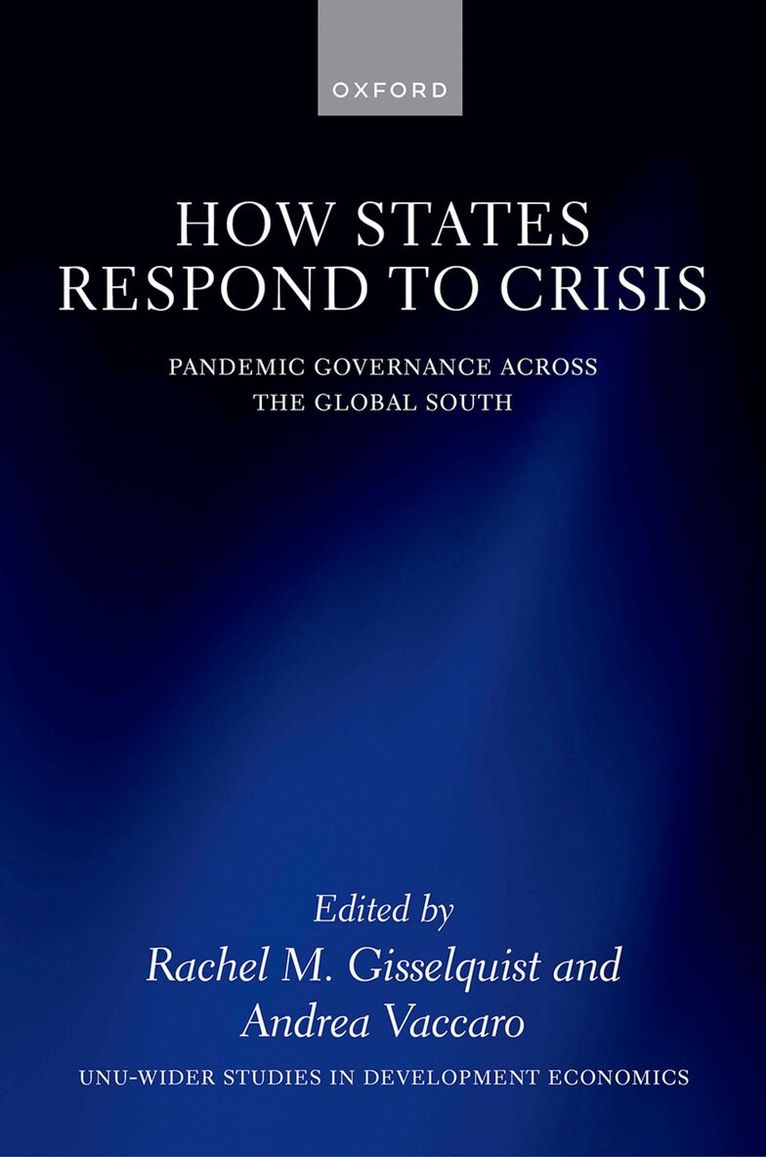
This is an open access title available under the terms of a CC BY-NC-SA 3.0 IGO licence. It is free to read at Oxford Academic and is offered as a free PDF download from OUP and selected open access locations.We expect the state to matter in times of crisis, for more 'capable' or 'stronger' states to better provide for and protect their populations. But how is it, precisely, that the quality of the state matters? This volume speaks to this question through comparative study of how diverse states in the Global South responded to the COVID-19 pandemic, the largest global crisis in recent memory. Bringing together insights from quantitative cross-country analysis and detailed country case studies, How States Respond to Crisis analyses the ways in which the quality of the state - in terms of its capacity, authority, and legitimacy - affected pandemic governance and health outcomes. Overall, while the significance of state capacity to deliver public services in effective pandemic response is clear, so too is striking variation among states lacking 'strong' capacity. State legitimacy and authority shed light on this variation, linked in particular to the degree to which governments' responses were evidence-based versus politically driven, and the tenor of citizen compliance with and government enforcement of public health regulations. Seven case study chapters authored by leading scholars of each country provide deep and specific insight into these relationships in Bolivia, Ghana, Nicaragua, Peru, the Philippines, Tanzania, and Vietnam. Extending beyond a literature on the state based heavily on study of Global North contexts, this volume sheds new light on the nature of the state and its role in crisis response and development.
1 180 kr
Skickas inom 5-8 vardagar
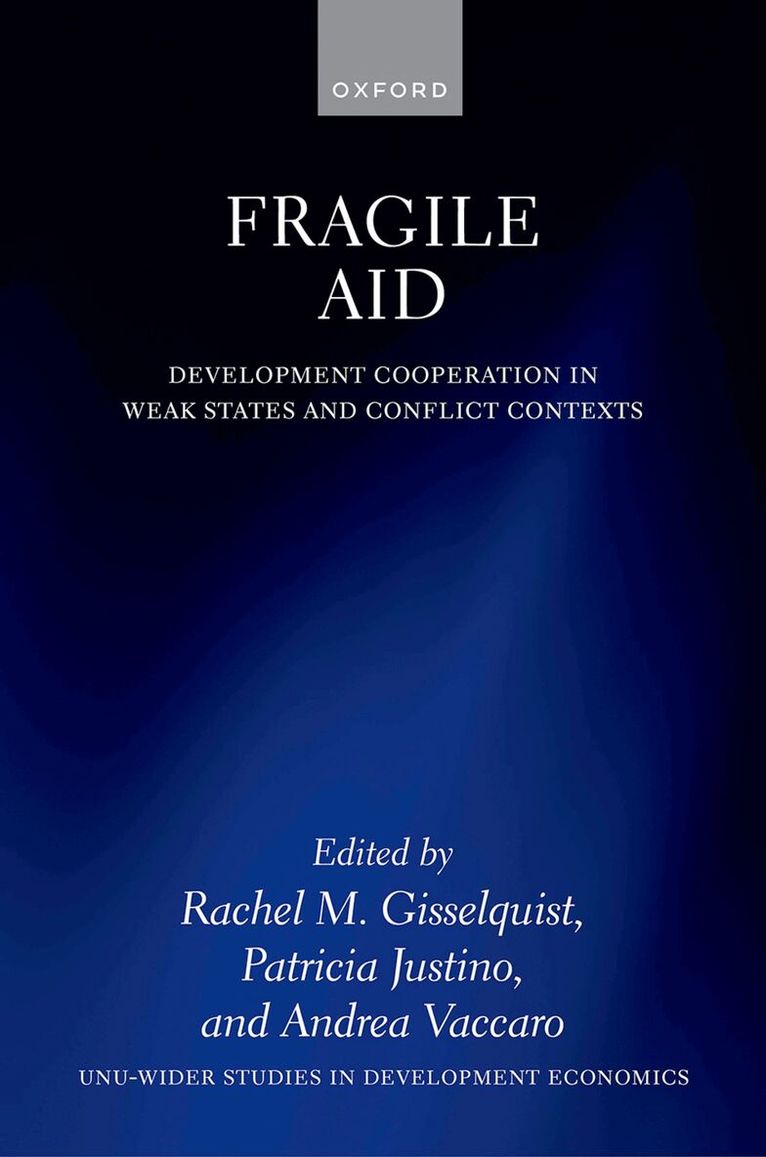
This is an open access title available under the terms of a CC BY-NC-SA 3.0 IGO licence. It is free to read at Oxford Scholarship Online and offered as a free PDF download from OUP and selected open access locationsInternational development cooperation plays a key role in promoting social, economic, and political progress and wellbeing in developing countries. Yet, it has long been clear that the effectiveness of aid is most challenging in countries with weak institutions. It is estimated that by 2030 around a fifth of the world's poorest people will live in fragile and conflict-affected countries. Despite increased attention, much more needs to be done to maximize the effectiveness of aid in these highly complex situations. This book offers fresh, in-depth understandings of the effectiveness of development cooperation in fragile contexts, and where challenges regarding the effectiveness of development cooperation are most pronounced. The empirical chapters combine quantitative macro analysis of cross-country data with detailed country case studies to take stock of past research on the topic, investigate the impact of foreign aid in fragile state contexts, and explore whether and how aid delivered in accordance with the principles of effective development cooperation works in these settings. Cross-national studies provide a broader picture of the topic, while country case studies allow us to identify specific ways in which development cooperation operates. More reflective chapters discuss the feasibility of the effectiveness agenda and provide important insights on how the effectiveness principles could be improved and better put into practice.The collection offers important original contributions to a large body of policy-relevant scholarship on the aid-development nexus, as well as to rapidly evolving research and policy debates on building strong and inclusive state institutions.
195 kr
Skickas inom 5-8 vardagar