Andrew J. Wood – författare
Visar alla böcker från författaren Andrew J. Wood. Handla med fri frakt och snabb leverans.
7 produkter
7 produkter
E-bok
PDF, Engelska, 20132 049 kr
Läs direkt efter köp
The mosses (Bryophatea, Musci) are a diverse and widely distributed group of land plants. Mosses are attractive experimental plants because they exhibit the traditional attributes of good model systems (Le. ease of growth & maintenance, fast generation time, and amenable genetics) with the added advantage of a haploid gametophyte that allowed developmental mutants to be recovered with relative ease. In addition, mosses with the ability to tolerate extreme environmental conditions offer realistic models for the analysis of environmental stress-tolerance; particularly when compared to tracheophytes such as Arabidopsis thaliana in which these important plant phenotypes are either not clearly expressed or entirely lacking. And, in one of the most exciting developments in Plant Biology, efficient homologous recombination occurs in the moss Physcomitrella patens. The ability to perform efficient homologous recombination (Le. gene knock-outs) in P. patens is at present unique amongst all plants and represents an extremely powerful technique for the functional analysis of many plant genes. Over the past 5 years, a world-wide community of moss researchers has evolved. A highly successful "Moss" conference has been held annually (l998-Mumbai, India; 1999-Carbondale, IL, USA; 2000-Villars, Switzerland; 200l-0kazaki, Japan; 2002-Ambleside, UK; 2003-St. Louis, MO, USA) with "Moss 2004" planned to be held in Frieburg Germany. These conferences have been instrumental in the creation & development of strong collaborative ties, and the free exchange of both ideas and materials.
E-bok
PDF, Engelska, 20083 663 kr
Läs direkt efter köp
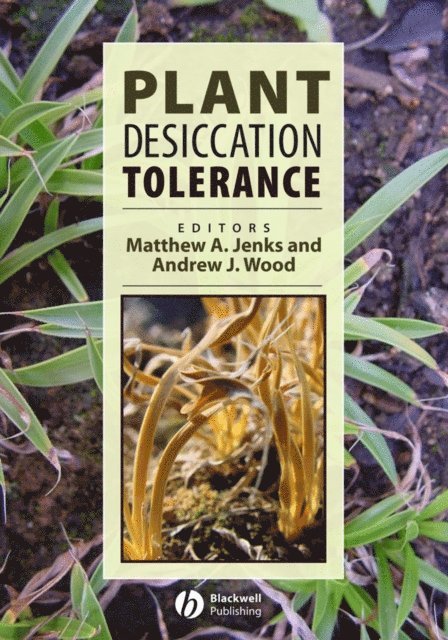
Plant desiccation tolerance is of great basic and applied scientific interest. Understanding plant responses and adaptations to severe desiccation is key to applying desiccation tolerance research to the improvement of economically important crops. Plant Desiccation Tolerance brings together a field of international researchers to provide a current review of the advances in plant desiccation tolerance research. The book is broken up into three sections: Vegetative Desiccation Tolerance; Desiccation Tolerance of Pollen, Spores, and Seeds; and Applications of Desiccation Tolerance Research. Completely up-to-date and written by leading desiccation experts, Plant Desiccation Tolerance will be of great interest to plant researchers and plant and crop science professionals.
E-bok
PDF, Engelska, 20093 312 kr
Läs direkt efter köp
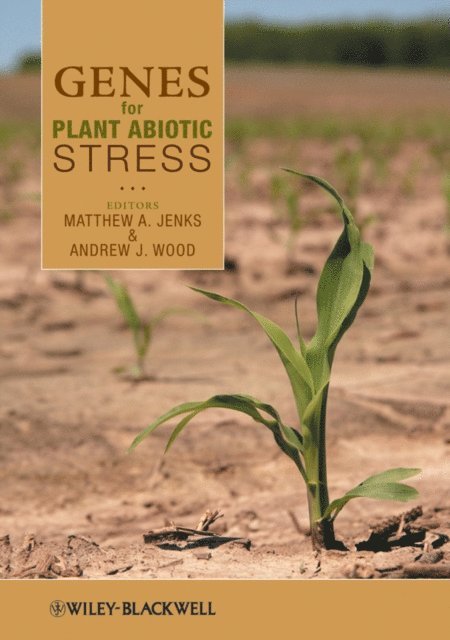
Abiotic stresses caused by drought, salinity, toxic metals, temperature extremes, and nutrient poor soils are among the major constraints to plant growth and crop production worldwide. While crop breeding strategies to improve yields have progressed, a better understanding of the genetic and biological mechanisms underpinning stress adaptation is needed. Genes For Plant Abiotic Stress presents the latest research on recently examined genes and alleles and guides discussion of the genetic and physiological determinants that will be important for crop improvement in the future.
Inbunden, Engelska, 2007
3 249 kr
Skickas inom 5-8 vardagar
Plant desiccation tolerance is of great basic and applied scientific interest. Understanding plant responses and adaptations to severe desiccation is key to applying desiccation tolerance research to the improvement of economically important crops. Plant Desiccation Tolerance brings together a field of international researchers to provide a current review of the advances in plant desiccation tolerance research. The book is broken up into three sections: Vegetative Desiccation Tolerance; Desiccation Tolerance of Pollen, Spores, and Seeds; and Applications of Desiccation Tolerance Research. Completely up-to-date and written by leading desiccation experts, Plant Desiccation Tolerance will be of great interest to plant researchers and plant and crop science professionals.
Inbunden, Engelska, 2009
2 905 kr
Skickas inom 11-20 vardagar
Abiotic stresses caused by drought, salinity, toxic metals, temperature extremes, and nutrient poor soils are among the major constraints to plant growth and crop production worldwide. While crop breeding strategies to improve yields have progressed, a better understanding of the genetic and biological mechanisms underpinning stress adaptation is needed. Genes For Plant Abiotic Stress presents the latest research on recently examined genes and alleles and guides discussion of the genetic and physiological determinants that will be important for crop improvement in the future.
Inbunden, Engelska, 2004
1 633 kr
Skickas inom 10-15 vardagar
The mosses (Bryophatea, Musci) are a diverse and widely distributed group of land plants. Mosses are attractive experimental plants because they exhibit the traditional attributes of good model systems (Le. ease of growth & maintenance, fast generation time, and amenable genetics) with the added advantage of a haploid gametophyte that allowed developmental mutants to be recovered with relative ease. In addition, mosses with the ability to tolerate extreme environmental conditions offer realistic models for the analysis of environmental stress-tolerance; particularly when compared to tracheophytes such as Arabidopsis thaliana in which these important plant phenotypes are either not clearly expressed or entirely lacking. And, in one of the most exciting developments in Plant Biology, efficient homologous recombination occurs in the moss Physcomitrella patens. The ability to perform efficient homologous recombination (Le. gene knock-outs) in P. patens is at present unique amongst all plants and represents an extremely powerful technique for the functional analysis of many plant genes. Over the past 5 years, a world-wide community of moss researchers has evolved. A highly successful "Moss" conference has been held annually (l998-Mumbai, India; 1999-Carbondale, IL, USA; 2000-Villars, Switzerland; 200l-0kazaki, Japan; 2002-Ambleside, UK; 2003-St. Louis, MO, USA) with "Moss 2004" planned to be held in Frieburg Germany. These conferences have been instrumental in the creation & development of strong collaborative ties, and the free exchange of both ideas and materials.
Häftad, Engelska, 2010
1 633 kr
Skickas inom 10-15 vardagar
The mosses (Bryophatea, Musci) are a diverse and widely distributed group of land plants. Mosses are attractive experimental plants because they exhibit the traditional attributes of good model systems (Le. ease of growth & maintenance, fast generation time, and amenable genetics) with the added advantage of a haploid gametophyte that allowed developmental mutants to be recovered with relative ease. In addition, mosses with the ability to tolerate extreme environmental conditions offer realistic models for the analysis of environmental stress-tolerance; particularly when compared to tracheophytes such as Arabidopsis thaliana in which these important plant phenotypes are either not clearly expressed or entirely lacking. And, in one of the most exciting developments in Plant Biology, efficient homologous recombination occurs in the moss Physcomitrella patens. The ability to perform efficient homologous recombination (Le. gene knock-outs) in P. patens is at present unique amongst all plants and represents an extremely powerful technique for the functional analysis of many plant genes. Over the past 5 years, a world-wide community of moss researchers has evolved. A highly successful "Moss" conference has been held annually (l998-Mumbai, India; 1999-Carbondale, IL, USA; 2000-Villars, Switzerland; 200l-0kazaki, Japan; 2002-Ambleside, UK; 2003-St. Louis, MO, USA) with "Moss 2004" planned to be held in Frieburg Germany. These conferences have been instrumental in the creation & development of strong collaborative ties, and the free exchange of both ideas and materials.