Angelika Krebs – författare
Visar alla böcker från författaren Angelika Krebs. Handla med fri frakt och snabb leverans.
4 produkter
4 produkter
20 164 kr
Skickas inom 10-15 vardagar
Emotions punctuate almost all significant events in our lives, but their nature, causes, and consequences are among the least well understood aspects of human experience. It is easier to express emotions than to describe them and even harder to analyse and explain them. Despite their apparent familiarity, emotions are an extremely subtle and complex topic. Unfortunately, the topic was neglected by philosophers and scientists in the past. In recent decades, however, interest in the emotions has grown considerably among scholars and students from many disciplines, as well as among the public at large. If there is to be any progress in this theoretically and practically important field, not only is a broad philosophical examination of basic concepts and issues essential (drawing both on analytical philosophy and phenomenology), but also an interdisciplinary approach that combines philosophical analysis with other types of scientific research (such as psychology, anthropology, history, sociology, and brain sciences). The clarification of basic emotional concepts as well as the unification of linguistic usages across disciplines and natural languages are necessary for integrating the growing body of interdisciplinary emotional research (e.g., does the traditional German "Gefühl" correspond to "feeling" or to "emotion"? and what about "Stimmung"?). The contemporary philosophy of emotions is equipped for this integrative task. It can provide us with a better and more comprehensive picture of the nature of emotions.
E-bok
PDF, Engelska, 20131 410 kr
Läs direkt efter köp
Is nature’s value only instrumental value for human beings or does nature also have intrinsic value? Can traditional anthropocentrism be defended or must we move to a new, physiocentric moral position? This study develops a critical taxonomy or “map” of thirteen arguments for the conservation of nature. It defends the moral intrinsic value of sentient animals, but not of nonsentient nature. The arguments are phrased in a simple, plastic, and concise language.
Del 1262 - suhrkamp taschenbücher wissenschaft
Naturethik
Häftad, Tyska
262 kr
Skickas inom 3-6 vardagar
E-bok
PDF, Tyska, 2019310 kr
Läs direkt efter köp
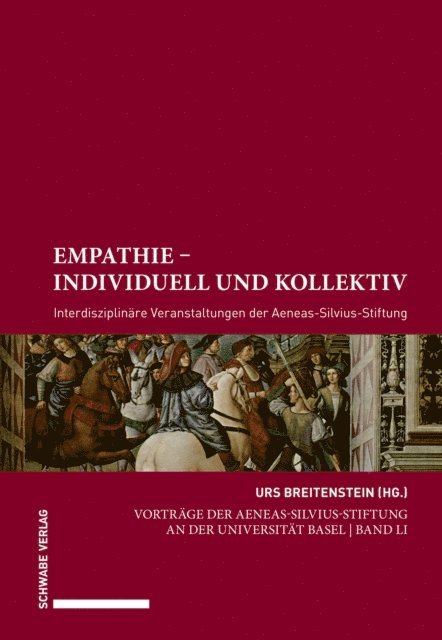
Empathie, Mitgefühl, compassio: Viele Namen trägt ein Phänomen, das sowohl individuell als auch kollektiv zu fassen ist. Die von Aristoteles geäusserte Vorstellung, "die Seele [sei] in gewisser Weise alle Dinge", lässt den Gedanken aufkommen, das Individuum habe qua seines Seins eine Affinität gegenüber allem Übrigen, es empfinde empathisch mit allem anderen mit. Ein moderner Reflex dieser Auffassung lässt sich noch bei Heidegger finden, dessen "In-der-Welt-sein" die vermeintliche Objektivität moderner Wissenschaft und Technik unterläuft.Aufbauend auf dieser individuellen Ebene wird Empathie häufig auf eine blosse Zweierszene reduziert, auf das Mitleid mit einem Gegenüber. Dabei wird allerdings übersehen, dass viele Formen von Empathie überhaupt erst zustande kommen, weil Dritte eine entscheidende Rolle spielen. In diesem Zusammenhang wird von kollektiver Empathie gesprochen. Wie genau die kollektiven Dimensionen Empathie prägen, wird hinterfragt.Aus interdisziplinärer Perspektive erschliessen die Beiträge aus Theologie, Philosophie, Sprach-, Literatur- und Musikwissenschaft, Kunstgeschichte, Medizin und Tiermedizin, Kinder- und Jugendpsychiatrie sowie Politikwissenschaft aktuelle Herausforderungen im Umgang mit Empathie auf individueller und kollektiver Ebene.