Ann Yaktine – författare
460 kr
Läs direkt efter köp
For more than two decades, the practice of risk assessment has been applied to human public health issues, and policy makers have used the results of risk assessments in their decision-making process. Approaches for risk assessment have been developed for nonnutrients such as drugs, food additives, and pesticides, but approaches for risk assessment have received less attention in the nutrition area. Some aspects of the risk assessment approach used for nonnutrients are applicable to the assessment of risks related to nutrition. The overall approach, however, must be adapted and modified to take into account the unique aspects of nutrients, including the fact that both high and low nutrient intakes are associated with risk. Experience with the application of a risk assessment process to the setting of upper levels of intake for essential nutrients, for example, has uncovered a number of challenges. Adapting and developing risk assessment strategies for application in nutrition science could lead to improved approaches to the development of dietary and nutritional recommendations and thus is a topic of considerable interest.
One nonscientific but overall challenge to nutritional risk assessment relates to increasing and improving communication among experts from key disciplines in ways that could inform the nutritional risk assessment process. Among these key disciplines are nutrition, toxicology, dietary exposure assessment, economics, risk analysis, and epidemiology. How can the perspectives and methods of these diverse fields be brought together to develop more effective approaches for quantitative nutritional risk assessment? How can they be applied to a spectrum of topics related to food and nutrition—micronutrients, macronutrients, dietary supplements, whole foods, food groups, and dietary patterns? How can they help overcome the data challenges that confront nutritional risk assessors?
As a step toward improving the communication and sharing methods and information across disciplines, members of the Interagency Risk Assessment Consortium, the U.S. Health and Human Services Office of the Assistant Secretary for Planning and Evaluation, the Institute of Medicine''s Food Forum, and the International Life Sciences Institute planned the Nutritional Risk Assessment Workshop. The workshop was held on February 28 and March 1, 2007, in Washington, D.C. This workshop, which was envisioned as one in a series, focused on opening a dialogue to explore the unique questions and challenges faced by nutritionists and the potential use of risk assessment methodologies to answer them. Nutritional Risk Assessment : Perspectives, Methods, and Data Challenges, Workshop Summary summarizes the happenings of this workshop.
597 kr
Skickas
382 kr
Läs direkt efter köp
Legal regulations and manufacturers'' monitoring practices have not been enough to prevent contamination of the national food supply and protect consumers from serious harm. In addressing food safety risks, regulators could perhaps better ensure the quality and safety of food by monitoring food production not just at a single point in production but all along the way, from farm to table.
Recognizing the troubled state of food safety, the Institute of Medicine''s (IOM) Food Forum met in Washington, DC, on September 9, 2008, to explore the management of food safety practices from the beginning of the supply chain to the marketplace.
460 kr
Läs direkt efter köp
In the food industry, scientists are exploring the potential of nanotechnology to enhance the flavor and other sensory characteristics of foods, introduce antibacterial nanostructures into food packaging and encapsulate and deliver nutrients directly into targeted tissues, among other applications. However, as with any new technology, along with the benefits, there is the potential for unanticipated adverse effects. There is still a great deal to learn about any health outcomes related to introducing nanosized materials into foods and food packaging materials. Developing nanotechnology into a safe, effective tool for use in food science and technology will require addressing these and other questions. Assuring consumer confidence will be equally important to the success of this new emerging technology. The Institute of Medicine held a one-day workshop, summarized in this volume, to further explore the use of nanotechnology in food. Specifically, the workshop was organized around three primary topic areas: (1) the application of nanotechnology to food products; (2) the safety and efficacy of nanomaterials in food products; and (3) educating and informing consumers about the applications of nanotechnology to food products.
485 kr
Läs direkt efter köp
In the food industry, scientists are exploring the potential of nanotechnology to enhance the flavor and other sensory characteristics of foods, introduce antibacterial nanostructures into food packaging and encapsulate and deliver nutrients directly into targeted tissues, among other applications. However, as with any new technology, along with the benefits, there is the potential for unanticipated adverse effects. There is still a great deal to learn about any health outcomes related to introducing nanosized materials into foods and food packaging materials. Developing nanotechnology into a safe, effective tool for use in food science and technology will require addressing these and other questions. Assuring consumer confidence will be equally important to the success of this new emerging technology. The Institute of Medicine held a one-day workshop, summarized in this volume, to further explore the use of nanotechnology in food. Specifically, the workshop was organized around three primary topic areas: (1) the application of nanotechnology to food products; (2) the safety and efficacy of nanomaterials in food products; and (3) educating and informing consumers about the applications of nanotechnology to food products.
536 kr
Läs direkt efter köp
Legal regulations and manufacturers'' monitoring practices have not been enough to prevent contamination of the national food supply and protect consumers from serious harm. In addressing food safety risks, regulators could perhaps better ensure the quality and safety of food by monitoring food production not just at a single point in production but all along the way, from farm to table.
Recognizing the troubled state of food safety, the Institute of Medicine''s (IOM) Food Forum met in Washington, DC, on September 9, 2008, to explore the management of food safety practices from the beginning of the supply chain to the marketplace.
652 kr
Läs direkt efter köp
For more than two decades, the practice of risk assessment has been applied to human public health issues, and policy makers have used the results of risk assessments in their decision-making process. Approaches for risk assessment have been developed for nonnutrients such as drugs, food additives, and pesticides, but approaches for risk assessment have received less attention in the nutrition area. Some aspects of the risk assessment approach used for nonnutrients are applicable to the assessment of risks related to nutrition. The overall approach, however, must be adapted and modified to take into account the unique aspects of nutrients, including the fact that both high and low nutrient intakes are associated with risk. Experience with the application of a risk assessment process to the setting of upper levels of intake for essential nutrients, for example, has uncovered a number of challenges. Adapting and developing risk assessment strategies for application in nutrition science could lead to improved approaches to the development of dietary and nutritional recommendations and thus is a topic of considerable interest.
One nonscientific but overall challenge to nutritional risk assessment relates to increasing and improving communication among experts from key disciplines in ways that could inform the nutritional risk assessment process. Among these key disciplines are nutrition, toxicology, dietary exposure assessment, economics, risk analysis, and epidemiology. How can the perspectives and methods of these diverse fields be brought together to develop more effective approaches for quantitative nutritional risk assessment? How can they be applied to a spectrum of topics related to food and nutrition—micronutrients, macronutrients, dietary supplements, whole foods, food groups, and dietary patterns? How can they help overcome the data challenges that confront nutritional risk assessors?
As a step toward improving the communication and sharing methods and information across disciplines, members of the Interagency Risk Assessment Consortium, the U.S. Health and Human Services Office of the Assistant Secretary for Planning and Evaluation, the Institute of Medicine''s Food Forum, and the International Life Sciences Institute planned the Nutritional Risk Assessment Workshop. The workshop was held on February 28 and March 1, 2007, in Washington, D.C. This workshop, which was envisioned as one in a series, focused on opening a dialogue to explore the unique questions and challenges faced by nutritionists and the potential use of risk assessment methodologies to answer them. Nutritional Risk Assessment : Perspectives, Methods, and Data Challenges, Workshop Summary summarizes the happenings of this workshop.
618 kr
Läs direkt efter köp
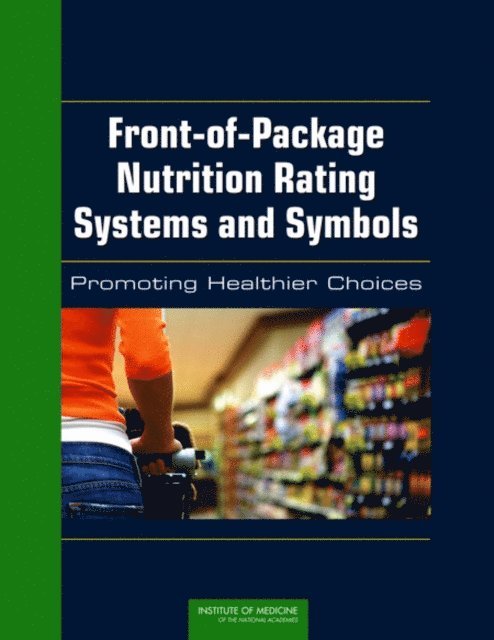
During the past decade, tremendous growth has occurred in the use of nutrition symbols and rating systems designed to summarize key nutritional aspects and characteristics of food products. These symbols and the systems that underlie them have become known as front-of-package (FOP) nutrition rating systems and symbols, even though the symbols themselves can be found anywhere on the front of a food package or on a retail shelf tag. Though not regulated and inconsistent in format, content, and criteria, FOP systems and symbols have the potential to provide useful guidance to consumers as well as maximize effectiveness. As a result, Congress directed the Centers for Disease Control and Prevention (CDC) to undertake a study with the Institute of Medicine (IOM) to examine and provide recommendations regarding FOP nutrition rating systems and symbols.
The study was completed in two phases. Phase I focused primarily on the nutrition criteria underlying FOP systems. Phase II builds on the results of Phase I while focusing on aspects related to consumer understanding and behavior related to the development of a standardized FOP system.
Front-of-Package Nutrition Rating Systems and Symbols focuses on Phase II of the study. The report addresses the potential benefits of a single, standardized front-label food guidance system regulated by the Food and Drug Administration, assesses which icons are most effective with consumer audiences, and considers the systems/icons that best promote health and how to maximize their use.
485 kr
Läs direkt efter köp
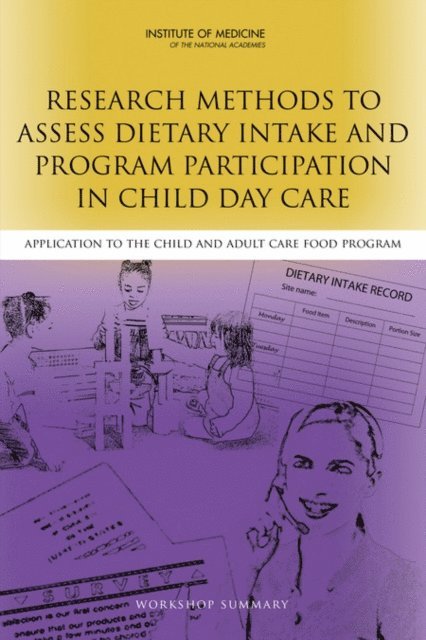
More than 16 million children in the United States live in food-insecure households where they are unable to obtain enough food to meet their needs. At the same time, a growing number of children are overweight or obese. Because of these challenges, improving child nutrition has emerged as one of the nation''s most urgent public health needs. The Child and Adult Care Food Program (CACFP), a U.S. Department of Agriculture (USDA) food program, served about 3.3 million children in 2011, as well as more than 124,000 adults who require daily supervision or assistance. Since many children rely on CACFP for the majority of their daily food, the quality of foods provided has the potential to greatly improve the health of the children''s diets. The USDA asked the IOM to review and recommend improvements, as necessary, to the CACFP meal requirements in order to keep them aligned with other federally funded food assistance programs and with the Dietary Guidelines for Americans. The 2011 IOM report, Child and Adult Care Food Program Aligning Dietary Guidance for All, reviewed the program in detail and provided recommendations for improvement.In February 2012, at the request of the USDA, the IOM conducted an additional workshop to examine research methods and approaches that could be used to design and conduct a nationally representative study assessing children''s dietary intake and participation rates in child care facilities, including CACFP-sponsored child care centers and homes. Research Methods to Assess Dietary Intake and Program Participation in Child Day Care: Application to the Child and Adult Care Food Program Workshop Summary is the report that summarizes the workshop.
167 kr
Läs direkt efter köp
Harmonized approaches to setting recommendations for safe and appropriate dietary intakes and nutritional interventions are critical to support the resolution of differences across countries in setting national and international nutrition standards; promote consistency in public and clinical health objectives; provide a mechanism for designing national and international food and nutrition policies; and enhance the transparency of national standards for trade and other regulatory actions that have economic, health, and safety implications.
Consistent dietary intake recommendations cannot be made without first establishing a consistent approach to derive reference values for population-level nutrient intakes. This tool kit is designed to help global stakeholders, including those in low- and middle-income countries, participate more easily in the process of implementing, disseminating, and evaluating a consistent and homogeneous methodological approach to the nutrient reference value process.
550 kr
Tillfälligt slut
408 kr
Tillfälligt slut
326 kr
Tillfälligt slut