Anna Calori - Böcker
Visar alla böcker från författaren Anna Calori. Handla med fri frakt och snabb leverans.
4 produkter
4 produkter
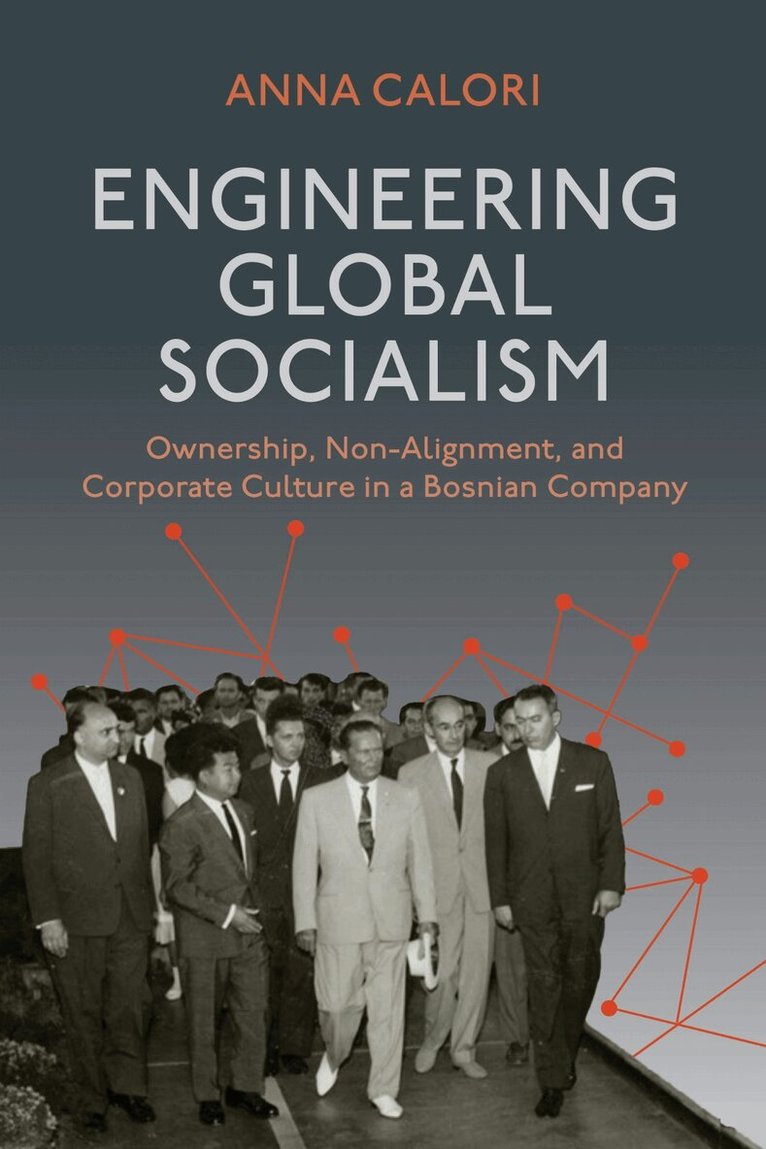
Engineering Global Socialism
Ownership, Non-Alignment, and Corporate Culture in a Bosnian Company
Inbunden, Engelska, 2026
1 090 kr
Skickas inom 7-10 vardagar
Engineering Global Socialism chronicles the journey of the Bosnian global corporation Energoinvest and its workers from its Yugoslav socialist ideals through decades of dissolution, reconstruction, and post-socialist transformation.Author Anna Calori provides a company-centric window into the business history of socialist globalization during periods of national development, destruction, and rebuilding. Contrary to popular perceptions of "centralized" socialist states, Energoinvest actively shaped trade relations with the Global South, driven by a socialist corporate culture that encouraged competition as well as collective decision-making. Even after Yugoslavia's disintegration in 1992 ended its dreams of a socialist path to globalization, these core characteristics shaped Energoinvest's adaptation to capitalist transformations and made it a key player in the struggle for Bosnia's post-war economic reconstruction. Through oral histories and archival research, Calori reveals how Energoinvest's workers paired the promise of a new model of global integration with their own visions of a working world in which they set the rules of engagement – and how, upon its sale to mostly foreign owners, the marginalization and ethnic homogenization of employee shareholders mirrored changes around citizenship in Bosnia. Now, in the twenty-first century, Energoinvest offers new promises of a post-industrial future, but its often hazy parameters leave workers to rely on the memory of "what could have been" to make sense of change.Tracing the long trajectory of a Yugoslav enterprise through decades of large-scale social change, Engineering Global Socialism presents a historical and sociological moment in which workers' ideas about social and corporate enterprise offered the possibility of a more democratic path to globalization.
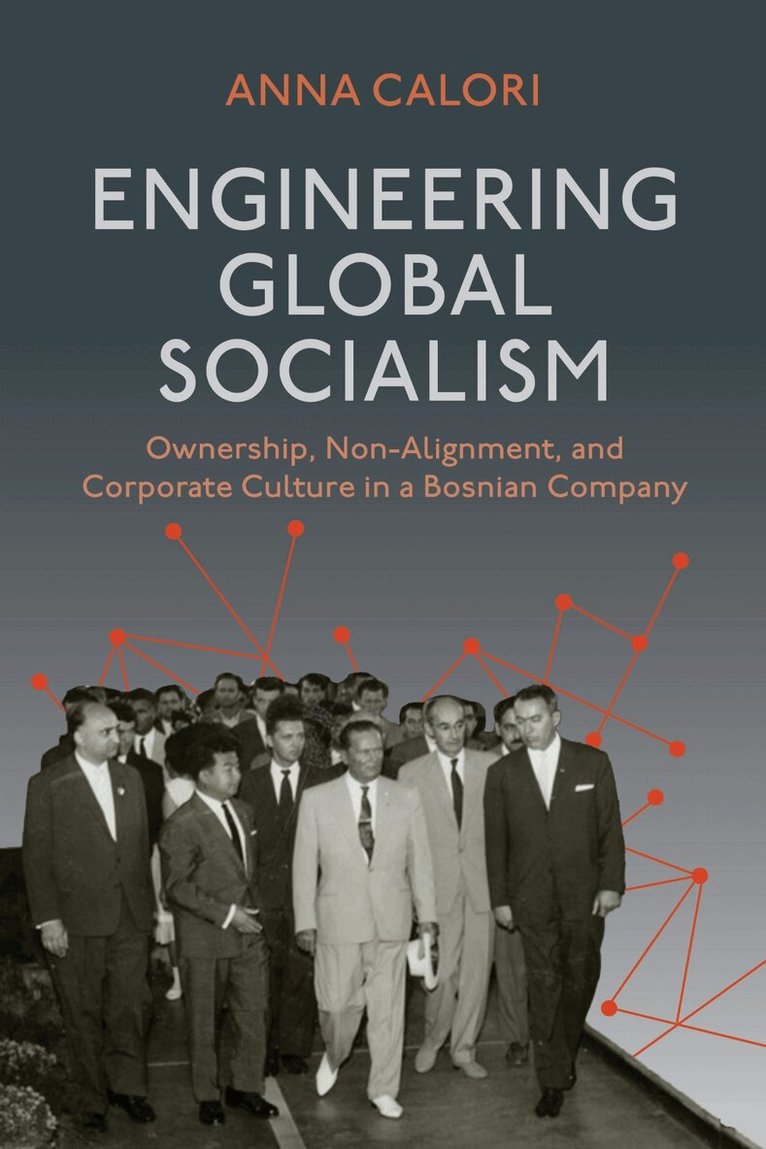
Engineering Global Socialism
Ownership, Non-Alignment, and Corporate Culture in a Bosnian Company
Häftad, Engelska, 2026
508 kr
Skickas inom 7-10 vardagar
Engineering Global Socialism chronicles the journey of the Bosnian global corporation Energoinvest and its workers from its Yugoslav socialist ideals through decades of dissolution, reconstruction, and post-socialist transformation.Author Anna Calori provides a company-centric window into the business history of socialist globalization during periods of national development, destruction, and rebuilding. Contrary to popular perceptions of "centralized" socialist states, Energoinvest actively shaped trade relations with the Global South, driven by a socialist corporate culture that encouraged competition as well as collective decision-making. Even after Yugoslavia's disintegration in 1992 ended its dreams of a socialist path to globalization, these core characteristics shaped Energoinvest's adaptation to capitalist transformations and made it a key player in the struggle for Bosnia's post-war economic reconstruction. Through oral histories and archival research, Calori reveals how Energoinvest's workers paired the promise of a new model of global integration with their own visions of a working world in which they set the rules of engagement—and how, upon its sale to mostly foreign owners, the marginalization and ethnic homogenization of employee shareholders mirrored changes around citizenship in Bosnia. Now, in the twenty-first century, Energoinvest offers new promises of a post-industrial future, but its often hazy parameters leave workers to rely on the memory of "what could have been" to make sense of change.Tracing the long trajectory of a Yugoslav enterprise through decades of large-scale social change, Engineering Global Socialism presents a historical and sociological moment in which workers' ideas about social and corporate enterprise offered the possibility of a more democratic path to globalization.
3 264 kr
Skickas inom 10-15 vardagar
This cutting-edge collection of essays analyzes the pivotal year of 1989 and the transformation processes that resulted from a historical perspective. It takes the events of that momentous year as a pivot to explore longer-term processes of economic, social, political, and cultural transformation linked to the rise of neoliberalism and globalization since the 1970s and enduring until now.Referencing the work of Karl Polanyi, the handbook advances four main arguments: that the “great transformation” presented here started earlier than 1989; that its legacies linger in spaces, practices, and objects; that in order to grasp the scale of what happened around 1989, it is important to bring Eastern and Central Europe into conversation with other global regions; and that the former Eastern Bloc served as an important node in a larger, global transformation. Insisting on the “Second World’s” place in the global history of the past five decades, this handbook challenges straightforward core-periphery dichotomies. The contributions to this volume provide different case studies—some national, some comparative, some international or global—each illustrating particular trends and developments.The handbook is directed at students and scholars of contemporary history of East Central Europe, of global and economic history, and at scholars of sociology, anthropology, and political science interested in post-1989 transformation, neoliberalism, and globalization.
Between East and South
Spaces of Interaction in the Globalizing Economy of the Cold War
Inbunden, Engelska, 2019
1 443 kr
Skickas inom 5-8 vardagar
During the Cold War, alternative globalization projects were underway: socialist Eastern Europe and left-leaning countries in the Third World maintained close economic relations. The two worlds traded and exchanged know-how and technology. This book examines the specific spaces of interaction of these exchanges and discusses the consequences for those projects of globalization undertaken in both world regions.