Antal van den Bosch - Böcker
Visar alla böcker från författaren Antal van den Bosch. Handla med fri frakt och snabb leverans.
8 produkter
8 produkter
523 kr
Skickas inom 7-10 vardagar
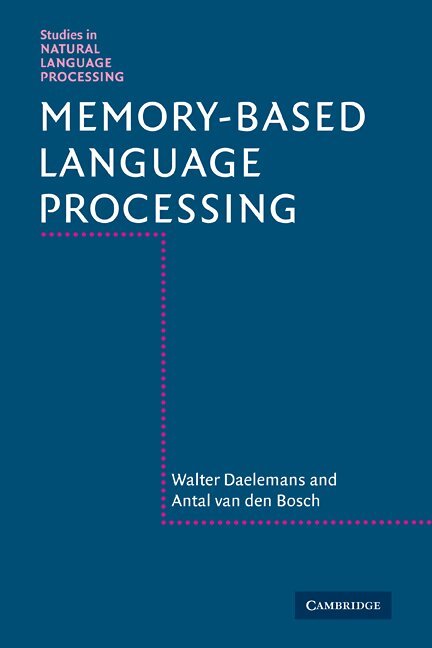
Memory-based language processing - a machine learning and problem solving method for language technology - is based on the idea that the direct reuse of examples using analogical reasoning is more suited for solving language processing problems than the application of rules extracted from those examples. This book discusses the theory and practice of memory-based language processing, showing its comparative strengths over alternative methods of language modelling. Language is complex, with few generalizations, many sub-regularities and exceptions, and the advantage of memory-based language processing is that it does not abstract away from this valuable low-frequency information. By applying the model to a range of benchmark problems, the authors show that for linguistic areas ranging from phonology to semantics, it produces excellent results. They also describe TiMBL, a software package for memory-based language processing. The first comprehensive overview of the approach, this book will be invaluable for computational linguists, psycholinguists and language engineers.
848 kr
Skickas inom 7-10 vardagar
Memory-based language processing - a machine learning and problem solving method for language technology - is based on the idea that the direct reuse of examples using analogical reasoning is more suited for solving language processing problems than the application of rules extracted from those examples. This book discusses the theory and practice of memory-based language processing, showing its comparative strengths over alternative methods of language modelling. Language is complex, with few generalizations, many sub-regularities and exceptions, and the advantage of memory-based language processing is that it does not abstract away from this valuable low-frequency information. By applying the model to a range of benchmark problems, the authors show that for linguistic areas ranging from phonology to semantics, it produces excellent results. They also describe TiMBL, a software package for memory-based language processing. The first comprehensive overview of the approach, this book will be invaluable for computational linguists, psycholinguists and language engineers.
1 624 kr
Skickas inom 10-15 vardagar
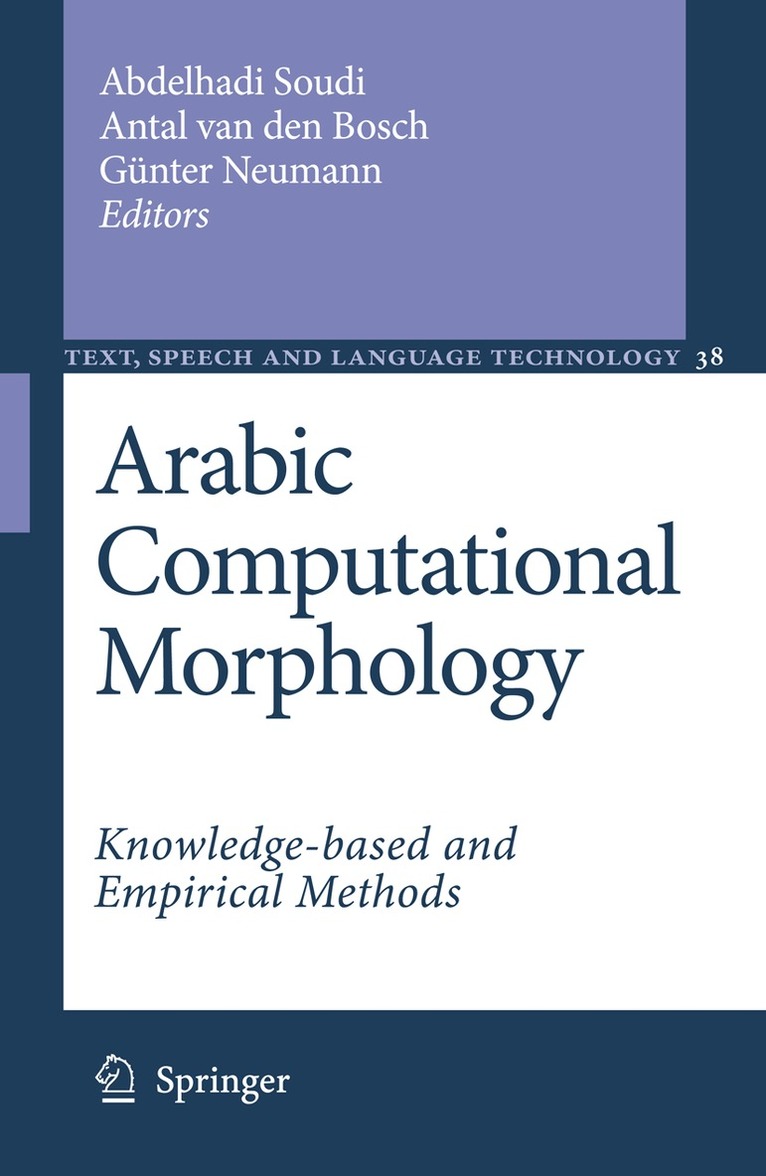
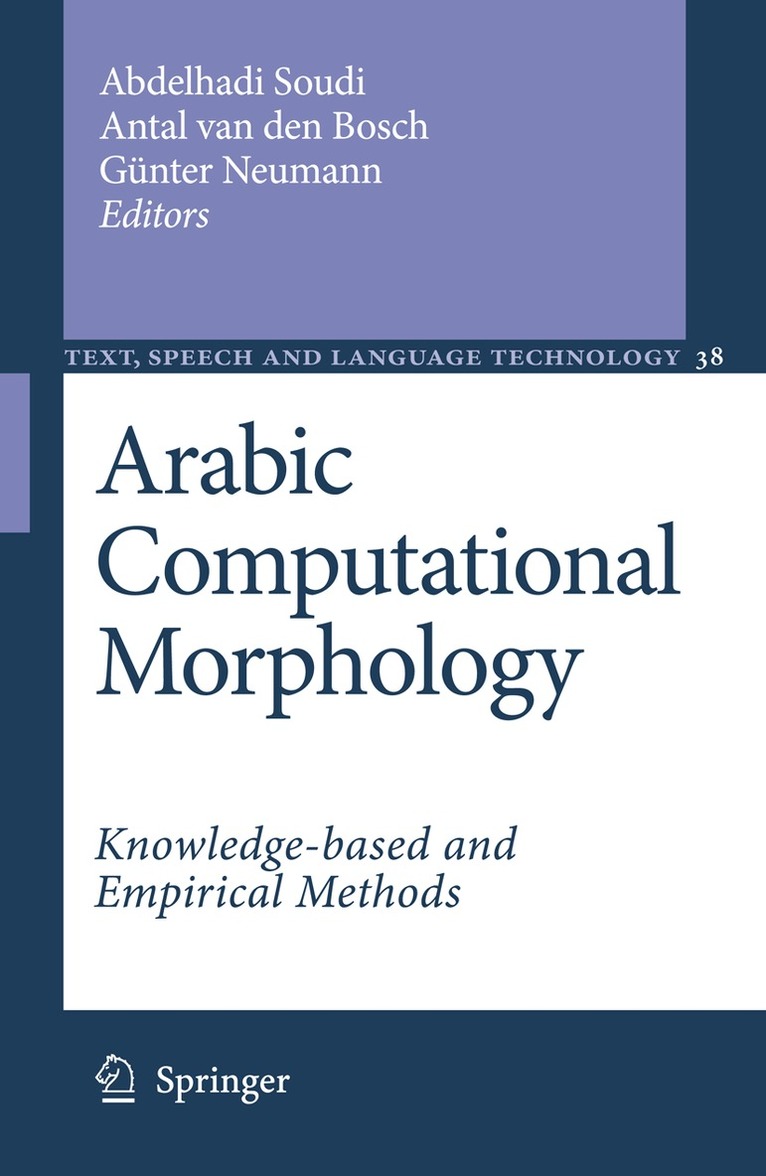
This is the first comprehensive overview of computational approaches to Arabic morphology. The subtitle aims to reflect that widely different computational approaches to the Arabic morphological system have been proposed. The book provides a showcase of the most advanced language technologies applied to one of the most vexing problems in linguistics. It covers knowledge-based and empirical-based approaches.
1 095 kr
Skickas inom 10-15 vardagar
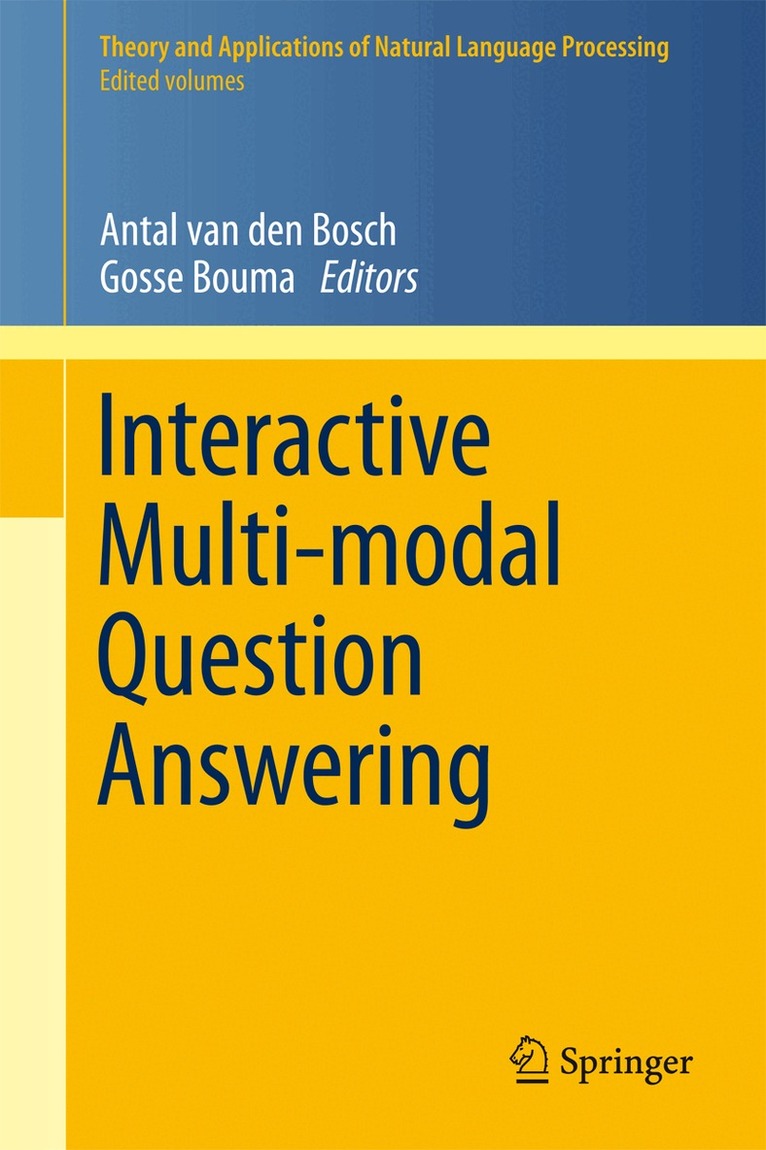
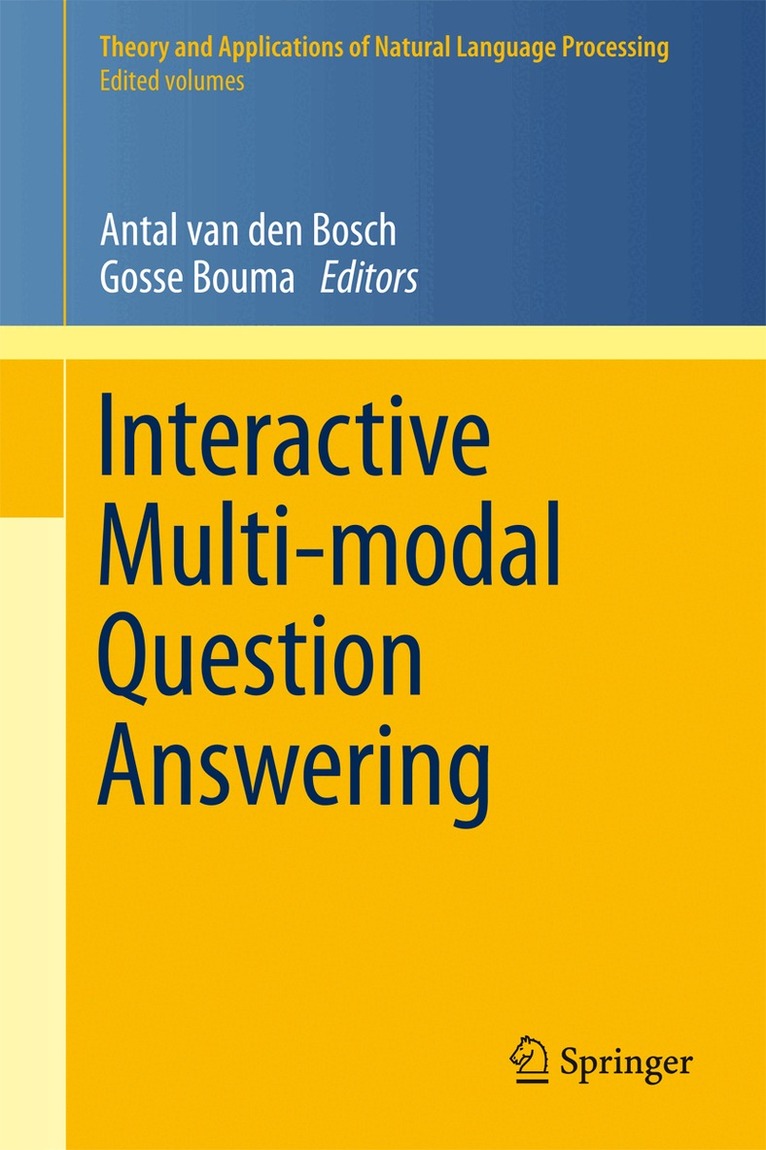
This book is the result of a group of researchers from different disciplines asking themselves one question: what does it take to develop a computer interface that listens, talks, and can answer questions in a domain? First, obviously, it takes specialized modules for speech recognition and synthesis, human interaction management (dialogue, input fusion, and multimodal output fusion), basic question understanding, and answer finding. While all modules are researched as independent subfields, this book describes the development of state-of-the-art modules and their integration into a single, working application capable of answering medical (encyclopedic) questions such as "How long is a person with measles contagious?" or "How can I prevent RSI?".The contributions in this book, which grew out of the IMIX project funded by the Netherlands Organisation for Scientific Research, document the development of this system, but also address more general issues in natural language processing, such as the development of multidimensional dialogue systems, the acquisition of taxonomic knowledge from text, answer fusion, sequence processing for domain-specific entity recognition, and syntactic parsing for question answering. Together, they offer an overview of the most important findings and lessons learned in the scope of the IMIX project, making the book of interest to both academic and commercial developers of human-machine interaction systems in Dutch or any other language.Highlights include: integrating multi-modal input fusion in dialogue management (Van Schooten and Op den Akker), state-of-the-art approaches to the extraction of term variants (Van der Plas, Tiedemann, and Fahmi; Tjong Kim Sang, Hofmann, and De Rijke), and multi-modal answer fusion (two chapters by Van Hooijdonk, Bosma, Krahmer, Maes, Theune, and Marsi).Watch the IMIX movie at www.nwo.nl/imix-film.Like IBM's Watson, the IMIX system described in the book gives naturally phrased responses to naturally posed questions. Where Watson can only generate synthetic speech, the IMIX system also recognizes speech. On the other hand, Watson is able to win a television quiz, while the IMIX system is domain-specific, answering only to medical questions."The Netherlands has always been one of the leaders in the general field of Human Language Technology, and IMIX is no exception. It was a very ambitious program, with a remarkably successful performance leading to interesting results. The teams covered a remarkable amount of territory in the general sphere of multimodal question answering and information delivery, question answering, information extraction and component technologies."Eduard Hovy, USC, USA, Jon Oberlander, University of Edinburgh, Scotland, and Norbert Reithinger, DFKI, Germany
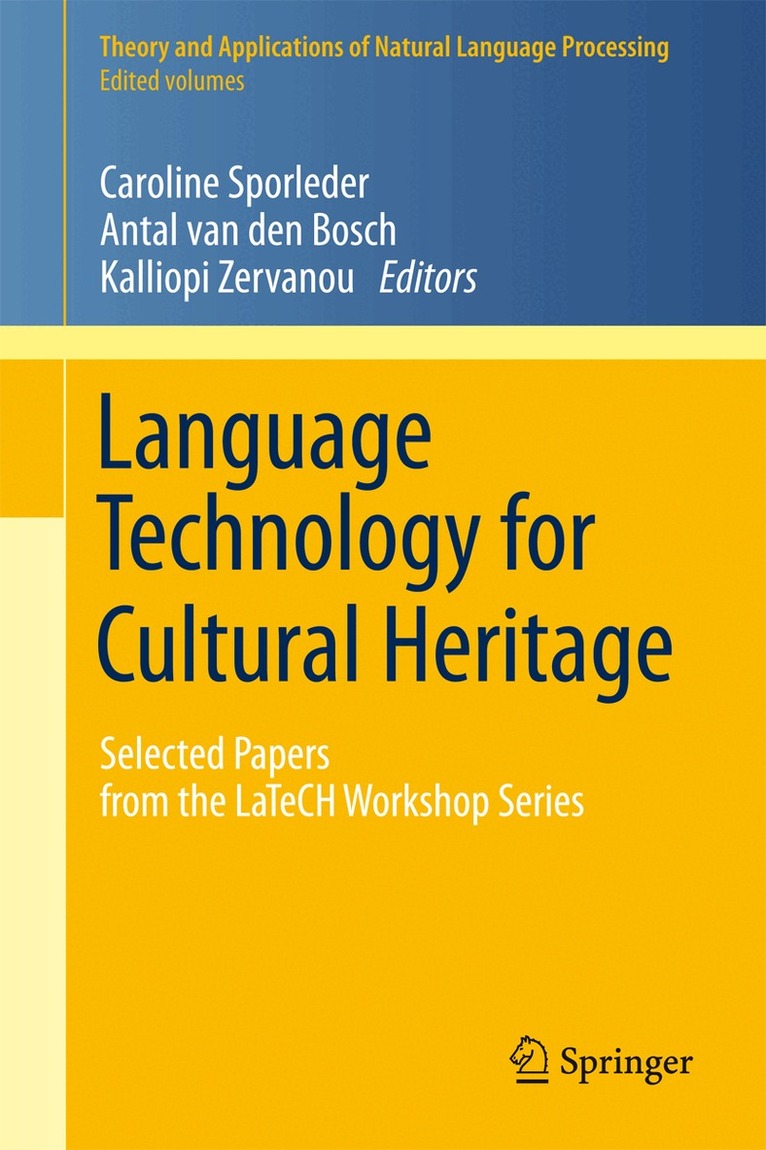
Language Technology for Cultural Heritage
Selected Papers from the LaTeCH Workshop Series
Inbunden, Engelska, 2011
1 095 kr
Skickas inom 10-15 vardagar
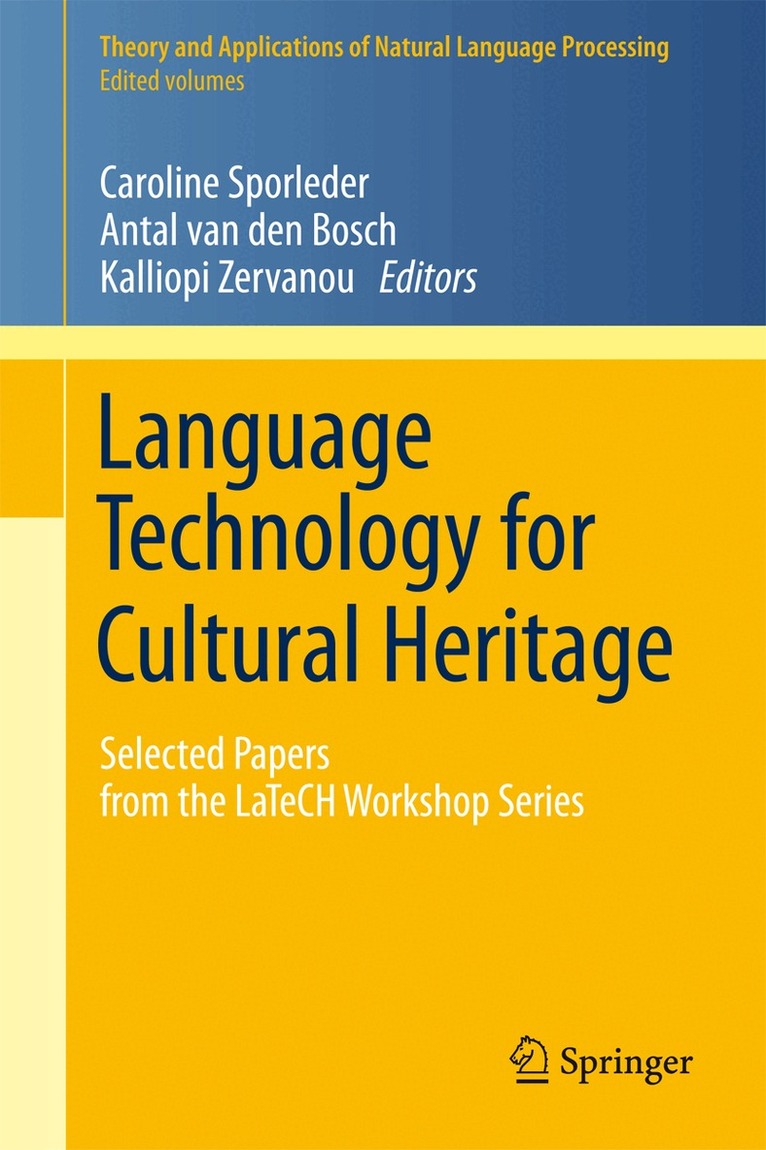
The digital age has had a profound effect on our cultural heritage and the academic research that studies it. Staggering amounts of objects, many of them of a textual nature, are being digitised to make them more readily accessible to both experts and laypersons. Besides a vast potential for more effective and efficient preservation, management, and presentation, digitisation offers opportunities to work with cultural heritage data in ways that were never feasible or even imagined. To explore and exploit these possibilities, an interdisciplinary approach is needed, bringing together experts from cultural heritage, the social sciences and humanities on the one hand, and information technology on the other. Due to a prevalence of textual data in these domains, language technology has a crucial role to play in this endeavour. Language technology can break through the "Google barrier" by offering the potential to analyse texts at advanced levels, extracting information and knowledge at the level of the humanities or social sciences researcher, who wants to know about the who, what, where, and when, but also the how and the why. At the same time cultural heritage data poses considerable challenges for existing language technology: technology aimed at "generic" language has to face such disparate problems as historical language variation, OCR digitisation errors, and near-extinct academic expertise. This book is primarily intended for researchers in information technology and language processing who would like to receive a state-of-the-art overview of the whole breadth of the new and vibrant field of language technology for cultural heritage and its associated academic research in the humanities and social sciences. Researchers working in the target domains of cultural heritage, the social sciences and humanities will also find this book useful, as it provides an overview of how language technology can help them with their informationneeds. The book covers applications ranging from pre-processing and data cleaning, to the adaptation and compilation of linguistic resources, to personalisation, narrative analysis, visualisation and retrieval.
1 095 kr
Skickas inom 10-15 vardagar
This book is the result of a group of researchers from different disciplines asking themselves one question: what does it take to develop a computer interface that listens, talks, and can answer questions in a domain? First, obviously, it takes specialized modules for speech recognition and synthesis, human interaction management (dialogue, input fusion, and multimodal output fusion), basic question understanding, and answer finding. While all modules are researched as independent subfields, this book describes the development of state-of-the-art modules and their integration into a single, working application capable of answering medical (encyclopedic) questions such as "How long is a person with measles contagious?" or "How can I prevent RSI?".The contributions in this book, which grew out of the IMIX project funded by the Netherlands Organisation for Scientific Research, document the development of this system, but also address more general issues in natural language processing, such as the development of multidimensional dialogue systems, the acquisition of taxonomic knowledge from text, answer fusion, sequence processing for domain-specific entity recognition, and syntactic parsing for question answering. Together, they offer an overview of the most important findings and lessons learned in the scope of the IMIX project, making the book of interest to both academic and commercial developers of human-machine interaction systems in Dutch or any other language.Highlights include: integrating multi-modal input fusion in dialogue management (Van Schooten and Op den Akker), state-of-the-art approaches to the extraction of term variants (Van der Plas, Tiedemann, and Fahmi; Tjong Kim Sang, Hofmann, and De Rijke), and multi-modal answer fusion (two chapters by Van Hooijdonk, Bosma, Krahmer, Maes, Theune, and Marsi).Watch the IMIX movie at www.nwo.nl/imix-film.Like IBM's Watson, the IMIX system described in the book gives naturally phrased responses to naturally posed questions. Where Watson can only generate synthetic speech, the IMIX system also recognizes speech. On the other hand, Watson is able to win a television quiz, while the IMIX system is domain-specific, answering only to medical questions."The Netherlands has always been one of the leaders in the general field of Human Language Technology, and IMIX is no exception. It was a very ambitious program, with a remarkably successful performance leading to interesting results. The teams covered a remarkable amount of territory in the general sphere of multimodal question answering and information delivery, question answering, information extraction and component technologies."Eduard Hovy, USC, USA, Jon Oberlander, University of Edinburgh, Scotland, and Norbert Reithinger, DFKI, Germany
Language Technology for Cultural Heritage
Selected Papers from the LaTeCH Workshop Series
Häftad, Engelska, 2013
1 095 kr
Skickas inom 10-15 vardagar
The digital age has had a profound effect on our cultural heritage and the academic research that studies it. Staggering amounts of objects, many of them of a textual nature, are being digitised to make them more readily accessible to both experts and laypersons. Besides a vast potential for more effective and efficient preservation, management, and presentation, digitisation offers opportunities to work with cultural heritage data in ways that were never feasible or even imagined. To explore and exploit these possibilities, an interdisciplinary approach is needed, bringing together experts from cultural heritage, the social sciences and humanities on the one hand, and information technology on the other. Due to a prevalence of textual data in these domains, language technology has a crucial role to play in this endeavour. Language technology can break through the "Google barrier" by offering the potential to analyse texts at advanced levels, extracting information and knowledge at the level of the humanities or social sciences researcher, who wants to know about the who, what, where, and when, but also the how and the why. At the same time cultural heritage data poses considerable challenges for existing language technology: technology aimed at "generic" language has to face such disparate problems as historical language variation, OCR digitisation errors, and near-extinct academic expertise. This book is primarily intended for researchers in information technology and language processing who would like to receive a state-of-the-art overview of the whole breadth of the new and vibrant field of language technology for cultural heritage and its associated academic research in the humanities and social sciences. Researchers working in the target domains of cultural heritage, the social sciences and humanities will also find this book useful, as it provides an overview of how language technology can help them with their informationneeds. The book covers applications ranging from pre-processing and data cleaning, to the adaptation and compilation of linguistic resources, to personalisation, narrative analysis, visualisation and retrieval.
1 624 kr
Skickas inom 10-15 vardagar
This is the first comprehensive overview of computational approaches to Arabic morphology. The subtitle aims to reflect that widely different computational approaches to the Arabic morphological system have been proposed. The book provides a showcase of the most advanced language technologies applied to one of the most vexing problems in linguistics. It covers knowledge-based and empirical-based approaches.