Anthea Hucklesby - Böcker
Visar alla böcker från författaren Anthea Hucklesby. Handla med fri frakt och snabb leverans.
11 produkter
11 produkter
608 kr
Skickas inom 5-8 vardagar
What is the criminal justice system for? How does it operate? How does it treat victims, suspects, defendants and offenders? Does it work? Is it fair? Criminal Justice provides a thought-provoking and critical introduction to the challenges faced by the UK's criminal justice system including policing, sentencing and punishment at the beginning of the 21st Century. Expert contributors, including criminologists and lawyers, provide students with a critical introduction to issues, institutions and agencies which shape the operation of the criminal justice system. A fascinating book which provides students from a range of disciplines including criminology, law, sociology, psychology and social policy with knowledge and understanding of the key areas of the subject and an appreciation of contemporary debates, policies and perspectives. Each chapter features questions, summaries, tables, diagrams, annotated further reading and weblinks, to ensure the book is as accessible and engaging as possible, and provides clear guidance on further study. An illuminating glossary of key terms is also included. Online Resource Centre This title is accompanied by an Online Resource Centre containing an online version of the glossary of key terms and annotated web links. Adopting lecturers will also have access to a test bank of multiple choice questions with answers and feedback.
349 kr
Skickas inom 3-6 vardagar
Under the New Labour government, breaking the apparent link between drug use and crime became one of the main aims of drug policy. A wide range of initiatives to tackle drug-related crime were introduced under the auspices of the Drug Interventions Programme and criminal justice agencies became key players in channelling drug users into treatment. This book focuses on the range of drug interventions now available at all stages in the criminal justice process that have been put in place to reduce drug-related offending. It comprises of a series of eight chapters from eleven authors who were all actively engaged in researching these new initiatives from criminological and criminal justice perspectives. Each chapter brings together theory, policy and research (including the author's own research) to provide a thorough review and analysis of the operation, impact and effectiveness of one or more drug interventions. A further chapter is dedicated to researching drug interventions in criminal justice. The book also contains a further resources section.Drug Interventions in Criminal Justice is a key text for students and academics in the fields of criminology and criminal justice, social policy and social work, health and social care, and addiction studies. It is essential reading for professionals and policy-makers working in for drug sector and criminal justice organisations.Contributors: Anthea Hucklesby, Stuart Lister, George Mair, Gill McIvor, Matthew Millings, Ian Paylor, Layla Skinns, Alex Stevens, Paul Turnbull, Alison Wilson, and Emma Wincup.
1 921 kr
Skickas inom 10-15 vardagar
Tracking technologies are now ubiquitous and are part of many people’s everyday lives. Large sections of the population voluntarily use devices and apps to track fitness, medical conditions, sleep, vital signs or their own or others’ whereabouts. Governments, health services, immigration and criminal justice agencies increasingly rely upon tracking technologies to monitor individuals’ whereabouts, behaviour, medical conditions and interventions. Despite the human rights concerns of some organisations and individuals, most wearers and their significant others tend to welcome the technologies. This paradox is only one of the many fascinating challenges raised by the widespread use of tracking technologies which are explored in this book.This book critically explores the ethical, legal, social, and technical issues arising from the current and future use of tracking technologies. It provides a unique and wide-ranging discussion, via a cross-disciplinary collection of essays, on issues relating to technological devices and apps whose use is imposed upon wearers or suggested by others, whether agencies or individuals, including in the domains of criminal justice, terrorism, and health and social care. Contributions from leading academics from across social sciences, engineering, computer and data science, philosophy, and health and social care address the diverse uses of tracking technologies including with individuals with dementia, defendants and offenders, individuals with mental health conditions and drug users alongside legal, ethical and normative questions about the appropriate use of these technologies. Cross-disciplinary themes emerge focusing on both the benefits of the technologies – freedom, improved safety, security, well-being and autonomy, and increased capacity of and efficiencies for public services – and the challenges – implementation and operational costs, mission creep, privacy concerns, stigmatisation, whether the technologies work as expected, and useability and wearability for all wearers. This book is essential reading for academics and students engaged in criminology, criminal justice, socio-legal studies, science and technology studies, medicine, health and social care, psychology, engineering, computer and data science, philosophy, social policy and social work and security studies. It will also be of great interest to policy-makers, regulators, practitioners already deploying or considering using tracking technologies, and to current and potential wearers.
530 kr
Skickas inom 10-15 vardagar
Tracking technologies are now ubiquitous and are part of many people’s everyday lives. Large sections of the population voluntarily use devices and apps to track fitness, medical conditions, sleep, vital signs or their own or others’ whereabouts. Governments, health services, immigration and criminal justice agencies increasingly rely upon tracking technologies to monitor individuals’ whereabouts, behaviour, medical conditions and interventions. Despite the human rights concerns of some organisations and individuals, most wearers and their significant others tend to welcome the technologies. This paradox is only one of the many fascinating challenges raised by the widespread use of tracking technologies which are explored in this book.This book critically explores the ethical, legal, social, and technical issues arising from the current and future use of tracking technologies. It provides a unique and wide-ranging discussion, via a cross-disciplinary collection of essays, on issues relating to technological devices and apps whose use is imposed upon wearers or suggested by others, whether agencies or individuals, including in the domains of criminal justice, terrorism, and health and social care. Contributions from leading academics from across social sciences, engineering, computer and data science, philosophy, and health and social care address the diverse uses of tracking technologies including with individuals with dementia, defendants and offenders, individuals with mental health conditions and drug users alongside legal, ethical and normative questions about the appropriate use of these technologies. Cross-disciplinary themes emerge focusing on both the benefits of the technologies – freedom, improved safety, security, well-being and autonomy, and increased capacity of and efficiencies for public services – and the challenges – implementation and operational costs, mission creep, privacy concerns, stigmatisation, whether the technologies work as expected, and useability and wearability for all wearers. This book is essential reading for academics and students engaged in criminology, criminal justice, socio-legal studies, science and technology studies, medicine, health and social care, psychology, engineering, computer and data science, philosophy, social policy and social work and security studies. It will also be of great interest to policy-makers, regulators, practitioners already deploying or considering using tracking technologies, and to current and potential wearers.
1 921 kr
Skickas inom 10-15 vardagar
Questions of legitimacy and issues of compliance lie at the heart of criminal justice systems and policies. Recent years have seen greater recognition and awareness of the essential role of legitimacy, trust and public confidence in underpinning the effectiveness of criminal justice practices and institutions. As such, experiences and perceptions of legitimacy have direct implications for compliance, whilst securing public compliance remains a pivotal challenge for systems of crime control. Exploring the hitherto neglected links between legitimacy and compliance raises crucial questions about the effectiveness of criminal justice and point to ways in which both elements might be enhanced. This book brings together leading international scholars to consider a number of connected themes relating to compliance, legitimacy and trust in different areas of criminal justice and social regulation. It presents an inter-disciplinary dialogue and debate that combines insights from criminology, psychology and socio-legal studies drawing together conceptual analysis with empirical research findings in relation to policing, anti-social behaviour interventions, community penalties, electronic monitoring, imprisonment and tax avoidance. In so doing, the book presents advances in theory and conceptual understandings of compliance and legitimacy within systems of crime control.The contributors highlight the importance of normative and social dimensions to compliance as well as the constructive role played by experiences of procedural fairness and legitimacy in systems of justice. This cutting-edge collection of essays will be invaluable reading for all those interested in thinking critically about the future of criminal justice policies and practices including academics, researchers and criminal justice practitioners.
618 kr
Skickas inom 10-15 vardagar
Questions of legitimacy and issues of compliance lie at the heart of criminal justice systems and policies. Recent years have seen greater recognition and awareness of the essential role of legitimacy, trust and public confidence in underpinning the effectiveness of criminal justice practices and institutions. As such, experiences and perceptions of legitimacy have direct implications for compliance, whilst securing public compliance remains a pivotal challenge for systems of crime control. Exploring the hitherto neglected links between legitimacy and compliance raises crucial questions about the effectiveness of criminal justice and point to ways in which both elements might be enhanced. This book brings together leading international scholars to consider a number of connected themes relating to compliance, legitimacy and trust in different areas of criminal justice and social regulation. It presents an inter-disciplinary dialogue and debate that combines insights from criminology, psychology and socio-legal studies drawing together conceptual analysis with empirical research findings in relation to policing, anti-social behaviour interventions, community penalties, electronic monitoring, imprisonment and tax avoidance. In so doing, the book presents advances in theory and conceptual understandings of compliance and legitimacy within systems of crime control.The contributors highlight the importance of normative and social dimensions to compliance as well as the constructive role played by experiences of procedural fairness and legitimacy in systems of justice. This cutting-edge collection of essays will be invaluable reading for all those interested in thinking critically about the future of criminal justice policies and practices including academics, researchers and criminal justice practitioners.
1 451 kr
Skickas inom 10-15 vardagar
This book brings together a collection of essays by leading criminologists to explore the relationship between the private sector and criminal justice.
493 kr
Skickas inom 10-15 vardagar
The voluntary sector has a long history of involvement in criminal justice by providing a variety of services to offenders and their families, victims and witnesses. This collection brings together leading experts to provide critical reflections and cutting edge research on the contemporary features of voluntary sector work in criminal justice. At a time when the voluntary sector's role is being transformed, this book examines the dynamic nature of the voluntary sector and its responses to current uncertainties, and some of the conflicting positions with regards to its present and future role in criminal justice work. It also examines the potential impact of economic, political and ideological trends on the role and remit of voluntary sector organisations which undertake criminal justice work.
576 kr
Skickas inom 10-15 vardagar
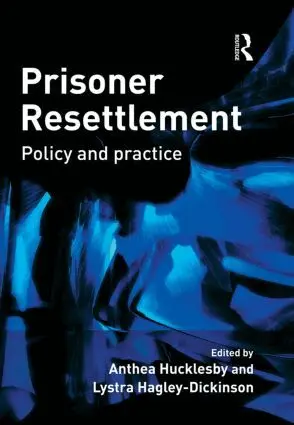
Prisoner resettlement is high on current political and policy agendas. The high reconviction rates of ex-prisoners have been acknowledged for many years but the rapidly rising prison population has meant that more prisoners than ever before are released. This together with the pressure this puts on to the infrastructure of the prison estate and the publication of two influential reports which highlighted the problems faced by prisoners leaving prison has concentrated attention on attempts to ensure that prisoners do not return to prison once released. The resettlement of prisoners is now a priority policy area linked directly to Government initiatives to reduce reoffending. The renewed policy interest in prisoners resettlement forms the context of this volume, which brings together current knowledge and understanding about prisoners resettlement. The book draws on the contributors extensive experience as researchers and practitioners in the field and includes contributions from acknowledged experts. Prisoner Resettlement provides a comprehensive review and analysis of resettlement policy and practice in England and Wales in the early part of the 21st century. In particular it: critically reviews current policy, theory, practice and research on prisoners resettlement explores practice issues through case studies of two resettlement initiatives and an examination of accommodation provision and voluntary sector involvement in prisoners resettlement; and examines the particular issues raised by the resettlement of different groups of prisoners including women, minority ethnic groups, prolific and priority offenders and high-risk offenders.
2 088 kr
Skickas inom 10-15 vardagar
Prisoner resettlement is high on current political and policy agendas. The high reconviction rates of ex-prisoners have been acknowledged for many years but the rapidly rising prison population has meant that more prisoners than ever before are released. This together with the pressure this puts on to the infrastructure of the prison estate and the publication of two influential reports which highlighted the problems faced by prisoners leaving prison has concentrated attention on attempts to ensure that prisoners do not return to prison once released. The resettlement of prisoners is now a priority policy area linked directly to Government initiatives to reduce reoffending. The renewed policy interest in prisoners resettlement forms the context of this volume, which brings together current knowledge and understanding about prisoners resettlement. The book draws on the contributors extensive experience as researchers and practitioners in the field and includes contributions from acknowledged experts. Prisoner Resettlement provides a comprehensive review and analysis of resettlement policy and practice in England and Wales in the early part of the 21st century. In particular it: critically reviews current policy, theory, practice and research on prisoners resettlement explores practice issues through case studies of two resettlement initiatives and an examination of accommodation provision and voluntary sector involvement in prisoners resettlement; and examines the particular issues raised by the resettlement of different groups of prisoners including women, minority ethnic groups, prolific and priority offenders and high-risk offenders.
309 kr
Skickas inom 7-10 vardagar
Bail is a fundamental human right which measures society's democratic credentials. Taken alongside an increasing prison population, there is an urgent need to find alternatives to custodial remands which do not increase risks to the community. This important book evaluates a bail support scheme called the Effective Bail Scheme (EBS), which was the first such scheme directed at adults, and places its findings in the context of bail law and practice. Based on up-to-date research, this book will make a valuable contribution to an under-researched area and provide useful insights for policy makers and practitioners.