Stuart Lister - Böcker
Visar alla böcker från författaren Stuart Lister. Handla med fri frakt och snabb leverans.
7 produkter
7 produkter
781 kr
Skickas inom 5-8 vardagar
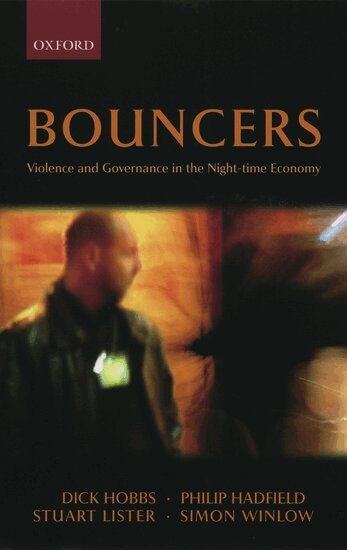
In recent years, the expansion of night-time leisure has emerged as a key indicator of post-industrial urban prosperity, attracting investment, creating employment, and re-generating the built environment.These leisure economies are youth-dominated, focusing upon the sale and consumption of alcohol. Unprecedented numbers of young people now flock to town centres that are crammed with bars, pubs, and clubs, and the resulting violent disorder has over run police resources that remain geared to the drinking patterns and alcohol cultures of previous generations. Post-industrial re-structuring has spawned an increasingly complex mass of night-time leisure options through which numerous licit and illicit commercial opportunities flow. Yet, regardless of the fashionable and romantic notions of many contemporary urban theorists, it is alcohol, mass intoxication, and profit rather than 'cultural regeneration,' which lies at the heart of this rapidly expanding dimension of post-industrial urbanism.Private security in the bulky form of bouncers fills the void left by the public police. These men (only 7% are women), whose activities are barely regulated by the State, are dominated by a powerful subculture rooted in routine violence and intimidation.Using ethnography, participant observation, and extensive interviews with all the main players, this controversial book charts the emergence of the bouncer as one of the most graphic symbols in the iconography of post-industrial Britain.
398 kr
Skickas inom 5-8 vardagar
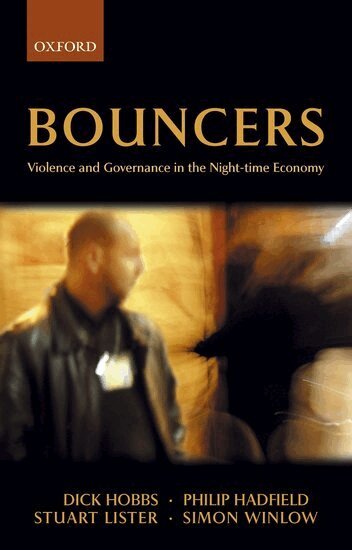
In recent years, the expansion of night-time leisure has emerged as a key indicator of post-industrial urban prosperity, attracting investment, creating employment and re-generating the built environment. These leisure economies are youth-dominated, focusing upon the sale and consumption of alcohol. Unprecedented numbers of young people now flock to town centres that are crammed with bars, pubs and clubs, and the resulting violent disorder has over run police resources that remain geared to the drinking patterns and alcohol cultures of previous generations. Post-industrial re-structuring has spawned an increasingly complex mass of night-time leisure options through which numerous licit and illicit commercial opportunities flow. Yet, regardless of the fashionable and romantic notions of many contemporary urban theorists, it is alcohol, mass intoxication and profit rather than 'cultural regeneration,' which lies at the heart of this rapidly expanding dimension of post-industrial urbanism. Private security in the bulky form of bouncers fills the void left by the public police. These men (only 7% are women), whose activities are barely regulated by the State, are dominated by a powerful subculture rooted in routine violence and intimidation. Using ethnography, participant observation and extensive interviews with all the main players, this controversial book charts the emergence of the bouncer as one of the most graphic symbols in the iconography of post industrial Britain.
2 155 kr
Skickas inom 10-15 vardagar
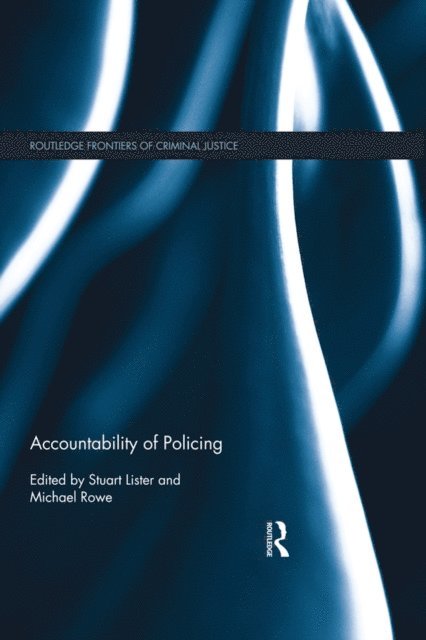
Accountability of Policing provides a contemporary and wide-ranging examination of the accountability and governance of ‘police’ and ‘policing’. Debates about ‘who guards the guards’ are among the oldest and most protracted in the history of democracy, but over the last decade we have witnessed important changes in how policing and security agencies are governed, regulated and held to account. Against a backdrop of increasing complexity in the local, national and transnational landscapes of ‘policing’, political, legal, administrative and technological developments have served to alter regimes of accountability. The extent and pace of these changes raises a pressing need for ongoing academic research, analysis and debate. Bringing together contributions from a range of leading scholars, this book offers an authoritative and comprehensive analysis of the shifting themes of accountability within policing. The contributions explore questions of accountability across a range of dimensions, including those ‘individuals’ and ‘institutions’ responsible for its delivery, within and between the ‘public’ and ‘private’ sectors, and at ‘local’, ‘national’ and ‘transnational’ scales of jurisdiction. They also engage with the concept of ‘accountability’ in a broad sense, bringing to the surface the various meanings that have become associated with it and demonstrating how it is invoked and interpreted in different contexts. Accountability of Policing is essential reading for academics and students involved in the study of policing, criminal justice and criminology and will also be of great interest to practitioners and policymakers.
1 451 kr
Skickas inom 10-15 vardagar
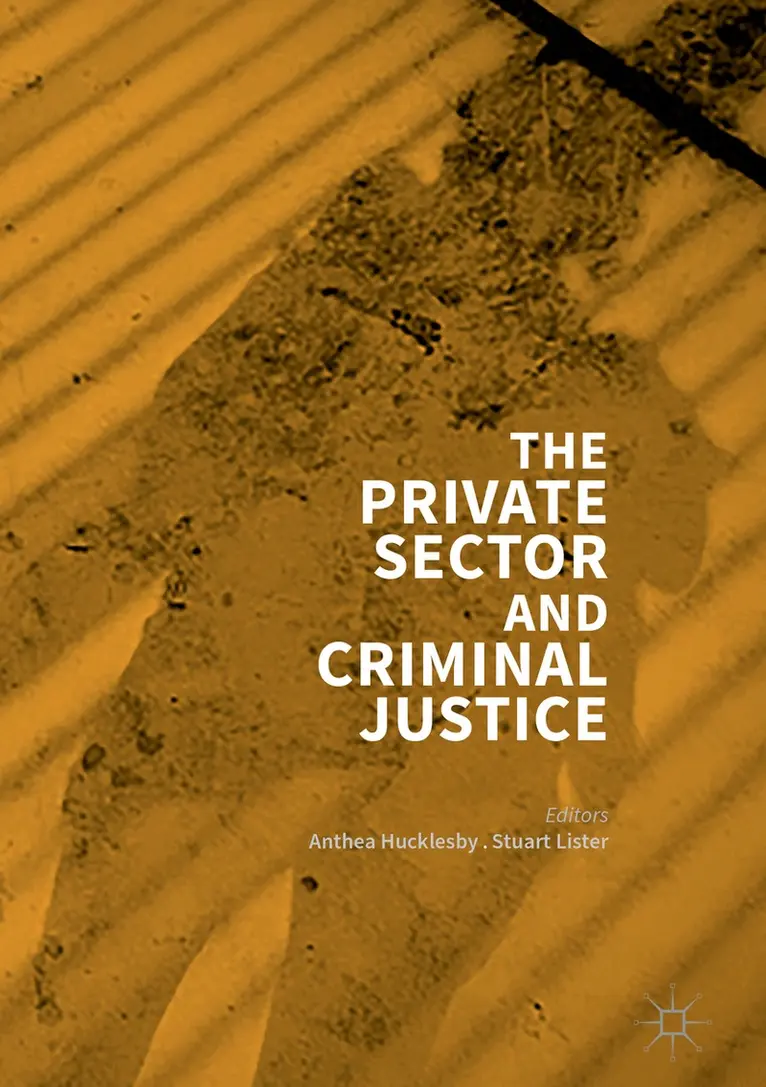
This book brings together a collection of essays by leading criminologists to explore the relationship between the private sector and criminal justice.
618 kr
Skickas inom 10-15 vardagar
Accountability of Policing provides a contemporary and wide-ranging examination of the accountability and governance of ‘police’ and ‘policing’. Debates about ‘who guards the guards’ are among the oldest and most protracted in the history of democracy, but over the last decade we have witnessed important changes in how policing and security agencies are governed, regulated and held to account. Against a backdrop of increasing complexity in the local, national and transnational landscapes of ‘policing’, political, legal, administrative and technological developments have served to alter regimes of accountability. The extent and pace of these changes raises a pressing need for ongoing academic research, analysis and debate. Bringing together contributions from a range of leading scholars, this book offers an authoritative and comprehensive analysis of the shifting themes of accountability within policing. The contributions explore questions of accountability across a range of dimensions, including those ‘individuals’ and ‘institutions’ responsible for its delivery, within and between the ‘public’ and ‘private’ sectors, and at ‘local’, ‘national’ and ‘transnational’ scales of jurisdiction. They also engage with the concept of ‘accountability’ in a broad sense, bringing to the surface the various meanings that have become associated with it and demonstrating how it is invoked and interpreted in different contexts. Accountability of Policing is essential reading for academics and students involved in the study of policing, criminal justice and criminology and will also be of great interest to practitioners and policymakers.
270 kr
Skickas inom 7-10 vardagar
The dispersal order - one of a variety of new powers introduced by the government to help police and local authorities address problems of disorder and incivilities - gives police powers to disperse groups of two or more from designated areas. Yet, controversially, these powers raise concerns regarding infringements of individual rights. This report provides the first in-depth study of the use and impact of dispersal orders. The report draws on extensive sources of data, including interviews with policy-makers and practitioners involved in implementing schemes across the UK; two detailed city-wide reviews; and two in-depth case studies. It explores the manner in which dispersal orders were experienced and interpreted by local adults and youths and considers their implications for local social relations. The authors assess the balance between enforcement and preventive approaches to local problems and the growing salience of public perceptions in policing. They also provide important insights into local best practice and implications for future policy development.This report will be a vital resource for all those interested in developing strategies to enhance community safety or keen to understand the impact of policing reforms. It will be particularly relevant to researchers and students of policing, policy-makers, police, community safety officers, anti-social behaviour practitioners, and those working with young people.
296 kr
Skickas inom 7-10 vardagar
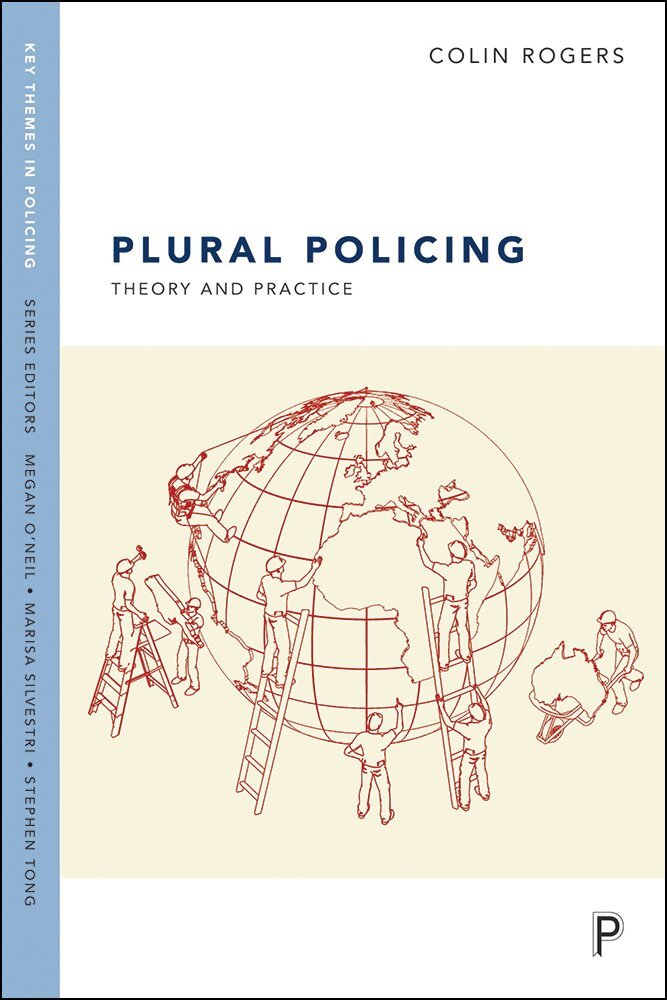
This timely and important report draws together the findings of an extensive two-year study of developments in the provision of visible policing in England and Wales. Exploring the dynamic relations between different public and private providers, it combines an overview of national developments with a detailed analysis of six focused case studies, including two city centres, one out-of-town shopping centre, an industrial park and two residential areas. The report considers the role of community support officers, neighbourhood wardens and private security guards, amongst other plural policing personnel and outlines the policy implications of the research findings, particularly with regard to the Government's current police reform agenda. It also provides important insights and recommendations regarding the organisation, co-ordination and regulation of the future mixed economy of visible security patrols.Plural policing will be of special interest to academics, researchers, policy makers, police and security managers and students of criminology and policing, as well as all those interested in community safety and the changing face of modern policing.