Anton Ficai – författare
1 740 kr
Skickas inom 10-15 vardagar
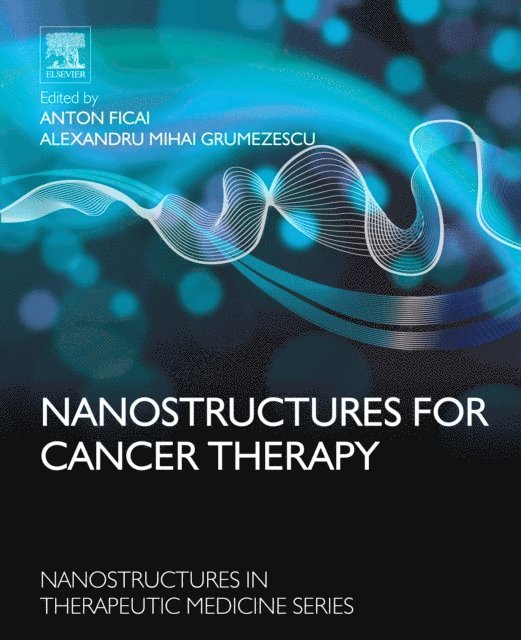
Nanostructures for Cancer Therapy discusses the available preclinical and clinical nanoparticle technology platforms and their impact on cancer therapy, including current trends and developments in the use of nanostructured materials in chemotherapy and chemotherapeutics.
In particular, coverage is given to the applications of gold nanoparticles and quantum dots in cancer therapies. In addition to the multifunctional nanomaterials involved in the treatment of cancer, other topics covered include nanocomposites that can target tumoral cells and the release of antitumoral therapeutic agents.
The book is an up-to-date overview that covers the inorganic and organic nanostructures involved in the diagnostics and treatment of cancer.
Provides an examination of nanoparticle delivery systems for cancer treatment, illustrating how the use of nanotechnology can help provide more effective chemotherapeutic treatments Examines, in detail, the different types of nanomaterials used in cancer therapy, also explaining the effect of each Provides a cogent overview of recent developments in the use of nanostructured materials in chemotherapeutics, allowing readers to quickly familiarize themselves with this area2 123 kr
Läs direkt efter köp
2 759 kr
Läs direkt efter köp
1 996 kr
Skickas inom 10-15 vardagar
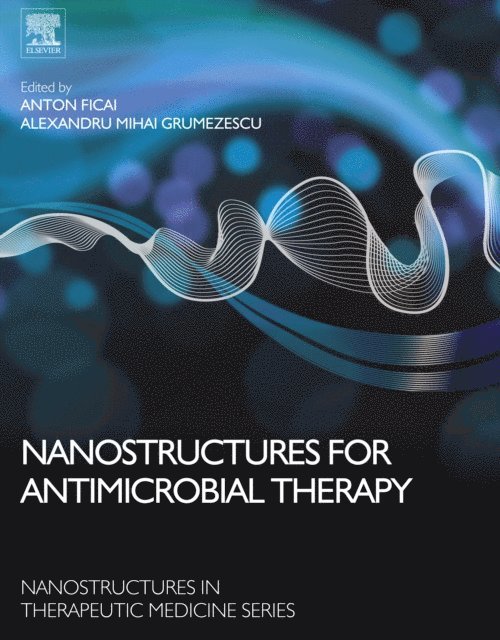
Nanostructures for Antimicrobial Therapy discusses the pros and cons of the use of nanostructured materials in the prevention and eradication of infections, highlighting the efficient microbicidal effect of nanoparticles against antibiotic-resistant pathogens and biofilms.
Conventional antibiotics are becoming ineffective towards microorganisms due to their widespread and often inappropriate use. As a result, the development of antibiotic resistance in microorganisms is increasingly being reported. New approaches are needed to confront the rising issues related to infectious diseases. The merging of biomaterials, such as chitosan, carrageenan, gelatin, poly (lactic-co-glycolic acid) with nanotechnology provides a promising platform for antimicrobial therapy as it provides a controlled way to target cells and induce the desired response without the adverse effects common to many traditional treatments.
Nanoparticles represent one of the most promising therapeutic treatments to the problem caused by infectious micro-organisms resistant to traditional therapies. This volume discusses this promise in detail, and also discusses what challenges the greater use of nanoparticles might pose to medical professionals. The unique physiochemical properties of nanoparticles, combined with their growth inhibitory capacity against microbes has led to the upsurge in the research on nanoparticles as antimicrobials. The importance of bactericidal nanobiomaterials study will likely increase as development of resistant strains of bacteria against most potent antibiotics continues.
Shows how nanoantibiotics can be used to more effectively treat disease Discusses the advantages and issues of a variety of different nanoantibiotics, enabling medics to select which best meets their needs Provides a cogent summary of recent developments in this field, allowing readers to quickly familiarize themselves with this topic area2 693 kr
Skickas inom 5-8 vardagar
3 054 kr
Läs direkt efter köp
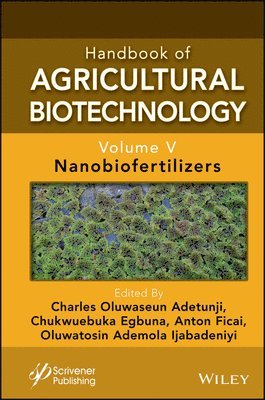
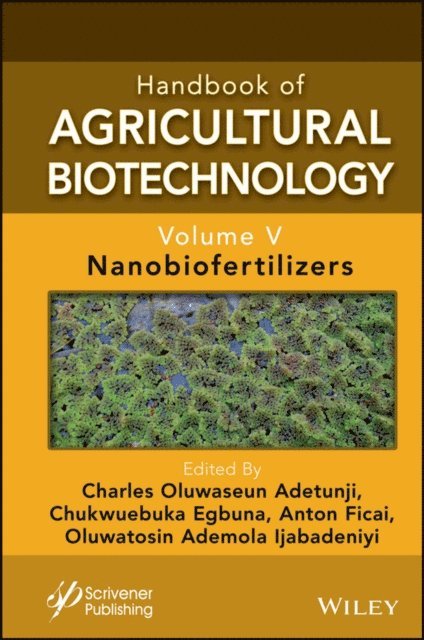
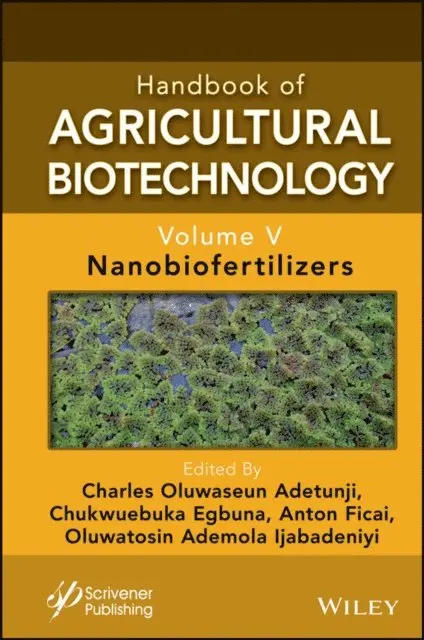
This book details recent advances in the applications of nanobiofertilizers as a substitute for synthetic fertilizers in boosting food production.
With the steady rise of the world’s population, there is a need to increase the production of safe and nutritious food. The constant loss of arable land, as a result of various anthropogenic activities from human action, has become a threat to global biodiversity and ecosystems. Additionally, the issue of climate change has imposed many obstacles to increasing agricultural productivity, especially from biotic and abiotic stressors and temperature-limited environments, such as in high altitudes or seasonally hot regions. Because of these factors, there is a need to adopt sustainable and modern technologies that can boost and improve the rate of food production.
One of the cheapest means of enhancing sustainable food production is to explore natural and unlimited beneficial microorganisms, particularly those that can increase the level of soil fertility, improve crop production and health, improve tolerance to stress, support nutrient uptake and availability, and boost natural biodiversity. The synergetic effect of nanotechnology and beneficial microorganisms for the effective bio-fabrication of nanobiofertilizers, is a sustainable solution for producing pesticide-free food. This book provides a deep insight into microbial diversity, recent techniques used for the isolation, screening, and characterization of beneficial microorganisms with eco-friendly attributes, used for bioengineering of nanobiofertilizers, as well as the application of proteomics, metabolomics, genomics, and bioinformatics. The book also covers commercialization, patents, and the business and socio-economic aspects of nanobiofertilizers, as well as the role of policymakers, stakeholders, and government agencies in the translation of nanobioferilizer research into policy.
Audience
The book is a useful resource for a diverse audience, including industrialists, food industry professionals, agriculturists, agricultural microbiologists, plant pathologists, botanists, microbiologists, biotechnologists, nanotechnologists, microbial biotechnologists, farmers, policymakers, and extension workers.
3 165 kr
Läs direkt efter köp
This book details recent advances in the applications of nanobiofertilizers as a substitute for synthetic fertilizers in boosting food production.
With the steady rise of the world’s population, there is a need to increase the production of safe and nutritious food. The constant loss of arable land, as a result of various anthropogenic activities from human action, has become a threat to global biodiversity and ecosystems. Additionally, the issue of climate change has imposed many obstacles to increasing agricultural productivity, especially from biotic and abiotic stressors and temperature-limited environments, such as in high altitudes or seasonally hot regions. Because of these factors, there is a need to adopt sustainable and modern technologies that can boost and improve the rate of food production.
One of the cheapest means of enhancing sustainable food production is to explore natural and unlimited beneficial microorganisms, particularly those that can increase the level of soil fertility, improve crop production and health, improve tolerance to stress, support nutrient uptake and availability, and boost natural biodiversity. The synergetic effect of nanotechnology and beneficial microorganisms for the effective bio-fabrication of nanobiofertilizers, is a sustainable solution for producing pesticide-free food. This book provides a deep insight into microbial diversity, recent techniques used for the isolation, screening, and characterization of beneficial microorganisms with eco-friendly attributes, used for bioengineering of nanobiofertilizers, as well as the application of proteomics, metabolomics, genomics, and bioinformatics. The book also covers commercialization, patents, and the business and socio-economic aspects of nanobiofertilizers, as well as the role of policymakers, stakeholders, and government agencies in the translation of nanobioferilizer research into policy.
Audience
The book is a useful resource for a diverse audience, including industrialists, food industry professionals, agriculturists, agricultural microbiologists, plant pathologists, botanists, microbiologists, biotechnologists, nanotechnologists, microbial biotechnologists, farmers, policymakers, and extension workers.