Anuj Chaudhary – författare
2 611 kr
Läs direkt efter köp
2 063 kr
Skickas inom 10-15 vardagar
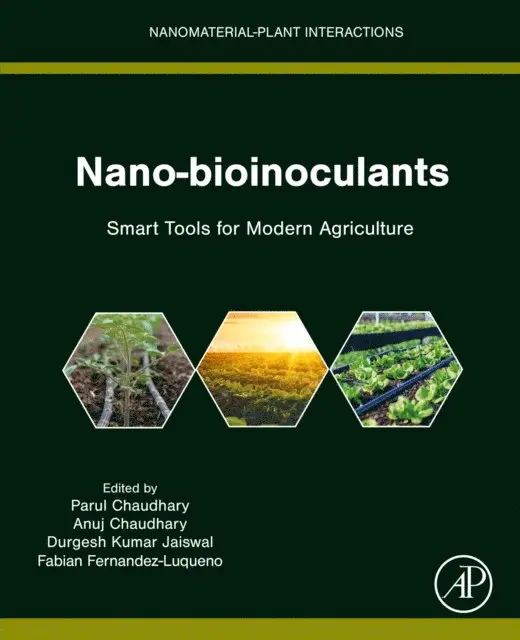
Nano-bioinoculants: Smart Tools for Modern Agriculture discusses the interactions between nanoparticles and soil-plants-microbiome systems in a single-volume book designed to guide improvements in sustainable agriculture i.e. plant production and soil health. Past practices for the application of pesticides and chemical fertilizers have reduced the beneficial microbial diversity and soil fertility essential for optimal crop yield and overall plant health. As a result, developing innovative approaches to plant/soil health maintenance, bioremediation process, and stress management is advancing. Plant protection methods are increasingly being tailored to improve sustainable precision results, reduce environmental impact, and to target specific plant health challenges. Nano-bioinoculants: Smart Tools for Modern Agriculture explains nanoparticles and beneficial microbes and their impact on soil microbiomes, soil fertility restoration, remediation of contaminated soil, and plant health. It also highlights nanoparticles and bioinoculants in stress management, plant growth, and productivity, as well as covering the potentially toxic effect of nanoparticles on humans and the environment. This volume in the Nanomaterial-Plant Interactions series explores the potential of nano-biotechnology for better agronomic performance and sustainability.
Provides current perspectives on applying nanoparticles and nanotechnology in agriculture in the futureHighlights an integrated approach between microbiology and nanotechnology for sustainable agriculture systemAddresses the application of both bioinoculants and nanoparticles in a single volume942 kr
Läs direkt efter köp
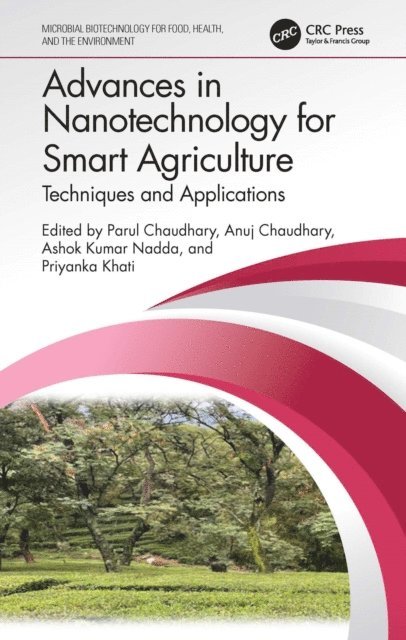
The yield of major agricultural crops can be severely decreased due to the inappropriate application of commonly used harmful chemicals. Excessive agrochemicals in field application can negatively affect microbial populations and their diversity, which in turn ultimately affects plant growth. Thus, it is necessary to turn toward more eco-friendly approaches which equally protect crops as well as the desirable microbial populations of complex soil systems. Nanoparticles are considered as potential agents for the production and development of sustainable agriculture. Green synthesis of nanoparticles has gained attention as a useful measure to diminish the harmful effects associated with the old methods of nanoparticle synthesis. Advances in Nanotechnology for Smart Agriculture: Techniques and Applications illustrates the science and practical applications of nanoparticles for sustainable agriculture.
Features:
Examines the role of nanotechnology in agricultural best practices, including sustainable development, precision farming, and long-term soil health942 kr
Läs direkt efter köp
The yield of major agricultural crops can be severely decreased due to the inappropriate application of commonly used harmful chemicals. Excessive agrochemicals in field application can negatively affect microbial populations and their diversity, which in turn ultimately affects plant growth. Thus, it is necessary to turn toward more eco-friendly approaches which equally protect crops as well as the desirable microbial populations of complex soil systems. Nanoparticles are considered as potential agents for the production and development of sustainable agriculture. Green synthesis of nanoparticles has gained attention as a useful measure to diminish the harmful effects associated with the old methods of nanoparticle synthesis. Advances in Nanotechnology for Smart Agriculture: Techniques and Applications illustrates the science and practical applications of nanoparticles for sustainable agriculture.
Features:
Examines the role of nanotechnology in agricultural best practices, including sustainable development, precision farming, and long-term soil health2 071 kr
Skickas inom 10-15 vardagar
798 kr
Skickas inom 10-15 vardagar
2 377 kr
Skickas inom 10-15 vardagar
3 157 kr
Läs direkt efter köp
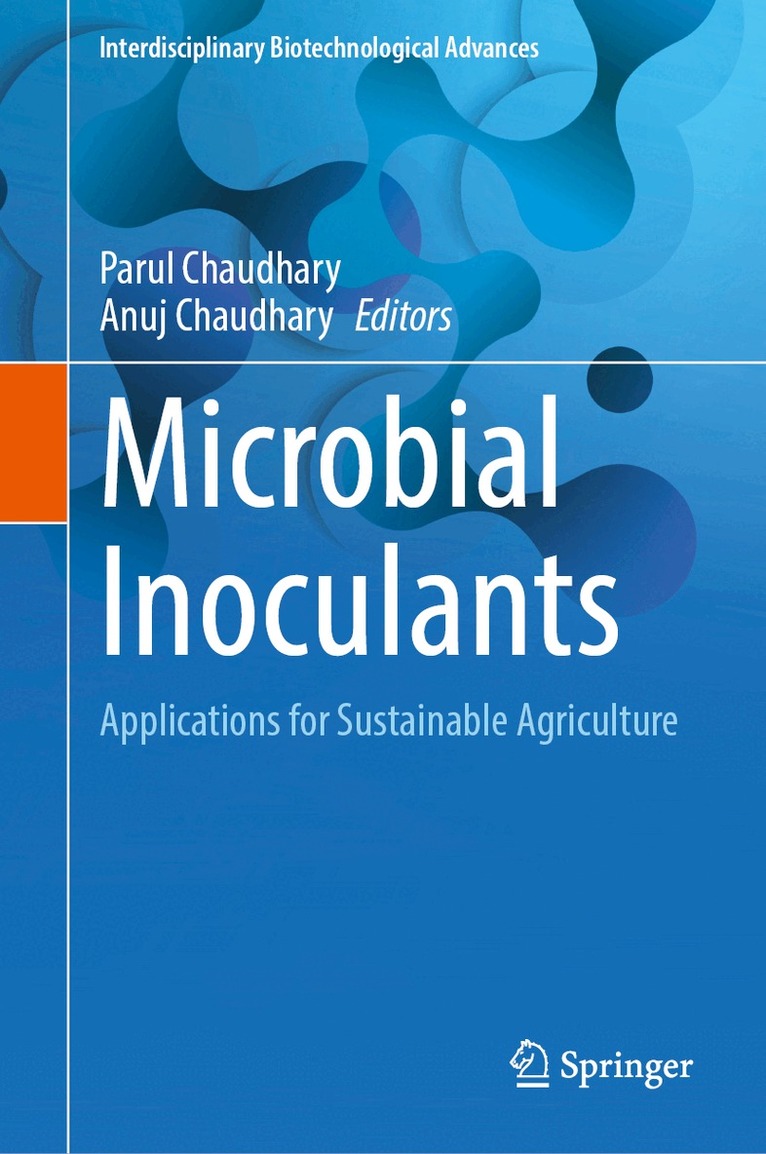
This book discusses the role of microbes in agriculture for plant attributes, soil fertility, and bio-remediation, which aid in sustainable agriculture. Nowadays, due to increase in human population, it is essential to increase food productivity in the near future, but exhaustive non-sustainable agricultural practices such as the usage of agrochemicals threaten food security, the economy, and the environment globally. Soil deterioration is the most serious environmental threat to food production, resulting in poverty and hunger in developing countries. As a result, the global community has faced challenges regarding the development of ecologically sound, efficient, and long-term alternative options to meet rising food requirements. Therefore, to contribute to food security, the advancement of sustainable and innovative modern agriculture aimed at addressing environmental, economic, and social challenges connected with present intense non-sustainable agriculture practices is required. As a result, beneficial microbial inoculants will be widely used in the development of new strategies to increase sustainable food production. Bioinoculant application helps to provide nutrients that directly support soil health and sustainable food production. Hence, this book offers the role of microbial inoculants for better agronomical performance for sustainable advancement in agriculture and also pays attention to soil health improvement for extensive period benefits. The book will be highly recommended for agriculture microbiologists, agronomists, plant pathologists, and related areas.
2 377 kr
Skickas inom 10-15 vardagar