Ariella Aïsha Azoulay - Böcker
Visar alla böcker från författaren Ariella Aïsha Azoulay. Handla med fri frakt och snabb leverans.
7 produkter
7 produkter
379 kr
Skickas inom 7-10 vardagar
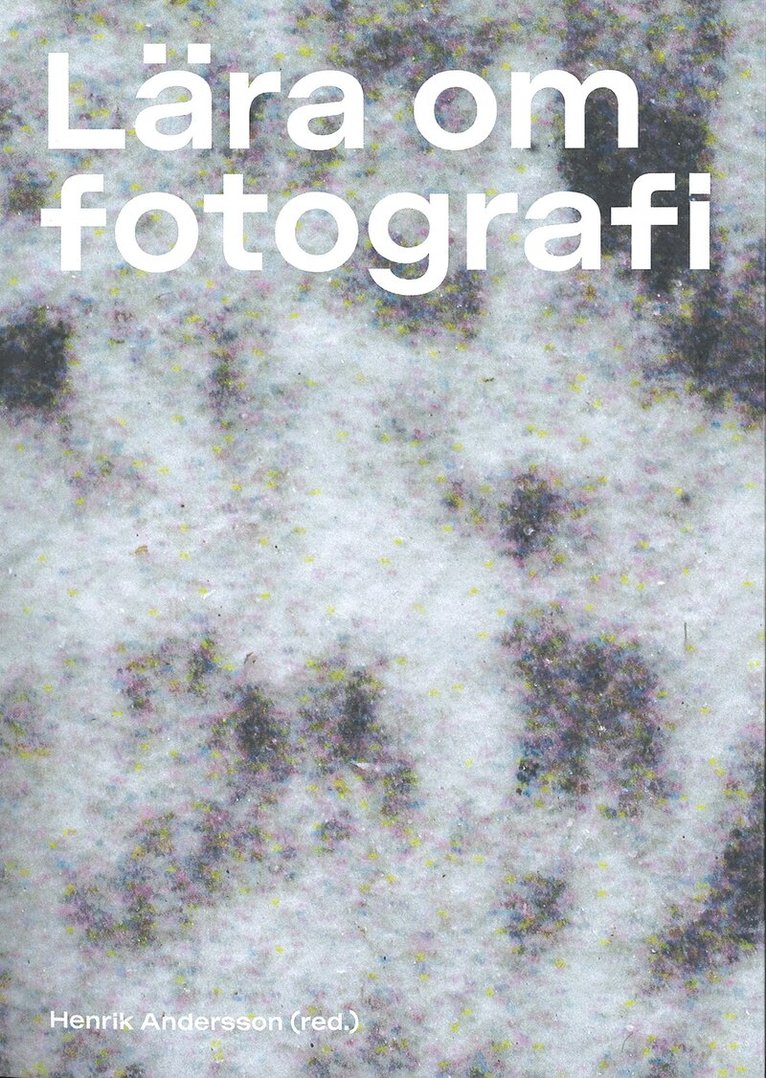
Kan det vara så, att det är just när tillfällen eller ting vilka inte kan eller låter sig fotograferas som fotografiets ideologiska grund visar sig? Fotografiet ger sig till känna först vid dess egen gränslinje och då som frånvarande. Under en fjällvandring i Jämtland får jag höra talas om en särdeles vacker sjö som heter Blanktjärn. Den har blivit känd för sitt azurblå vatten och jag bestämmer mig för att vandra dit. Men innan jag kommer fram till sjön möts jag av Länsstyrelsens avspärrningar. Området är numera fredat från besök på grund av en alltför hög turistbelastning som har skadat den känsliga naturen i området. Orsaken till det ökade intresset för sjön kunde jag senare spåra till fotografier som delats i sociala medier. Sjöns klara vatten hade lockat så många besökare som ville fotografera sig själva vid sevärdheten, att myndigheterna inte såg någon annan möjlighet än att stänga av området. Om vi vill förstå hur vår relation till fotografi ser ut kan vi använda oss av anekdoter av det här slaget. Exemplet beskriver tydligt en konflikt som ofta framträder genom fotografi. Vi har att göra med en teknologi som å ena sidan kanaliserar begär, tillgängliggör och om man så vill demokratiserar – å andra sidan territorialiserar områden, kanaliserar ägande och exploaterar resurser. Det är denna materiella verklighet som Lära om fotografi försöker att förstå. Det senaste decenniet har vi i en svensk kontext sett ett ökat intresse för fotografins historia. Vi kan se det som en följd av digitaliseringen som tillgängliggjort allt fler historiska fotografier. Dock har fokus på fotografiet i stort kommit att utgå ifrån vad som kan kallas en idealistisk historieskrivning, vilken har fokuserat mer på enskilda individer och årtal och mindre på de materiella förutsättningarna för fotografi. Lära om fotografi undersöker en dynamik inom fotografi som visar sig genom konflikter och motsättningar. Den vill ge svar på vår relation till fotografi snarare än att slå fast dess egenskaper. Hellre än att försöka definiera fotografins gränser, eller göra anspråk på att vilja äga fotografin som idé, söker blandningen av texter i den här boken efter en ny kritik av fotografi. Hur kan den kritiska distansen bli ett verktyg för att förstå fotografi när teknologin som sådan kan sägas bygga på optisk separation från världen? Texterna i den här antologin vill alla säga något om vår relation till bildernas värld. De utgår alla på något sätt från den uppdelning och strukturering av världen som sedan upplysningen gett oss de dikotomier vilka betecknar våra liv och som fotografiet står i tät förbindelse med. Arbetet med boken bygger vidare på en lång tradition av fotografisk utbildning på Konstfack. Från Akademin för fotografi till dagens Institutionen för fri konst går en obruten linje av kritisk diskussion om det fotografiska mediet och nyfikenhet inför den fotografiska praktiken. Texterna har tillkommit ur föreläsningarna på de fristående kurser som Fotografins historia och Fotografiska seminariet har. Lära om fotografi har således en pedagogisk dimension som kunskapsförmedling men boken rymmer också en ambition att omförhandla eller lära om föreställda positioner inom fotografi.
421 kr
Kommande
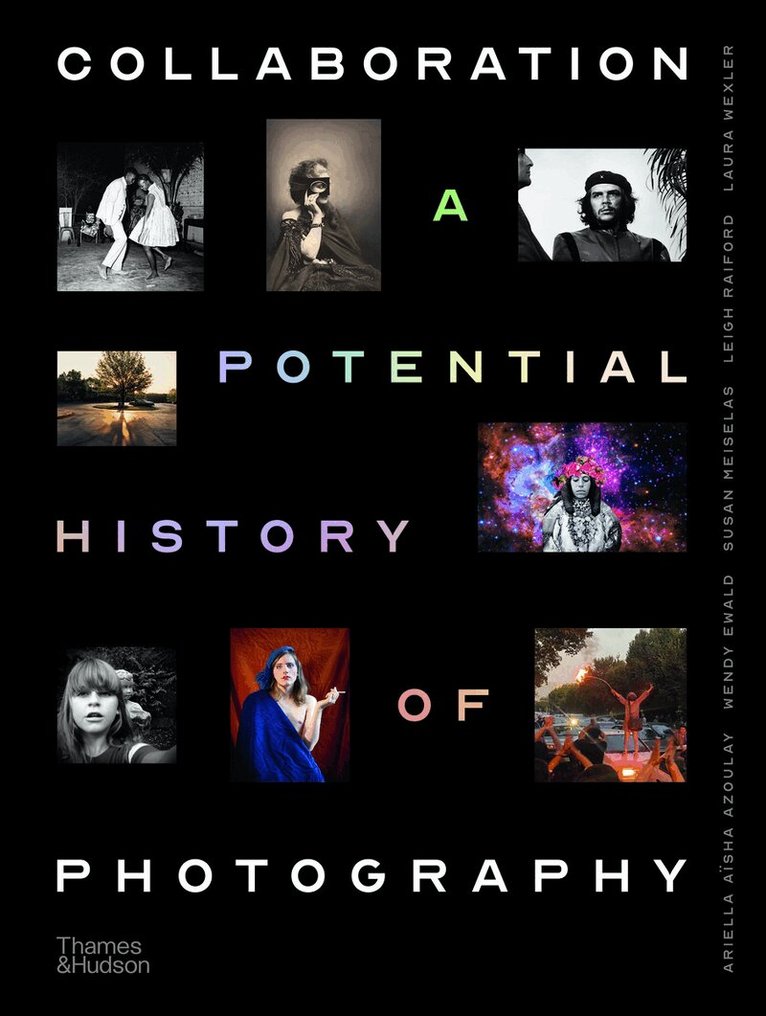
A revolutionary history of photography from a stellar team of writers and thinkers that challenges all existing narratives by focusing on the complex collaborations between photographer and subject. This groundbreaking and multifaceted history explores photography through the lens of collaboration, and in so doing challenges the dominant narratives around photographic history and authorship. Led by five of photography’s great thinkers and practitioners, it breaks apart the ‘single creator’ tradition by bringing to light tangible traces of collaboration – the various relationships, exchanges and interactions which occur between all participants in the event of photography. Over 115 photography projects are surveyed in eight thematic chapters, and presented non-hierarchically alongside quotes, testimonies and concise texts by guest contributors. These networks of texts and images provide perspective on a vast array of photographic themes, from Araki’s provocative portraits of women to archival files from the Spanish Civil War. With more than 550 photographs and over 100 text contributors, Collaboration is an inspiration for teaching and an open invitation to scholars, activists, photographers and others to practice always with and alongside others, and to participate actively in this engagement and enquiry.
354 kr
Skickas inom 7-10 vardagar
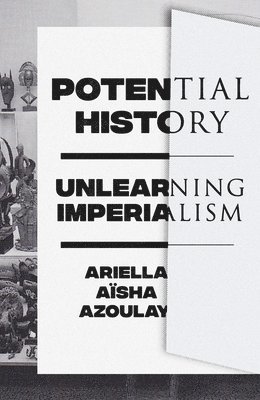
In this theoretical tour-de-force, renowned scholar Ariella Aïsha Azoulay calls on us to recognize the imperial foundations of knowledge and to refuse its strictures and its many violences.Azoulay argues that the institutions that make our world, from archives and museums to ideas of sovereignty and human rights to history itself, are all dependent on imperial modes of thinking. Imperialism has segmented populations into differentially governed groups, continually emphasised the possibility of progress while trying to destroy what came before, and voraciously sought out the new by sealing the past away in dusty archival boxes and the glass vitrines of museums.By practising what she calls potential history, Azoulay argues that we can still refuse the imperial violence that shattered communities, lives, and worlds, from native peoples in the Americas to the Congo ruled by Belgium's brutal King Léopold II, from dispossessed Palestinians in 1948 to displaced refugees in our own day. In Potential History, Azoulay travels alongside historical companions - an old Palestinian man who refused to leave his village in 1948, an anonymous woman in war-ravaged Berlin, looted objects and documents torn from their worlds and now housed in archives and museums - to chart the ways imperialism has sought to order time, space, and politics.Rather than looking for a new future, Azoulay calls upon us to rewind history and unlearn our imperial rights, to continue to refuse imperial violence by making present what was invented as "past" and making the repair of torn worlds the substance of politics.
227 kr
Skickas inom 7-10 vardagar
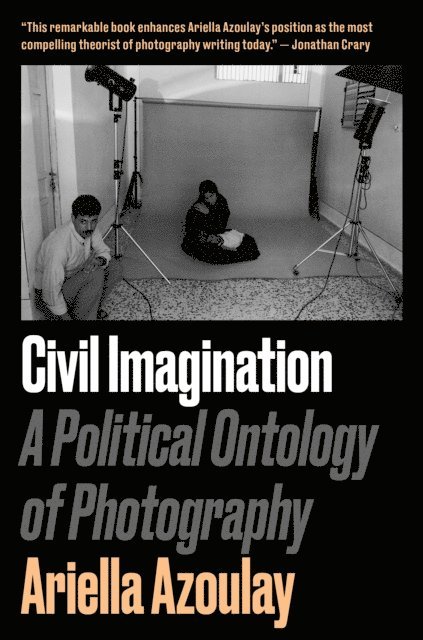
The photograph is not just an image but an event, one in the longer sequence of a photographic moment. Challenging given definitions of photography and of the political, Ariella Aïsha Azoulay calls for us to use photographs of political violence, such as the colonial regime in Palestine, to envision the political relationships that made each photograph possible, and to be able to intervene in them. In this way, we can build our capacity for "civil imagination": a way of seeing and imagining ourselves as part of the image rather than only as spectators.The new edition includes a discussion of the legal battles to reclaim the images of the enslaved Papa Renty, held by Harvard University, rejecting the regime of photographs as private property, established by institutions that claim ownership of images seized with violence."This trenchant, perennially contemporary book valorizes powerful intersubjective relations enabled by photography, relations that exceed the strictures of imperial power. For Azoulay, photography's entangled temporalities enable a transformation of our sense of what persists, just as a collective practice of civil imagination reconstructs our apprehension of those with whom we unevenly share a lifeworld. Azoulay contradistinguishes spectatorship from the radical work of being a companion- a distinction that itself rewrites normative conceptions of the social work of seeing." - Stanley Wolukau-Wanambwa, author of Dark Mirrors
329 kr
Skickas inom 7-10 vardagar
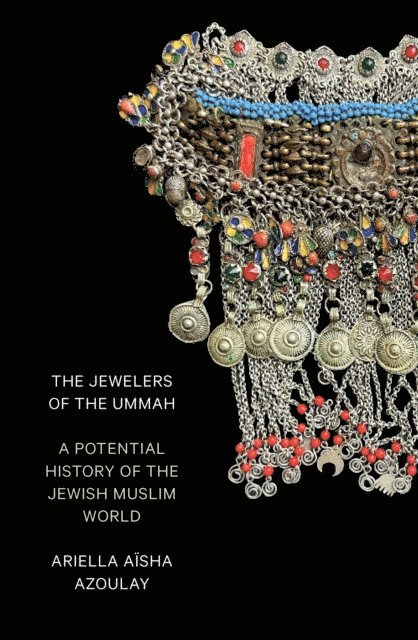
Can we return to worlds destroyed by colonial violence? In a series of letters to her father, her great-grandmothers, and her children-and to thinkers such as Frantz Fanon and Hannah Arendt-Ariella Aïsha Azoulay examines the disruption of Jewish Muslim life in Algeria and broadly in the Maghreb and the Middle East by two colonial projects: French rule and the Zionist colonization of Palestine, which provoked the departure of Jews from these areas. Jewelry making was a profession that marked the Algerian Jews' place in the world they shared in the ummah, the borderless community of Muslims. The objects they crafted continue to unsettle the clear-cut separation of Jews from Muslims and of Jews from Algeria. In this jewelry, and in the history of those who made, wore, and sold it, Azoulay finds a path to reviving the lost wisdom of her ancestors.Emptying Africa of its Jews is a tragedy which Azoulay refuses to accept. In these letters, she reintroduces Muslim Jews to the violence of colonization and traces anticolonial pathways to rebuild the rich world of the jewelers of the ummah.
193 kr
Skickas inom 7-10 vardagar
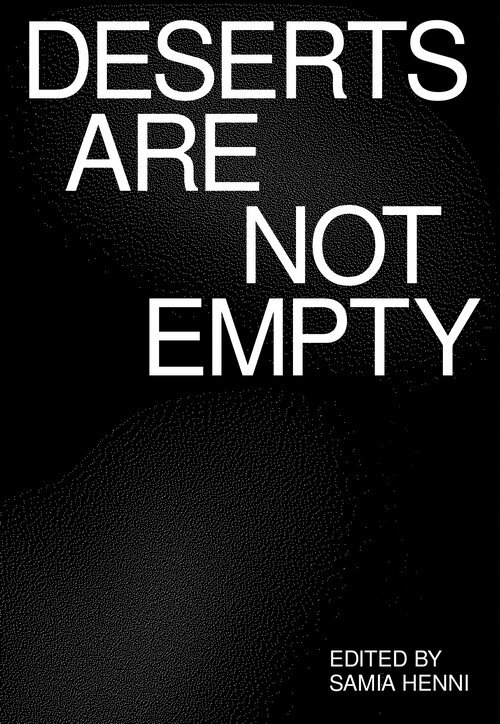
Colonial and imperial powers have often portrayed arid lands as “empty” spaces ready to be occupied, exploited, extracted, and polluted. Despite the undeniable presence of human and nonhuman lives and forces in desert territories, the “regime of emptiness” has inhabited, and is still inhabiting, many imaginaries. Deserts Are Not Empty challenges this colonial tendency, questions its roots and ramifications, and remaps the representations, theories, histories, and stories of arid lands—which comprise approximately one-third of the Earth’s land surface. The volume brings together poems in original languages, conversations with collectives, and essays by scholars and professionals from the fields of architecture, architectural history and theory, curatorial studies, comparative literature, film studies, landscape architecture, and photography. These different approaches and diverse voices draw on a framework of decoloniality to unsettle and unlearn the desert, opening up possibilities to see, think, imagine it otherwise. With contributions from Saphiya Abu Al-Maati, Menna Agha, Asaiel Al Saeed, Aseel AlYaqoub, Yousef Awaad Hussein, Ariella Aïsha Azoulay, Danika Cooper, Brahim El Guabli, Timothy Hyde, Jill Jarvis, Bongani Kona, Dalal Musaed Alsayer, Observatoire des armements, Francisco E. Robles, Paulo Tavares, Alla Vronskaya, and XqSu.
136 kr
Skickas inom 3-6 vardagar