• Fri frakt över 249 kr
  • •
  • Snabba leveranser
  • •
  • Billiga böcker
Kundservice

Du är på sajten för privatpersoner.

Företag, bibliotek eller offentlig verksamhet?

Du handlar på classic.bokus.com, där alla dina funktioner finns intakta.
Till classic.bokus.com
Bokus logotyp. Gå till startsidan.
  • Erbjudanden
  • Nyheter
  • Student
  • Topplistor
  • Barn & ungdom
  • Bokus Play
  • E-böcker
  • Pocketböcker
  • Spel & pussel

10% rabatt på allt med kod: NYSTART10 →

Sidfot

Mina sidor

    Hjälp

    • Kundservice
    • Vanliga frågor och svar
    • Frakt och leverans
    • Retur vid ångerrätt
    • Reklamera vara
    • Betalning
    • Köpvillkor
    • Allmänna villkor
    • Information om webbplatsens tillgänglighet

    Om Bokus

    • Om oss
    • Pressrum
    • För studenter
    • För företag
    • För bibliotek och offentlig verksamhet
    • För leverantörer
    • Hållbarhet

    Populärt

    • Aktuella erbjudanden
    • Presentkort
    • Studentlitteratur
    • Nya böcker
    • Topplistor
    • Signerade böcker
    • Engelska böcker

    Inspiration

    • Boktips
    • BookTok
    • Populära bokserier
    • Barnbokskaraktärer
    • Populära författare
    Logotyp för Bokus
    Följ oss på Facebook (extern länk)Följ oss på Instagram (extern länk)Följ oss på YouTube (extern länk)Följ oss på TikTok (extern länk)
    bokus @ CookiesAnpassa cookiesIntegritetspolicyKöpvillkor
    Till Citymail hemsida (extern länk)Till Budbee hemsida (extern länk)Till Postnord hemsida (extern länk)Till Schenker hemsida (extern länk)Till Early Bird hemsida (extern länk)Till Walleys hemsida (extern länk)
    1. Historia och arkeologi
    2. Historia
    3. Historia: särskilda händelser och ämnen
    4. Kolonialism och imperialism

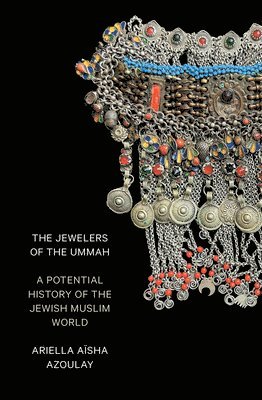
    Jewelers of the Ummah

    A Potential History of the Jewish Muslim World

    AvAriella Aïsha Azoulay

    Häftad, Engelska, 2024

    329 kr

    Beställningsvara. Skickas inom 7-10 vardagar. Fri frakt över 249 kr.

    Fler format och utgåvor

    E-bok

    252 kr

    Beskrivning

    Can we return to worlds destroyed by colonial violence? In a series of letters to her father, her great-grandmothers, and her children-and to thinkers such as Frantz Fanon and Hannah Arendt-Ariella Aïsha Azoulay examines the disruption of Jewish Muslim life in Algeria and broadly in the Maghreb and the Middle East by two colonial projects: French rule and the Zionist colonization of Palestine, which provoked the departure of Jews from these areas. Jewelry making was a profession that marked the Algerian Jews' place in the world they shared in the ummah, the borderless community of Muslims. The objects they crafted continue to unsettle the clear-cut separation of Jews from Muslims and of Jews from Algeria. In this jewelry, and in the history of those who made, wore, and sold it, Azoulay finds a path to reviving the lost wisdom of her ancestors.Emptying Africa of its Jews is a tragedy which Azoulay refuses to accept. In these letters, she reintroduces Muslim Jews to the violence of colonization and traces anticolonial pathways to rebuild the rich world of the jewelers of the ummah.

    Produktinformation

    • Utgivningsdatum:2024-09-24
    • Mått:152 x 234 x 43 mm
    • Vikt:704 g
    • Format:Häftad
    • Språk:Engelska
    • Antal sidor:656
    • Förlag:Verso Books
    • ISBN:9781804293119

    Utforska kategorier

    • Kolonialism och imperialism inom Historia och arkeologi
    • Konsthistoria inom Kultur
    • Sociala grupper och identitet inom Samhälle och politik

    Mer om författaren

    Ariella Aïsha Azoulay teaches political thought and visual culture at Brown University. She is the author of a number of books including Civil Imagination [2015] and Potential History [2019].

    Recensioner i media

    A tour de force of formal, conceptual, and historiographical innovation, not to mention ethical creativity. In keeping with Azoulay's signature commitment to transformable and transformative pasts-potential histories, in her terms-this powerful book refuses the partitioning of composite Arab and Jewish identities and shared forms of life in colonized Algeria. Azoulay reopens the foreclosed past by means of a dazzling epistolatory experiment. In letters to ancestors and elected kin (Hannah Arendt, Frantz Fanon, Sylvia Wynter, her own parents, among others), she exercises a right to address, become coeval, and build a world anew with strangers and familiars, those who have gone and who remain. This work is a manifesto of repair in times of unconscionable violence.