Atiqur Rahman – författare
425 kr
Läs direkt efter köp
1 376 kr
Skickas inom 7-10 vardagar
588 kr
Skickas inom 7-10 vardagar
1 727 kr
Skickas inom 10-15 vardagar
2 138 kr
Läs direkt efter köp
According to UN estimates, approximately nearly half of the world''s population now lives in cities and that figure is expected to rise to almost 70% by 2050. Cities now account for around 70% of worldwide greenhouse gas emissions, and this percentage is predicted to rise in the near future as a result of projected increases in global urbanization patterns. It is widely acknowledged that irrational urban planning and design can increase emissions while also exacerbating threats and risks, resulting in a slew of environmental issues such as urban heat islands, air pollution, flooding, amongst other issues, as well as environmental, social, and economic losses. Therefore, these concerns must be addressed promptly in order to cope up with these rising difficulties and make urban environments safer for residents.
With the advancement of remote sensing technology and the use of current remote observation systems, urban data science, remote sensing, and artificialintelligence (AI), modeling and quantifying emergent difficulties in urban regions and urban systems have become easy. They aid in the quantitative analysis of urban shape, functions, and human behavior in cities. Harvesting data, developing models, and suggesting new methodologies will be aided by combining urban ecology with new breakthroughs in data science. This book is of great value to a diverse group of academicians, scientists, students, environmentalists, meteorologists, urban planners, remote sensing and GIS experts with a common interest in geospatial sciences within the earth environmental sciences, as well as human and social sciences.
631 kr
Skickas inom 5-8 vardagar
1 727 kr
Skickas inom 10-15 vardagar
1 941 kr
Skickas inom 10-15 vardagar
2 435 kr
Läs direkt efter köp
This book seeks to showcase the ongoing challenges of water resource and its management through innovative and cutting-edge approaches (flooding and droughts and their respective impacts; spatial and urban planning; early warning systems; estimation of losses; water resource in the age of global climate change; risk communication; meteorology; integrated analysis; risk mitigation; infrastructures; nature-based management; watershed management; transport; legal assessment; vulnerability analysis; public participation; or case studies). In the face of current global changes, the availability and quality of water resources are under severe threat. Indeed, in all sectors related to water resource management, sustainable development is important for present and future generations. Indeed, multiple problems such as water shortage or flooding, as well as environmental pollution phenomena, are observed. This situation is further exacerbated by poor management practices and unsustainable extraction of water for various consumptive uses. Consequently, many regions around the world, particularly urban areas, are becoming water stressed and conflicts over access to water are becoming ever more common. To overcome the significant challenges fundamental to the management of water resources, cutting-edge knowledge, innovative approaches, and an in-depth understanding of the inherent scientific, economic, social, and environmental issues are imperative. Therefore, water resource management requires a clear understanding of the ongoing challenges and innovative approaches. The authors and editors believe that this book provides huge knowledge and data in the fields of water resource management, earth environmental sciences, humanities, and social sciences, which target a diverse range of readers, such as academics, scientists, students, environmentalists, meteorologists, urban planners, remote sensing, and GIS experts.
1 941 kr
Skickas inom 10-15 vardagar
1 941 kr
Skickas inom 10-15 vardagar
2 435 kr
Läs direkt efter köp
This book provides huge knowledge and data in the fields of geospatial sciences, earth environmental sciences, humanities, and social sciences, which target a diverse range of readers, such as academics, scientists, students, environmentalists, meteorologists, urban planners, remote sensing, and GIS experts. Earth environment (ecological envelope of geosphere, biosphere, hydrosphere, atmosphere and cryosphere) faces a significant challenge from different risks and threats due to due to rapid changes in global land use, population increase and pollution. They might drastically impair the ecosystem''s ability to maintain long-term service levels while bolstering the economic, social, and environmental pillars of sustainable development. Therefore, risk assessment (RA) has lately become a prominent research topic and a powerful mechanism for enforcing legal activities-related environmental restoration and health improvements to do sustainable development. The United States Environmental Protection Agency (USEPA) first used the risk assessment approach in 1980, and since then, it has expanded and become standard practice in many areas of ecological research. Some practices are air quality assessment, land degradation assessment, natural hazards risk assessment, urban surface ecological health condition, wetland and forest health assessment and drinking water quality assessment. However, recently risk assessment alone is not sufficient to propose any sustainable management plans. Also, there is no universal strategy for conducting risk assessments, and insufficient expertise with the methodology may result in erroneous findings. Therefore, scientists are increasingly interested in developing resilience strategies with AI and geospatial-based risk assessment to lower environmental risk. Different resilience approaches make different assumptions about the system dynamics involved in resilience-based environmental risk and impact assessment. Therefore, this book seeks to showcase the most current advances in risk and hazards assessment of environments with resilience strategies to mitigate the prevailing environmental issues with the help of remote sensing, GIS, artificial intelligence, and state-of-the-art frameworks like PSR, VIOR, nature-based solutions.
2 371 kr
Skickas inom 10-15 vardagar
3 046 kr
Läs direkt efter köp
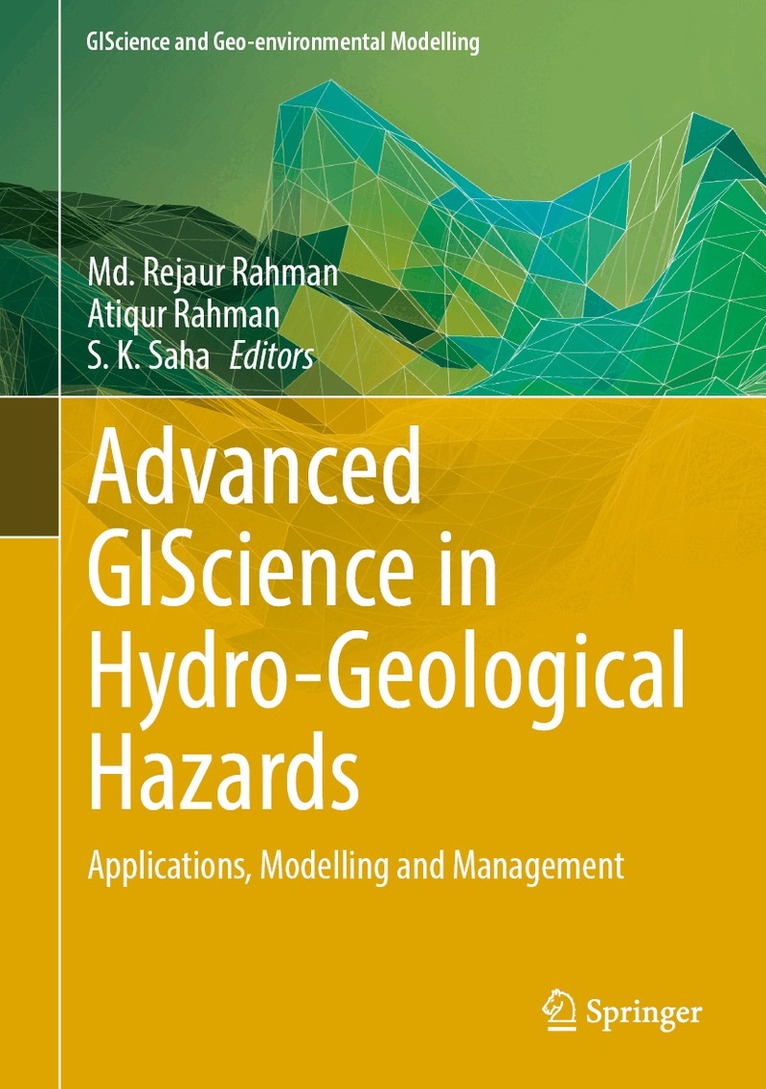
In recent decades, natural hazards have increasingly threatened lives, livelihoods, and economies, with annual losses totalling billions of dollars globally. According to the Insurance Information Institute (III) and the Zebra, USA, natural disaster losses reached $74.4 billion in 2020, and an average of 6,800 natural disasters occur each year, claiming around 1.35 million lives. Hydrological and geological hazards, in particular, have significant societal and environmental impacts, making them critical areas of research. Understanding and mitigating these hazards is vital for developing legal mechanisms related to environmental restoration, societal improvements, and sustainable development.
Modern technologies and earth observation data play a crucial role in disaster monitoring, prediction, modelling, and management. Recent advancements in geoinformation science have introduced multi-source data for natural hazards research. In addition, cutting-edge methods such as machine learning, deep learning, and big data science offer powerful tools for in-depth studies of natural hazards through remote sensing and geoinformatics. This book, Advanced GIScience in Hydro-Geological Hazards, presents up-to-date contributions on applying advanced GIScience to research various hydro-geological hazards, including floods, landslides, tropical cyclones, soil erosion, coastal erosion, riverbank erosion, coastal area vulnerability, drought, wetlands shrinking etc. It also explores multi-hazard studies using SAR, GNSS, and other innovative methods. The chapters focus on integrating artificial intelligence, machine learning techniques, and remote sensing to enhance preparedness, response, and resilience against these hazards. Targeting a broad audience of academics, scientists, students, environmentalists, government agencies, disaster planners, and GIS experts, this book aims to showcase the latest advancements in GIScience for assessing and managing hydro-geological hazards. It offers strategies for disaster risk reduction and capacity building, providing readers with the knowledge needed to address pressing environmental challenges.
2 371 kr
Skickas inom 10-15 vardagar
1 605 kr
Skickas inom 10-15 vardagar
1 519 kr
Läs direkt efter köp
1 179 kr
Skickas inom 10-15 vardagar
2 458 kr
Skickas inom 10-15 vardagar
3 046 kr
Läs direkt efter köp
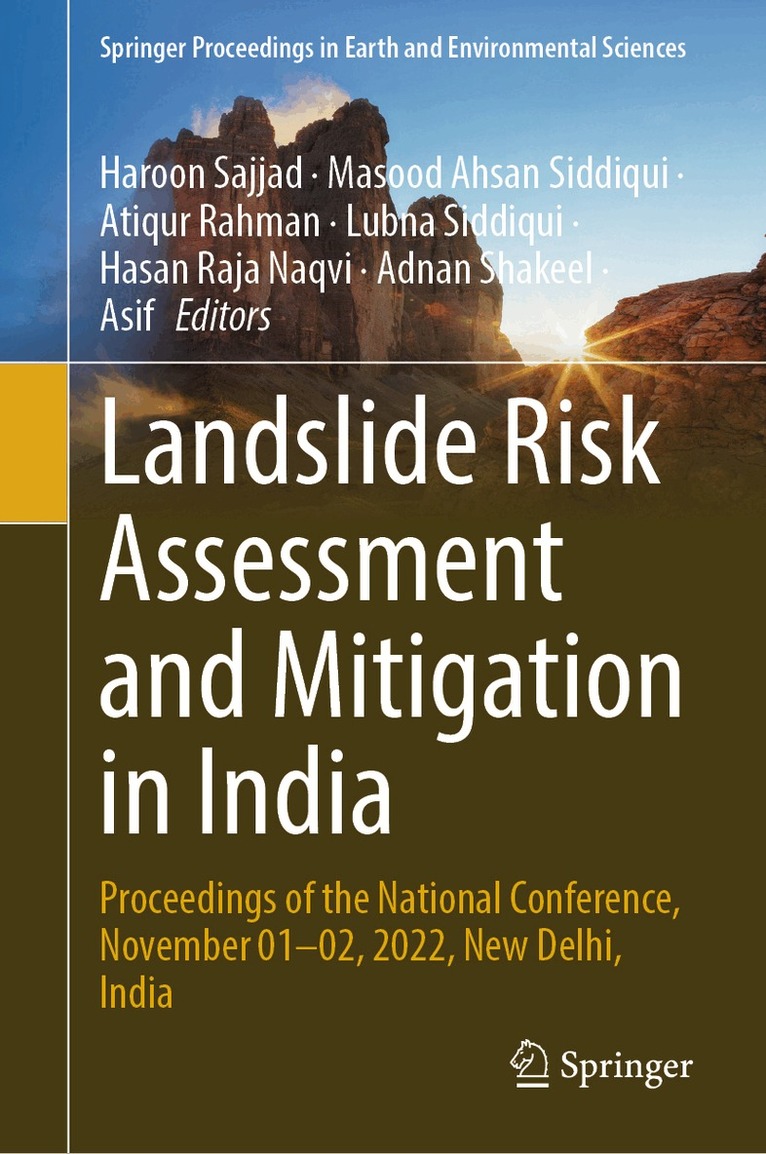
This book focuses on landslide hazard mapping, identification of site-specific drivers of landslide occurrence, and assessment of landslide susceptibility, vulnerability, risk and mitigation using advanced techniques and approaches. The book encompasses the use of geospatial technologies, artificial intelligence, machine learning algorithms, and advanced statistical models to explore multi-dimensionality of landslide hazard. The book is a synthesis of research papers presented at the National Conference on Landslide Risk Assessment and Mitigation in India, organized by the Department of Geography, Jamia Millia Islamia, New Delhi, India, 01–02 November 2022. The book is organized into four parts made up of 21 chapters. Part I deals with landslide hazard mapping. Part II covers landslide susceptibility mapping and assessment. Part III evaluates landslide risk. Finally, Part IV presents multi-disciplinary approach and holistic mechanism to devise landslide mitigation strategies. The chapters help better understand the intertwined physical processes, causes of landslides, potential risk factors, movement characteristics, and role of engineering and technology to minimize upcoming human, physical and economic losses. The book is a valuable resource for researchers, academicians, stakeholders, and policy makers.
2 458 kr
Skickas inom 10-15 vardagar