Atish Prashar – författare
1 941 kr
Skickas inom 10-15 vardagar
2 435 kr
Läs direkt efter köp
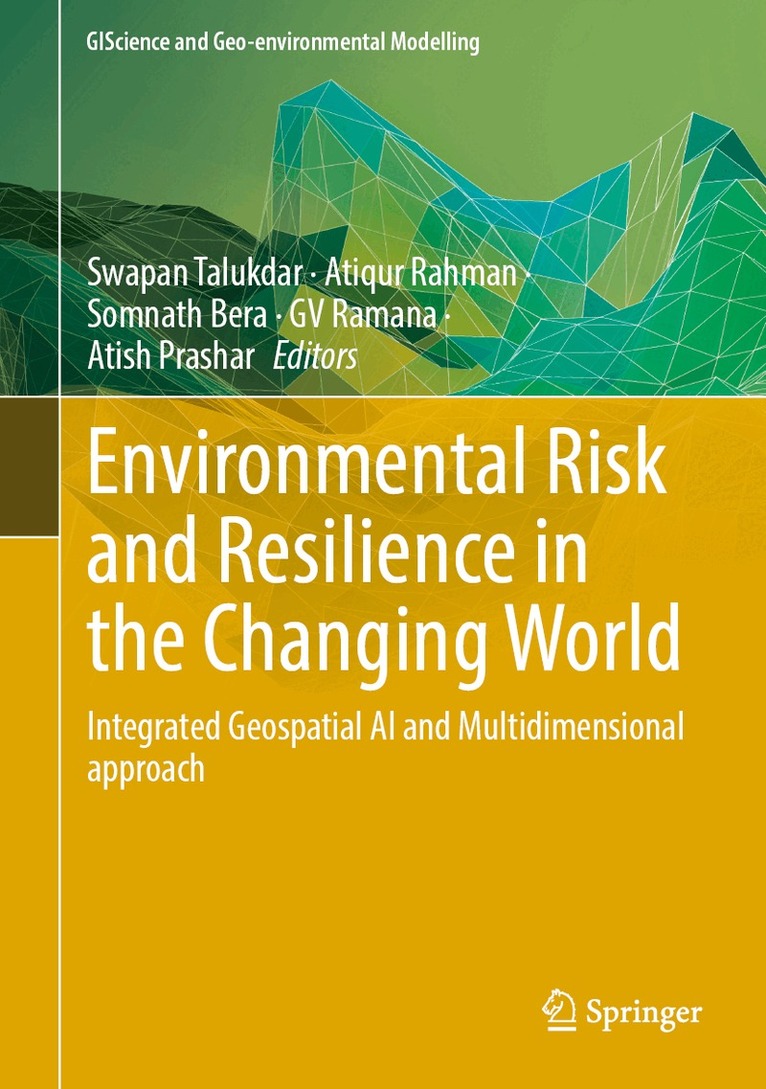
This book provides huge knowledge and data in the fields of geospatial sciences, earth environmental sciences, humanities, and social sciences, which target a diverse range of readers, such as academics, scientists, students, environmentalists, meteorologists, urban planners, remote sensing, and GIS experts. Earth environment (ecological envelope of geosphere, biosphere, hydrosphere, atmosphere and cryosphere) faces a significant challenge from different risks and threats due to due to rapid changes in global land use, population increase and pollution. They might drastically impair the ecosystem''s ability to maintain long-term service levels while bolstering the economic, social, and environmental pillars of sustainable development. Therefore, risk assessment (RA) has lately become a prominent research topic and a powerful mechanism for enforcing legal activities-related environmental restoration and health improvements to do sustainable development. The United States Environmental Protection Agency (USEPA) first used the risk assessment approach in 1980, and since then, it has expanded and become standard practice in many areas of ecological research. Some practices are air quality assessment, land degradation assessment, natural hazards risk assessment, urban surface ecological health condition, wetland and forest health assessment and drinking water quality assessment. However, recently risk assessment alone is not sufficient to propose any sustainable management plans. Also, there is no universal strategy for conducting risk assessments, and insufficient expertise with the methodology may result in erroneous findings. Therefore, scientists are increasingly interested in developing resilience strategies with AI and geospatial-based risk assessment to lower environmental risk. Different resilience approaches make different assumptions about the system dynamics involved in resilience-based environmental risk and impact assessment. Therefore, this book seeks to showcase the most current advances in risk and hazards assessment of environments with resilience strategies to mitigate the prevailing environmental issues with the help of remote sensing, GIS, artificial intelligence, and state-of-the-art frameworks like PSR, VIOR, nature-based solutions.
1 834 kr
Skickas inom 10-15 vardagar
2 283 kr
Läs direkt efter köp
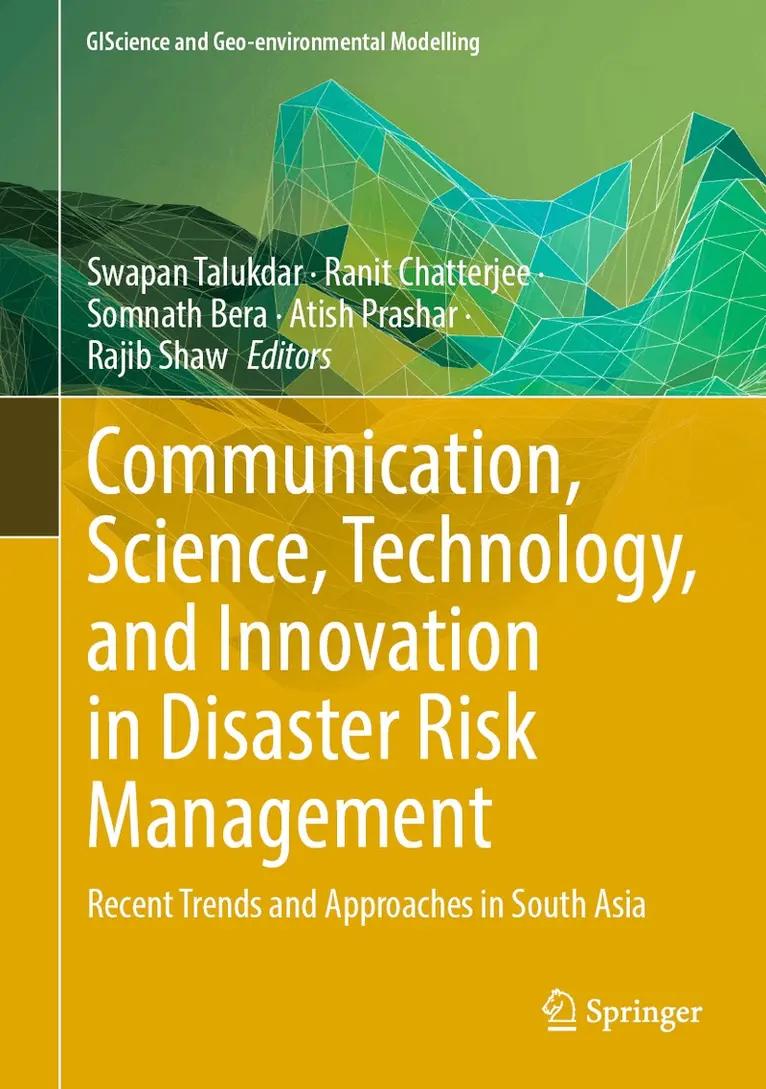
This book presents the three pillars of Disaster Risk Management (DRM): communication, innovation, and science and technology. These three pillars are applied across five dimensions, namely risk identification and reduction, preparedness, financial protection, resilient recovery, and risk-informed investments in South Asia. In the coming decades, the region will experience rapid economic development and population growth, which, combined with the effects of climate change, will increase the likelihood of being affected by hazards. As hazards can negatively impact every sector of the economy and undo years of economic progress, effective measures to reduce the risk must be incorporated into development plans and poverty reduction strategies.
Technological advances have opened up previously unimaginable opportunities to strengthen resilience and improve communications. In the South Asia, it has been experienced that the prevention of hazards and the development of emergency plans enabled by advances in communications and space technology can be much more successful and significantly costly effective than in the past. The use of space technology in disaster monitoring, early warning, and emergency response and for response has shown remarkable efficiency. New approaches to Disaster Risk Management (DRM) are becoming more available due to recent advances in space and communication technology. This book focuses on the use and innovation of space technology and communication for DRM in two specific areas: the Early Warning System (EWS) and the Disaster Information Management System (DIMS).
1 834 kr
Skickas inom 10-15 vardagar