Swapan Talukdar – författare
1 727 kr
Skickas inom 10-15 vardagar
2 138 kr
Läs direkt efter köp
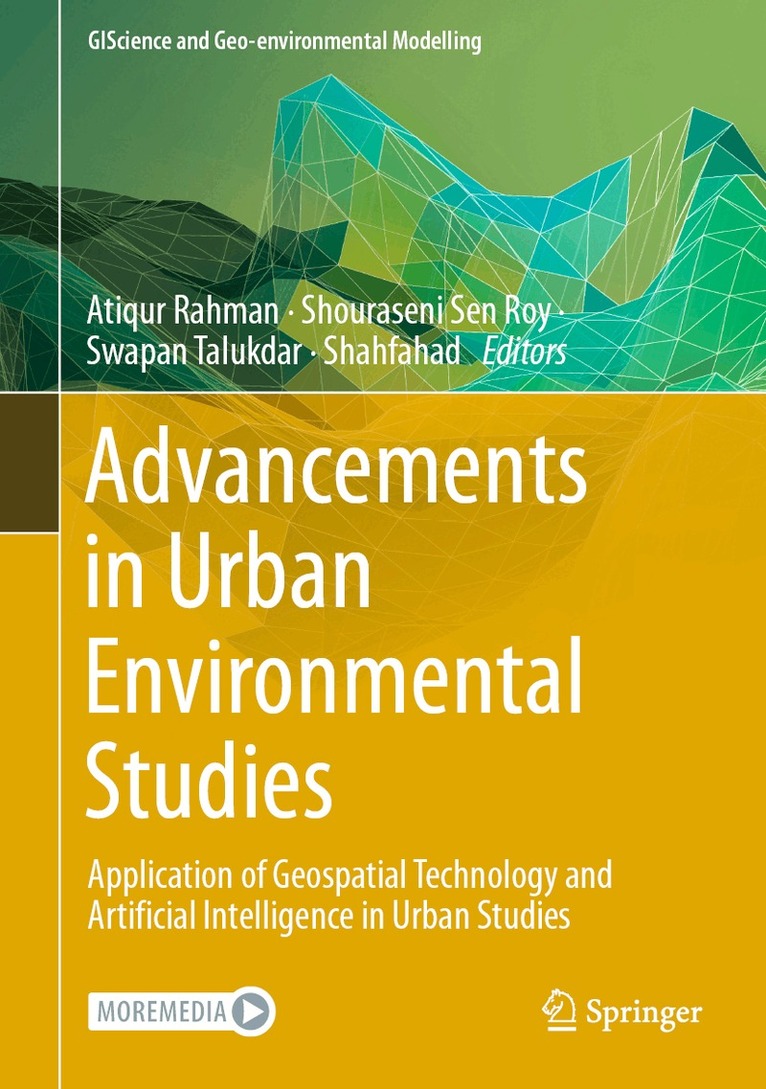
According to UN estimates, approximately nearly half of the world''s population now lives in cities and that figure is expected to rise to almost 70% by 2050. Cities now account for around 70% of worldwide greenhouse gas emissions, and this percentage is predicted to rise in the near future as a result of projected increases in global urbanization patterns. It is widely acknowledged that irrational urban planning and design can increase emissions while also exacerbating threats and risks, resulting in a slew of environmental issues such as urban heat islands, air pollution, flooding, amongst other issues, as well as environmental, social, and economic losses. Therefore, these concerns must be addressed promptly in order to cope up with these rising difficulties and make urban environments safer for residents.
With the advancement of remote sensing technology and the use of current remote observation systems, urban data science, remote sensing, and artificialintelligence (AI), modeling and quantifying emergent difficulties in urban regions and urban systems have become easy. They aid in the quantitative analysis of urban shape, functions, and human behavior in cities. Harvesting data, developing models, and suggesting new methodologies will be aided by combining urban ecology with new breakthroughs in data science. This book is of great value to a diverse group of academicians, scientists, students, environmentalists, meteorologists, urban planners, remote sensing and GIS experts with a common interest in geospatial sciences within the earth environmental sciences, as well as human and social sciences.
1 727 kr
Skickas inom 10-15 vardagar
1 941 kr
Skickas inom 10-15 vardagar
2 435 kr
Läs direkt efter köp
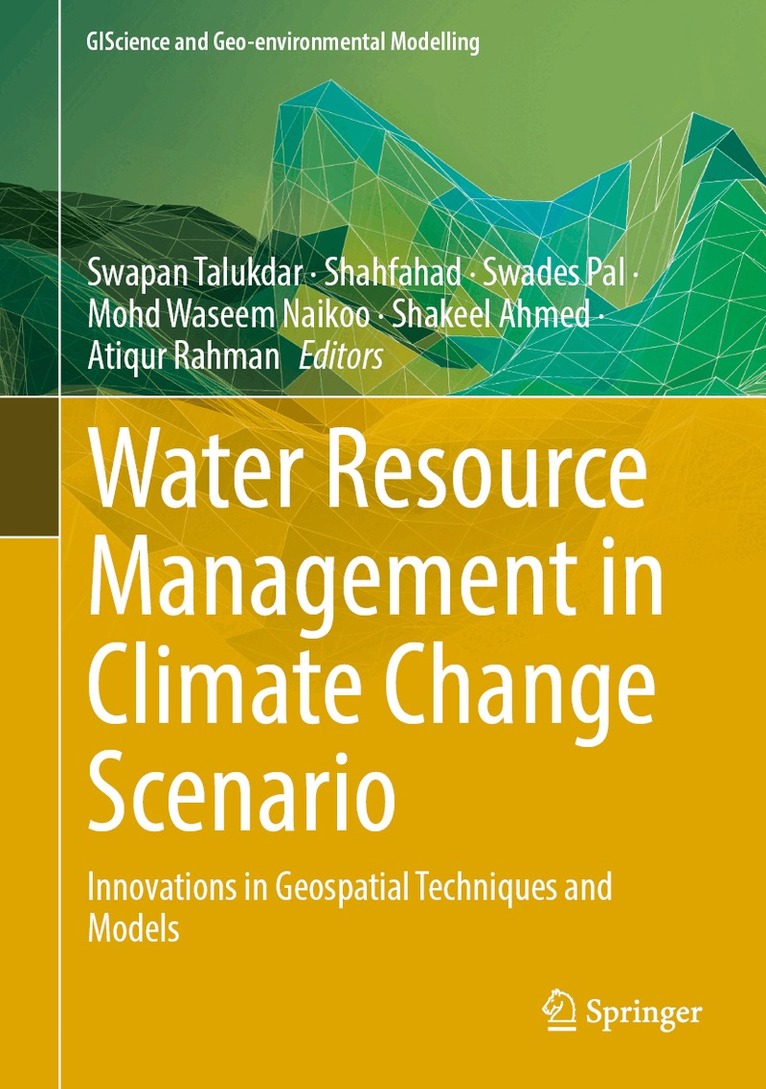
This book seeks to showcase the ongoing challenges of water resource and its management through innovative and cutting-edge approaches (flooding and droughts and their respective impacts; spatial and urban planning; early warning systems; estimation of losses; water resource in the age of global climate change; risk communication; meteorology; integrated analysis; risk mitigation; infrastructures; nature-based management; watershed management; transport; legal assessment; vulnerability analysis; public participation; or case studies). In the face of current global changes, the availability and quality of water resources are under severe threat. Indeed, in all sectors related to water resource management, sustainable development is important for present and future generations. Indeed, multiple problems such as water shortage or flooding, as well as environmental pollution phenomena, are observed. This situation is further exacerbated by poor management practices and unsustainable extraction of water for various consumptive uses. Consequently, many regions around the world, particularly urban areas, are becoming water stressed and conflicts over access to water are becoming ever more common. To overcome the significant challenges fundamental to the management of water resources, cutting-edge knowledge, innovative approaches, and an in-depth understanding of the inherent scientific, economic, social, and environmental issues are imperative. Therefore, water resource management requires a clear understanding of the ongoing challenges and innovative approaches. The authors and editors believe that this book provides huge knowledge and data in the fields of water resource management, earth environmental sciences, humanities, and social sciences, which target a diverse range of readers, such as academics, scientists, students, environmentalists, meteorologists, urban planners, remote sensing, and GIS experts.
1 941 kr
Skickas inom 10-15 vardagar
1 941 kr
Skickas inom 10-15 vardagar
2 435 kr
Läs direkt efter köp
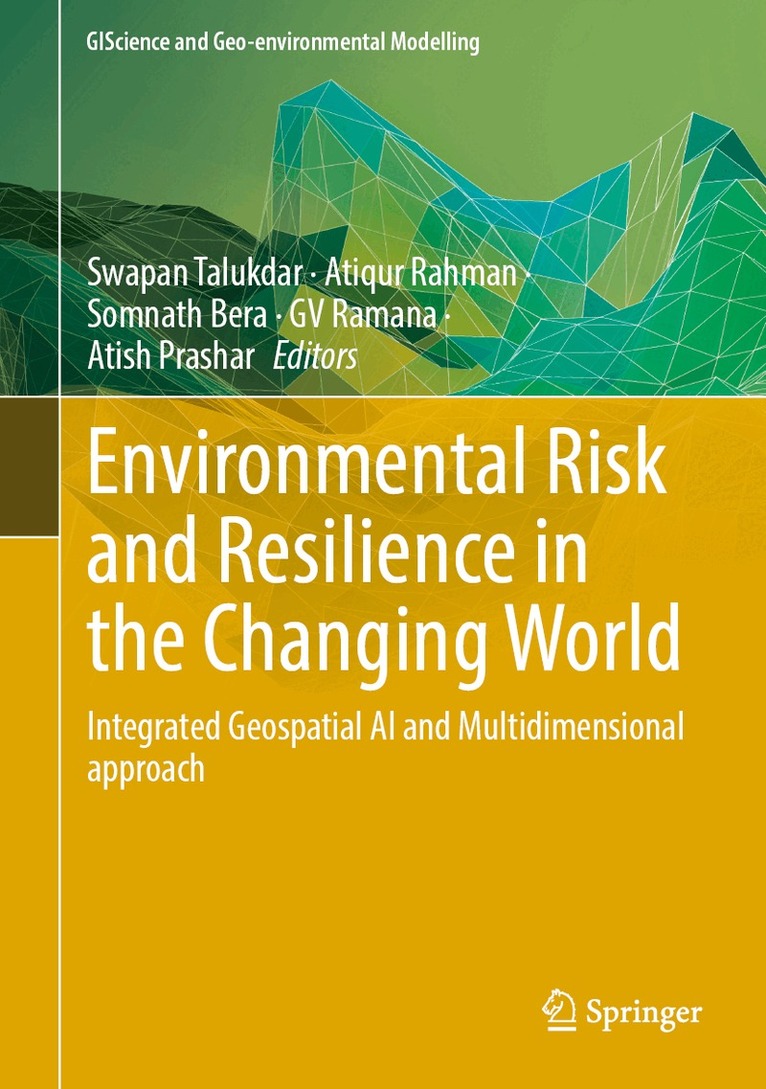
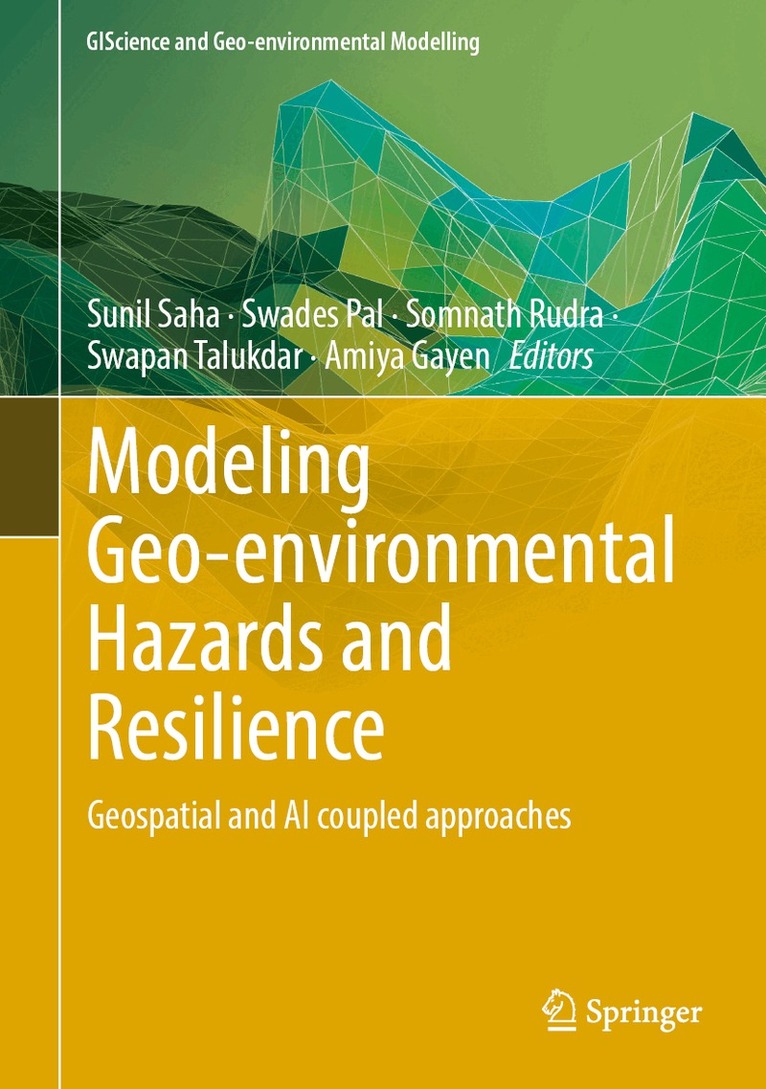
This book provides huge knowledge and data in the fields of geospatial sciences, earth environmental sciences, humanities, and social sciences, which target a diverse range of readers, such as academics, scientists, students, environmentalists, meteorologists, urban planners, remote sensing, and GIS experts. Earth environment (ecological envelope of geosphere, biosphere, hydrosphere, atmosphere and cryosphere) faces a significant challenge from different risks and threats due to due to rapid changes in global land use, population increase and pollution. They might drastically impair the ecosystem''s ability to maintain long-term service levels while bolstering the economic, social, and environmental pillars of sustainable development. Therefore, risk assessment (RA) has lately become a prominent research topic and a powerful mechanism for enforcing legal activities-related environmental restoration and health improvements to do sustainable development. The United States Environmental Protection Agency (USEPA) first used the risk assessment approach in 1980, and since then, it has expanded and become standard practice in many areas of ecological research. Some practices are air quality assessment, land degradation assessment, natural hazards risk assessment, urban surface ecological health condition, wetland and forest health assessment and drinking water quality assessment. However, recently risk assessment alone is not sufficient to propose any sustainable management plans. Also, there is no universal strategy for conducting risk assessments, and insufficient expertise with the methodology may result in erroneous findings. Therefore, scientists are increasingly interested in developing resilience strategies with AI and geospatial-based risk assessment to lower environmental risk. Different resilience approaches make different assumptions about the system dynamics involved in resilience-based environmental risk and impact assessment. Therefore, this book seeks to showcase the most current advances in risk and hazards assessment of environments with resilience strategies to mitigate the prevailing environmental issues with the help of remote sensing, GIS, artificial intelligence, and state-of-the-art frameworks like PSR, VIOR, nature-based solutions.
1 834 kr
Skickas inom 10-15 vardagar
2 283 kr
Läs direkt efter köp
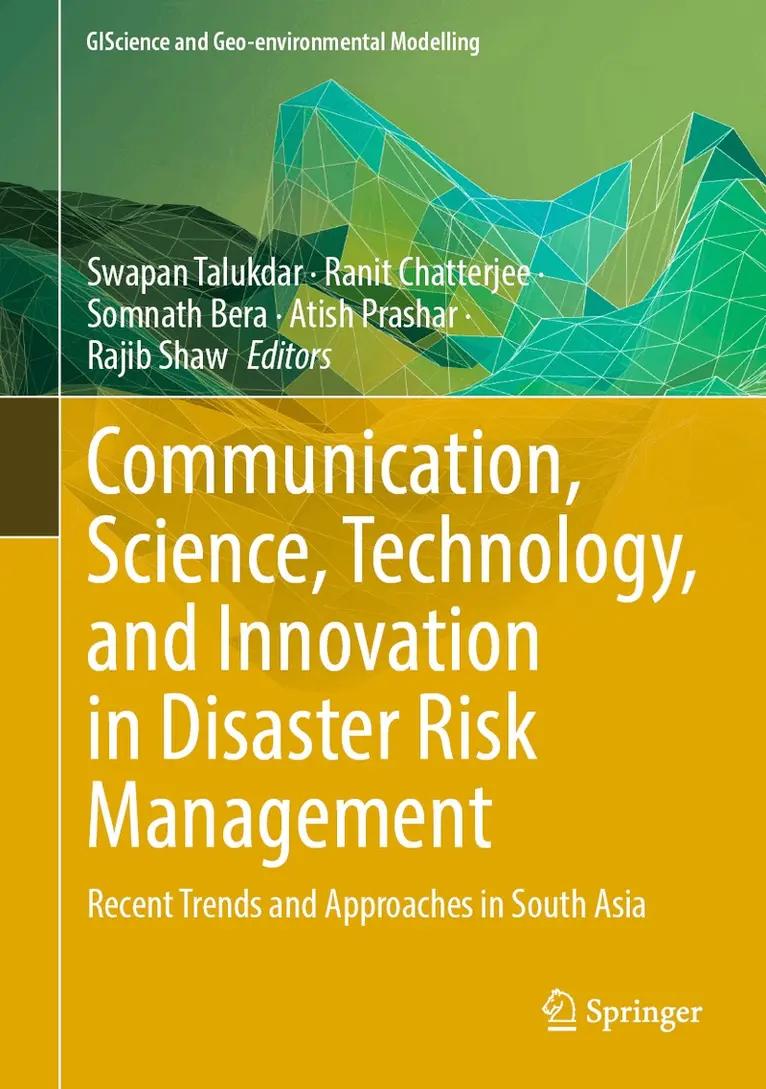
This book presents the three pillars of Disaster Risk Management (DRM): communication, innovation, and science and technology. These three pillars are applied across five dimensions, namely risk identification and reduction, preparedness, financial protection, resilient recovery, and risk-informed investments in South Asia. In the coming decades, the region will experience rapid economic development and population growth, which, combined with the effects of climate change, will increase the likelihood of being affected by hazards. As hazards can negatively impact every sector of the economy and undo years of economic progress, effective measures to reduce the risk must be incorporated into development plans and poverty reduction strategies.
Technological advances have opened up previously unimaginable opportunities to strengthen resilience and improve communications. In the South Asia, it has been experienced that the prevention of hazards and the development of emergency plans enabled by advances in communications and space technology can be much more successful and significantly costly effective than in the past. The use of space technology in disaster monitoring, early warning, and emergency response and for response has shown remarkable efficiency. New approaches to Disaster Risk Management (DRM) are becoming more available due to recent advances in space and communication technology. This book focuses on the use and innovation of space technology and communication for DRM in two specific areas: the Early Warning System (EWS) and the Disaster Information Management System (DIMS).
1 834 kr
Skickas inom 10-15 vardagar
1 825 kr
Skickas inom 5-8 vardagar
2 283 kr
Läs direkt efter köp