Avraham Sela - Böcker
Visar alla böcker från författaren Avraham Sela. Handla med fri frakt och snabb leverans.
7 produkter
7 produkter
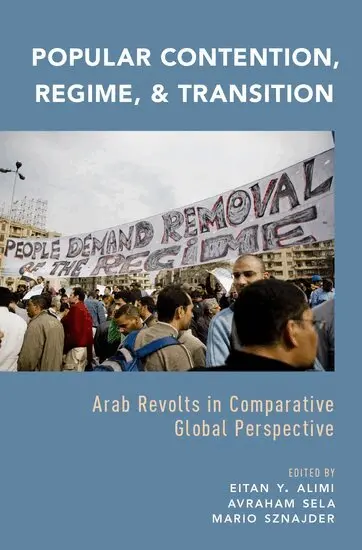
Popular Contention, Regime, and Transition
Arab Revolts in Comparative Global Perspective
Inbunden, Engelska, 2016
1 147 kr
Skickas inom 5-8 vardagar
Although episodes of resistance and contention in authoritarian and authoritarian-like regimes constitute the majority of mass political movements worldwide, the theories and models of popular contention have been developed on liberal-democratic assumptions. Prompted by the recent revolutionary waves in the Middle East and North Africa, Popular Contention, Regime, and Transition offers a deeper understanding of the complex and indeterminate linkages between popular protest, regime type, and transitions in democratic and authoritarian regimes alike. Through a diverse array of case studies from countries around the world, this volume places the Arab Spring uprisings in comparative perspective, demonstrating the similarities and parallels between contentious events in democratic and authoritarian-like regimes. Leading scholars in the fields of political science, sociologoy, and international studies discuss topics such as the set of initial conditions involved in the protest, prospects of contention, and forms of protest, as well as the role of historical legacies, regime responses, the military, social polarization, and external factors in the divergent outcomes of protest. By situating the study of contention in authoritarian and semi-authoritarian regimes in comparative perspective, Popular Contention, Regime, and Transition generates powerful insights into the impetus, dynamics, and consequences of contention in all contexts.
2 191 kr
Skickas inom 3-6 vardagar
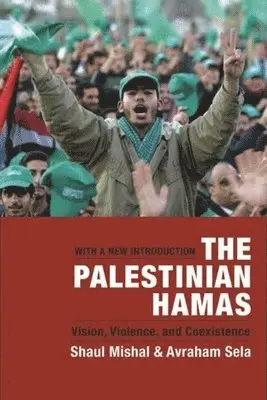
In The Palestinian Hamas, Shaul Mishal and Avraham Sela show that, contrary to its violent image, Hamas (the Islamic Resistance Movement) is essentially a social and political organization, providing extensive community services and responding to political realities through bargaining and power brokering. The authors lift the veil on Hamas's strategic decision-making methods at each of the crucial crossroads it has confronted: the Intifada and the struggle with the PLO, the Oslo accords and the establishment of the Palestinian National Authority, and the choice between absolute jihad against Israel and controlled violence. Now with a new introduction, this book does much to contextualize the current ascendancy of this controversial movement.
595 kr
Skickas inom 3-6 vardagar
In The Palestinian Hamas, Shaul Mishal and Avraham Sela show that, contrary to its violent image, Hamas (the Islamic Resistance Movement) is essentially a social and political organization, providing extensive community services and responding to political realities through bargaining and power brokering. The authors lift the veil on Hamas's strategic decision-making methods at each of the crucial crossroads it has confronted: the Intifada and the struggle with the PLO, the Oslo accords and the establishment of the Palestinian National Authority, and the choice between absolute jihad against Israel and controlled violence. Now with a new introduction, this book does much to contextualize the current ascendancy of this controversial movement.
264 kr
Skickas inom 7-10 vardagar
The 1948 War is remembered in this special volume, including aspects of Israeli-Jewish memory and historical narratives of 1948 and representations of Israeli-Palestinian memory of that cataclysmic event and its consequences. The contributors map and analyze a range of perspectives of the 1948 War as represented in literature, historical museums, art, visual media, and landscape, as well as in competing official and societal narratives. They are examined especially against the backdrop of the Oslo process, which brought into relief tensions within and between both sides of the national divide concerning identity and legitimacy, justice, and righteousness of "self" and "other."
2 088 kr
Skickas inom 10-15 vardagar
This book, prepared by the Permanent Secretariat of the Latin American Economic System (SFXA), analyzes a range of factors in the current economic policies of the United States that affect Latin American and Caribbean countries. In particular, it pinpoints the effects of U.S. monetary policy on the region's economies and trade relations and on the
617 kr
Skickas inom 10-15 vardagar
This book analyzes U.S. international economic policy and the interactions involved in its formulation. It discusses, among other issues, the effects of U.S. policy on Latin American economies and trade relations and the policies of international financial agencies.
Decline of the Arab-Israeli Conflict
Middle East Politics and the Quest for Regional Order
Häftad, Engelska, 1997
416 kr
Tillfälligt slut
Addresses the inter-Arab dimension of Middle East politics and its impact on the Palestinian conflict.This historical study of international Middle East politics in regional perspective presents a comprehensive analysis of the interplay between inter-Arab politics and the conflict with Israel-the two key issues which have shaped the Middle East contemporary history (and made it simultaneously tumultuous and a focus of international affairs).The Decline of the Arab-Israeli Conflict addresses the changing political behavior of the regional Arab system in the Palestine conflict, from total enmity to negotiated peace with Israel. This change is explained as a reflection of state formation process and constant thrust of ruling elites to disengage from compelling supra-state commitments stemming from Pan-Arab nationalist ideology and Islamic political culture.The book scrutinizes the role of Arab summit conferences which, since 1964, became the main collective Arab institution for decision making on common core issues-foremost of which was the conflict with Israel. The summits' main role was to legitimize incremental departure from the overburdening Palestine conflict whose powerful collective symbolism threatened states' autonomy. Summits' consensus sanctioned shifts from hitherto established collective Arab norms toward Israel as well as on inter-Arab relations, in accordance with core actors' interests. The summits offer a view to the Arab regional system's evolution as a negotiated inter-state order based on mutual recognition of sovereign states as opposed to compulsive collectivism in the name of Pan-Arabism. They were, in fact, a manipulation of the regional Arab system by primary participants' coalitions through employment of financial, ideological, and political trade-offs to resolve inter-Arab differences and reach a consensus on redefined collective goals.