Mario Sznajder - Böcker
Visar alla böcker från författaren Mario Sznajder. Handla med fri frakt och snabb leverans.
5 produkter
5 produkter
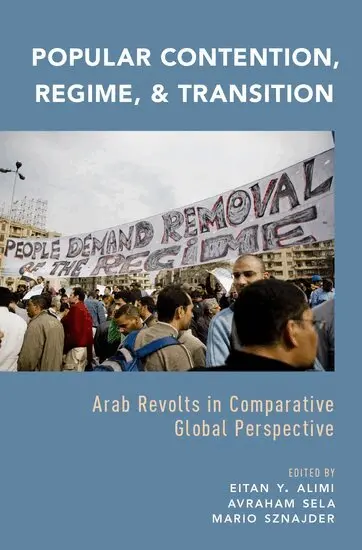
Popular Contention, Regime, and Transition
Arab Revolts in Comparative Global Perspective
Inbunden, Engelska, 2016
1 147 kr
Skickas inom 5-8 vardagar
Although episodes of resistance and contention in authoritarian and authoritarian-like regimes constitute the majority of mass political movements worldwide, the theories and models of popular contention have been developed on liberal-democratic assumptions. Prompted by the recent revolutionary waves in the Middle East and North Africa, Popular Contention, Regime, and Transition offers a deeper understanding of the complex and indeterminate linkages between popular protest, regime type, and transitions in democratic and authoritarian regimes alike. Through a diverse array of case studies from countries around the world, this volume places the Arab Spring uprisings in comparative perspective, demonstrating the similarities and parallels between contentious events in democratic and authoritarian-like regimes. Leading scholars in the fields of political science, sociologoy, and international studies discuss topics such as the set of initial conditions involved in the protest, prospects of contention, and forms of protest, as well as the role of historical legacies, regime responses, the military, social polarization, and external factors in the divergent outcomes of protest. By situating the study of contention in authoritarian and semi-authoritarian regimes in comparative perspective, Popular Contention, Regime, and Transition generates powerful insights into the impetus, dynamics, and consequences of contention in all contexts.
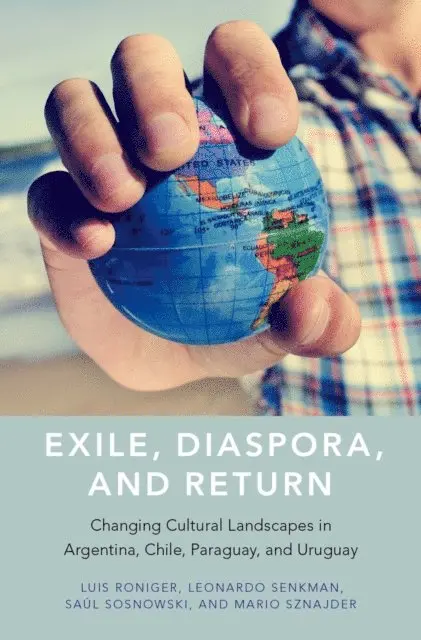
Exile, Diaspora, and Return
Changing Cultural Landscapes in Argentina, Chile, Paraguay, and Uruguay
Inbunden, Engelska, 2017
1 147 kr
Skickas inom 5-8 vardagar
During the late twentieth and early twenty-first centuries, dictatorships in Latin America hastened the outward movement of intellectuals, academics, artists, and political and social activists to other countries. Following the coups that toppled democratically elected governments or curtailed parliamentary oversight, the incoming military or civilian-military administrations assumed that, by forcing those aligned with opposition movements out of the country, they would assure their control of politics and domestic public spheres. Yet, by enlarging a diaspora of co-nationals, the authoritarian rulers merely extrapolated internal dissent and conflicts, emboldening opposition forces beyond their national borders. Displaced individuals soon had a presence in many host countries, gaining the support of solidarity circles and advocacy networks that condemned authoritarianism and worked with exiles and internal resistance towards the restoration of electoral democracy. Exiles soon became vehicles for spreading cultural ideas from abroad, celebrating cosmopolitanism over nationalism, and emphasizing human rights and democracy in Latin American countries.Exile, Diaspora, and Return explores how Argentina, Chile, Paraguay, and Uruguay have been affected by post-exilic relocations, transnational migrant displacements, and diasporas. Specifically, this book provides the first comprehensive analysis of diasporic experiences and the impact of returnees on the public life, culture, institutions, and development of post-authoritarian politics in the Southern Cone of the Americas. Bringing together sociopolitical, cultural, and policy analysis with the testimonies of dozens of intellectuals, academics, political activists, and policy makers, the authors address the impact of exile on people's lives and on their fractured experiences; the debates and prospects of return; the challenges of dis-exile and post-exilic trends; and the ways in which those who experienced exile impacted democratized institutions, public culture, and discourse. Furthermore, the authors present new readings of the recent history of South America and the diasporas that emphasize the importance of regional, transnational or global dimensions over the national.
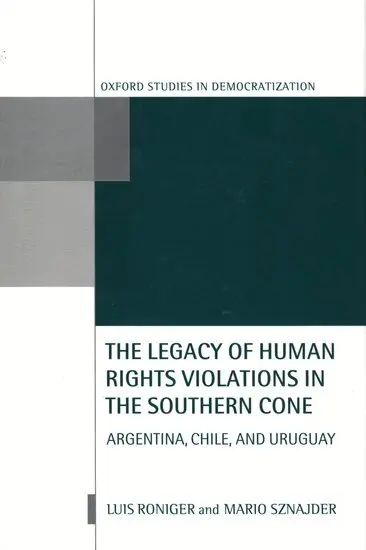
The Legacy of Human Rights Violations in the Southern Cone
Argentina, Chile, and Uruguay
Inbunden, Engelska, 1999
2 933 kr
Skickas inom 5-8 vardagar
The new democracies of the Southern Cone have publicly professed to reject and condemn the uses of the state power in various forms against citizens under military rule, thus dissociating themselves from their predecessors. And yet the experiences of military rule have become a grim legacy, raising major issues and dilemmas to the forefront of the public agenda. The Legacy of Human Rights Violations in the Southern Cone: Argentina, Chile, and Uruguay analyses in a systematic and comparative way the struggles and debates, the institutional paths and crises that took place in these societies following redemocratization in the 1980s and 1990s, as they confronted the legacy of violations committed under previous authoritarian governments and as the democratic administrations tried to balance normative principles and political contingency. The book also traces how these trends affected the development of politics of oblivion and memory and the restructuring of collective identity and solidarity following redemocratization. Oxford Studies in Democratization is a series for scholars and students of comparative politics and related disciplines. The series will concentrate on the comparative study of the democratization process that accompanied the decline and termination of the cold war. The geographical focus of the series will primarily be Latin America, the Caribbean, Southern and Eastern Europe, and relevant experiences in Africa and Asia.
1 390 kr
Skickas inom 7-10 vardagar
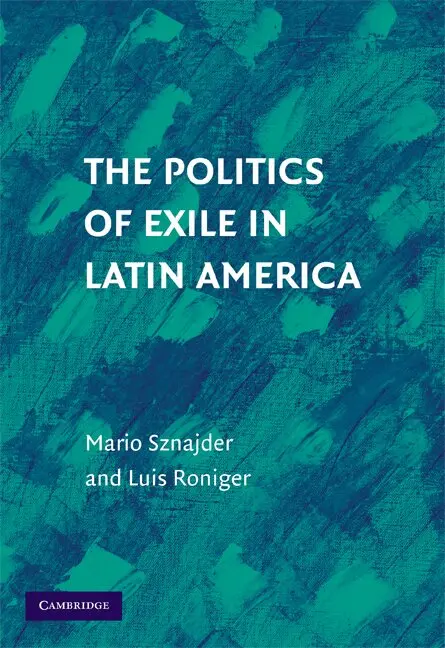
The Politics of Exile in Latin America addresses exile as a major mechanism of institutional exclusion used by all types of governments in the region against their own citizens, while they often provided asylum to aliens fleeing persecution. The work is the first systematic analysis of Latin American exile on a continental and transnational basis and on a long-term perspective. It traces variations in the saliency of exile among different expelling and receiving countries; across different periods; with different paths of exile, both elite and massive; and under authoritarian and democratic contexts. The project integrates theoretical hindsight and empirical findings, analyzing the importance of exile as a recent and contemporary phenomenon, while reaching back to its origins and phases of development. It also addresses presidential exile, the formation of Latin American communities of exiles worldwide, and the role of exiles in shaping the collective identities of these countries.
507 kr
Skickas inom 7-10 vardagar
The Politics of Exile in Latin America addresses exile as a major mechanism of institutional exclusion used by all types of governments in the region against their own citizens, while they often provided asylum to aliens fleeing persecution. The work is the first systematic analysis of Latin American exile on a continental and transnational basis and on a long-term perspective. It traces variations in the saliency of exile among different expelling and receiving countries; across different periods; with different paths of exile, both elite and massive; and under authoritarian and democratic contexts. The project integrates theoretical hindsight and empirical findings, analyzing the importance of exile as a recent and contemporary phenomenon, while reaching back to its origins and phases of development. It also addresses presidential exile, the formation of Latin American communities of exiles worldwide, and the role of exiles in shaping the collective identities of these countries.