Barak Kushner – författare
Visar alla böcker från författaren Barak Kushner. Handla med fri frakt och snabb leverans.
19 produkter
Examining Japan's Lost Decades
Av Yoichi Funabashi, Barak Kushner
Häftad, 2016
934 kr
Lägg i varukorg
This book examines five features of Japan’s ‘Lost Decades’: the speed of the economic decline in Japan compared to Japan’s earlier global prowess; a rapidly declining population; considerable political instability and failed reform attempts; shifting balances of power in the region and changing …
Men to Devils, Devils to Men
Japanese War Crimes and Chinese Justice
Inbunden, 2015
557 kr
Lägg i varukorg
The Japanese Army committed numerous atrocities during its pitiless campaigns in China from 1931 to 1945. When the Chinese emerged victorious with the Allies at the end of World War II, many seemed ready to exact retribution for these crimes. Rather than resort to violence, however, they chose to …
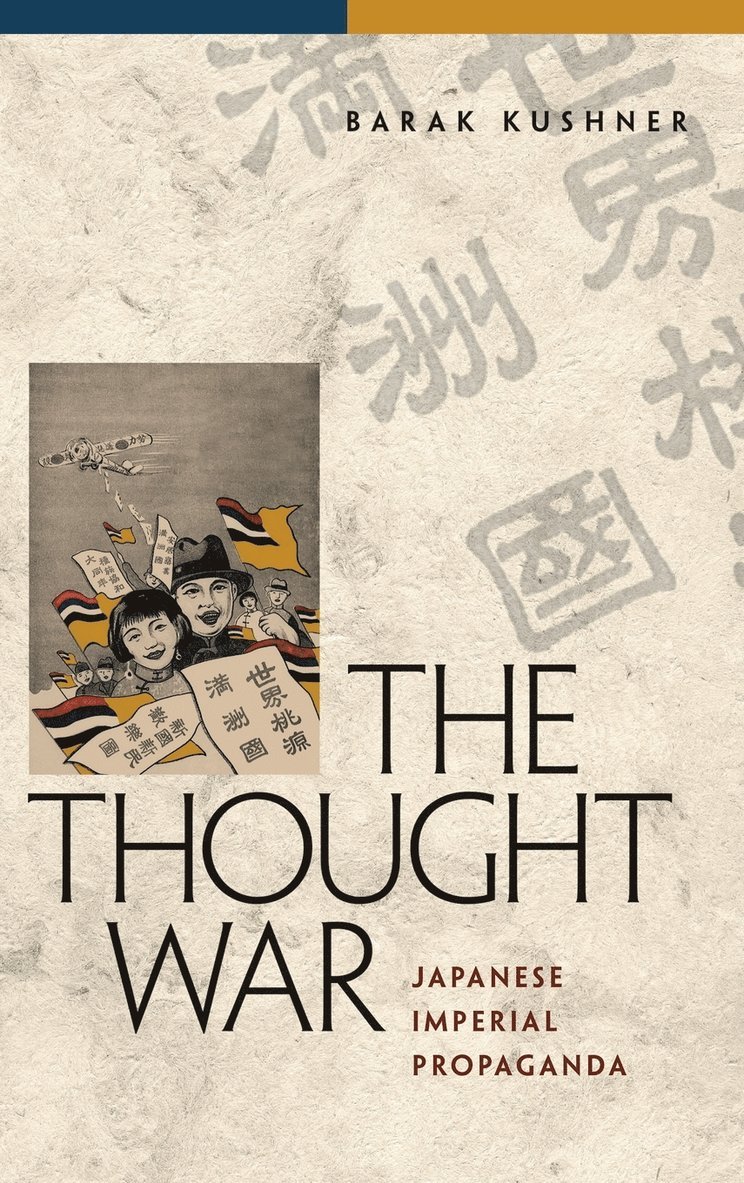
Thought War
Japanese Imperial Propaganda
Inbunden, 2005
877 kr
Lägg i varukorg
A major contribution both to the study of Japan and propaganda in the twentieth century. Barak Kushner meticulously and convincingly reveals the full scope of what was assumed to not have existed; namely an organized, multifaceted, and disturbingly resilient system of Japanese propaganda. Based on …
Thought War
Japanese Imperial Propaganda
Häftad, 2007
225 kr
Lägg i varukorg
The Thought War is the first book in English to examine the full extent of Japan’s wartime propaganda. Based on a wide range of archival material and sources in Japanese, Chinese, and English, it explores the propaganda programs of the Japanese government from 1931 to 1945, demonstrating the true …
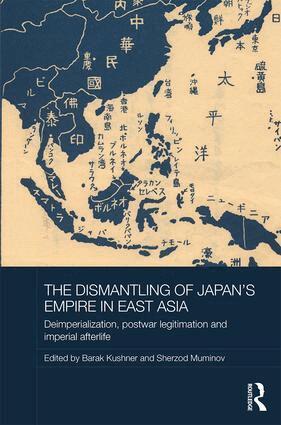
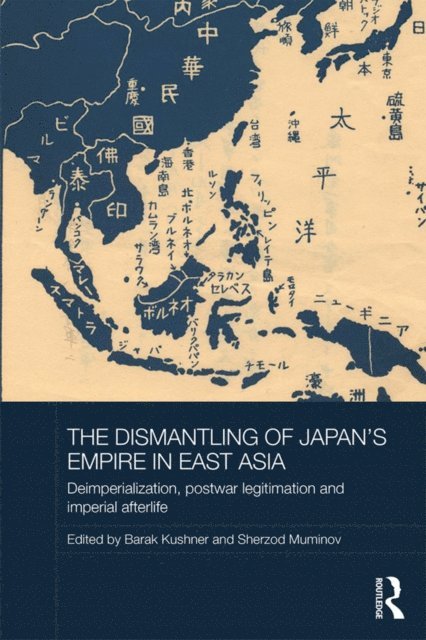
Dismantling of Japan's Empire in East Asia
Deimperialization, Postwar Legitimation and Imperial Afterlife
Av Barak Kushner, Sherzod Muminov
Inbunden, 2016
2818 kr
Lägg i varukorg
The end of Japan’s empire appeared to happen very suddenly and cleanly – but, as this book shows, it was in fact very messy, with a long period of establishing or re-establishing the postwar order. Moreover, as the authors argue, empires have afterlives, which, in the case of Japan’s empire, is not …
Dismantling of Japan's Empire in East Asia
Deimperialization, Postwar Legitimation and Imperial Afterlife
Av Barak Kushner, Sherzod Muminov
Häftad, 2018
814 kr
Lägg i varukorg
The end of Japan’s empire appeared to happen very suddenly and cleanly – but, as this book shows, it was in fact very messy, with a long period of establishing or re-establishing the postwar order. Moreover, as the authors argue, empires have afterlives, which, in the case of Japan’s empire, is not …
Examining Japan's Lost Decades
Av Yoichi Funabashi, Barak Kushner
Inbunden, 2015
2578 kr
Lägg i varukorg
This book examines five features of Japan’s ‘Lost Decades’: the speed of the economic decline in Japan compared to Japan’s earlier global prowess; a rapidly declining population; considerable political instability and failed reform attempts; shifting balances of power in the region and changing …
Dismantling of Japan's Empire in East Asia
Deimperialization, Postwar Legitimation and Imperial Afterlife
Av Sherzod Muminov, Barak Kushner
E-bok, 2016
935 kr
Lägg i varukorg
The end of Japan’s empire appeared to happen very suddenly and cleanly – but, as this book shows, it was in fact very messy, with a long period of establishing or re-establishing the postwar order. Moreover, as the authors argue, empires have afterlives, which, in the case of Japan’s empire, …
Dismantling of Japan's Empire in East Asia
Deimperialization, Postwar Legitimation and Imperial Afterlife
Av Sherzod Muminov, Barak Kushner
E-bok, 2016
942 kr
Lägg i varukorg
The end of Japan’s empire appeared to happen very suddenly and cleanly – but, as this book shows, it was in fact very messy, with a long period of establishing or re-establishing the postwar order. Moreover, as the authors argue, empires have afterlives, which, in the case of Japan’s empire, …
Examining Japan's Lost Decades
Av Barak Kushner, Yoichi Funabashi
E-bok, 2015
1106 kr
Lägg i varukorg
This book examines five features of Japan’s ‘Lost Decades’: the speed of the economic decline in Japan compared to Japan’s earlier global prowess; a rapidly declining population; considerable political instability and failed reform attempts; shifting balances of power in the region and changing …
Examining Japan's Lost Decades
Av Barak Kushner, Yoichi Funabashi
E-bok, 2015
1106 kr
Lägg i varukorg
This book examines five features of Japan’s ‘Lost Decades’: the speed of the economic decline in Japan compared to Japan’s earlier global prowess; a rapidly declining population; considerable political instability and failed reform attempts; shifting balances of power in the region and changing …
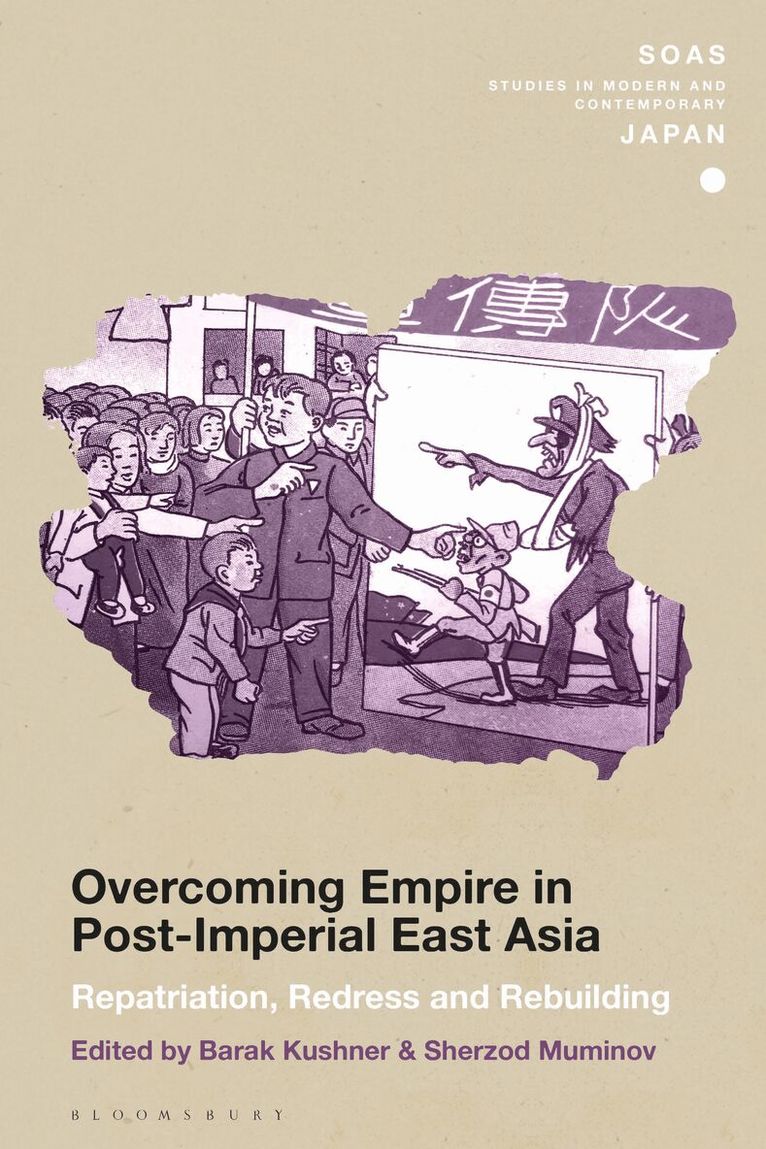
Overcoming Empire in Post-Imperial East Asia
Repatriation, Redress and Rebuilding
Av Barak Kushner, Sherzod Muminov
Inbunden, 2019
1748 kr
Lägg i varukorg
When Emperor Hirohito announced defeat in a radio broadcast on 15th August 1945, Japan was not merely a nation; it was a colossal empire stretching from the tip of Alaska to the fringes of Australia grown out of a colonial ideology that continued to pervade East Asian society for years after the …
Overcoming Empire in Post-Imperial East Asia
Repatriation, Redress and Rebuilding
Av Barak Kushner, Sherzod Muminov
E-bok, 2019
530 kr
Lägg i varukorg
When Emperor Hirohito announced defeat in a radio broadcast on 15th August 1945, Japan was not merely a nation; it was a colossal empire stretching from the tip of Alaska to the fringes of Australia grown out of a colonial ideology that continued to pervade East Asian society for years after the …
Overcoming Empire in Post-Imperial East Asia
Repatriation, Redress and Rebuilding
Av Barak Kushner, Sherzod Muminov
E-bok, 2019
518 kr
Lägg i varukorg
When Emperor Hirohito announced defeat in a radio broadcast on 15th August 1945, Japan was not merely a nation; it was a colossal empire stretching from the tip of Alaska to the fringes of Australia grown out of a colonial ideology that continued to pervade East Asian society for years after the …
Overcoming Empire in Post-Imperial East Asia
Repatriation, Redress and Rebuilding
Av Barak Kushner, Sherzod Muminov
Häftad, 2021
486 kr
Lägg i varukorg
When Emperor Hirohito announced defeat in a radio broadcast on 15th August 1945, Japan was not merely a nation; it was a colossal empire stretching from the tip of Alaska to the fringes of Australia grown out of a colonial ideology that continued to pervade East Asian society for years after the …
Geography of Injustice
East Asia's Battle Between Memory and History
Inbunden, 2024
703 kr
Lägg i varukorg
In The Geography of Injustice, Barak Kushner argues that the war crimes tribunals in East Asia formed and cemented national divides that persist into the present day. In 1946 the Allies convened the Tokyo Trial to prosecute Japanese wartime atrocities and Japan's empire. At its conclusion one of …
Slurp! A Social and Culinary History of Ramen - Japan's Favorite Noodle Soup
Inbunden, 2012
1573 kr
Lägg i varukorg
Ramen, Japan’s noodle soup, is a microcosm of Japan and its historical relations with China. The long evolution of ramen helps us enter the history of cuisine in Japan, charting how food and politics combined as a force within Sino-Japan relations. Cuisine in East Asia plays a significant political …
Slurp! A Social and Culinary History of Ramen - Japan's Favorite Noodle Soup
Häftad, 2012
552 kr
Lägg i varukorg
Ramen, Japan’s noodle soup, is a microcosm of Japan and its historical relations with China. The long evolution of ramen helps us enter the history of cuisine in Japan, charting how food and politics combined as a force within Sino-Japan relations. Cuisine in East Asia plays a significant political …
In the Ruins of the Japanese Empire
Imperial Violence, State Destruction, and the Reordering of Modern East Asia
Inbunden, 2020
844 kr
Lägg i varukorg