Barbara J. Bain – författare
1 493 kr
Skickas inom 5-8 vardagar
998 kr
Skickas inom 5-8 vardagar
For more than 65 years, this best-selling text by Drs. Barbara J. Bain, Imelda Bates, and Mike A. Laffan has been the worldwide standard in laboratory haematology. The 12th Edition of Dacie and Lewis Practical Haematology continues the tradition of excellence with thorough coverage of all of the techniques used in the investigation of patients with blood disorders, including the latest technologies as well as traditional manual methods of measurement. You’ll find expert discussions of the principles of each test, possible causes of error, and the interpretation and clinical significance of the findings.
1 572 kr
Läs direkt efter köp
The analysis of blood, bone marrow and tissue fluid specimens requires a multi-faceted approach with the integration of scientific data from a number of disciplines. No single discipline can operate in isolation or errors will occur. Flow cytometry is in a privileged position in that it can provide rapid analysis of specimens and it is often the first definitive investigation to produce results and help formulate a working diagnosis.
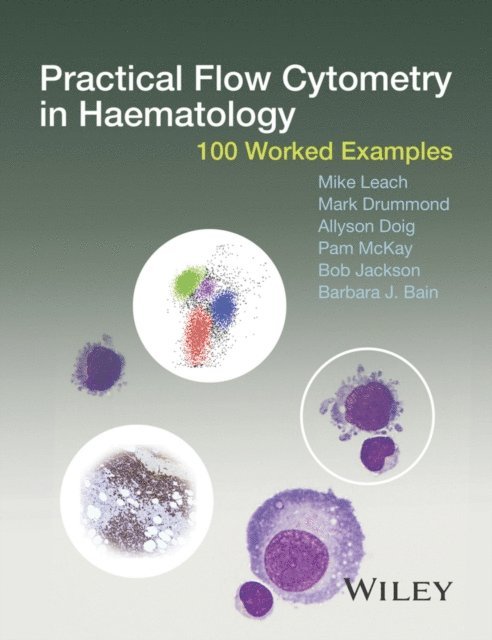
This companion text to Practical Flow Cytometry in Haematology Diagnosis contains 100 worked examples drawn from real clinical cases presenting to the authors’ institution. Cases are illustrated with peripheral blood and bone marrow cytology, tissue pathology and cytogenetic and molecular data, which are integrated to generate, where appropriate, a diagnosis based on the WHO Classification of Tumours of Haematopoietic and Lymphoid Tissues. The spectrum of clinical cases includes adult and paediatric patients, and both neoplastic and reactive disorders. The cases appear in no particular order to challenge the reader to make their own diagnosis.
The reader will review May−Grünwald−Giemsa (MGG)-stained films of peripheral blood and bone marrow aspirates presented alongside flow cytometric data and haematoxylin and eosin (H&E)-stained bone marrow and other tissue biopsy sections. Immunohistochemistry is used to further clarify the tissue lineage and cell differentiation. Cytogenetic studies using metaphase preparations are used to identify translocations and chromosome gains and losses whilst interphase fluorescence in situ hybridisation (FISH) studies and polymerase chain reaction (PCR) are used to identify gene fusions, gene rearrangements and deletions. Each case concludes with a discussion of the features that are important to making a diagnosis. The cases are also listed according to disease classification in the appendix so that the text can also be used as a reference.
Practical Flow Cytometry in Haematology: 100 Worked Examples:
Provides a practical, example-based resource for flow cytometry Demonstrates how flow cytometry results should be interpreted and applied to optimize patient care Includes both malignant and benign conditions Can be used in conjunction with Practical Flow Cytometry in Haematology Diagnosis, by the same author team (ISBN 9780470671207)Practical Flow Cytometry in Haematology: 100 Worked Examples is ideal for practicing haematologists and histopathologists with an interest in haematopathology, but particularly directed at trainee haematologists and scientists preparing for FRCPath and related examinations.
1 629 kr
Läs direkt efter köp
The analysis of blood, bone marrow and tissue fluid specimens requires a multi-faceted approach with the integration of scientific data from a number of disciplines. No single discipline can operate in isolation or errors will occur. Flow cytometry is in a privileged position in that it can provide rapid analysis of specimens and it is often the first definitive investigation to produce results and help formulate a working diagnosis.
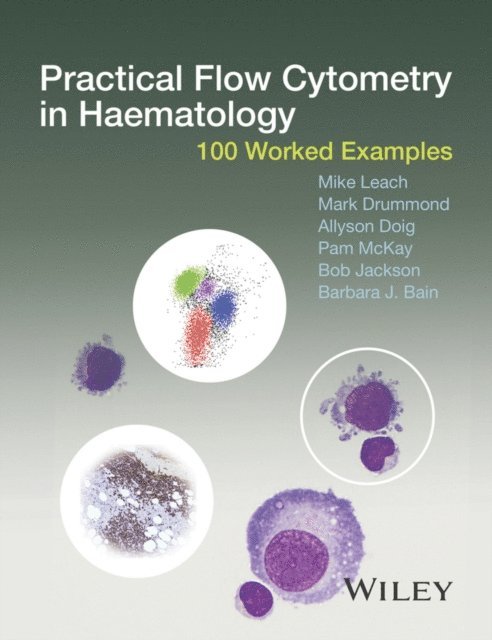
This companion text to Practical Flow Cytometry in Haematology Diagnosis contains 100 worked examples drawn from real clinical cases presenting to the authors’ institution. Cases are illustrated with peripheral blood and bone marrow cytology, tissue pathology and cytogenetic and molecular data, which are integrated to generate, where appropriate, a diagnosis based on the WHO Classification of Tumours of Haematopoietic and Lymphoid Tissues. The spectrum of clinical cases includes adult and paediatric patients, and both neoplastic and reactive disorders. The cases appear in no particular order to challenge the reader to make their own diagnosis.
The reader will review May−Grünwald−Giemsa (MGG)-stained films of peripheral blood and bone marrow aspirates presented alongside flow cytometric data and haematoxylin and eosin (H&E)-stained bone marrow and other tissue biopsy sections. Immunohistochemistry is used to further clarify the tissue lineage and cell differentiation. Cytogenetic studies using metaphase preparations are used to identify translocations and chromosome gains and losses whilst interphase fluorescence in situ hybridisation (FISH) studies and polymerase chain reaction (PCR) are used to identify gene fusions, gene rearrangements and deletions. Each case concludes with a discussion of the features that are important to making a diagnosis. The cases are also listed according to disease classification in the appendix so that the text can also be used as a reference.
Practical Flow Cytometry in Haematology: 100 Worked Examples:
Provides a practical, example-based resource for flow cytometry Demonstrates how flow cytometry results should be interpreted and applied to optimize patient care Includes both malignant and benign conditions Can be used in conjunction with Practical Flow Cytometry in Haematology Diagnosis, by the same author team (ISBN 9780470671207)Practical Flow Cytometry in Haematology: 100 Worked Examples is ideal for practicing haematologists and histopathologists with an interest in haematopathology, but particularly directed at trainee haematologists and scientists preparing for FRCPath and related examinations.
1 409 kr
Skickas inom 5-8 vardagar
1 933 kr
Läs direkt efter köp
2 004 kr
Läs direkt efter köp
2 264 kr
Läs direkt efter köp
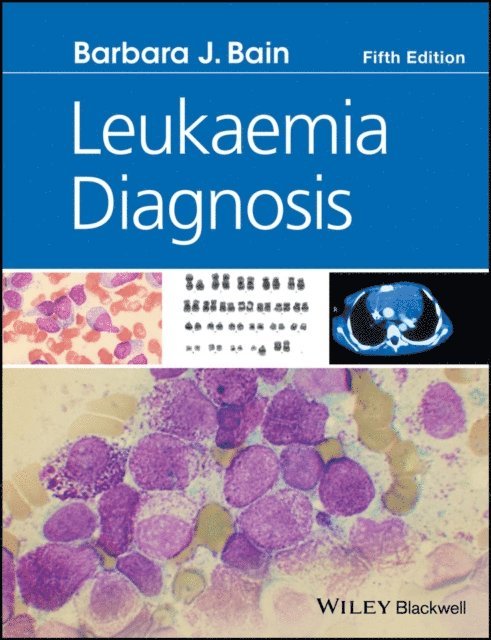
From the bestselling author, Barbara J. Bain, the new edition of this practical reference on the principles of leukaemia diagnosis and classification has been fully updated, and incorporates the recently revised WHO classification.
Leukaemias are a very heterogeneous group of diseases, which differ from each other in aetiology, pathogenesis, prognosis and responsiveness to treatment. Accurate diagnosis and classification are vital for the identification of specific biological entities and underpin scientific advances in this field. The detailed characterization of haematological neoplasms is also essential for the optimal management of individual patients.
In this user-friendly guide, Professor Bain illustrates and explains how these many laboratory techniques are used for the diagnosis and classification of leukaemia and related disorders. Leukaemia Diagnosis, Fifth Edition will be highly valuable to trainee haematologists and laboratory scientists in haematology and related disciplines, and will also prove a useful reference source and teaching aid for those who already have expertise in this field. In addition, cytogeneticists and molecular geneticists will find that this book enhances their understanding of the relationship of their disciplines to the diagnosis, classification and monitoring of leukaemia and related disorders.
Essential reading for every haematologist and haematopathologist, Leukaemia Diagnosis, Fifth Edition features
Over 300 high quality full colour digital images of abnormal cells in leukaemia and lymphoma supplemented by histological, cytogenetic and immunophenotyping images Recent information on cytogenetic and molecular genetic abnormalities in leukaemia Updated information on the characteristic immunophenotypic characteristics of different categories of leukaemia2 284 kr
Läs direkt efter köp
From the bestselling author, Barbara J. Bain, the new edition of this practical reference on the principles of leukaemia diagnosis and classification has been fully updated, and incorporates the recently revised WHO classification.
Leukaemias are a very heterogeneous group of diseases, which differ from each other in aetiology, pathogenesis, prognosis and responsiveness to treatment. Accurate diagnosis and classification are vital for the identification of specific biological entities and underpin scientific advances in this field. The detailed characterization of haematological neoplasms is also essential for the optimal management of individual patients.
In this user-friendly guide, Professor Bain illustrates and explains how these many laboratory techniques are used for the diagnosis and classification of leukaemia and related disorders. Leukaemia Diagnosis, Fifth Edition will be highly valuable to trainee haematologists and laboratory scientists in haematology and related disciplines, and will also prove a useful reference source and teaching aid for those who already have expertise in this field. In addition, cytogeneticists and molecular geneticists will find that this book enhances their understanding of the relationship of their disciplines to the diagnosis, classification and monitoring of leukaemia and related disorders.
Essential reading for every haematologist and haematopathologist, Leukaemia Diagnosis, Fifth Edition features
Over 300 high quality full colour digital images of abnormal cells in leukaemia and lymphoma supplemented by histological, cytogenetic and immunophenotyping images Recent information on cytogenetic and molecular genetic abnormalities in leukaemia Updated information on the characteristic immunophenotypic characteristics of different categories of leukaemia554 kr
Skickas inom 5-8 vardagar
635 kr
Läs direkt efter köp
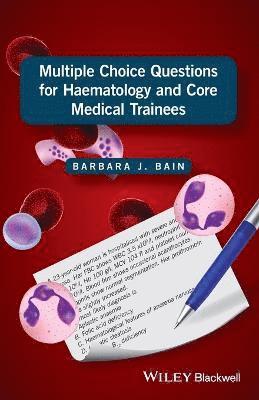
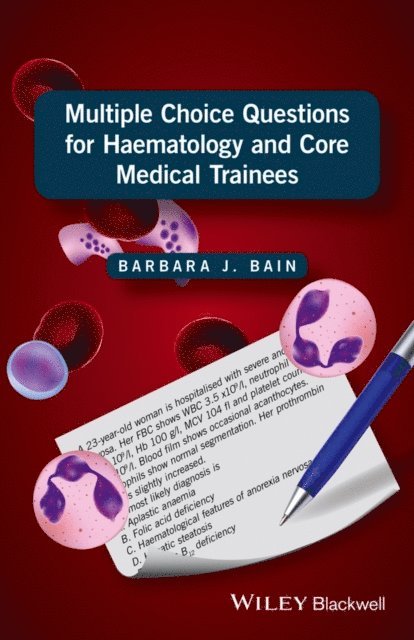
Written to help haematology and general medical trainees evaluate their own knowledge, and particularly useful for those preparing for the Part 1 examination of the Royal College of Pathologists. This exam-centered book will also be of use to core medical trainees preparing for the examinations of the Royal College of Physicians and the Royal Australasian College of Physicians and to haematology and general medicine trainees in other countries where methods of examination are similar.
The 150 questions are presented in two formats, Single Best Answer and Extended Matching Question, and comes complete with detailed feedback and, when appropriate, relevant references are given for each question so that those who select the wrong answer will understand why another answer is better.
Quick reference question book, ideal for examination preparation Includes 50 SBA questions, ideal for the Part 1 and Part 2 MRCP examinations, which although having a general medical slant, are also appropriate for haematology specialist trainees Includes 70 SBA multiple choice questions appropriate for haematology specialist trainees but also useful to core medical trainees Includes 30 EMQs suitable for those taking Part 1 of the FRCPath examination Questions come complete with fully referenced answers and discussion pointsThis book provides an educational tool for training as well as an ideal way to prepare for examinations and is also of value to those who examine in haematology and haematopathology.
613 kr
Läs direkt efter köp
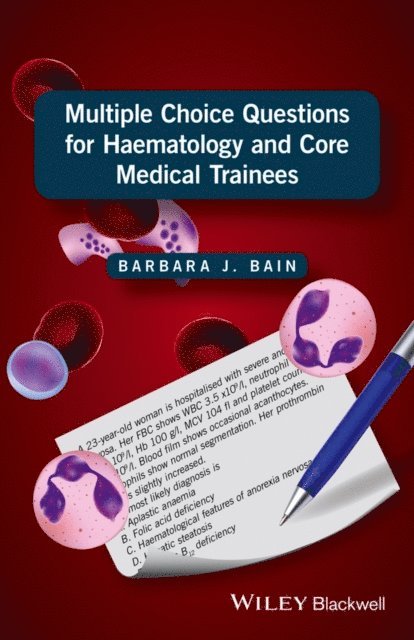
Written to help haematology and general medical trainees evaluate their own knowledge, and particularly useful for those preparing for the Part 1 examination of the Royal College of Pathologists. This exam-centered book will also be of use to core medical trainees preparing for the examinations of the Royal College of Physicians and the Royal Australasian College of Physicians and to haematology and general medicine trainees in other countries where methods of examination are similar.
The 150 questions are presented in two formats, Single Best Answer and Extended Matching Question, and comes complete with detailed feedback and, when appropriate, relevant references are given for each question so that those who select the wrong answer will understand why another answer is better.
Quick reference question book, ideal for examination preparation Includes 50 SBA questions, ideal for the Part 1 and Part 2 MRCP examinations, which although having a general medical slant, are also appropriate for haematology specialist trainees Includes 70 SBA multiple choice questions appropriate for haematology specialist trainees but also useful to core medical trainees Includes 30 EMQs suitable for those taking Part 1 of the FRCPath examination Questions come complete with fully referenced answers and discussion pointsThis book provides an educational tool for training as well as an ideal way to prepare for examinations and is also of value to those who examine in haematology and haematopathology.
596 kr
Skickas inom 5-8 vardagar
660 kr
Läs direkt efter köp
684 kr
Läs direkt efter köp
1 603 kr
Läs direkt efter köp
This unique handbook contains comprehensive coverage of neonatal haematology and aids diagnosis via high-quality images, diagnostic algorithms, case studies, and tables. With illustrations accompanying the diagnosis at each stage and clear explanations provided throughout, the book is ideal for trainees and experts alike.
Authored by two of the world’s leading haematologists, Professor Irene Roberts and Professor Barbara Bain, this book provides a depth of knowledge that is unequalled in other texts. To aid in reader comprehension, it is neatly organised by clinical problems and covers sample topics such as:
Red cells: morphology, membrane, enzymes, and changes over the first 4 weeks of life Haemolytic anaemias: causes of neonatal haemolysis, diagnostic clues, and immune haemolysis (haemolytic disease of the newborn) Neonatal anaemia due to blood loss: causes of blood loss, diagnostic clues, feto-maternal haemorrhage, and twin-to-twin transfusion Haematological signs of neonatal infection: causes of neutrophil left shift, leucoerythroblastosis, and toxic granulationPaediatric haematologists, consultant haematologists, and trainees in haematology can use the succinct, well-written content in this book as a useful helping hand during consultation. Biomedical scientists will also value the work as a laboratory reference.
1 437 kr
Skickas inom 5-8 vardagar
1 662 kr
Läs direkt efter köp
This unique handbook contains comprehensive coverage of neonatal haematology and aids diagnosis via high-quality images, diagnostic algorithms, case studies, and tables. With illustrations accompanying the diagnosis at each stage and clear explanations provided throughout, the book is ideal for trainees and experts alike.
Authored by two of the world’s leading haematologists, Professor Irene Roberts and Professor Barbara Bain, this book provides a depth of knowledge that is unequalled in other texts. To aid in reader comprehension, it is neatly organised by clinical problems and covers sample topics such as:
Red cells: morphology, membrane, enzymes, and changes over the first 4 weeks of life Haemolytic anaemias: causes of neonatal haemolysis, diagnostic clues, and immune haemolysis (haemolytic disease of the newborn) Neonatal anaemia due to blood loss: causes of blood loss, diagnostic clues, feto-maternal haemorrhage, and twin-to-twin transfusion Haematological signs of neonatal infection: causes of neutrophil left shift, leucoerythroblastosis, and toxic granulationPaediatric haematologists, consultant haematologists, and trainees in haematology can use the succinct, well-written content in this book as a useful helping hand during consultation. Biomedical scientists will also value the work as a laboratory reference.
2 525 kr
Läs direkt efter köp
2 436 kr
Läs direkt efter köp
2 284 kr
Läs direkt efter köp
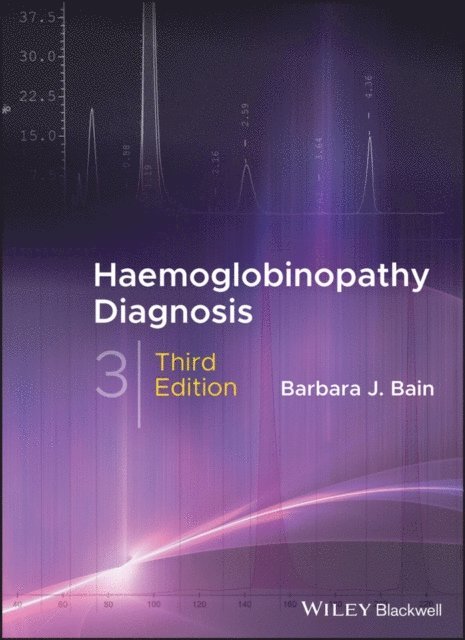
An updated, essential guide for the laboratory diagnosis of haemoglobin disorders
This revised and updated third edition of Haemoglobinopathy Diagnosis offers a comprehensive review of the practical information needed for an understanding of the laboratory diagnosis of haemoglobin disorders. Written in a concise and approachable format, the book includes an overview of clinical and laboratory features of these disorders. The author focuses on the selection, performance, and interpretation of the tests that are offered by the majority of diagnostic laboratories. The book also explains when more specialist tests are required and explores what specialist referral centres will accomplish. The information on diagnosis is set in a clinical context.
The third edition is written by a leading haematologist with a reputation for educational excellence. Designed as a practical resource, the book is filled with illustrative examples and helpful questions that can aide in the retention of the material presented. Additionally, the author includes information on the most recent advances in the field. This important text:
• Contains a practical, highly illustrated, approach to the laboratory diagnosis of haemoglobin disorders
• Includes “test-yourself” questions and provides an indispensable tool for learning and teaching
• Presents new material on antenatal screening/prenatal diagnostic services
• Offers myriad self-assessment case studies that are ideal for the trainee
Written for trainees and residents in haematology, practicing haematologists, and laboratory scientists, Haemoglobinopathy Diagnosis is an essential reference and learning tool that provides a clear basis for understanding the diagnosis of haemoglobin disorders.
2 264 kr
Läs direkt efter köp
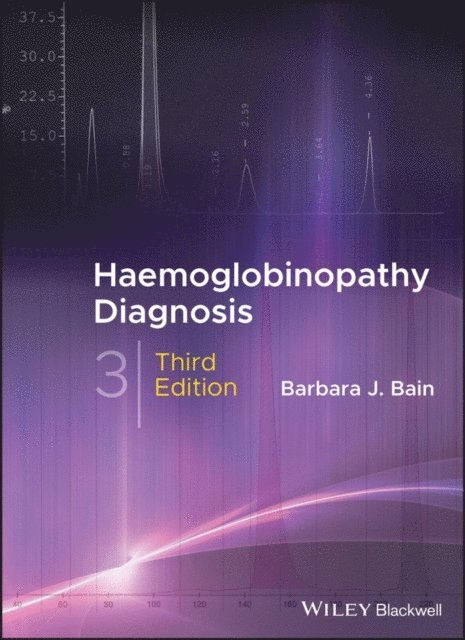
An updated, essential guide for the laboratory diagnosis of haemoglobin disorders
This revised and updated third edition of Haemoglobinopathy Diagnosis offers a comprehensive review of the practical information needed for an understanding of the laboratory diagnosis of haemoglobin disorders. Written in a concise and approachable format, the book includes an overview of clinical and laboratory features of these disorders. The author focuses on the selection, performance, and interpretation of the tests that are offered by the majority of diagnostic laboratories. The book also explains when more specialist tests are required and explores what specialist referral centres will accomplish. The information on diagnosis is set in a clinical context.
The third edition is written by a leading haematologist with a reputation for educational excellence. Designed as a practical resource, the book is filled with illustrative examples and helpful questions that can aide in the retention of the material presented. Additionally, the author includes information on the most recent advances in the field. This important text:
• Contains a practical, highly illustrated, approach to the laboratory diagnosis of haemoglobin disorders
• Includes “test-yourself” questions and provides an indispensable tool for learning and teaching
• Presents new material on antenatal screening/prenatal diagnostic services
• Offers myriad self-assessment case studies that are ideal for the trainee
Written for trainees and residents in haematology, practicing haematologists, and laboratory scientists, Haemoglobinopathy Diagnosis is an essential reference and learning tool that provides a clear basis for understanding the diagnosis of haemoglobin disorders.
1 423 kr
Skickas inom 5-8 vardagar
1 645 kr
Läs direkt efter köp
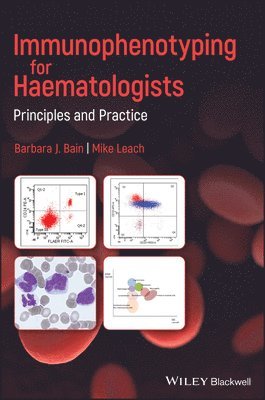
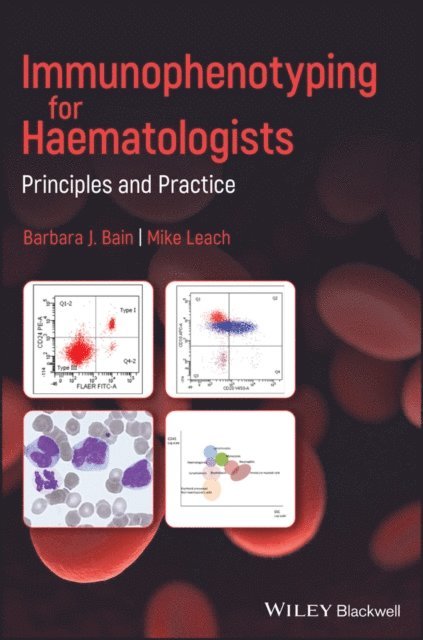
Offers clear and concise instruction on running, reporting and interpreting immunophenotyping studies
Written by two well-known haematology educators and experts on the topic, Immunophenotyping for Haematologists contains an introduction to running, reporting and interpreting immunophenotyping studies. The book offers a unique approach to the topic by putting the focus on clinical and laboratory haematologists who are not routinely involved in running and reporting on immunophenotyping studies.
Immunophenotyping using flow cytometry has become the method of choice in identifying and sorting cells within complex populations, for example, the analysis of immune or neoplastic cells in a blood sample. The text reviews the purpose and principles of immunophenotyping and includes an introduction and explanation of the principles and the role of immunophenotyping. The authors examine immunophenotypic characteristics of the disease groups commonly encountered and identify the features that differentiate malignant cells from normal cells. To enhance understanding, the book contains multiple choice and extended matching questions which integrates immunophenotyping with clinicopathological features and the results of other investigations to mimic everyday practice. This important book:
Provides a concise introduction to running, reporting and interpreting immunophenotyping studies Contains a list of all the antibody specificities currently widely used in diagnosis and disease monitoring Presents an ideal reference for use in laboratories, including immunophenotyping laboratories Aids in the interpretation by covering immunophenotypic characteristics of commonly encountered disease groups Identifies the features that differentiate malignant cells from their normal counterpartsWritten for haematologists working in both laboratory and clinical haematology, Immunophenotyping for Haematologists is a much-needed reference for understanding and interpreting immunophenotyping studies.
1 602 kr
Läs direkt efter köp
Offers clear and concise instruction on running, reporting and interpreting immunophenotyping studies
Written by two well-known haematology educators and experts on the topic, Immunophenotyping for Haematologists contains an introduction to running, reporting and interpreting immunophenotyping studies. The book offers a unique approach to the topic by putting the focus on clinical and laboratory haematologists who are not routinely involved in running and reporting on immunophenotyping studies.
Immunophenotyping using flow cytometry has become the method of choice in identifying and sorting cells within complex populations, for example, the analysis of immune or neoplastic cells in a blood sample. The text reviews the purpose and principles of immunophenotyping and includes an introduction and explanation of the principles and the role of immunophenotyping. The authors examine immunophenotypic characteristics of the disease groups commonly encountered and identify the features that differentiate malignant cells from normal cells. To enhance understanding, the book contains multiple choice and extended matching questions which integrates immunophenotyping with clinicopathological features and the results of other investigations to mimic everyday practice. This important book:
Provides a concise introduction to running, reporting and interpreting immunophenotyping studies Contains a list of all the antibody specificities currently widely used in diagnosis and disease monitoring Presents an ideal reference for use in laboratories, including immunophenotyping laboratories Aids in the interpretation by covering immunophenotypic characteristics of commonly encountered disease groups Identifies the features that differentiate malignant cells from their normal counterpartsWritten for haematologists working in both laboratory and clinical haematology, Immunophenotyping for Haematologists is a much-needed reference for understanding and interpreting immunophenotyping studies.
1 369 kr
Skickas
1 662 kr
Läs direkt efter köp
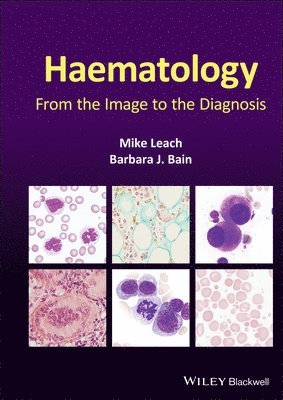
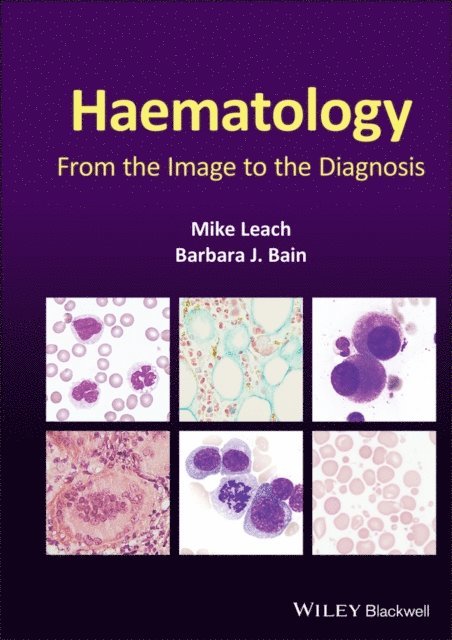
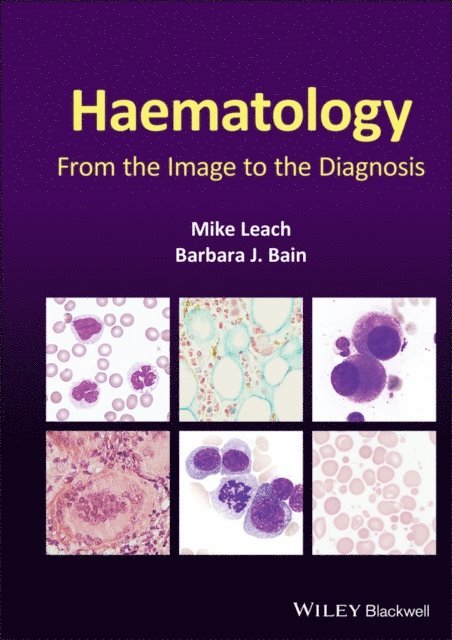
Diagnostic haematology requires the assessment of clinical and laboratory data together with a careful morphological assessment of cells in blood, bone marrow and tissue fluids. Subsequent investigations including flow cytometry, immunohistochemistry, cytogenetics and molecular studies are guided by the original morphological findings. These targeted investigations help generate a prompt unifying diagnosis. Haematology: From the Image to the Diagnosis presents a series of cases illustrating how skills in morphology can guide the investigative process. In this book, the authors capture a series of images to illustrate key features to recognize when undertaking a morphological review and show how they can be integrated with supplementary information to reach a final diagnosis.
Using a novel format of visual case studies, this text mimics ‘real life’ for the practising diagnostic haematologist – using brief clinical details and initial microscopic morphological triage to formulate a differential diagnosis and a plan for efficient and economical confirmatory investigation to deduce the correct final diagnosis. The carefully selected, high-quality photomicrographs and the clear, succinct descriptions of key features, investigations and results will help haematologists, clinical scientists, haematology trainees and haematopathologists to make accurate diagnoses in their day-to-day work.
Covering a wide range of topics, and including paediatric as well as adult cases, Haematology: From the Image to the Diagnosis is a succinct visual guide which will be welcomed by consultants, trainees and scientists alike.
1 662 kr
Läs direkt efter köp
Diagnostic haematology requires the assessment of clinical and laboratory data together with a careful morphological assessment of cells in blood, bone marrow and tissue fluids. Subsequent investigations including flow cytometry, immunohistochemistry, cytogenetics and molecular studies are guided by the original morphological findings. These targeted investigations help generate a prompt unifying diagnosis. Haematology: From the Image to the Diagnosis presents a series of cases illustrating how skills in morphology can guide the investigative process. In this book, the authors capture a series of images to illustrate key features to recognize when undertaking a morphological review and show how they can be integrated with supplementary information to reach a final diagnosis.
Using a novel format of visual case studies, this text mimics ‘real life’ for the practising diagnostic haematologist – using brief clinical details and initial microscopic morphological triage to formulate a differential diagnosis and a plan for efficient and economical confirmatory investigation to deduce the correct final diagnosis. The carefully selected, high-quality photomicrographs and the clear, succinct descriptions of key features, investigations and results will help haematologists, clinical scientists, haematology trainees and haematopathologists to make accurate diagnoses in their day-to-day work.
Covering a wide range of topics, and including paediatric as well as adult cases, Haematology: From the Image to the Diagnosis is a succinct visual guide which will be welcomed by consultants, trainees and scientists alike.
1 760 kr
Läs direkt efter köp
A comprehensive discussion of haematological morphology
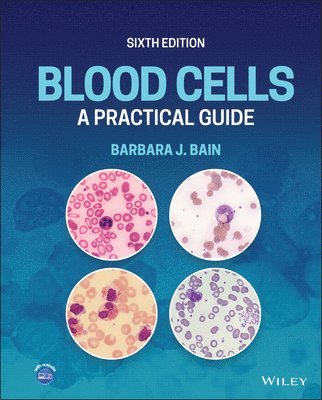
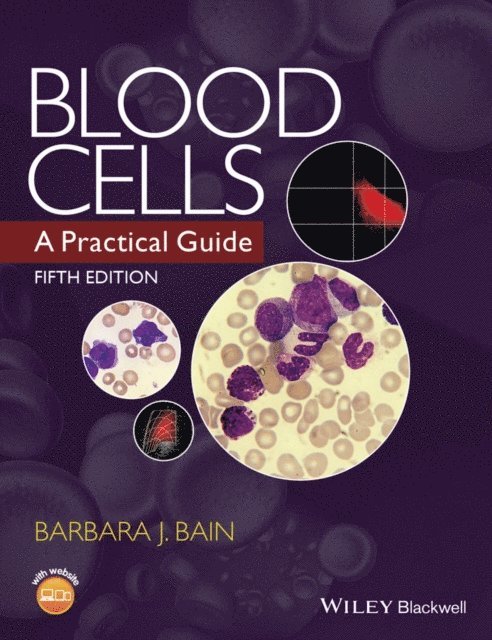
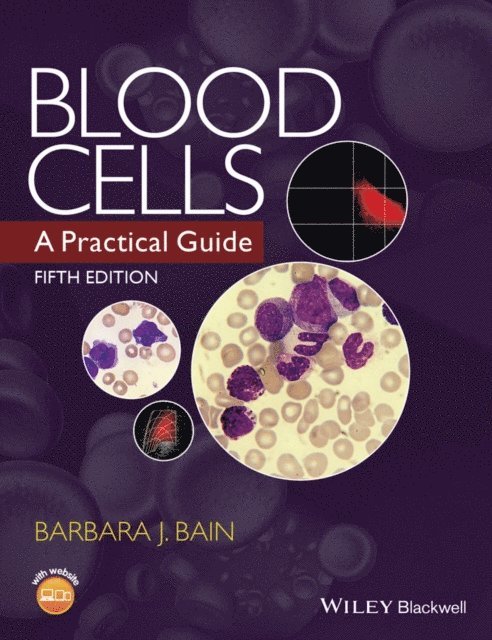
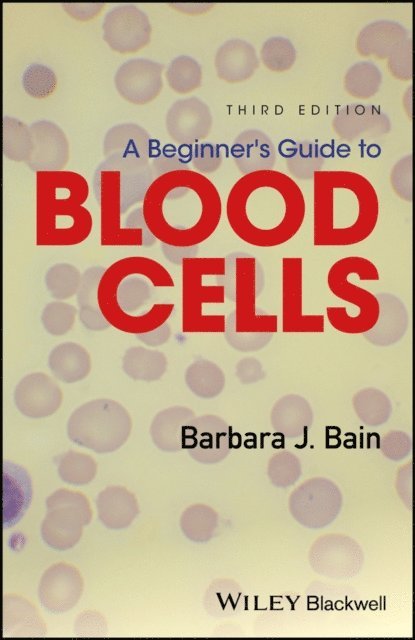
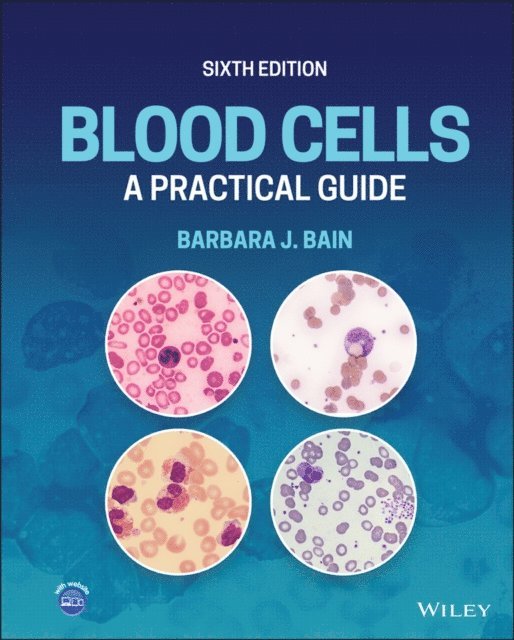
In the newly revised Sixth Edition of Blood Cells: A Practical Guide, expert haematologist Barbara J. Bain delivers a robust guide for use in the diagnostic hematology laboratory, covering methods of collection of blood specimens, blood film preparation and staining, the principles of manual and automated blood counts, and the assessment of the morphological features of blood cells.
The book functions well as both a straightforward and practical bench manual and as a reference source for practicing hematologists. It has been completely updated to incorporate newly published information and 400 high-quality photographs to aid in blood cell identification. The text is comprehensive and fully supported by references.
A companion website contains multiple-choice questions to aid the reader in retaining the information contained within. While the book provides additional guidance on further tests that should be performed for specific provisional diagnoses, the main focus of the text remains on microscopy and the automated full blood count. It also contains:
A thorough introduction to blood sampling and blood film preparation and examination, as well as performance of blood counts Comprehensive exploration of the morphology of blood cells, detecting erroneous blood counts, and normal ranges Practical discussions of quantitative changes in blood cells and important supplementary tests In-depth examinations of disorders of red blood cells, white blood cells and platelets Review of the morphological features of blood parasitesPerfect for practicing haematologists and haematology trainees, Blood Cells: A Practical Guide will also earn a place in the libraries of biomedical scientists working in laboratory settings. Many laboratories worldwide regard it as an essential bench book.
1 760 kr
Läs direkt efter köp
A comprehensive discussion of haematological morphology
In the newly revised Sixth Edition of Blood Cells: A Practical Guide, expert haematologist Barbara J. Bain delivers a robust guide for use in the diagnostic hematology laboratory, covering methods of collection of blood specimens, blood film preparation and staining, the principles of manual and automated blood counts, and the assessment of the morphological features of blood cells.
The book functions well as both a straightforward and practical bench manual and as a reference source for practicing hematologists. It has been completely updated to incorporate newly published information and 400 high-quality photographs to aid in blood cell identification. The text is comprehensive and fully supported by references.
A companion website contains multiple-choice questions to aid the reader in retaining the information contained within. While the book provides additional guidance on further tests that should be performed for specific provisional diagnoses, the main focus of the text remains on microscopy and the automated full blood count. It also contains:
A thorough introduction to blood sampling and blood film preparation and examination, as well as performance of blood counts Comprehensive exploration of the morphology of blood cells, detecting erroneous blood counts, and normal ranges Practical discussions of quantitative changes in blood cells and important supplementary tests In-depth examinations of disorders of red blood cells, white blood cells and platelets Review of the morphological features of blood parasitesPerfect for practicing haematologists and haematology trainees, Blood Cells: A Practical Guide will also earn a place in the libraries of biomedical scientists working in laboratory settings. Many laboratories worldwide regard it as an essential bench book.