Barbara P. Uzzell – författare
Visar alla böcker från författaren Barbara P. Uzzell. Handla med fri frakt och snabb leverans.
17 produkter
International Handbook of Cross-Cultural Neuropsychology
Av Alfredo Ardila, Marcel Ponton m. fl.
E-bok, 2007
464 kr
Lägg i varukorg
The role of culture is significant when measuring cognitive abilities during neuropsychological assessments. However, cultural diversity is a frequently overlooked moderating variable. The International Handbook of Cross-Cultural Neuropsychology emphasizes major distinctions among cultural groups …
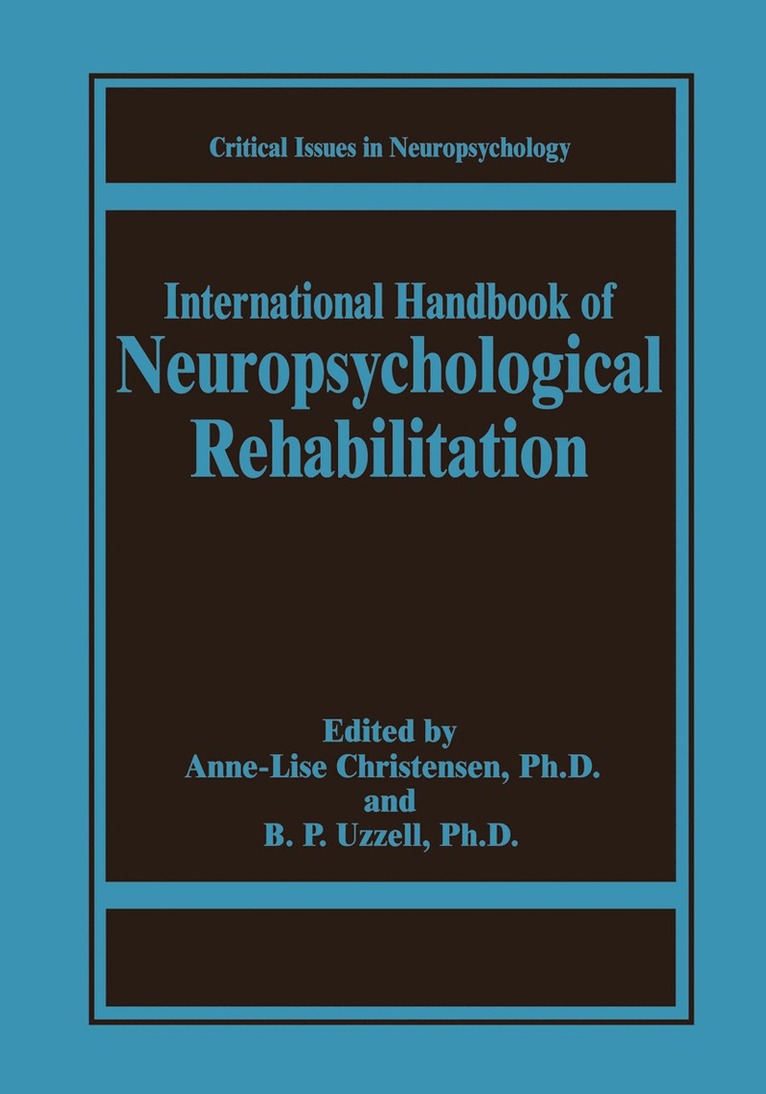
International Handbook of Neuropsychological Rehabilitation
Av Barbara P. Uzzell, Anne-Lise Christensen m. fl.
Inbunden, 1999
1692 kr
Lägg i varukorg
I am extraordinarily pleased to have been asked by Drs. Christensen and Uzzell to write the foreword for this handbook. This handbook is the result of the most recent of a series of con ferences held in Copenhagen, Denmark, at five-year intervals over the past 15 years, under the guidance and …
Brain Injury and Neuropsychological Rehabilitation
International Perspectives
Av Anne-Lise Christensen, Barbara P. Uzzell
Häftad, 1994
472 kr
Lägg i varukorg
Most individuals with brain damage experience a curtailment or loss of lifestyle without rehabilitation. Improved methods and appropriately timed medical interventions now make it possible for more individuals to survive brain insults and to be assisted by rehabilitation neuropsychologists in …
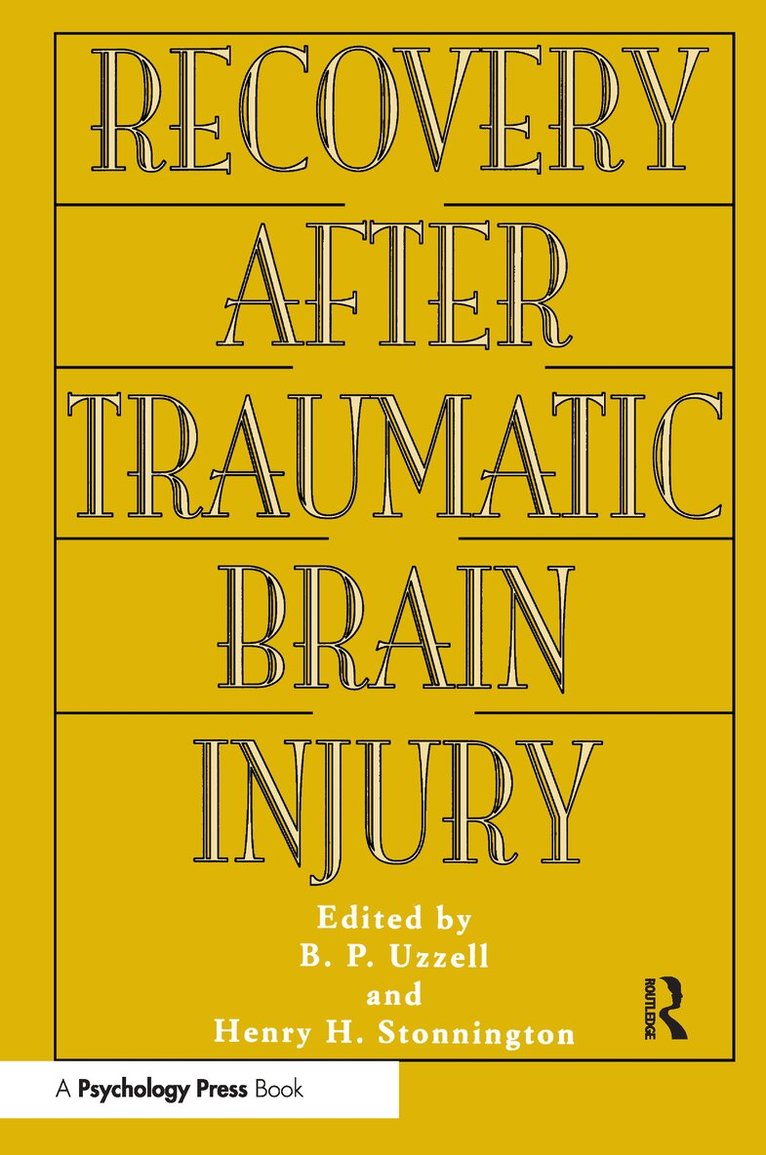
Recovery After Traumatic Brain Injury
Av Barbara P. Uzzell, Henry H. Stonnington
Inbunden, 1996
2586 kr
Lägg i varukorg
Emotions, behaviors, thoughts, creations, planning, daily physical activities, and routines are programmed within our brains. To acquire these capacities, the brain takes time to fully develop--a process that may take the first 20 years of life. Disruptions of the brain involving neurons, axons, …
Recovery After Traumatic Brain Injury
Av Barbara P. Uzzell, Henry H. Stonnington
Häftad, 1996
1072 kr
Lägg i varukorg
Emotions, behaviors, thoughts, creations, planning, daily physical activities, and routines are programmed within our brains. To acquire these capacities, the brain takes time to fully develop--a process that may take the first 20 years of life. Disruptions of the brain involving neurons, axons, …
International Handbook of Cross-Cultural Neuropsychology
Av Barbara P. Uzzell, Marcel Ponton m. fl.
Inbunden, 2007
743 kr
Lägg i varukorg
The role of culture is significant when measuring cognitive abilities during neuropsychological assessments. However, cultural diversity is a frequently overlooked moderating variable. The International Handbook of Cross-Cultural Neuropsychology emphasizes major distinctions among cultural groups …
International Handbook of Cross-Cultural Neuropsychology
Av Barbara P. Uzzell, Marcel Ponton m. fl.
Häftad, 2007
375 kr
Lägg i varukorg
The role of culture is significant when measuring cognitive abilities during neuropsychological assessments. However, cultural diversity is a frequently overlooked moderating variable. The International Handbook of Cross-Cultural Neuropsychology emphasizes major distinctions among cultural groups …
International Handbook of Cross-Cultural Neuropsychology
Av Alfredo Ardila, Marcel Ponton m. fl.
E-bok, 2007
464 kr
Lägg i varukorg
The role of culture is significant when measuring cognitive abilities during neuropsychological assessments. However, cultural diversity is a frequently overlooked moderating variable. The International Handbook of Cross-Cultural Neuropsychology emphasizes major distinctions among cultural groups …
Recovery After Traumatic Brain Injury
Av Henry H. Stonnington, Barbara P. Uzzell
E-bok, 2014
1266 kr
Lägg i varukorg
Emotions, behaviors, thoughts, creations, planning, daily physical activities, and routines are programmed within our brains. To acquire these capacities, the brain takes time to fully develop--a process that may take the first 20 years of life. Disruptions of the brain involving neurons, axons, …
Recovery After Traumatic Brain Injury
Av Henry H. Stonnington, Barbara P. Uzzell
E-bok, 2014
1239 kr
Lägg i varukorg
Emotions, behaviors, thoughts, creations, planning, daily physical activities, and routines are programmed within our brains. To acquire these capacities, the brain takes time to fully develop--a process that may take the first 20 years of life. Disruptions of the brain involving neurons, axons, …
Brain Injury and Neuropsychological Rehabilitation
International Perspectives
Av Barbara P. Uzzell, Anne-Lise Christensen
E-bok, 2014
553 kr
Lägg i varukorg
Most individuals with brain damage experience a curtailment or loss of lifestyle without rehabilitation. Improved methods and appropriately timed medical interventions now make it possible for more individuals to survive brain insults and to be assisted by rehabilitation neuropsychologists in …
Brain Injury and Neuropsychological Rehabilitation
International Perspectives
Av Barbara P. Uzzell, Anne-Lise Christensen
E-bok, 2014
553 kr
Lägg i varukorg
Most individuals with brain damage experience a curtailment or loss of lifestyle without rehabilitation. Improved methods and appropriately timed medical interventions now make it possible for more individuals to survive brain insults and to be assisted by rehabilitation neuropsychologists in …
International Handbook of Neuropsychological Rehabilitation
Av Anne-Lise Christensen, Barbara P. Uzzell
Häftad, 2010
1692 kr
Lägg i varukorg
I am extraordinarily pleased to have been asked by Drs. Christensen and Uzzell to write the foreword for this handbook. This handbook is the result of the most recent of a series of con ferences held in Copenhagen, Denmark, at five-year intervals over the past 15 years, under the guidance and …
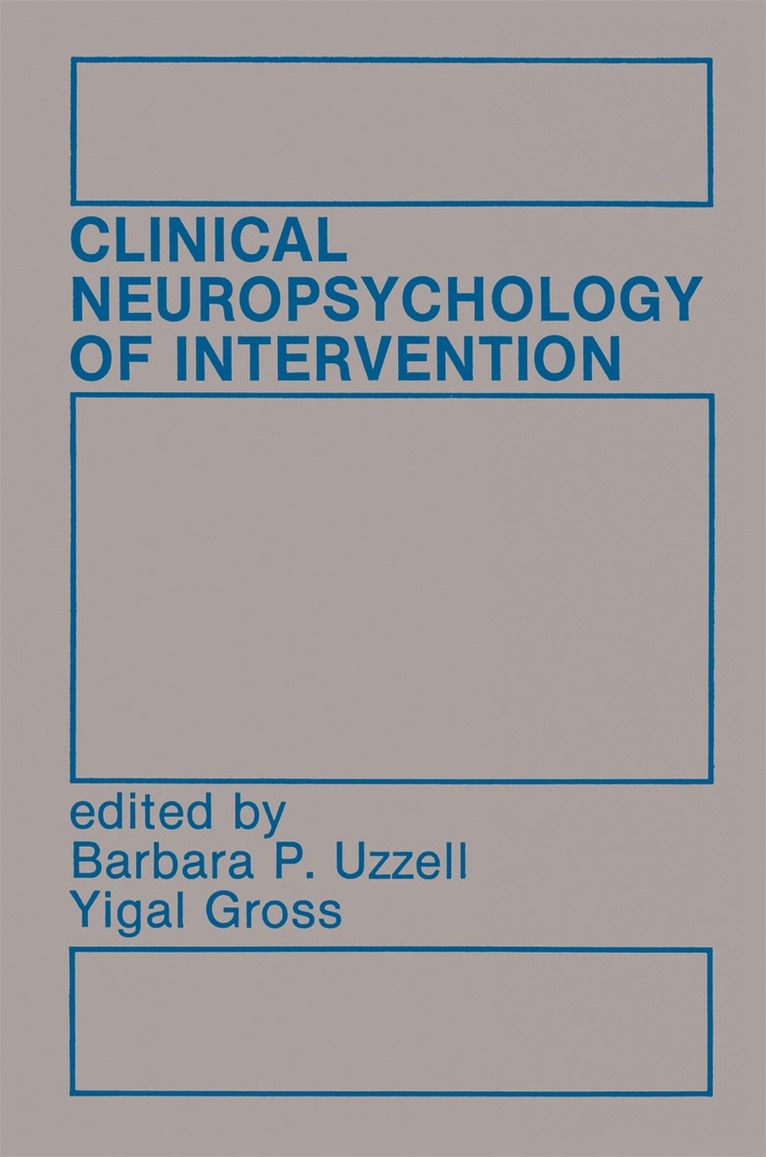
Clinical Neuropsychology of Intervention
Av Barbara P. Uzzell, Yigal Gross
Häftad, 2011
569 kr
Lägg i varukorg
Neuropsychology has been concerned with brain-behavior relationships. Clinical neuropsychology has been concerned with application of relation ships to clinical problems. As interest in these topics continues, a spin-off from clinical neuropsychology has been the realization ofthe potential ofde …
Clinical Neuropsychology of Intervention
Av Yigal Gross, Barbara P. Uzzell
E-bok, 2012
755 kr
Lägg i varukorg
Neuropsychology has been concerned with brain-behavior relationships. Clinical neuropsychology has been concerned with application of relation ships to clinical problems. As interest in these topics continues, a spin-off from clinical neuropsychology has been the realization ofthe potential ofde …
International Handbook of Neuropsychological Rehabilitation
Av Barbara P. Uzzell, Anne-Lise Christensen
E-bok, 2013
2127 kr
Lägg i varukorg
I am extraordinarily pleased to have been asked by Drs. Christensen and Uzzell to write the foreword for this handbook. This handbook is the result of the most recent of a series of con ferences held in Copenhagen, Denmark, at five-year intervals over the past 15 years, under the guidance and …
International Handbook of Neuropsychological Rehabilitation
Av Anne-Lise Christensen, Barbara P. Uzzell
2013
686 kr
Lägg i varukorg