Benjamin Johnston – författare
Visar alla böcker från författaren Benjamin Johnston. Handla med fri frakt och snabb leverans.
10 produkter
10 produkter
Inbunden, Engelska, 2026
450 kr
Skickas inom 7-10 vardagar
As a trained architect, Johnston has a keen eye for the classic design principles of balance and proportion. His application of clean lines and tailored details demonstrate his timeless sensibility, but he imbues every space with something unexpected to make it feel modern. The homes he creates are both classic and cool, curated with a contemporary eye, a distinctive fusion of styles, time periods, and cultures to create interiors that defy the cliche. In an opening section of his principles, Johnston discusses Intention, Theatre, Architecture, Juxtaposition, Imperfection, Art, Scale, Texture, and Color. The book then segues into seven homes embodying modern elegance, many of which have never been seen before. The rooms reflect a unique blend of creativity, functionality, and a deep understanding of aesthetics. Johnston explores each home in detail, and provides a comprehensive look into his design philosophy, methodologies, and his most important dos and don ts when it comes to creating a home. Whether discussing the role of scale, daytime vs nighttime rooms, creating drama in hospitality spaces, or why every room needs a bit of black, Johnston will guide readers through every part of the design process, making this book a source of inspiration and learning not only to those in the design community, but to anyone looking for ideas and lessons on designing a home.
Häftad, Engelska, 2019
1 006 kr
Skickas inom 5-8 vardagar
Take your first steps to become a fully qualified data analyst by learning how to explore large relational datasetsKey FeaturesExplore a variety of statistical techniques to analyze your dataIntegrate your SQL pipelines with other analytics technologiesPerform advanced analytics such as geospatial and text analysisBook DescriptionUnderstanding and finding patterns in data has become one of the most important ways to improve business decisions. If you know the basics of SQL, but don't know how to use it to gain the most effective business insights from data, this book is for you.SQL for Data Analytics helps you build the skills to move beyond basic SQL and instead learn to spot patterns and explain the logic hidden in data. You'll discover how to explore and understand data by identifying trends and unlocking deeper insights. You'll also gain experience working with different types of data in SQL, including time-series, geospatial, and text data. Finally, you'll learn how to increase your productivity with the help of profiling and automation.By the end of this book, you'll be able to use SQL in everyday business scenarios efficiently and look at data with the critical eye of an analytics professional.Please note: if you are having difficulty loading the sample datasets, there are new instructions uploaded to the GitHub repository. The link to the GitHub repository can be found in the book's preface.What you will learnPerform advanced statistical calculations using the WINDOW functionUse SQL queries and subqueries to prepare data for analysisImport and export data using a text file and psqlApply special SQL clauses and functions to generate descriptive statisticsAnalyze special data types in SQL, including geospatial data and time dataOptimize queries to improve their performance for faster resultsDebug queries that won't runUse SQL to summarize and identify patterns in dataWho this book is forIf you’re a database engineer looking to transition into analytics, or a backend engineer who wants to develop a deeper understanding of production data, you will find this book useful. This book is also ideal for data scientists or business analysts who want to improve their data analytics skills using SQL. Knowledge of basic SQL and database concepts will aid in understanding the concepts covered in this book.
Häftad, Engelska, 2019
628 kr
Skickas inom 5-8 vardagar
Design clever algorithms that can uncover interesting structures and hidden relationships in unstructured and unlabeled dataKey FeaturesLearn how to select the most suitable Python library to solve your problemCompare k-Nearest Neighbor (k-NN) and non-parametric methods and decide when to use themExplore the applications of neural networks using real-world datasetsBook DescriptionUnsupervised learning is a useful and practical solution in situations where labeled data is not available.Applied Unsupervised Learning with Python guides you in learning the best practices for using unsupervised learning techniques in tandem with Python libraries and extracting meaningful information from unstructured data. The book begins by explaining how basic clustering works to find similar data points in a set. Once you are well-versed with the k-means algorithm and how it operates, you’ll learn what dimensionality reduction is and where to apply it. As you progress, you’ll learn various neural network techniques and how they can improve your model. While studying the applications of unsupervised learning, you will also understand how to mine topics that are trending on Twitter and Facebook and build a news recommendation engine for users. Finally, you will be able to put your knowledge to work through interesting activities such as performing a Market Basket Analysis and identifying relationships between different products.By the end of this book, you will have the skills you need to confidently build your own models using Python.What you will learnUnderstand the basics and importance of clusteringBuild k-means, hierarchical, and DBSCAN clustering algorithms from scratch with built-in packagesExplore dimensionality reduction and its applicationsUse scikit-learn (sklearn) to implement and analyze principal component analysis (PCA) on the Iris datasetEmploy Keras to build autoencoder models for the CIFAR-10 datasetApply the Apriori algorithm with machine learning extensions (Mlxtend) to study transaction dataWho this book is forThis course is designed for developers, data scientists, and machine learning enthusiasts who are interested in unsupervised learning. Some familiarity with Python programming along with basic knowledge of mathematical concepts including exponents, square roots, means, and medians will be beneficial.
Häftad, Engelska, 2019
570 kr
Skickas inom 5-8 vardagar
Explore the exciting world of machine learning with the fastest growing technology in the worldKey FeaturesUnderstand various machine learning concepts with real-world examplesImplement a supervised machine learning pipeline from data ingestion to validationGain insights into how you can use machine learning in everyday lifeBook DescriptionMachine learning—the ability of a machine to give right answers based on input data—has revolutionized the way we do business. Applied Supervised Learning with Python provides a rich understanding of how you can apply machine learning techniques in your data science projects using Python. You'll explore Jupyter Notebooks, the technology used commonly in academic and commercial circles with in-line code running support.With the help of fun examples, you'll gain experience working on the Python machine learning toolkit—from performing basic data cleaning and processing to working with a range of regression and classification algorithms. Once you’ve grasped the basics, you'll learn how to build and train your own models using advanced techniques such as decision trees, ensemble modeling, validation, and error metrics. You'll also learn data visualization techniques using powerful Python libraries such as Matplotlib and Seaborn. This book also covers ensemble modeling and random forest classifiers along with other methods for combining results from multiple models, and concludes by delving into cross-validation to test your algorithm and check how well the model works on unseen data.By the end of this book, you'll be equipped to not only work with machine learning algorithms, but also be able to create some of your own!What you will learnUnderstand the concept of supervised learning and its applicationsImplement common supervised learning algorithms using machine learning Python librariesValidate models using the k-fold techniqueBuild your models with decision trees to get results effortlesslyUse ensemble modeling techniques to improve the performance of your modelApply a variety of metrics to compare machine learning modelsWho this book is forApplied Supervised Learning with Python is for you if you want to gain a solid understanding of machine learning using Python. It'll help if you to have some experience in any functional or object-oriented language and a basic understanding of Python libraries and expressions, such as arrays and dictionaries.
Häftad, Engelska, 2020
565 kr
Skickas inom 5-8 vardagar
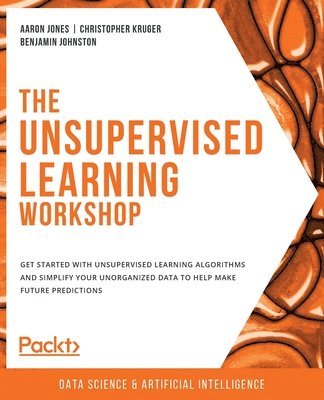
Learning how to apply unsupervised algorithms on unlabeled datasets from scratch can be easier than you thought with this beginner's workshop, featuring interesting examples and activitiesKey FeaturesGet familiar with the ecosystem of unsupervised algorithmsLearn interesting methods to simplify large amounts of unorganized dataTackle real-world challenges, such as estimating the population density of a geographical areaBook DescriptionDo you find it difficult to understand how popular companies like WhatsApp and Amazon find valuable insights from large amounts of unorganized data? The Unsupervised Learning Workshop will give you the confidence to deal with cluttered and unlabeled datasets, using unsupervised algorithms in an easy and interactive manner.The book starts by introducing the most popular clustering algorithms of unsupervised learning. You'll find out how hierarchical clustering differs from k-means, along with understanding how to apply DBSCAN to highly complex and noisy data. Moving ahead, you'll use autoencoders for efficient data encoding.As you progress, you’ll use t-SNE models to extract high-dimensional information into a lower dimension for better visualization, in addition to working with topic modeling for implementing natural language processing (NLP). In later chapters, you’ll find key relationships between customers and businesses using Market Basket Analysis, before going on to use Hotspot Analysis for estimating the population density of an area.By the end of this book, you’ll be equipped with the skills you need to apply unsupervised algorithms on cluttered datasets to find useful patterns and insights.What you will learnDistinguish between hierarchical clustering and the k-means algorithmUnderstand the process of finding clusters in dataGrasp interesting techniques to reduce the size of dataUse autoencoders to decode dataExtract text from a large collection of documents using topic modelingCreate a bag-of-words model using the CountVectorizerWho this book is forIf you are a data scientist who is just getting started and want to learn how to implement machine learning algorithms to build predictive models, then this book is for you. To expedite the learning process, a solid understanding of the Python programming language is recommended, as you’ll be editing classes and functions instead of creating them from scratch.
Häftad, Engelska, 2020
675 kr
Skickas inom 5-8 vardagar
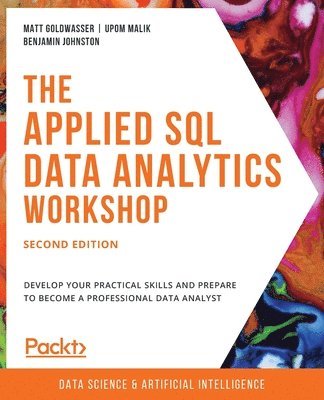
Take a step-by-step approach to learning SQL data analysis in this interactive workshop that uses fun exercises and activities to make learning data analytics for beginners easy and approachable.Key FeaturesExplore ways to use SQL for data analytics and gain key insights from your dataStudy advanced analytics, such as geospatial and text analyticsDiscover ways to integrate your SQL pipelines with other analytics technologiesBook DescriptionEvery day, businesses operate around the clock and a huge amount of data is generated at a rapid pace. Hidden in this data are key patterns and behaviors that can help you and your business understand your customers at a deep, fundamental level. Are you ready to enter the exciting world of data analytics and unlock these useful insights?Written by a team of expert data scientists who have used their data analytics skills to transform businesses of all shapes and sizes, The Applied SQL Data Analytics Workshop is a great way to get started with data analysis, showing you how to effectively sieve and process information from raw data, even without any prior experience.The book begins by showing you how to form hypotheses and generate descriptive statistics that can provide key insights into your existing data. As you progress, you'll learn how to write SQL queries to aggregate, calculate and combine SQL data from sources outside of your current dataset. You'll also discover how to work with different data types, like JSON. By exploring advanced techniques, such as geospatial analysis and text analysis, you'll finally be able to understand your business at a deeper level. Finally, the book lets you in on the secret to getting information faster and more effectively by using advanced techniques like profiling and automation.By the end of The Applied SQL Data Analytics Workshop, you'll have the skills you need to start identifying patterns and unlocking insights in your own data. You will be capable of looking and assessing data with the critical eye of a skilled data analyst.What you will learnUnderstand what data analytics is and why it is importantExperiment with data analytics using basic and advanced queriesInterpret data through descriptive statistics and aggregate functionsExport data from external sources using powerful SQL queriesWork with and manipulate data using SQL joins and constraintsSpeed up your data analysis workflow by automating tasks and optimizing queriesWho this book is forIf you are a database engineer who is looking to transition into analytics or someone who knows SQL basics but doesn't know how to use it to create business insights, then this book is for you.
Häftad, Engelska, 2020
503 kr
Skickas inom 5-8 vardagar
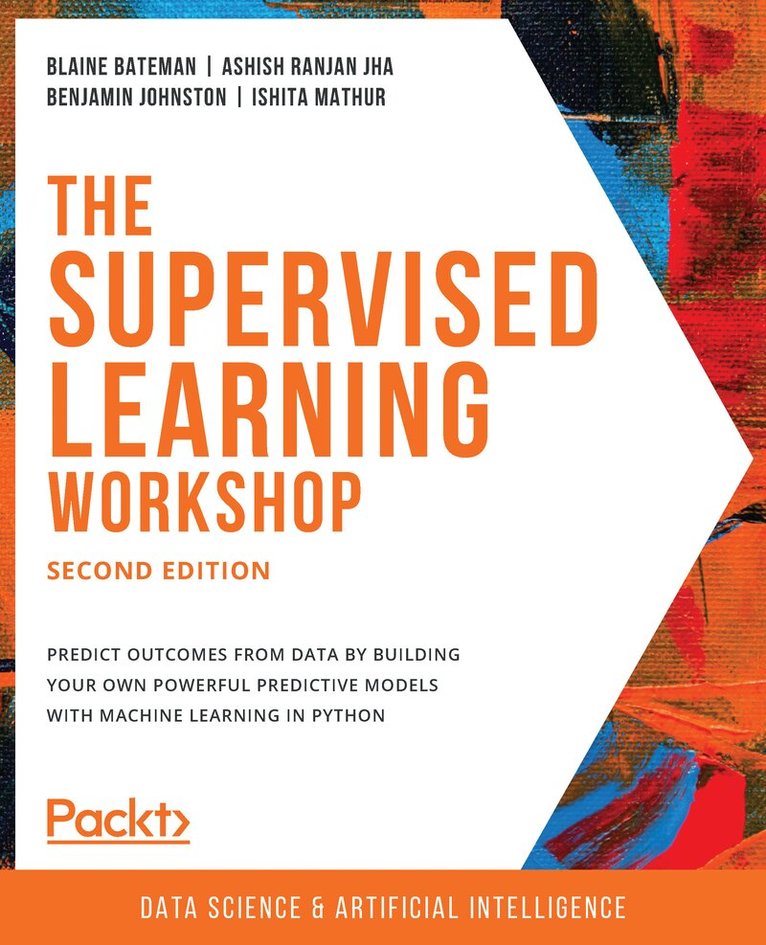
Discover how you can supervise machine learning algorithms in Python and personalize predictive models with the help of real-world datasetsKey FeaturesExplore the fundamentals of supervised machine learning and its applicationsLearn how to label and process data correctly using Python librariesGain a comprehensive overview of different machine learning algorithms used for building prediction modelsBook DescriptionWould you like to understand how and why machine learning techniques and data analytics are spearheading enterprises globally? From analyzing bioinformatics to predicting climate change, machine learning plays an increasingly pivotal role in our society.Although the real-world applications may seem complex, this book simplifies supervised learning for beginners with a step-by-step interactive approach. Working with real-time datasets, you’ll learn how supervised learning, when used with Python, can produce efficient predictive models.Starting with the fundamentals of supervised learning, you’ll quickly move to understand how to automate manual tasks and the process of assessing date using Jupyter and Python libraries like pandas. Next, you’ll use data exploration and visualization techniques to develop powerful supervised learning models, before understanding how to distinguish variables and represent their relationships using scatter plots, heatmaps, and box plots. After using regression and classification models on real-time datasets to predict future outcomes, you’ll grasp advanced ensemble techniques such as boosting and random forests. Finally, you’ll learn the importance of model evaluation in supervised learning and study metrics to evaluate regression and classification tasks.By the end of this book, you’ll have the skills you need to work on your real-life supervised learning Python projects.What you will learnImport NumPy and pandas libraries to assess the data in a Jupyter NotebookDiscover patterns within a dataset using exploratory data analysisUsing pandas to find the summary statistics of a datasetImprove the performance of a model with linear regression analysisIncrease the predictive accuracy with decision trees such as k-nearest neighbor (KNN) modelsPlot precision-recall and ROC curves to evaluate model performanceWho this book is forIf you are a beginner or a data scientist who is just getting started and looking to learn how to implement machine learning algorithms to build predicting models, then this book is for you. To expedite the learning process, a solid understanding of Python programming is recommended as you’ll be editing the classes or functions instead of creating from scratch.
Häftad, Engelska, 2022
628 kr
Skickas inom 5-8 vardagar
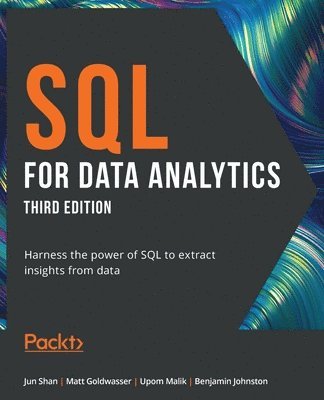
Take your first steps to becoming a fully qualified data analyst by learning how to explore complex datasetsKey FeaturesMaster each concept through practical exercises and activitiesDiscover various statistical techniques to analyze your dataImplement everything you’ve learned on a real-world case study to uncover valuable insightsBook DescriptionEvery day, businesses operate around the clock, and a huge amount of data is generated at a rapid pace. This book helps you analyze this data and identify key patterns and behaviors that can help you and your business understand your customers at a deep, fundamental level.SQL for Data Analytics, Third Edition is a great way to get started with data analysis, showing how to effectively sort and process information from raw data, even without any prior experience.You will begin by learning how to form hypotheses and generate descriptive statistics that can provide key insights into your existing data. As you progress, you will learn how to write SQL queries to aggregate, calculate, and combine SQL data from sources outside of your current dataset. You will also discover how to work with advanced data types, like JSON. By exploring advanced techniques, such as geospatial analysis and text analysis, you will be able to understand your business at a deeper level. Finally, the book lets you in on the secret to getting information faster and more effectively by using advanced techniques like profiling and automation.By the end of this book, you will be proficient in the efficient application of SQL techniques in everyday business scenarios and looking at data with the critical eye of analytics professional.What you will learnUse SQL to clean, prepare, and combine different datasetsAggregate basic statistics using GROUP BY clausesPerform advanced statistical calculations using a WINDOW functionImport data into a database to combine with other tablesExport SQL query results into various sourcesAnalyze special data types in SQL, including geospatial, date/time, and JSON dataOptimize queries and automate tasksThink about data problems and find answers using SQLWho this book is forIf you're a database engineer looking to transition into analytics or a backend engineer who wants to develop a deeper understanding of production data and gain practical SQL knowledge, you will find this book useful. This book is also ideal for data scientists or business analysts who want to improve their data analytics skills using SQL.Basic familiarity with SQL (such as basic SELECT, WHERE, and GROUP BY clauses) as well as a good understanding of linear algebra, statistics, and PostgreSQL 14 are necessary to make the most of this SQL data analytics book.
Häftad, Engelska, 2025
613 kr
Skickas inom 5-8 vardagar
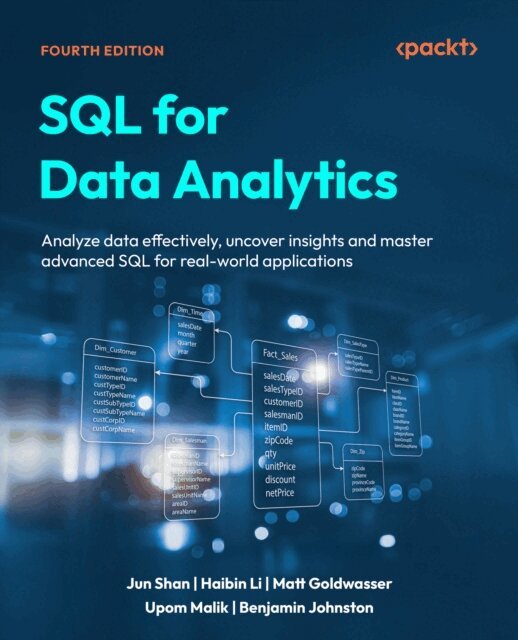
Level up from basic SQL to advanced, analytics-grade data analysis and use real PostgreSQL datasets, modern features, and practical business scenarios to turn raw data into clear, actionable insights.Free with your book: DRM-free PDF version + access to Packt's next-gen Reader*Key FeaturesSolve real business problems with advanced SQL techniquesWork with time-series, geospatial, and text data using PostgreSQLBuild job-ready data analysis skills with hands-on SQL projectsPurchase of the print or Kindle book includes a free PDF eBookBook DescriptionSQL remains one of the most essential tools for modern data analysis and mastering it can set you apart in a competitive data landscape. This book helps you go beyond basic query writing to develop a deep, practical understanding of how SQL powers real-world decision-making. SQL for Data Analytics, Fourth Edition, is for anyone who wants to go beyond basic SQL syntax and confidently analyze real-world data. Whether you're trying to make sense of production data for the first time or upgrading your analytics toolkit, this book gives you the skills to turn data into actionable outcomes. You'll start by creating and managing structured databases before advancing to data retrieval, transformation, and summarization. From there, you’ll take on more complex tasks such as window functions, statistical operations, and analyzing geospatial, time-series, and text data. With hands-on exercises, case studies, and detailed guidance throughout, this book prepares you to apply SQL in everyday business contexts, whether you're cleaning data, building dashboards, or presenting findings to stakeholders. By the end, you'll have a powerful SQL toolkit that translates directly to the work analysts do every day. *Email sign-up and proof of purchase requiredWhat you will learnWrite SQL Queries to explore and analyze structured data.Use JOINs, subqueries, views, and CTEs to build analytics-ready datasetsApply window functions to identify trends, patterns, and cohort behaviorPerform statistical analysis and hypothesis testing directly in SQLAnalyze JSON, arrays, text, geospatial, and time-series dataImprove SQL performance with indexing strategies and query plan optimizationLoad data with Python and automate analytics workflowsComplete a full case study simulating a real-world data analysis projectWho this book is forThis book is for aspiring and early-career data analysts, data engineers, backend developers, business analysts, and students who want to apply SQL to real-world data analytics. You should have basic SQL familiarity and college-level math knowledge, along with the desire to advance toward analytics-grade SQL, data transformation, pattern discovery, and business insight generation.
Del 8755 - Lecture Notes in Computer Science
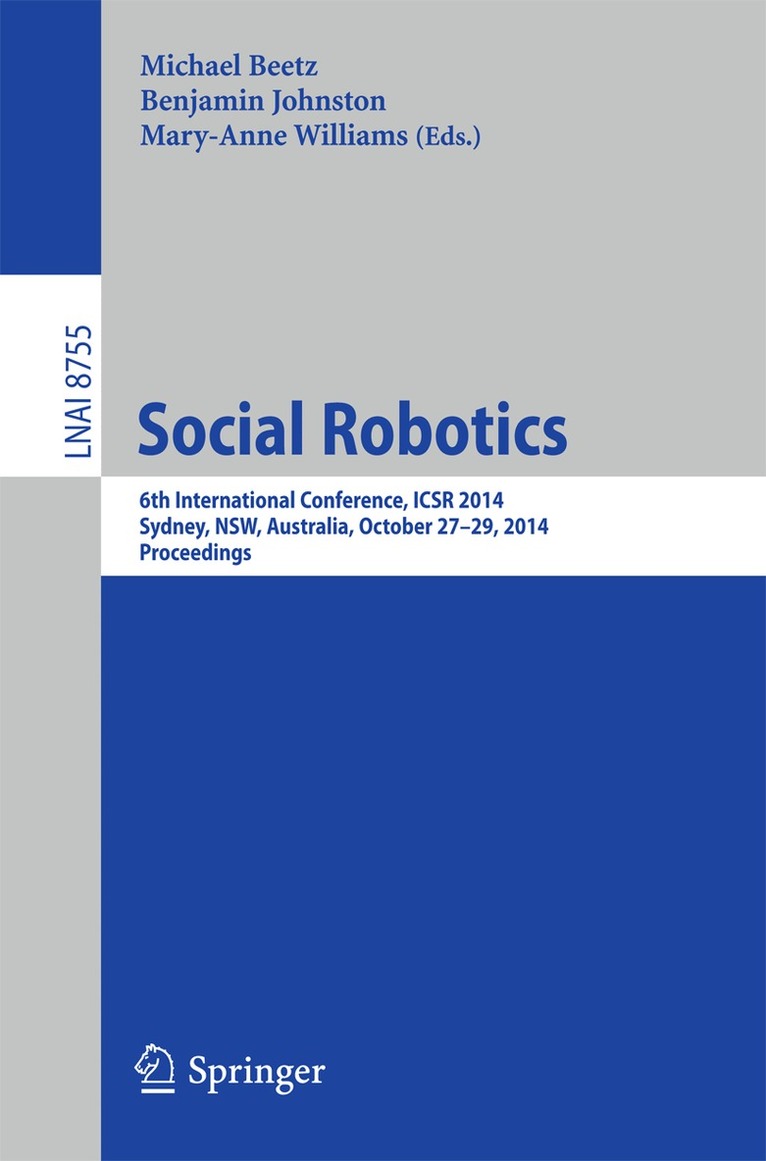
Social Robotics
6th International Conference, ICSR 2014, Sydney, NSW, Australia, October 27-29, 2014. Proceedings
Häftad, Engelska, 2014
542 kr
Skickas inom 10-15 vardagar
This book constitutes the refereed proceedings of the 6th International Conference on Social Robotics, ICSR 2014, held in Sydney, NSW, Australia, in October 2014. knowledge representation and reasoning frameworks for robot social intelligence; cognitive architectures that support social intelligence for robots;