Benoit Leclercq – författare
Visar alla böcker från författaren Benoit Leclercq. Handla med fri frakt och snabb leverans.
9 produkter
Linguistic Knowledge and Language Use
Bridging Construction Grammar and Relevance Theory
E-bok, 2023
386 kr
Lägg i varukorg
Linguistic Knowledge and Language Use
Bridging Construction Grammar and Relevance Theory
E-bok, 2023
378 kr
Lägg i varukorg
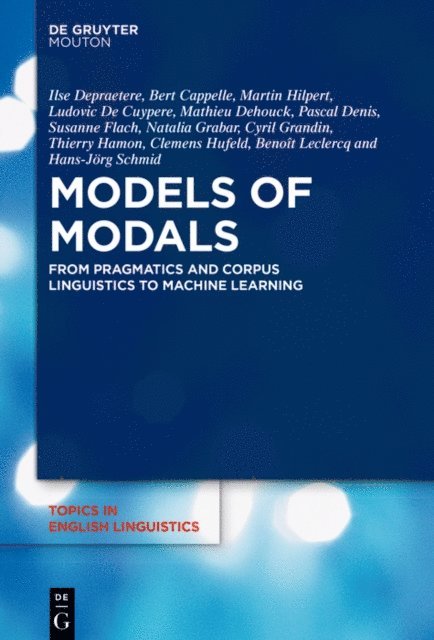
Models of Modals
From Pragmatics and Corpus Linguistics to Machine Learning
Av Hans-Jorg Schmid, Benoit Leclercq m. fl.
E-bok, 2023
2112 kr
Lägg i varukorg
Modal verbs in English communicate delicate shades of meaning, there being a large range of verbs both on the necessity side ( must , have to , should , ought to , need , need to ) and the possibility side ( can , may , could , might , be able to ). They therefore constitute excellent test ground …
Models of Modals
From Pragmatics and Corpus Linguistics to Machine Learning
Av Hans-Jorg Schmid, Benoit Leclercq m. fl.
E-bok, 2023
2112 kr
Lägg i varukorg
Modal verbs in English communicate delicate shades of meaning, there being a large range of verbs both on the necessity side ( must , have to , should , ought to , need , need to ) and the possibility side ( can , may , could , might , be able to ). They therefore constitute excellent test ground …
Models of Modals
From Pragmatics and Corpus Linguistics to Machine Learning
Av Ilse Depraetere, Bert Cappelle m. fl.
Inbunden, 2023
2096 kr
Lägg i varukorg
No detailed description available for "Models of Modals".
Models of Modals
From Pragmatics and Corpus Linguistics to Machine Learning
Av Ilse Depraetere, Bert Cappelle m. fl.
Häftad, 2024
284 kr
Lägg i varukorg
No detailed description available for "Models of Modals".