Bernard Winkelmann – författare
Visar alla böcker från författaren Bernard Winkelmann. Handla med fri frakt och snabb leverans.
5 produkter
5 produkter
E-bok
PDF, Engelska, 20062 741 kr
Läs direkt efter köp
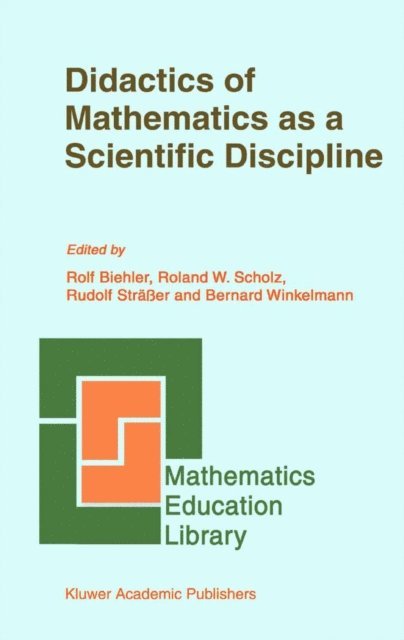
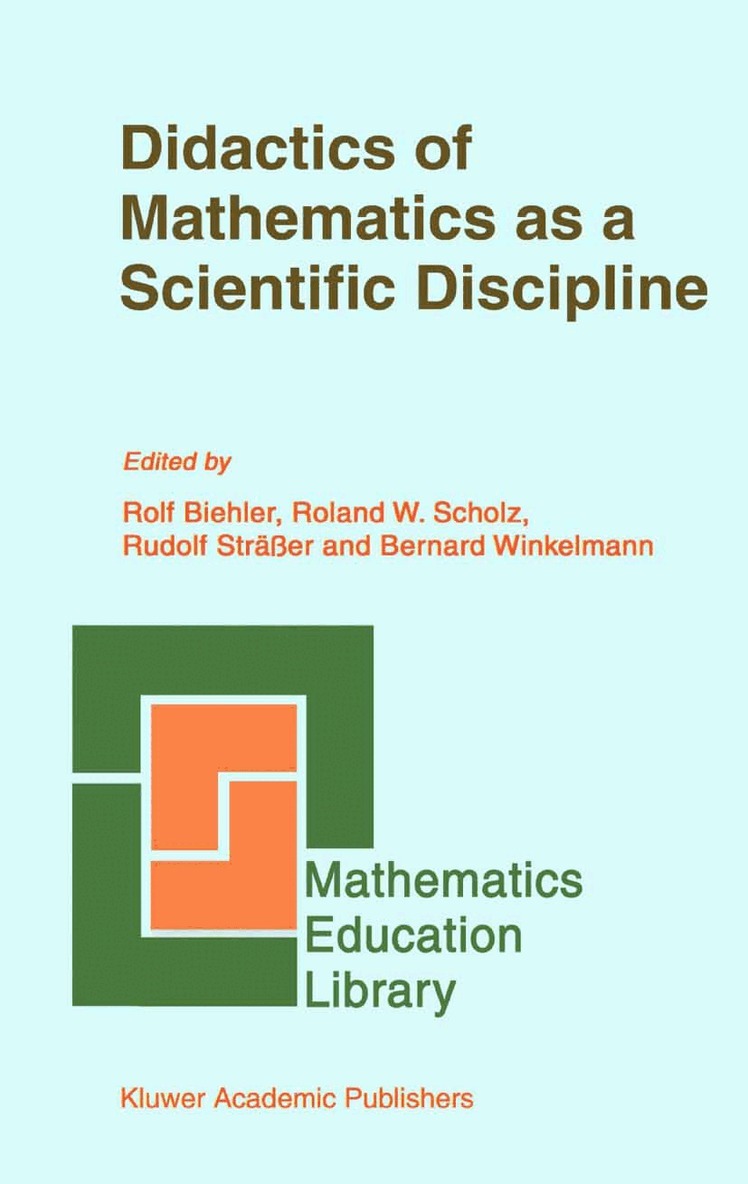
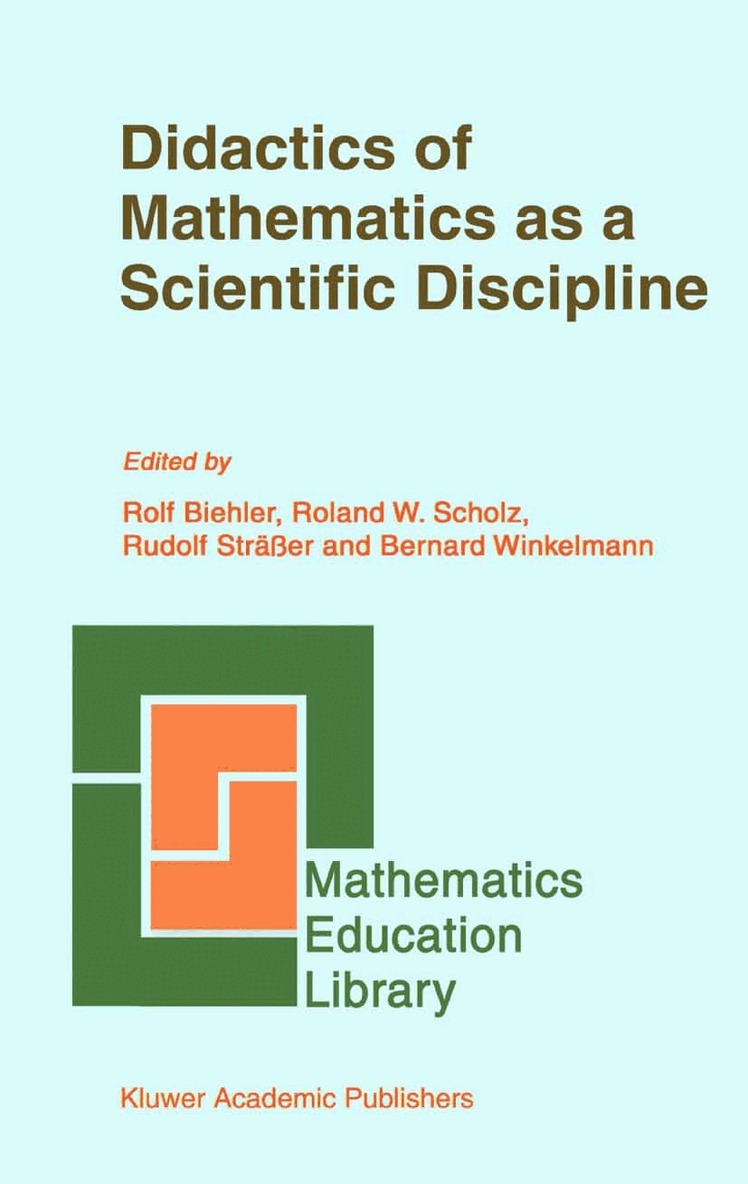
Didactics of Mathematics as a Scientific Discipline describes the state of the art in a new branch of science. Starting from a general perspective on the didactics of mathematics, the 30 original contributions to the book, drawn from 10 different countries, go on to identify certain subdisciplines and suggest an overall structure or `topology'' of the field. The book is divided into eight sections: (1) Preparing Mathematics for Students; (2) Teacher Education and Research on Teaching; (3) Interaction in the Classroom; (4) Technology and Mathematics Education; (5) Psychology of Mathematical Thinking; (6) Differential Didactics; (7) History and Epistemology of Mathematics and Mathematics Education; (8) Cultural Framing of Teaching and Learning Mathematics. Didactics of Mathematics as a Scientific Discipline is required reading for all researchers into the didactics of mathematics, and contains surveys and a variety of stimulating reflections which make it extremely useful for mathematics educators and teacher trainers interested in the theory of their practice. Future and practising teachers of mathematics will find much to interest them in relation to their daily work, especially as it relates to the teaching of different age groups and ability ranges. The book is also recommended to researchers in neighbouring disciplines, such as mathematics itself, general education, educational psychology and cognitive science.
Inbunden, Engelska, 1993
2 156 kr
Skickas inom 10-15 vardagar
"Didactics of Mathematics as a Scientific Discipline" describes the state-of-the-art in this branch of science. Starting from a general perspective on the didactics of mathematics, the 30 original contributions to the book, drawn from 10 different countries, go on to identify certain subdisciplines and suggest an overall structure or "topology" of the field. This text should be of use to researchers in the field of the didactics of mathematics; it contains surveys and a variety of reflections which should make it useful for mathematics educators and teacher trainers interested in the theory of their practice. Future and practicing teachers of mathematics should find much to interest them in relation to their daily work, especially as it relates to the teaching of different age groups and ability ranges. The book is also recommended to researchers in neighbouring disciplines, such as mathematics itself, general education, educational psychology and cognitive science.
E-bok
PDF, Tyska, 2013519 kr
Läs direkt efter köp
Häftad, Tyska, 1999
509 kr
Skickas inom 10-15 vardagar
Häftad, Engelska, 2013
2 138 kr
Skickas inom 10-15 vardagar
Didactics of Mathematics as a Scientific Discipline describes the state of the art in a new branch of science. Starting from a general perspective on the didactics of mathematics, the 30 original contributions to the book, drawn from 10 different countries, go on to identify certain subdisciplines and suggest an overall structure or `topology' of the field.The book is divided into eight sections: (1) Preparing Mathematics for Students; (2) Teacher Education and Research on Teaching; (3) Interaction in the Classroom; (4) Technology and Mathematics Education; (5) Psychology of Mathematical Thinking; (6) Differential Didactics; (7) History and Epistemology of Mathematics and Mathematics Education; (8) Cultural Framing of Teaching and Learning Mathematics.Didactics of Mathematics as a Scientific Discipline is required reading for all researchers into the didactics of mathematics, and contains surveys and a variety of stimulating reflections which make it extremely useful for mathematics educators and teacher trainers interested in the theory of their practice. Future and practising teachers of mathematics will find much to interest them in relation to their daily work, especially as it relates to the teaching of different age groups and ability ranges. The book is also recommended to researchers in neighbouring disciplines, such as mathematics itself, general education, educational psychology and cognitive science.