Bjørn Thomassen - Böcker
Visar alla böcker från författaren Bjørn Thomassen. Handla med fri frakt och snabb leverans.
11 produkter
11 produkter
1 227 kr
Skickas inom 7-10 vardagar
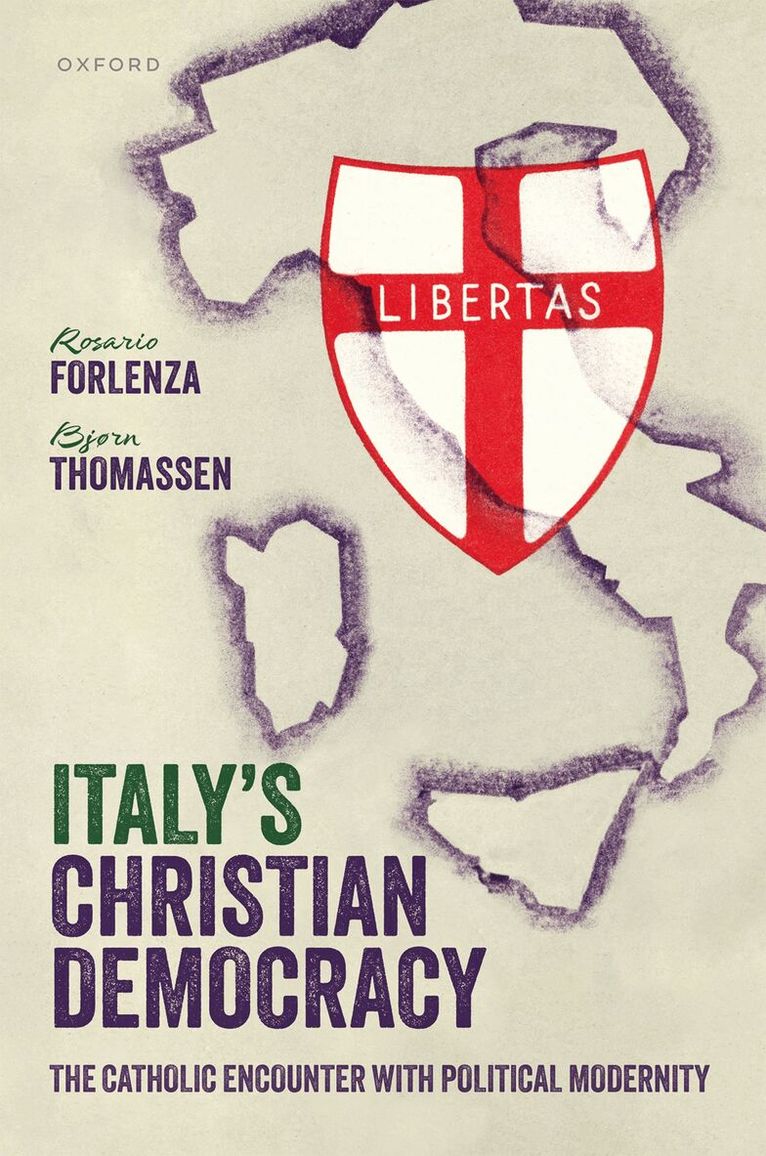
The first comprehensive study of Italian Christian Democracy in English, Italy's Christian Democracy unravels the encounter between Catholicism and democracy from pre-unification Italy in the eighteenth century to the near-present. Forlenza and Thomassen put the triumphant emergence of the Christian Democratic political party that ruled Italy from 1948 to 1994 into historical perspective. With a focus on critical moments of modern Italian history – the Enlightenment and French Revolution, the Risorgimento, World War I, the fascist period, World War II, the post-war Republic – Italy's Christian Democracy demonstrates the often-dramatic ways in which Catholic thinkers, from laymen to priests and bishops, sought to interpret and direct democratic thought and practice in line with Catholic ethics. The Christian Democracy was much more than reactionary politics – namely a sincere attempt to integrate a religious worldview into modern politics. Contrary to a purely secular reading, the authors demonstrate that the Catholic embrace of political modernity and democracy emerged as a historically significant alternative to both fascism and socialism, liberalism and conservativism, attempting to re-anchor democracy, justice, and freedom in a religiously argued ethos.Italy's Christian Democracy contributes to existing scholarship by stressing two interrelated aspects crucial for a better understanding of the role that Catholicism and Christian Democracy have played in the nineteenth and twentieth centuries: the political dimension of transcendence and spirituality and the transformative power of historical experiences and events. The narrative considers the religious and spiritual impulse behind Christian democratic thought, framing Christian Democracy as a distinct form of "political spirituality".Offering a novel historical narrative, Italy's Christian Democracy stresses the contemporary relevance of the nexus between Christianity and modern politics: the current spread of identity politics and the increasing use of religion in political and public discourse, recently appropriated by new populist parties and movements, in Italy and beyond.
905 kr
Skickas inom 7-10 vardagar
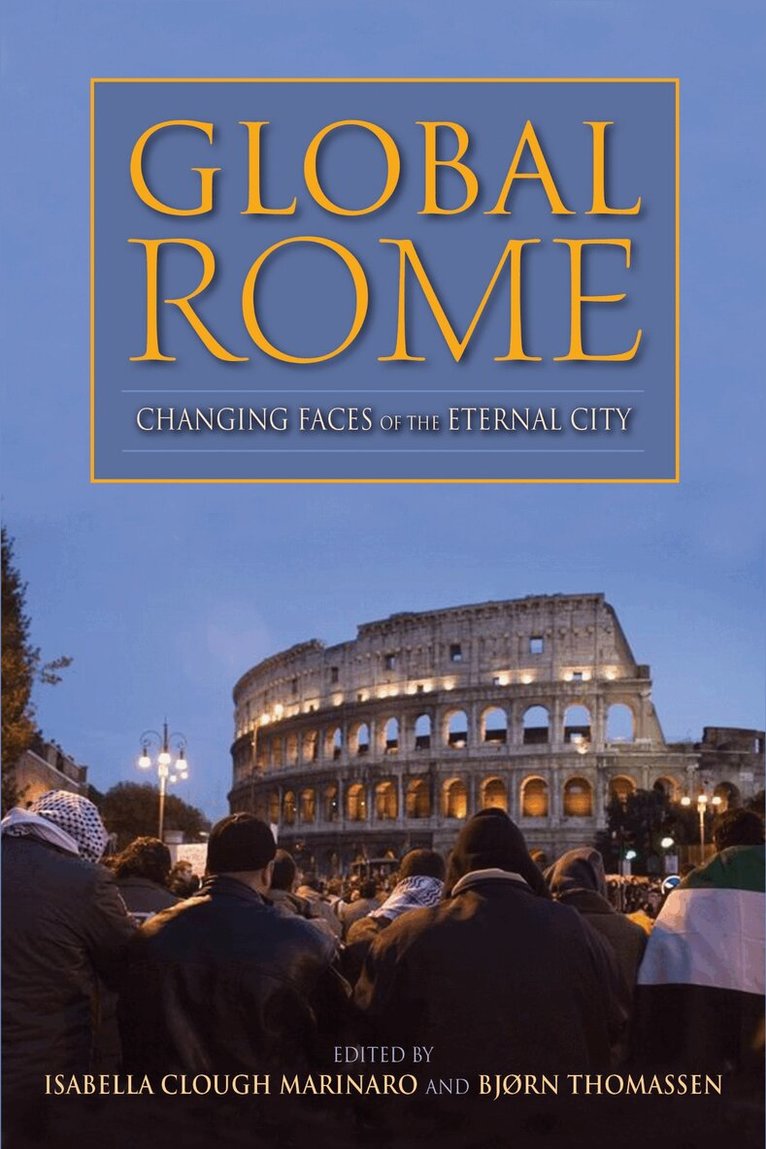
Is 21st-century Rome a global city? Is it part of Europe's core or periphery? This volume examines the "real city" beyond Rome's historical center, exploring the diversity and challenges of life in neighborhoods affected by immigration, neoliberalism, formal urban planning, and grassroots social movements. The contributors engage with themes of contemporary urban studies–the global city, the self-made city, alternative modernities, capital cities and nations, urban change from below, and sustainability. Global Rome serves as a provocative introduction to the Eternal City and makes an original contribution to interdisciplinary scholarship.
324 kr
Skickas inom 7-10 vardagar
Is 21st-century Rome a global city? Is it part of Europe's core or periphery? This volume examines the "real city" beyond Rome's historical center, exploring the diversity and challenges of life in neighborhoods affected by immigration, neoliberalism, formal urban planning, and grassroots social movements. The contributors engage with themes of contemporary urban studies–the global city, the self-made city, alternative modernities, capital cities and nations, urban change from below, and sustainability. Global Rome serves as a provocative introduction to the Eternal City and makes an original contribution to interdisciplinary scholarship.
360 kr
Skickas inom 7-10 vardagar
Presenting a ground-breaking revitalization of contemporary social theory, this book revisits the rise of the modern world to reopen the dialogue between anthropology and sociology. Using concepts developed by a series of 'maverick' anthropologists who were systematically marginalised as their ideas fell outside the standard academic canon, such as Arnold van Gennep, Marcel Mauss, Paul Radin, Lucien Lévy-Bruhl and Gregory Bateson, the authors argue that such concepts are necessary for understanding better the rise and dynamics of the modern world, including the development of the social sciences, in particular sociology and anthropology. Concepts discussed include liminality, imitation, schismogenesis and trickster, which provide an anthropological 'toolkit' for readers to develop innovative understandings of the underlying power mechanisms of globalized modernity. Aimed at graduate students and researchers, the book is clearly structured. Part I introduces the 'maverick' anthropologists, while Part II applies the maverick tool-kit to revisit the history of sociological thought and the question of modernity.
1 205 kr
Skickas inom 10-15 vardagar
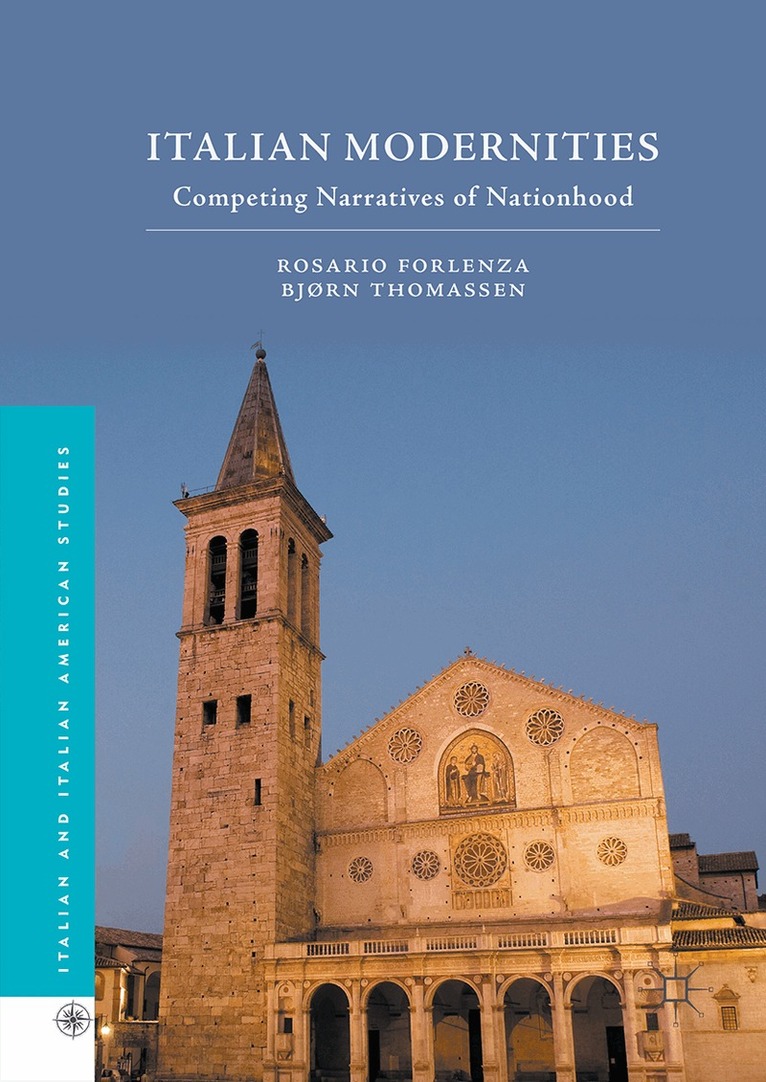
By revisiting Italian political history from the late nineteenth century until the present with a focus on transition periods, Italian Modernities explores how competing historical narratives influenced shifting understandings of Italian nationhood, thus foregrounding the active role of memory politics in the formulation of multiple modernities.
671 kr
Skickas inom 10-15 vardagar
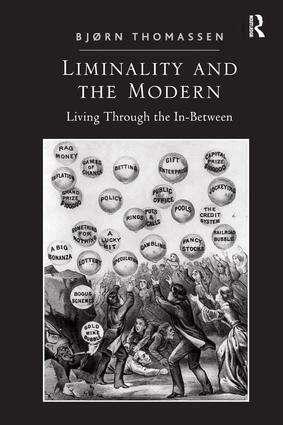
This book provides the history and genealogy of an increasingly important subject: liminality. Coming to the fore in recent years in social and political theory and extending beyond is original use as developed within anthropology, liminality has come to denote spaces and moments in which the taken-for-granted order of the world ceases to exist and novel forms emerge, often in unpredictable ways. Liminality and the Modern offers a comprehensive introduction to this concept, discussing its development and laying out a conceptual and experiential framework for thinking about change in terms of liminality. Applying this framework to questions surrounding the implosion of ’non-spaces’, the analysis of major historical periods and the study of political revolution, the book also explores its possible uses in social science research and its implications for our understanding of the uncertainty and contingency of the liquid structures of modern society. Shedding new light on a concept central to social thought, as well as its capacity for pushing social and political theory in new directions, this book will be of interest to scholars across the social sciences and philosophy working in fields such as social, political and anthropological theory, cultural studies, social and cultural geography, and historical anthropology and sociology.
2 088 kr
Skickas inom 10-15 vardagar
This book provides the history and genealogy of an increasingly important subject: liminality. Coming to the fore in recent years in social and political theory and extending beyond is original use as developed within anthropology, liminality has come to denote spaces and moments in which the taken-for-granted order of the world ceases to exist and novel forms emerge, often in unpredictable ways. Liminality and the Modern offers a comprehensive introduction to this concept, discussing its development and laying out a conceptual and experiential framework for thinking about change in terms of liminality. Applying this framework to questions surrounding the implosion of ’non-spaces’, the analysis of major historical periods and the study of political revolution, the book also explores its possible uses in social science research and its implications for our understanding of the uncertainty and contingency of the liquid structures of modern society. Shedding new light on a concept central to social thought, as well as its capacity for pushing social and political theory in new directions, this book will be of interest to scholars across the social sciences and philosophy working in fields such as social, political and anthropological theory, cultural studies, social and cultural geography, and historical anthropology and sociology.
1 956 kr
Skickas inom 3-6 vardagar
Liminality has the potential to be a leading paradigm for understanding transformation in a globalizing world. As a fundamental human experience, liminality transmits cultural practices, codes, rituals, and meanings in situations that fall between defined structures and have uncertain outcomes. Based on case studies of some of the most important crises in history, society, and politics, this volume explores the methodological range and applicability of the concept to a variety of concrete social and political problems.
3 642 kr
Skickas inom 7-10 vardagar
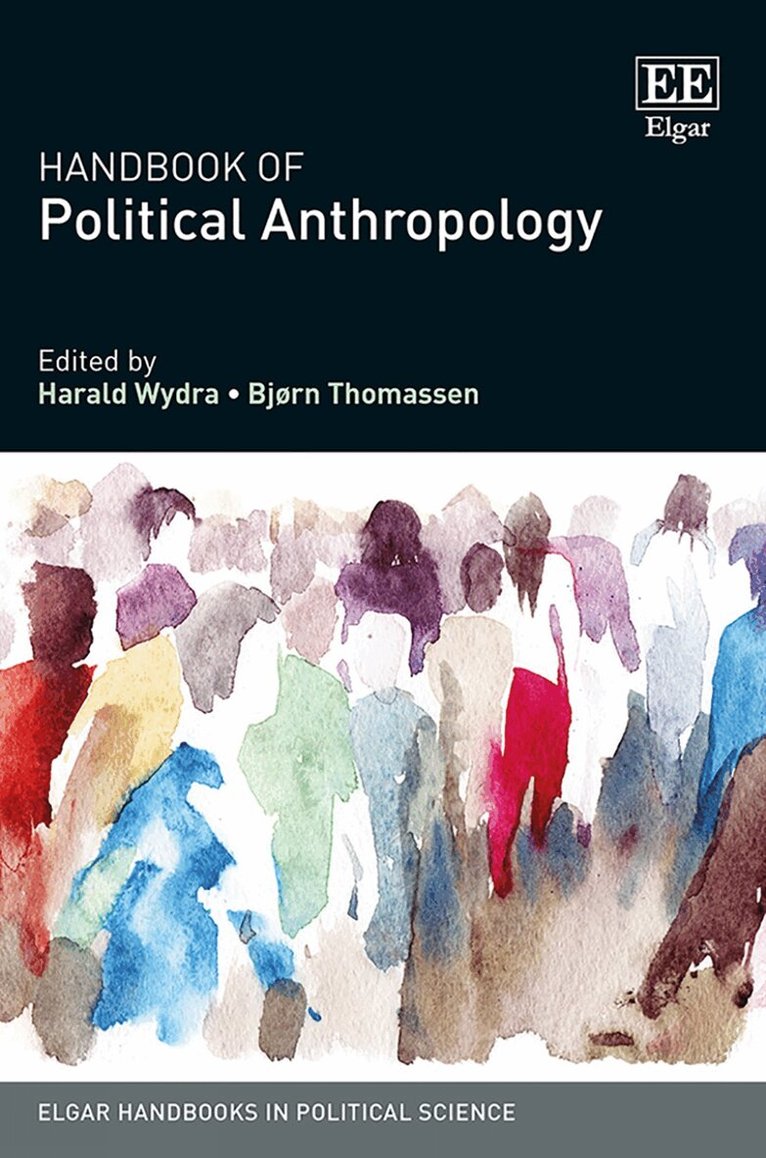
This ground-breaking collection introduces readers to the fascinating research field of political anthropology. The chapters engage in major theoretical and methodological debates to provide interpretive frames, analytical tools and ethnographic illustrations for culturally based interpretations of political phenomena, revealing the intersection between anthropology, culture, politics and international relations. Theoretical tools such as liminality, sacrifice, mimesis, ethics, trickster and interpretation of meaning provide understanding of key challenges in a globalised world. These include war zones, revolutions, migration, securitization, territorial borders, climate change and ethno-religious violence. The contributing authors focus on the ethnographies of power, political culture and forms of cultural intimacy in informal networks. Using self-critical and reflexive approaches, they show that disciplinary boundaries have been reshaped by changing meanings of power, including reconfigurations of state and sovereignty. With reflections on the potential and limits of political anthropology, this Handbook explores the art of understanding human interaction within political frameworks in a globalising world. Offering a unique reference resource in the area with exceptional cross-disciplinary research, this Handbook will suit political, social and cultural anthropologists as well as scholars in comparative political analysis and social theory. Students and researchers of politics, anthropology and international relations will also benefit from the key methodological tools explaining the challenges and consequences of globalisation.Contributors include: S. Coleman, J.-P. Daloz, G. de Anna, H. Donnan, T.H. Eriksen, R. Farneti, M. Fog Olwig, J. Gledhill, J. Gould, S. Haugbølle, A. Horvath, C. Illies, J. Kubik, N. Long, M. Mälksoo, K. Martin, M. Moodie, M. Nuijten, P. Rabinow, M. Rasaratnam, P. Raman, E. Ranta, A. Sanchez, D. Sausdal, A. Stavrianakis, F. Stepputat, A. Szakolczai, B. Thomassen, H. Vigh, H. Wydra
496 kr
Skickas inom 3-6 vardagar
Liminality has the potential to be a leading paradigm for understanding transformation in a globalizing world. As a fundamental human experience, liminality transmits cultural practices, codes, rituals, and meanings in situations that fall between defined structures and have uncertain outcomes. Based on case studies of some of the most important crises in history, society, and politics, this volume explores the methodological range and applicability of the concept to a variety of concrete social and political problems.
799 kr
Skickas inom 7-10 vardagar
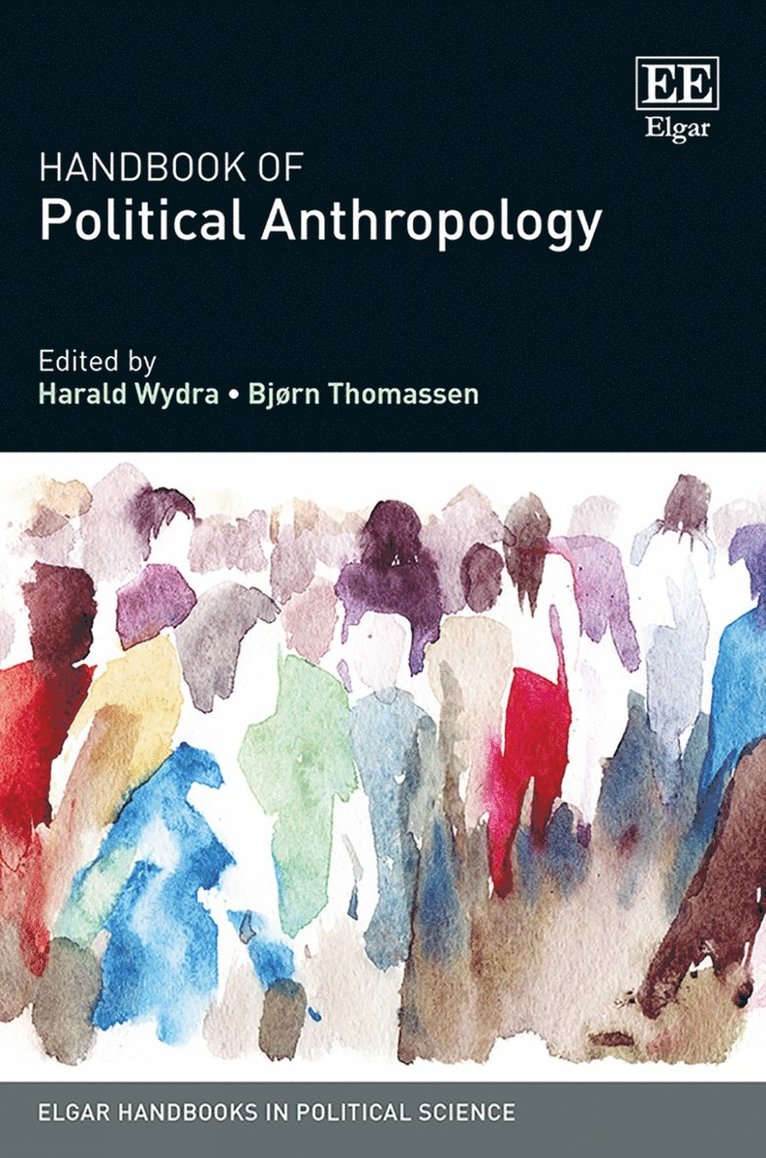
This ground-breaking collection introduces readers to the fascinating research field of political anthropology. The chapters engage in major theoretical and methodological debates to provide interpretive frames, analytical tools and ethnographic illustrations for culturally based interpretations of political phenomena, revealing the intersection between anthropology, culture, politics and international relations. Theoretical tools such as liminality, sacrifice, mimesis, ethics, trickster and interpretation of meaning provide understanding of key challenges in a globalised world. These include war zones, revolutions, migration, securitization, territorial borders, climate change and ethno-religious violence. The contributing authors focus on the ethnographies of power, political culture and forms of cultural intimacy in informal networks. Using self-critical and reflexive approaches, they show that disciplinary boundaries have been reshaped by changing meanings of power, including reconfigurations of state and sovereignty. With reflections on the potential and limits of political anthropology, this Handbook explores the art of understanding human interaction within political frameworks in a globalising world. Offering a unique reference resource in the area with exceptional cross-disciplinary research, this Handbook will suit political, social and cultural anthropologists as well as scholars in comparative political analysis and social theory. Students and researchers of politics, anthropology and international relations will also benefit from the key methodological tools explaining the challenges and consequences of globalisation.Contributors include: S. Coleman, J.-P. Daloz, G. de Anna, H. Donnan, T.H. Eriksen, R. Farneti, M. Fog Olwig, J. Gledhill, J. Gould, S. Haugbølle, A. Horvath, C. Illies, J. Kubik, N. Long, M. Mälksoo, K. Martin, M. Moodie, M. Nuijten, P. Rabinow, M. Rasaratnam, P. Raman, E. Ranta, A. Sanchez, D. Sausdal, A. Stavrianakis, F. Stepputat, A. Szakolczai, B. Thomassen, H. Vigh, H. Wydra