Bonnie Lynn Webber - Böcker
Visar alla böcker från författaren Bonnie Lynn Webber. Handla med fri frakt och snabb leverans.
3 produkter
3 produkter
2 019 kr
Skickas inom 5-8 vardagar
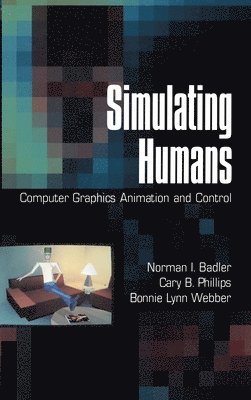
Though actively pursued by several research groups, the problem of providing a synthetic or surrogate human for an engineer or designer already used to Computer Aided Design techniques has been most comprehensively solved by Norman Badler's computer graphics laboratory at the University of Pennsylvania - one of the world leaders in the field of simulated human figures in computer graphics. For human factors engineers, this book provides current knowledge of how a computer graphics surrogate human can augment their analyses of designed environments; for design engineers it presents the cutting edge in human figure modelling and hence human-centred design and for the computer graphics community it presents a major research effort in the interactive control of articulated human figures. This book constitutes the state of the art in simulating human figures, discusses the many areas of application and predicts the future in this exciting, fast moving field.
2 150 kr
Skickas inom 10-15 vardagar
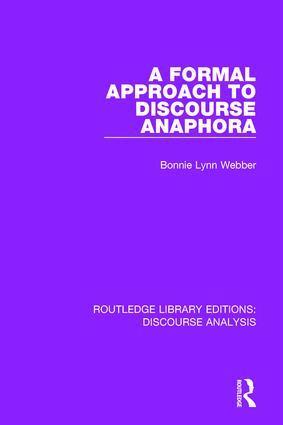
First published in 1979, this book starts from the perspective that dealing with anaphoric language can be decomposed into two complementary tasks: 1. identifying what a text potentially makes available for anaphoric reference and 2. constraining the candidate set of a given anaphoric expression down to one possible choice. The author argues there is an intimate connection between formal sentential analysis and the synthesis of an appropriate conceptual model of the discourse. Some of the issues with the creation of this conceptual model are discussed in the second chapter, which follows a background to the thesis that catalogues the types of anaphoric expression available in English and lists the types of things that can be referred to anaphorically. The third and fourth chapters examine two types of anaphoric expression that do not refer to non-linguistic entities. The final chapter details three areas into which this research could potentially be extended. This book will be of interest to students of linguistics.
565 kr
Skickas inom 10-15 vardagar
First published in 1979, this book starts from the perspective that dealing with anaphoric language can be decomposed into two complementary tasks: 1. identifying what a text potentially makes available for anaphoric reference and 2. constraining the candidate set of a given anaphoric expression down to one possible choice. The author argues there is an intimate connection between formal sentential analysis and the synthesis of an appropriate conceptual model of the discourse. Some of the issues with the creation of this conceptual model are discussed in the second chapter, which follows a background to the thesis that catalogues the types of anaphoric expression available in English and lists the types of things that can be referred to anaphorically. The third and fourth chapters examine two types of anaphoric expression that do not refer to non-linguistic entities. The final chapter details three areas into which this research could potentially be extended. This book will be of interest to students of linguistics.