Bruce B. Janz – författare
Visar alla böcker från författaren Bruce B. Janz. Handla med fri frakt och snabb leverans.
9 produkter
9 produkter
Inbunden, Engelska, 2009
1 524 kr
Skickas inom 10-15 vardagar
Over the past few decades, there has been much effort put forth by philosophers to answer the question, "Is there an African philosophy?" Bruce B. Janz boldly changes this central question to "What is it to do philosophy in this (African) place?" in Philosophy in an African Place. Janz argues that African philosophy has spent a lot of time trying to define what African philosophy is, and in doing so has ironically been unable to properly conceptualize African lived experience. He goes on to claim that such conceptualization can only occur when the central question is changed from the spatial to a new, platial one. Philosophy in an African Place both opens up new questions within the field, and also establishes "philosophy-in-place", a mode of philosophy which begins from the places in which concepts have currency and shows how a truly creative philosophy can emerge from focusing on questioning, listening, and attending to difference. This innovative new approach to African philosophy will be useful not only to African and African-American philosophers, but also to scholars interested in any cultural, intercultural, or national philosophical projects.
Häftad, Engelska, 2011
696 kr
Skickas inom 10-15 vardagar
Over the past few decades, there has been much effort put forth by philosophers to answer the question, "Is there an African philosophy?" Bruce B. Janz boldly changes this central question to "What is it to do philosophy in this (African) place?" in Philosophy in an African Place. Janz argues that African philosophy has spent a lot of time trying to define what African philosophy is, and in doing so has ironically been unable to properly conceptualize African lived experience. He goes on to claim that such conceptualization can only occur when the central question is changed from the spatial to a new, platial one. Philosophy in an African Place both opens up new questions within the field, and also establishes "philosophy-in-place", a mode of philosophy which begins from the places in which concepts have currency and shows how a truly creative philosophy can emerge from focusing on questioning, listening, and attending to difference. This innovative new approach to African philosophy will be useful not only to African and African-American philosophers, but also to scholars interested in any cultural, intercultural, or national philosophical projects.
Inbunden, Engelska, 2022
1 317 kr
Skickas inom 10-15 vardagar
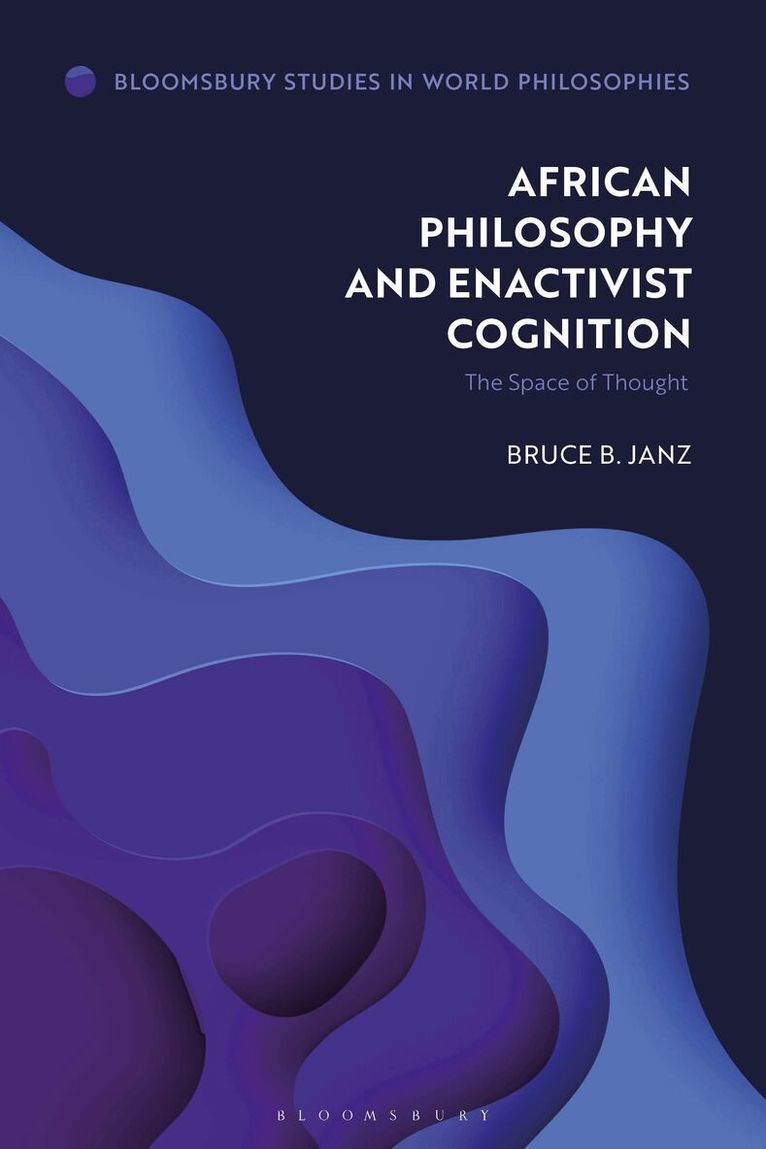
Using classic texts in African philosophy, Bruce B. Janz applies the strand of cognitive science known as enactivism to realise new connections and intersections between both fields. The idea that cognition is embodied and embedded in a social world neatly maps onto specifically African epistemologies to outline a new direction of study on what philosophy is. By working through a rich range of texts and thinkers, Janz provides a fruitful new interpretation of African philosophy and provides close readings of seminal and sidelined thinkers to provide an invaluable resource for students and scholars. Janz’s study takes in the creative humanism of Sylvia Wynter, Placide Tempels’s Bantu Philosophy, Mbiti’s theory of time, Oruka’s last work on sage philosophy, Mogobe Ramose’s own version of Ubuntu, Sophie Oluwole’s active literature of philosophy, Achille Mbembe’s excoriating attack on the effects of colonialism on life in Africa, and Suzanne Césaire writings on négritude.This book reorients African philosophy towards an active and creative future informed by enactivist thinking.
E-bok
PDF, Engelska, 2022438 kr
Läs direkt efter köp
Using classic texts in African philosophy, Bruce B. Janz applies the strand of cognitive science known as enactivism to realise new connections and intersections between both fields. The idea that cognition is embodied and embedded in a social world neatly maps onto specifically African epistemologies to outline a new direction of study on what philosophy is. By working through a rich range of texts and thinkers, Janz provides a fruitful new interpretation of African philosophy and provides close readings of seminal and sidelined thinkers to provide an invaluable resource for students and scholars. Janz''s study takes in the creative humanism of Sylvia Wynter, Placide Tempels''s Bantu Philosophy, Mbiti''s theory of time, Oruka''s last work on sage philosophy, Mogobe Ramose''s own version of Ubuntu, Sophie Oluwole''s active literature of philosophy, Achille Mbembe''s excoriating attack on the effects of colonialism on life in Africa, and Suzanne Césaire writings on négritude.This book reorients African philosophy towards an active and creative future informed by enactivist thinking.
E-bok
Engelska, 2022438 kr
Läs direkt efter köp
Using classic texts in African philosophy, Bruce B. Janz applies the strand of cognitive science known as enactivism to realise new connections and intersections between both fields. The idea that cognition is embodied and embedded in a social world neatly maps onto specifically African epistemologies to outline a new direction of study on what philosophy is. By working through a rich range of texts and thinkers, Janz provides a fruitful new interpretation of African philosophy and provides close readings of seminal and sidelined thinkers to provide an invaluable resource for students and scholars. Janz''s study takes in the creative humanism of Sylvia Wynter, Placide Tempels''s Bantu Philosophy, Mbiti''s theory of time, Oruka''s last work on sage philosophy, Mogobe Ramose''s own version of Ubuntu, Sophie Oluwole''s active literature of philosophy, Achille Mbembe''s excoriating attack on the effects of colonialism on life in Africa, and Suzanne Césaire writings on négritude.This book reorients African philosophy towards an active and creative future informed by enactivist thinking.
Häftad, Engelska, 2024
421 kr
Skickas inom 10-15 vardagar
Using classic texts in African philosophy, Bruce B. Janz applies the strand of cognitive science known as enactivism to realise new connections and intersections between both fields. The idea that cognition is embodied and embedded in a social world neatly maps onto specifically African epistemologies to outline a new direction of study on what philosophy is. By working through a rich range of texts and thinkers, Janz provides a fruitful new interpretation of African philosophy and provides close readings of seminal and sidelined thinkers to provide an invaluable resource for students and scholars. Janz’s study takes in the creative humanism of Sylvia Wynter, Placide Tempels’s Bantu Philosophy, Mbiti’s theory of time, Oruka’s last work on sage philosophy, Mogobe Ramose’s own version of Ubuntu, Sophie Oluwole’s active literature of philosophy, Achille Mbembe’s excoriating attack on the effects of colonialism on life in Africa, and Suzanne Césaire writings on négritude.This book reorients African philosophy towards an active and creative future informed by enactivist thinking.
Inbunden, Engelska, 2017
1 849 kr
Skickas inom 10-15 vardagar
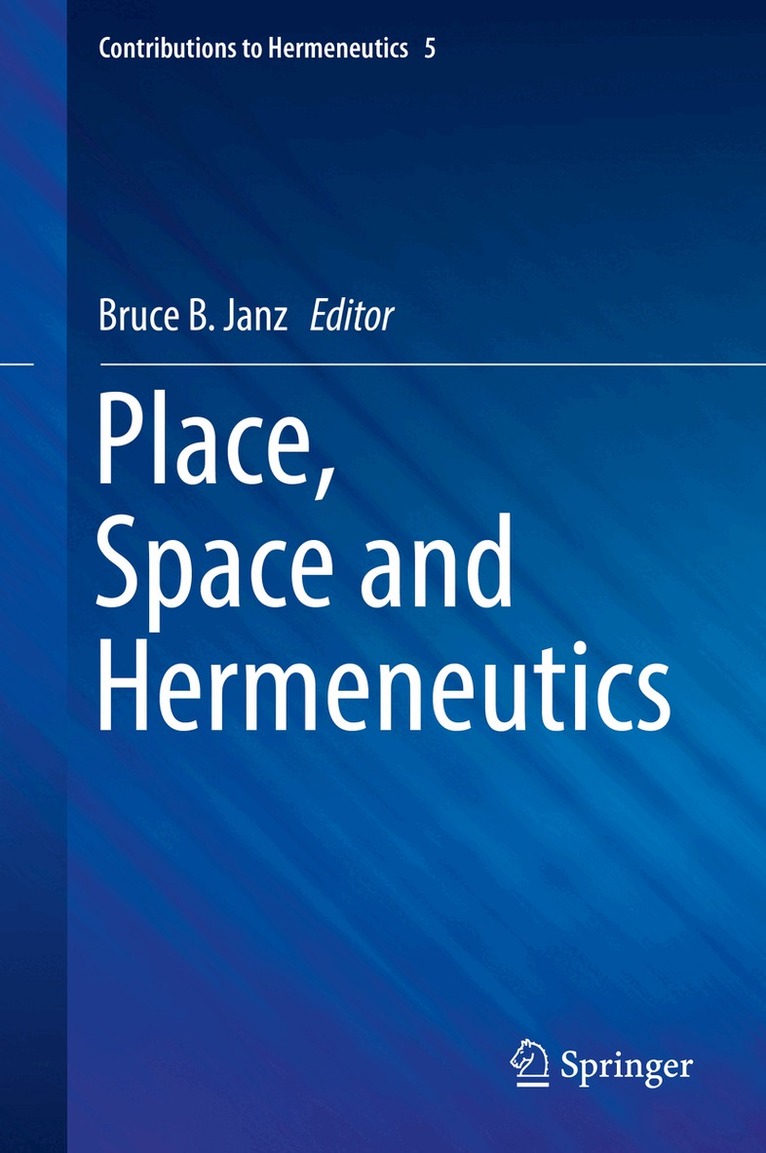
This book analyzes the hermeneutics of place, raising questions about central issues such as textuality, dialogue, and play. It discusses the central figures in the development of hermeneutics and place, and surveys disciplines and areas in which a hermeneutic approach to place has been fruitful. It covers the range of philosophical hermeneutic theory, both within philosophy itself as well as from other disciplines. In doing so, the volume reflects the state of theorization on these issues, and also looks forward to the implications and opportunities that exist. Philosophical hermeneutics has fundamentally altered philosophy’s approach to place. Issues such as how we dwell in place, how place is imagined, created, preserved, and lost, and how philosophy itself exists in place have become central. While there is much research applying hermeneutics to place, there is little which both reflects on that heritage and critically analyzes a hermeneutic approach to place. This book fills thatvoid by offering a sustained analysis of the central elements, major figures, and disciplinary applications of hermeneutics and place.
E-bok
Engelska, 20172 283 kr
Läs direkt efter köp
This book analyzes the hermeneutics of place, raising questions about central issues such as textuality, dialogue, and play. It discusses the central figures in the development of hermeneutics and place, and surveys disciplines and areas in which a hermeneutic approach to place has been fruitful. It covers the range of philosophical hermeneutic theory, both within philosophy itself as well as from other disciplines. In doing so, the volume reflects the state of theorization on these issues, and also looks forward to the implications and opportunities that exist. Philosophical hermeneutics has fundamentally altered philosophy’s approach to place. Issues such as how we dwell in place, how place is imagined, created, preserved, and lost, and how philosophy itself exists in place have become central. While there is much research applying hermeneutics to place, there is little which both reflects on that heritage and critically analyzes a hermeneutic approach to place. This book fills thatvoid by offering a sustained analysis of the central elements, major figures, and disciplinary applications of hermeneutics and place.
Del 5 - Contributions to Hermeneutics
Place, Space and Hermeneutics
Häftad, Engelska, 2018
1 849 kr
Skickas inom 10-15 vardagar
This book analyzes the hermeneutics of place, raising questions about central issues such as textuality, dialogue, and play. It discusses the central figures in the development of hermeneutics and place, and surveys disciplines and areas in which a hermeneutic approach to place has been fruitful. It covers the range of philosophical hermeneutic theory, both within philosophy itself as well as from other disciplines. In doing so, the volume reflects the state of theorization on these issues, and also looks forward to the implications and opportunities that exist. Philosophical hermeneutics has fundamentally altered philosophy’s approach to place. Issues such as how we dwell in place, how place is imagined, created, preserved, and lost, and how philosophy itself exists in place have become central. While there is much research applying hermeneutics to place, there is little which both reflects on that heritage and critically analyzes a hermeneutic approach to place. This book fills thatvoid by offering a sustained analysis of the central elements, major figures, and disciplinary applications of hermeneutics and place.