Bruce Bongar - Böcker
Visar alla böcker från författaren Bruce Bongar. Handla med fri frakt och snabb leverans.
8 produkter
8 produkter
474 kr
Skickas inom 3-6 vardagar
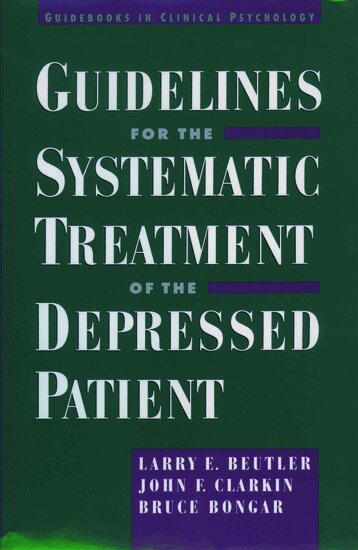
From initial consultation to termination of treatment, psychologists and other mental health practitioners make a series of crucial decisions to determine the progress and therapy of the patient. These decisions have varied implications such as the clinical course of the patient, the efficacy and efficiency of the treatment, and the cost of the sessions. Thus, the decisions made by mental health professionals need to be accurate and consistent, respecting a series of guidelines that will ultimately benefit the patient. This is the first in a series of guidebooks that is designed to do just that by providing practitioners with some structure in the development of treatment programmes. Previous guidelines have been based on consensus panels of experts or on the opinions of membership groups, causing guidelines to be very far off from the findings of empirical research. Here, guidelines are presented in terms of treatment principles rather than in terms of specific treatment models or theories, and they do not favour one theory of psychotherapy over another. Instead, they define strategies and considerations that can be woven into comprehensive treatment programmes. The entire series of guidebooks will cover numerous topics, including anxiety disorders, drug abuse, alcohol abuse, and treatment of serious mental disorders. This volume will cover in detail the nature of depression, issues in treatment research, contemporary treatments, and implications for education and training. It is ideal for postgraduates and professionals in the mental health field and is intended to provide important background on treatment of non-bipolar depressive disorders.
302 kr
Skickas inom 5-8 vardagar
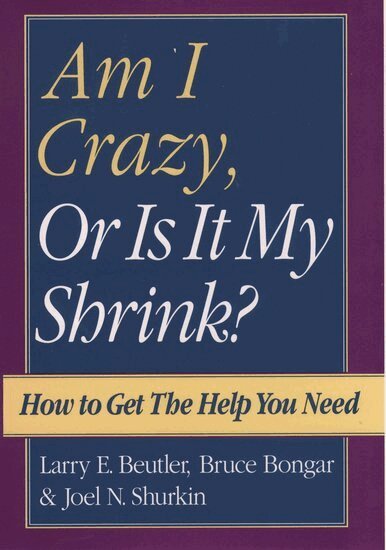
With over 400 types of psychotherapy available, ranging from the highly effective to the highly questionable to the downright fraudulent, the task of choosing a therapist can be daunting. Now, Am I Crazy Or Is My Shrink? gives you all the information you need to get the most effective help and to know when your therapy is working--or when it's time for a change.Drawing on years of practical experience and the most up-to-date research, the authors give you expert guidance on all the issues you should consider, whether you're seeking therapy or uncertain about the therapy you're receiving: What questions should I ask my therapist about a recommended treatment? What personal qualities and professional qualifications should I look for in a therapist? What do research studies say about the effectiveness of a particular therapy? How do I recognize when a therapist is not right for me? How can I tell when my therapist's behavior is unethical or unprofessional? What strategies can I use to evaluate my progress? The authors also provide an overview of the main branches of psychotherapy and suggest which approaches are best suited to the most commonly occurring problems, such as depression, anxiety, obsessive-compulsive disorders, eating disorders, relationship and sexual difficulties, and many others. Finally, the authors stress that because therapies don't come with warning labels, and because a therapist will typically apply his or her theory to whoever walks through the door, regardless of their unique symptoms and circumstances, it is essential to choose your therapist wisely, with as much forethought as possible.Am I Crazy Or Is My Shrink? empowers you to make that choice with confidence and to be a knowledgeable participant in your own treatment.
1 505 kr
Skickas inom 5-8 vardagar
The past decade has witnessed a dramatic transformation in the nature and use of political terrorism. Psychology of Terrorism is an indispensable resource in the field of psychology and terrorism. Given the relative newness of the discipline, there is a great need for a text that covers relevant aspects of psychology related to terrorism. This book presents the newest findings on treatment and clinical response protocols. Other topics included the theory and history of terrorism, types and effects of weapons of mass destruction or disruption, the role of nation, state, and local agencies and volunteer groups responding to terrorist threat, military response, psychological consequences of terrorism, special populations, prevention, training, and research. This text fills the need for a single, comprehensive resource for mental health clinicians, medical care providers, researchers, educators, and others who respond to acts of terrorism. There is currently no existing, comprehensive text that provides information on psychology and terrorism. The Handbook represents an international collaboration with the goal of serving as the benchmark in the rapidly growing and evolving field of psychology and terrorism.
1 962 kr
Skickas inom 5-8 vardagar
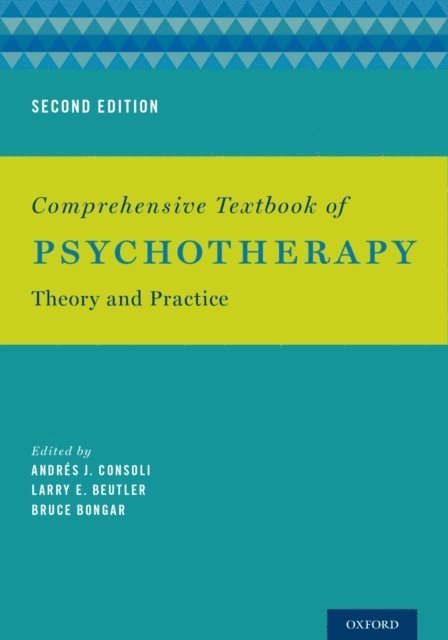
This completely updated second edition of Comprehensive Textbook of Psychotherapy discusses the contemporary landscape of psychotherapy, honors its complexities, and focuses on history, theory, science, practice, and diversity. The book is divided into three parts: (1) Models of Psychotherapy; (2) Psychotherapy by Modalities and Populations, and (3) Research Methods and Randomized Clinical Trials, Professional Issues, and New Directions in Psychotherapy. Part 1 has been expanded to include two chapters on Interpersonal Psychotherapy (IPT). This section now details the similarities and differences that exist across models, in an effort to articulate overarching principles of human change and stability processes that are advanced through professional practice. Chapters in Part 1 are organized into sets of two; each set has a theory chapter covering one of the six psychotherapy models discussed, followed by a practice chapter that conveys and illustrates the use of the model in a specific application, including a detailed case example. Part 2 addresses modalities of psychotherapy such as group, family, and electronic-based approaches, as well as psychotherapy with specific populations such as children and adolescents, older adults, and women. This section, too, has been expanded to include treatment of people in the schizophrenia spectrum, a chapter on treatment of immigrants and refugees, and another on working with men. There are also new chapters on working with military personnel and veterans, and a chapter on treating survivors of trauma, specifically on those exposed to mass trauma. Still another new chapter is included on working with psychological emergencies. Part 3 covers research methods and randomized clinical trials, the training of psychotherapists, ethics and legal matters, and the future of psychotherapy. Research and diversity are emphasized in each chapter and throughout the book. This new edition of a classic textbook will be valuable to instructors and students, psychotherapists-in-training, practitioners, and supervisors alike.
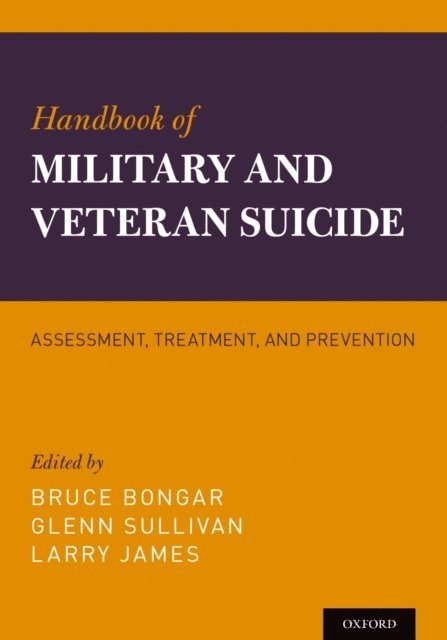
Handbook of Military and Veteran Suicide
Assessment, Treatment, and Prevention
Inbunden, Engelska, 2017
2 258 kr
Skickas inom 5-8 vardagar
For the past decade, suicidal behavior in military and veteran populations has been a constant feature in the news and in the media, with suicide rates among active duty American military personnel reaching their highest level in almost three decades. Handbook of Military and Veteran Suicide reviews the most advanced scientific understanding of the phenomenon of active duty and veteran suicide, while providing a useful, hands-on clinical guide for those working with this population.This comprehensive Handbook covers all relevant topics and current research in suicide in military and veteran populations, including links between suicide and PTSD, the stigma of mental health treatment in the military, screening for firearms access in military and veteran populations, "subintentioned" suicide (e.g. reckless driving and other such "accidental" deaths), women in combat, and working with families. Chapters also cover suicide risk assessment, ethical issues in treating suicidal patients, evidence-based treatments for PTSD, traumatic brain injury, and managing suicide in older veterans. Significant issues that may arise in assessing and treating military and veteran populations who are at risk for suicide are presented and discussed with evidence-based and practical recommendations. This Handbook will benefit researchers, policy makers, and clinicians who work with active duty military and veteran populations.
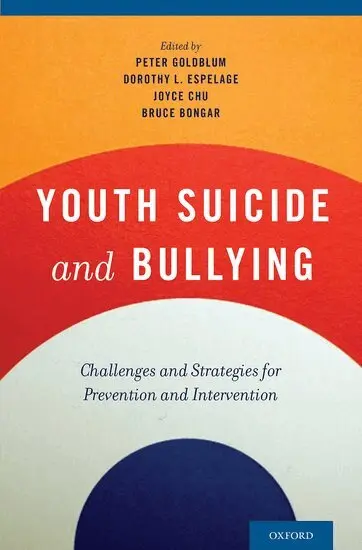
Youth Suicide and Bullying
Challenges and Strategies for Prevention and Intervention
Inbunden, Engelska, 2014
1 146 kr
Skickas inom 5-8 vardagar
High profile media reports of young people committing suicide after experiencing bullying have propelled a national conversation about the nature and scope of this problem and the means to address it. Specialists have long known that involvement in bullying in any capacity (as the victim or as the perpetrator) is associated with higher rates of suicidal ideation and behaviors, but evidence about which bullying subtype is at greatest risk is more mixed. For instance, some studies have shown that the association between suicidal ideation and bullying is stronger for targets of bullying than perpetrators. However, another study found that after controlling for depression, the association was strongest for perpetrators. Similar disagreement persists with regard to gender disparities relating to bullying and self-harm, for instance.Youth Suicide and Bullying presents an authoritative review of the science demonstrating the links between these two major public health concerns alongside informed discussion and evidence-based recommendations. The volume provides sound, scientifically grounded, and effective advice about bullying and suicide at every level: national, state, and community. Chapters provide details on models of interpersonal aggression; groups at risk for both bullying and suicide (such as sexual minorities); the role of stigma; family, school, and community-based youth bullying and suicide prevention programs, and more. Each chapter concludes with recommendations for mental health providers, educators, and policymakers. Compiling knowledge from the most informed experts and providing authoritative research-based information, this volume supports efforts to better understand and thereby reduce the prevalence of victimization and suicide.
607 kr
Skickas inom 7-10 vardagar
The Suicidal Patient provides an overview of the legal landscape, evaluates evidence-based assessment methods, and reviews treatment and management strategies for both outpatients and inpatients. Bongar and Sullivan propose practical risk management strategies for suicide prevention and postvention, emphasizing the importance of effective evaluation and documentation. Significant new material has been included on firearms, veterans and the military, diversity, and sexual minority status.This practical resource will help clinicians, supervisors, and administrators provide compassionate care for suicidal patients, and help better serve all patients - with the ultimate goal of saving lives.
498 kr
Skickas inom 3-6 vardagar
How does the law define reasonable care in the treatment of suicidal patients? What are the most clinically and legally appropriate procedures for evaluating and managing suicide risks? And what forms of precautionary planning and documentation are recommended for minimizing the likelihood of malpractice actions? Drawing upon years of clinical experience as well as extensive malpractice claims data and relevant case law, this book outlines effective assessment, management, and treatment procedures that balance the need for high-quality care with the requirements of court-determined and statutory standards. Three widely cited papers on standards of care are accompanied by four new chapters on clinical and legal risk management and issues surrounding pharmacotherapy.