Catherine E. De Vries - Böcker
Visar alla böcker från författaren Catherine E. De Vries. Handla med fri frakt och snabb leverans.
6 produkter
6 produkter
760 kr
Skickas inom 5-8 vardagar
With its coherent analytical framework and accessible style, Foundations of European Politics: A Comparative Approach introduces students to important tools of social science and comparative analysis.Key Features- Adopts a social scientific approach, introducing students to the important theoretical and empirical tools necessary to compare and analyse democratic politics in Europe.- Provides comprehensive coverage of political institutions, political behaviour and voters, and selected important policy outcomes.- Breakout boxes are included in each chapter to go deeper into aspects of European politics, and how to study it. Boxes includes debates about methods and measurement of important concepts, case studies, and academic controversies and debates.New to this Edition- Three new chapters cover topics around how to study European politics using the scientific method, how people receive and process political information and the role social media and political elites play in informing citizens about politics, and how organizations and social movements influence policy-making in Europe. - New and updated, full colour, graphs and figures help to clarify complex data and theoretical topics.- Existing chapters have been restructured and expanded to provide deeper insights and more comprehensive coverage of European politics.Digital Formats and ResourcesFoundations of European Politics is available for students and institutions to purchase in a variety of formats, and it is supported by online resources. Additional data set exercises can be found at www.foundationsofeuropeanpolitics.com.
344 kr
Kommande
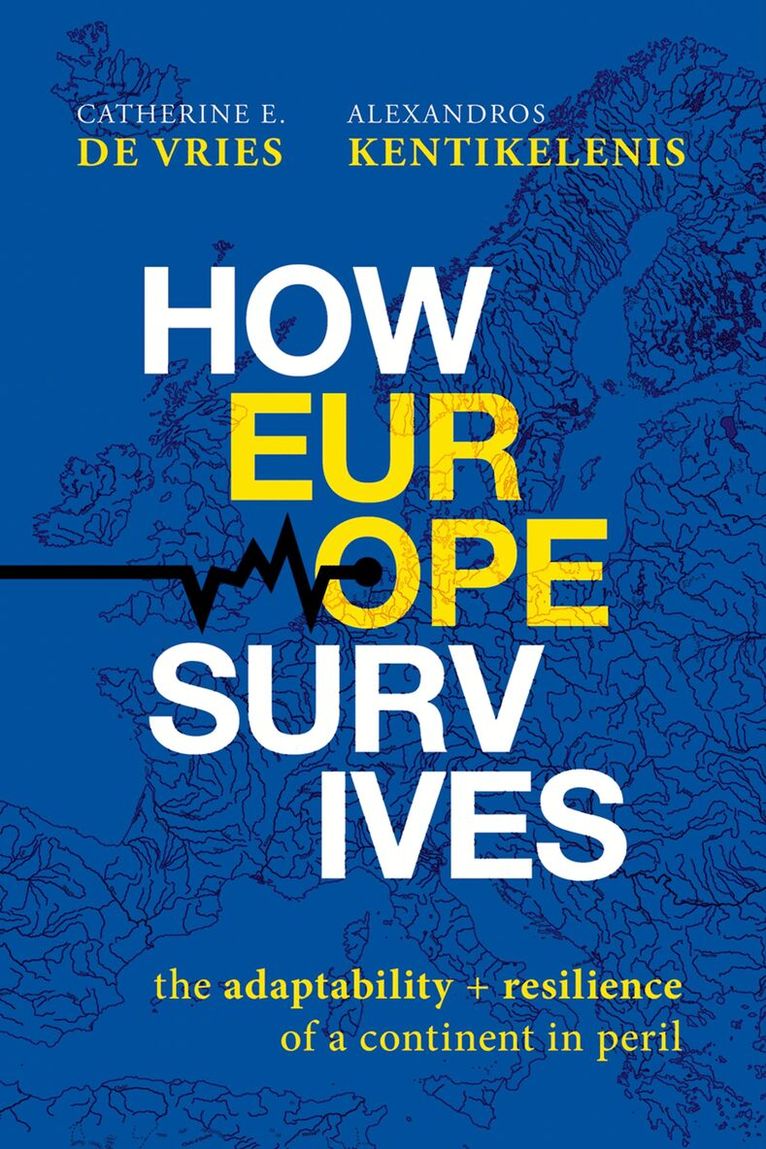
A bold new take on how Europe adapts, endures, and remains powerful in a rapidly shifting world order.Europe is often cast as lurching from one near-death experience to the next—from the eurozone crisis and Brexit to a pandemic and war on its borders. And yet, it endures. Not because it has resolved its contradictions, but because it has adapted through them. Challenging the familiar image of the European Union as fragile or intrinsically flawed, How Europe Survives reimagines Europe and its strengths.Catherine E. De Vries and Alexandros Kentikelenis reframe Europe as a living organism: imperfect, evolving, and responsive to its environment. That messiness is part of its strength. Like an organism, the EU survives by improvising, recalibrating, and absorbing internal tensions and external shocks. Its strengths lie in its malleability and flexibility, which enable it to constantly reinvent itself. It does so both in moments of crisis and in its normal functioning. How Europe Survives is both a reinterpretation of Europe's past and a guide to its future. This is not a triumphalist story. Europe's adaptability has costs and limits. But it offers a practical lesson for governing in an age of permanent crisis: flexible institutions, open contestation, and a willingness to learn can keep a political project alive. Clear-eyed and accessible, How Europe Survives explains how the EU has endured—and what that means for its citizens and its role in the world.
1 600 kr
Skickas inom 5-8 vardagar
The European Union (EU) is facing one of the rockiest periods in its existence. No time in its history has it looked so economically fragile, so unsecure about how to protect its borders, so divided over how to tackle the crisis of legitimacy facing its institutions, and so under assault of Eurosceptic parties. The unprecedented levels of integration in recent decades have led to increased public contestation, yet at the same the EU is more reliant on public support for its continued legitimacy than ever before. This book examines the role of public opinion in the European integration process. It develops a novel theory of public opinion that stresses the deep interconnectedness between people's views about European and national politics, and suggests that public opinion cannot simply be characterized as either Eurosceptic or not, but rather consists of different types. This is important because these types coincide with fundamentally different views about the way the EU should be reformed and which policy priorities should be pursued. These types also have very different consequences for behaviour in elections and referenda. Euroscepticism is such a diverse phenomenon because the Eurozone crisis has exacerbated the structural imbalances within the EU. As the economic and political fates of member states diverged, people's experiences with and evaluations of the EU and national political systems also grew further apart. The heterogeneity in public preferences that this book has uncovered makes a one-size-fits-all approach to addressing Euroscepticism unlikely to be successful.
535 kr
Tillfälligt slut
Foundations of European Politics: A Comparative Approach offers an accessible introduction to European politics using a coherent comparative and analytical framework. It presents students with the basic theoretical and empirical toolkit of social scientific researchers, and explains how an analytic approach can be used to understand both domestic and EU-level policy-making in Europe. The book draws on cutting edge research from all areas of European politics - from national and EU institutions, to political behaviour and policy-making - and uses case studies and examples throughout to help students compare different electoral systems, parties and governments across Europe. The book is structured thematically in five parts, beginning with theoretical foundations; moving on to examine citizens and voters, elections and parties, governments and policy; and finally covering the rule of law, democracy and backsliding. Digital formats and resourcesFoundations of European Politics: A Comparative Approach is available for students and institutions to purchase in a variety of formats, and is supported by online resources. · The e-book offers a mobile experience and convenient access along with functionality tools, navigation features and links that offer extra learning support: www.oxfordtextbooks.co.uk/ebooks · Online resources for students include: multiple choice questions, web links, essay questions, and data descriptions and data exercises.· Online resources for lecturers include: adaptable PowerPoint slides, test bank questions, figures and tables from the book.
343 kr
Skickas inom 7-10 vardagar
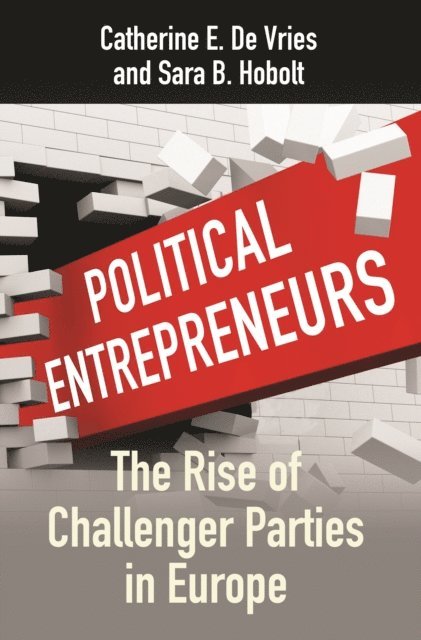
How challenger parties, acting as political entrepreneurs, are changing European democraciesChallenger parties are on the rise in Europe, exemplified by the likes of Podemos in Spain, the National Rally in France, the Alternative for Germany, or the Brexit Party in Great Britain. Like disruptive entrepreneurs, these parties offer new policies and defy the dominance of established party brands. In the face of these challenges and a more volatile electorate, mainstream parties are losing their grip on power. In this book, Catherine De Vries and Sara Hobolt explore why some challenger parties are so successful and what mainstream parties can do to confront these political entrepreneurs.Drawing analogies with how firms compete, De Vries and Hobolt demonstrate that political change is as much about the ability of challenger parties to innovate as it is about the inability of dominant parties to respond. Challenger parties employ two types of innovation to break established party dominance: they mobilize new issues, such as immigration, the environment, and Euroscepticism, and they employ antiestablishment rhetoric to undermine mainstream party appeal. Unencumbered by government experience, challenger parties adapt more quickly to shifting voter tastes and harness voter disenchantment. Delving into strategies of dominance versus innovation, the authors explain why European party systems have remained stable for decades, but also why they are now increasingly under strain.As challenger parties continue to seek to disrupt the existing order, Political Entrepreneurs shows that their ascendency fundamentally alters government stability and democratic politics.
231 kr
Skickas inom 7-10 vardagar
How challenger parties, acting as political entrepreneurs, are changing European democraciesChallenger parties are on the rise in Europe, exemplified by the likes of Podemos in Spain, the National Rally in France, the Alternative for Germany, or the Brexit Party in Great Britain. Like disruptive entrepreneurs, these parties offer new policies and defy the dominance of established party brands. In the face of these challenges and a more volatile electorate, mainstream parties are losing their grip on power. In this book, Catherine De Vries and Sara Hobolt explore why some challenger parties are so successful and what mainstream parties can do to confront these political entrepreneurs.Drawing analogies with how firms compete, De Vries and Hobolt demonstrate that political change is as much about the ability of challenger parties to innovate as it is about the inability of dominant parties to respond. Challenger parties employ two types of innovation to break established party dominance: they mobilize new issues, such as immigration, the environment, and Euroscepticism, and they employ antiestablishment rhetoric to undermine mainstream party appeal. Unencumbered by government experience, challenger parties adapt more quickly to shifting voter tastes and harness voter disenchantment. Delving into strategies of dominance versus innovation, the authors explain why European party systems have remained stable for decades, but also why they are now increasingly under strain.As challenger parties continue to seek to disrupt the existing order, Political Entrepreneurs shows that their ascendency fundamentally alters government stability and democratic politics.