Sara B. Hobolt - Böcker
Visar alla böcker från författaren Sara B. Hobolt. Handla med fri frakt och snabb leverans.
9 produkter
9 produkter
546 kr
Skickas inom 5-8 vardagar
With its coherent analytical framework and accessible style, Foundations of European Politics: A Comparative Approach introduces students to important tools of social science and comparative analysis.Key Features- Adopts a social scientific approach, introducing students to the important theoretical and empirical tools necessary to compare and analyse democratic politics in Europe.- Provides comprehensive coverage of political institutions, political behaviour and voters, and selected important policy outcomes.- Breakout boxes are included in each chapter to go deeper into aspects of European politics, and how to study it. Boxes includes debates about methods and measurement of important concepts, case studies, and academic controversies and debates.New to this Edition- Three new chapters cover topics around how to study European politics using the scientific method, how people receive and process political information and the role social media and political elites play in informing citizens about politics, and how organizations and social movements influence policy-making in Europe. - New and updated, full colour, graphs and figures help to clarify complex data and theoretical topics.- Existing chapters have been restructured and expanded to provide deeper insights and more comprehensive coverage of European politics.Digital Formats and ResourcesFoundations of European Politics is available for students and institutions to purchase in a variety of formats, and it is supported by online resources. Additional data set exercises can be found at www.foundationsofeuropeanpolitics.com.
1 444 kr
Skickas inom 5-8 vardagar
This book offers a comprehensive political analysis of the Euro crisis that erupted in Greece in 2010 and subsequently threatened the very survival of the Euro area. It has left a profound mark on democratic politics all over Europe, changing public attitudes and voting preferences, institutional and societal norms, and deeply anchored political traditions. The contributors to this volume reveal the extent to which policymakers are torn between the pressures emanating from financial markets and the demands put forward by their own constituents; how they struggle to reconcile national preferences with wider European interests; and how a polarized and politicized Union seeks to maintain some degree of cohesion. The emerging picture is that of a European Union under serious stress, transformed by new governance structures and a shifting balance of power. In response, the authors evaluate the prospects of a more legitimate and democratic Europe. They provide a rich and pluralist set of new analyses and proposals, aimed at understanding and navigating the myriad tensions which surround the EU in the aftermath of the crisis. If the European project is to regain the trust of its citizens, such considerations must take a central place in public debate.
535 kr
Tillfälligt slut
Foundations of European Politics: A Comparative Approach offers an accessible introduction to European politics using a coherent comparative and analytical framework. It presents students with the basic theoretical and empirical toolkit of social scientific researchers, and explains how an analytic approach can be used to understand both domestic and EU-level policy-making in Europe. The book draws on cutting edge research from all areas of European politics - from national and EU institutions, to political behaviour and policy-making - and uses case studies and examples throughout to help students compare different electoral systems, parties and governments across Europe. The book is structured thematically in five parts, beginning with theoretical foundations; moving on to examine citizens and voters, elections and parties, governments and policy; and finally covering the rule of law, democracy and backsliding. Digital formats and resourcesFoundations of European Politics: A Comparative Approach is available for students and institutions to purchase in a variety of formats, and is supported by online resources. · The e-book offers a mobile experience and convenient access along with functionality tools, navigation features and links that offer extra learning support: www.oxfordtextbooks.co.uk/ebooks · Online resources for students include: multiple choice questions, web links, essay questions, and data descriptions and data exercises.· Online resources for lecturers include: adaptable PowerPoint slides, test bank questions, figures and tables from the book.
399 kr
Skickas inom 5-8 vardagar
The Brexit referendum was a pivotal moment in British politics. Tribal Politics argues this is not only because it led to the UK's departure from the European Union, but also because it created two new, powerful, and enduring political identities in the UK: Leavers and Remainers. These new identities rapidly became central to how people saw themselves, others, and the world around them, and they continue to underpin British politics.Tribal Politics explores how these identities were created and why they have proved so resilient in the years following the 2016 vote. It does so by treating the Brexit divide as the result of three contingent factors: issue contestation (intense, high-stakes public conflict), issue expression (individual commitment through voting and political engagement), and issue alignment (the way Brexit cut across traditional party lines). Together, these conditions transformed what had been, for many, a distant policy question into a deep and lasting identity divide.Drawing on political psychology and a wide range of original evidence—including surveys, experiments, and analyses of political discourse—Sara B. Hobolt and James Tilley examine the far-reaching consequences of tribal politics for political attitudes and choices. They show that we dislike, look down on, and discriminate against people because they belong to another tribe, and that we also change our views of reality, our policy opinions, and even our perceptions of democratic legitimacy to better fit our tribal loyalties.While rooted in the Brexit experience, Tribal Politics speaks to the origins and consequences of all types of identity-driven affective polarization. As many democracies around the world confront deepening political divides, it offers timely insights into how a single political moment can spark lasting tribalism and why those tribes so often survive long after that moment has passed.
1 566 kr
Skickas inom 5-8 vardagar
A key component of democratic accountability is that citizens understand 'who is to blame'. Nonetheless, little is known about how citizens attribute responsibility in the European Union or how those perceptions of responsibility matter. This book presents the first comprehensive account of how citizens assign blame to the EU, how politicians and the media attempt to shift blame and finally, how it matters for electoral democracy. Based on rich and unique data sources, Blaming Europe? sheds light on all three aspects of responsibility in the EU. First, it shows that while institutional differences between countries shape citizen judgements of EU responsibility, those judgements are also highly determined by pre-existing attitudes towards the EU. Second, it demonstrates that neither politicians nor the media assign much blame to the EU. Third, it establishes that regardless of whether voters are capable of accurately assigning responsibility, they are not able to hold their EU representatives to account via the ballot box in European elections due to the lack of an identifiable 'European government' to reward or punish. As a consequence, when citizens hold the EU responsible for poor performance, but are unable to sanction an EU incumbent, they lose trust in the EU as a whole instead. In conclusion, it argues that this 'accountability deficit' has significant implications for the future of the European Union.
1 921 kr
Skickas inom 10-15 vardagar
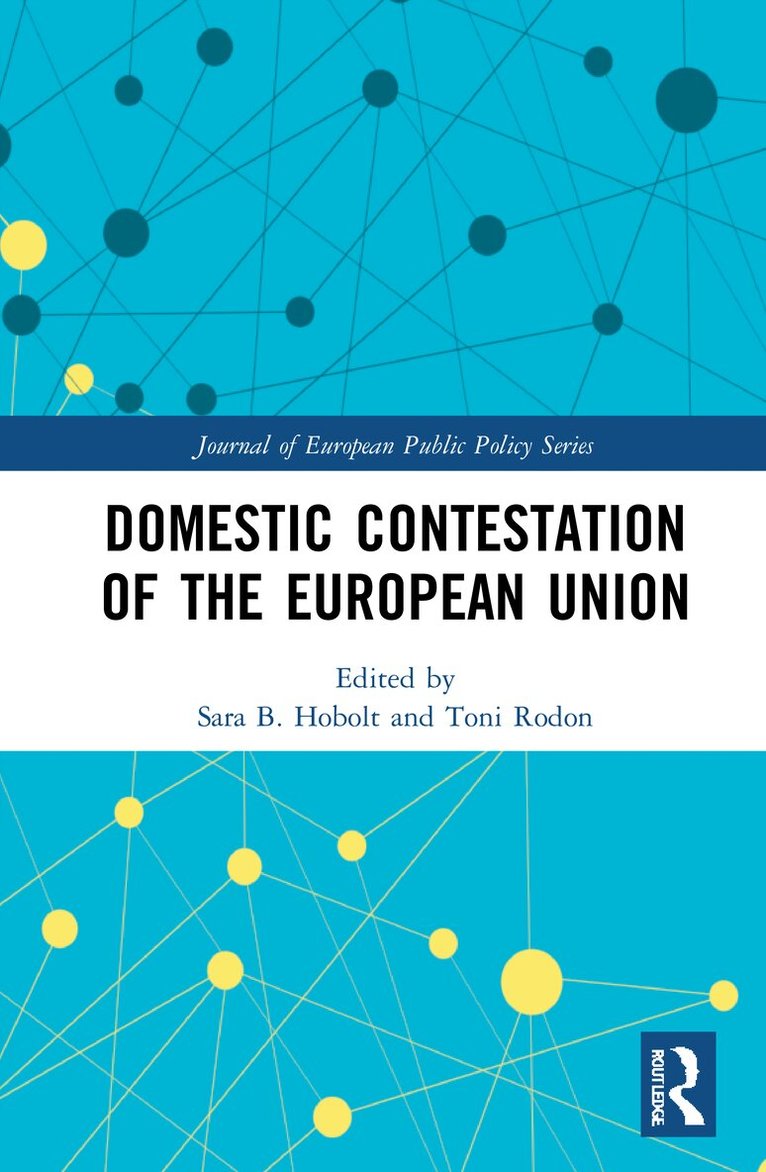
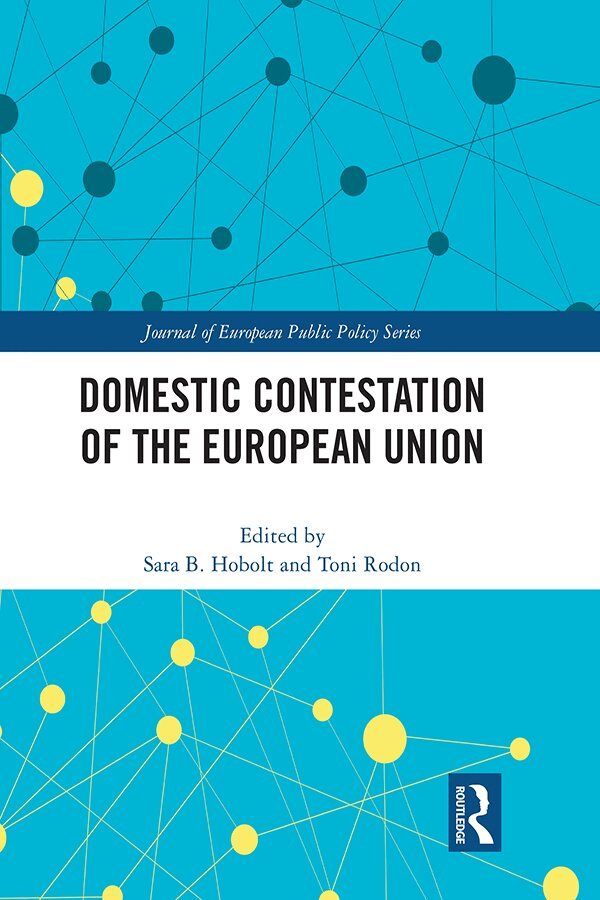
This book examines how Europe-wide issues – such as immigration, cross-national redistribution and further European integration – have reshaped electoral democracy and party competition across Europe.After decades of scholars and commentators bemoaning the limited politicization of the EU nationally, European issues have come to dominate domestic electoral politics. From the Eurozone crisis to the struggle of dealing with growing numbers of migrants and refugees entering Europe, EU-wide issues now occupy a salient part of the domestic political debate. This book examines what drives public opinion towards some of the key Europe-wide issues of the day and how these EU issues shapes electoral behaviour and party competition. It brings together leading scholars from different fields to explore what shapes preferences towards Europe-wide policy issues, how they influence electoral behaviour and party fortunes and what the implications are for the quality of European democracy. Overall, this book deepens our understanding of the state of European democracy domestically in an era in which national and Europe-wide problems and policy solutions are inextricably linked.The chapters in this book were originally published in the Journal of European Public Policy.
568 kr
Skickas inom 10-15 vardagar
This book examines how Europe-wide issues – such as immigration, cross-national redistribution and further European integration – have reshaped electoral democracy and party competition across Europe.After decades of scholars and commentators bemoaning the limited politicization of the EU nationally, European issues have come to dominate domestic electoral politics. From the Eurozone crisis to the struggle of dealing with growing numbers of migrants and refugees entering Europe, EU-wide issues now occupy a salient part of the domestic political debate. This book examines what drives public opinion towards some of the key Europe-wide issues of the day and how these EU issues shapes electoral behaviour and party competition. It brings together leading scholars from different fields to explore what shapes preferences towards Europe-wide policy issues, how they influence electoral behaviour and party fortunes and what the implications are for the quality of European democracy. Overall, this book deepens our understanding of the state of European democracy domestically in an era in which national and Europe-wide problems and policy solutions are inextricably linked.The chapters in this book were originally published in the Journal of European Public Policy.
337 kr
Skickas inom 7-10 vardagar
How challenger parties, acting as political entrepreneurs, are changing European democraciesChallenger parties are on the rise in Europe, exemplified by the likes of Podemos in Spain, the National Rally in France, the Alternative for Germany, or the Brexit Party in Great Britain. Like disruptive entrepreneurs, these parties offer new policies and defy the dominance of established party brands. In the face of these challenges and a more volatile electorate, mainstream parties are losing their grip on power. In this book, Catherine De Vries and Sara Hobolt explore why some challenger parties are so successful and what mainstream parties can do to confront these political entrepreneurs.Drawing analogies with how firms compete, De Vries and Hobolt demonstrate that political change is as much about the ability of challenger parties to innovate as it is about the inability of dominant parties to respond. Challenger parties employ two types of innovation to break established party dominance: they mobilize new issues, such as immigration, the environment, and Euroscepticism, and they employ antiestablishment rhetoric to undermine mainstream party appeal. Unencumbered by government experience, challenger parties adapt more quickly to shifting voter tastes and harness voter disenchantment. Delving into strategies of dominance versus innovation, the authors explain why European party systems have remained stable for decades, but also why they are now increasingly under strain.As challenger parties continue to seek to disrupt the existing order, Political Entrepreneurs shows that their ascendency fundamentally alters government stability and democratic politics.
227 kr
Skickas inom 7-10 vardagar
How challenger parties, acting as political entrepreneurs, are changing European democraciesChallenger parties are on the rise in Europe, exemplified by the likes of Podemos in Spain, the National Rally in France, the Alternative for Germany, or the Brexit Party in Great Britain. Like disruptive entrepreneurs, these parties offer new policies and defy the dominance of established party brands. In the face of these challenges and a more volatile electorate, mainstream parties are losing their grip on power. In this book, Catherine De Vries and Sara Hobolt explore why some challenger parties are so successful and what mainstream parties can do to confront these political entrepreneurs.Drawing analogies with how firms compete, De Vries and Hobolt demonstrate that political change is as much about the ability of challenger parties to innovate as it is about the inability of dominant parties to respond. Challenger parties employ two types of innovation to break established party dominance: they mobilize new issues, such as immigration, the environment, and Euroscepticism, and they employ antiestablishment rhetoric to undermine mainstream party appeal. Unencumbered by government experience, challenger parties adapt more quickly to shifting voter tastes and harness voter disenchantment. Delving into strategies of dominance versus innovation, the authors explain why European party systems have remained stable for decades, but also why they are now increasingly under strain.As challenger parties continue to seek to disrupt the existing order, Political Entrepreneurs shows that their ascendency fundamentally alters government stability and democratic politics.