Catherine E. Foley - Böcker
Visar alla böcker från författaren Catherine E. Foley. Handla med fri frakt och snabb leverans.
3 produkter
3 produkter
851 kr
Skickas inom 10-15 vardagar
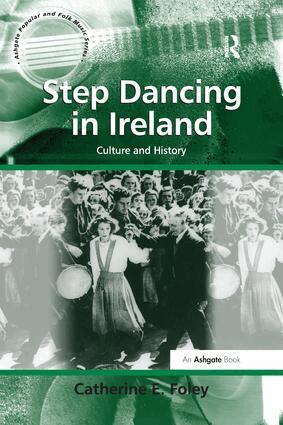
For many people step dancing is associated mainly with the Irish step-dance stage shows, Riverdance and Lord of the Dance, which assisted both in promoting the dance form and in placing Ireland globally. But, in this book, Catherine Foley illustrates that the practice and contexts of step dancing are much more complicated and fluid. Tracing the trajectory of step dancing in Ireland, she tells its story from roots in eighteenth-century Ireland to its diverse cultural manifestations today. She examines the interrelationships between step dancing and the changing historical and cultural contexts of colonialism, nationalism, postcolonialism and globalization, and shows that step dancing is a powerful tool of embodiment and meaning that can provoke important questions relating to culture and identity through the bodies of those who perform it. Focusing on the rural European region of North Kerry in the south-west of Ireland, Catherine Foley examines three step-dance practices: one, the rural Molyneaux step-dance practice, representing the end of a relatively long-lived system of teaching by itinerant dancing masters in the region; two, Rinceoirà na RÃochta, a dance school representative of the urbanized staged, competition orientated practice, cultivated by the cultural nationalist movement, the Gaelic League, established at the end of the nineteenth century, and practised today both in Ireland and abroad; and three, the stylized, commoditized, folk-theatrical practice of Siamsa TÃre, the National Folk Theatre of Ireland, established in North Kerry in the 1970s. Written from an ethnochoreological perspective, Catherine Foley provides a rich historical and ethnographic account of step dancing, step dancers and cultural institutions in Ireland.
2 220 kr
Skickas inom 10-15 vardagar
For many people step dancing is associated mainly with the Irish step-dance stage shows, Riverdance and Lord of the Dance, which assisted both in promoting the dance form and in placing Ireland globally. But, in this book, Catherine Foley illustrates that the practice and contexts of step dancing are much more complicated and fluid. Tracing the trajectory of step dancing in Ireland, she tells its story from roots in eighteenth-century Ireland to its diverse cultural manifestations today. She examines the interrelationships between step dancing and the changing historical and cultural contexts of colonialism, nationalism, postcolonialism and globalization, and shows that step dancing is a powerful tool of embodiment and meaning that can provoke important questions relating to culture and identity through the bodies of those who perform it. Focusing on the rural European region of North Kerry in the south-west of Ireland, Catherine Foley examines three step-dance practices: one, the rural Molyneaux step-dance practice, representing the end of a relatively long-lived system of teaching by itinerant dancing masters in the region; two, Rinceoirà na RÃochta, a dance school representative of the urbanized staged, competition orientated practice, cultivated by the cultural nationalist movement, the Gaelic League, established at the end of the nineteenth century, and practised today both in Ireland and abroad; and three, the stylized, commoditized, folk-theatrical practice of Siamsa TÃre, the National Folk Theatre of Ireland, established in North Kerry in the 1970s. Written from an ethnochoreological perspective, Catherine Foley provides a rich historical and ethnographic account of step dancing, step dancers and cultural institutions in Ireland.
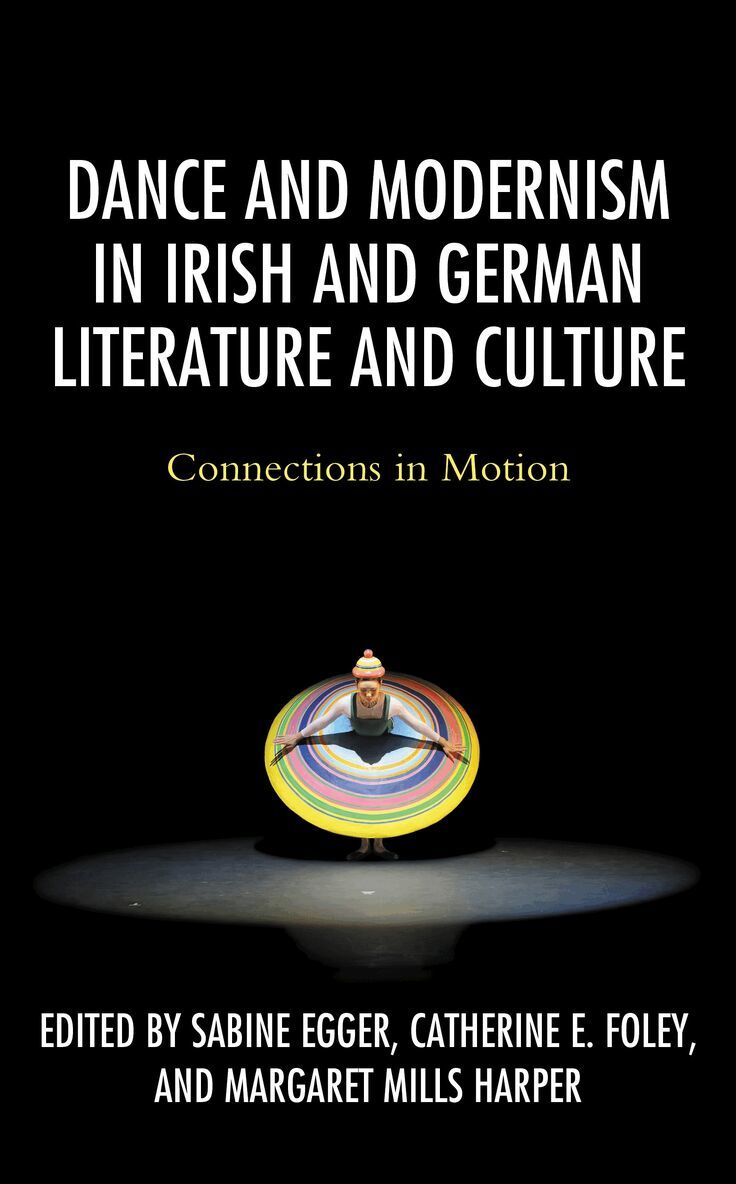
Dance and Modernism in Irish and German Literature and Culture
Connections in Motion
Häftad, Engelska, 2023
447 kr
Skickas inom 10-15 vardagar
A collection of scholarly articles and essays by dancers and scholars of ethnochoreology, dance studies, drama studies, cultural studies, literature, and architecture, Dance and Modernism in Irish and German Literature and Culture: Connections in Motion explores Irish-German connections through dance in choreographic processes and on stage, in literary texts, dance documentation, film, and architecture from the 1920s to today. The contributors discuss modernism, with a specific focus on modern dance, and its impact on different art forms and discourses in Irish and German culture. Within this framework, dance is regarded both as a motif and a specific form of spatial movement, which allows for the transgression of medial and disciplinary boundaries as well as gender, social, or cultural differences. Part 1 of the collection focuses on Irish-German cultural connections made through dance, while part 2 studies the role of dance in Irish and German literature, visual art, and architecture.