Cato T. Laurencin – författare
331 kr
Läs direkt efter köp
Academic preparation is critical to increase Black representation in Science, Engineering, and Medicine, but so, too, are such interrelated factors as providing mentoring and role models in sufficient numbers, adequately funding school and community support services, and analyzing the intentional and unintentional consequences of a range of policies and practices. To address these issues, the Roundtable on Black Men and Black Women of the National Academies of Sciences, Engineering, and Medicine convened a virtual workshop on September 2 and 3, 2020. Titled "Educational Pathways for Blacks in Science, Engineering, and Medicine: Exploring Barriers and Possible Interventions," the workshop provided a platform to explore challenges and opportunities, beginning in the earliest years of life through K-12 schooling, undergraduate and postgraduate education, and into the workforce. Presenters throughout the workshop provided perspectives from research and from their own experiences to discuss the need for systemic solutions inside and outside of formal education institutions. This publication summarizes the presentation and discussion of the workshop.
457 kr
Läs direkt efter köp
On December 7 and 8, 2020, the Roundtable on Black Men and Black Women in Science, Engineering, and Medicine of the National Academies of Sciences, Engineering, and Medicine convened a virtual workshop that examined how to strengthen mentoring and advising of Black students and professionals in science, engineering, and medicine. Presenters included faculty deans, social scientists who are experts in organizational and professional development, and program implementers. Throughout the workshop, individual presenters highlighted evaluation criteria used by successful pipeline programs, including statistics on recruitment, retention, and advancement; career and leadership accomplishments; and awards and publications. This publication summarizes the presentations and discussions of the workshop.
618 kr
Läs direkt efter köp
While the COVID-19 pandemic has had devastating health and economic impacts in the United States, communities of color, especially Black communities, have been disproportionately affected. On June 23, 2020, the Roundtable on Black Men and Black Women in Science, Engineering, and Medicine of the National Academies of Sciences, Engineering, and Medicine convened a virtual workshop to discuss the landscape of COVID-19, including how systemic racism contributes to the disproportionate effects related to infection rates and mortality of this virus and other health conditions. Presenters highlighted relevant research and creative responses from many perspectives, including how Black scientists, engineers, and doctors are contributing to solutions and are ready to do more. National Academies leaders and members also discussed the role of the National Academies in addressing the pandemic and underlying issues of systemic racism that have led to health disparities in the United States. This publication summarizes the presentation and discussion of the workshop.
685 kr
Läs direkt efter köp
Black men are increasingly underrepresented in medical schools and in the medical profession. A diverse workforce is a key attribute of quality healthcare and research suggests that a diverse workforce may help to advance cultural competency and increase access to high-quality health care, especially for underserved populations. Conversely, lack of diversity in the health workforce threatens health care quality and access and contributes to health disparities. In this way, the growing absence of Black men in medicine is especially troubling, because their absence in medicine may have adverse consequences for health care access, quality, and outcomes among Black Americans and Americans overall.
To better understand the factors that contribute to the low participation of Black men in the medical profession, facilitate discussion of current strategies used to increase their participation in medical education, and explore new strategies along the educational and professional pipeline that may have potential to increase participation in medicine, the National Academies of Sciences, Engineering, and Medicine and the Cobb Institute jointly convened a 2-day workshop in November 2017, in Washington, DC. This publication summarizes the presentations and discussions from the workshop.
665 kr
Läs direkt efter köp
Despite the changing demographics of the nation and a growing appreciation for diversity and inclusion as drivers of excellence in science, engineering, and medicine, Black Americans are severely underrepresented in these fields. Racism and bias are significant reasons for this disparity, with detrimental implications on individuals, health care organizations, and the nation as a whole. The Roundtable on Black Men and Black Women in Science, Engineering, and Medicine was launched at the National Academies of Sciences, Engineering, and Medicine in 2019 to identify key levers, drivers, and disruptors in government, industry, health care, and higher education where actions can have the most impact on increasing the participation of Black men and Black women in science, medicine, and engineering.
On April 16, 2020, the Roundtable convened a workshop to explore the context for their work; to surface key issues and questions that the Roundtable should address in its initial phase; and to reach key stakeholders and constituents. This proceedings provides a record of the workshop.
331 kr
Läs direkt efter köp
The number of Black students in science, engineering, and medicine in the United States has remained disproportionately low over the past several decades. A number of reasons have been identified as contributing to these low numbers, including those related to finances. Financial considerations range from the most immediate - the ability of students to pay for their education and associated costs - to more structural concerns, such as inequities that created and have perpetuated a wealth gap between races and ethnic groups.
On April 19-20, 2021, the Roundtable on Black Men and Black Women in Science, Engineering, and Medicine of the National Academies of Sciences, Engineering, and Medicine organized a virtual public workshop to examine financial barriers for Black students in science, engineering, and medicine, explore existing educational programs to them, and engage stakeholders in conversations about partnerships and policies that span academia, industry, and philanthropy. This publication summarizes the presentation and discussion of the workshop.
284 kr
Läs direkt efter köp
Efforts over the last several decades to increase the participation and leadership of Black men and women in the scientific and medical workforce have had limited results. Despite many individual successes, the number of Black professionals in science, engineering, and medicine (SEM) fields has not reached a level that corresponds with African Americanrepresentation in the country at large. Structural racism affects progress at all stages along the pathway - from young children through graduate and medical students through faculty and clinicians at all levels. Beyond entry into educational programs or recruitment into workplaces seeking to diversify, challenges persist to achieve equity and inclusion for Black males and females. Moreover, psychological barriers confound the engagement of Black men and women in SEM fields.
To explore these issues and suggest solutions, the National Academies of Sciences, Engineering, and Medicine launched the Roundtable on Black Men and Black Women in Science, Engineering,and Medicine. Over the past 2 years, the Roundtable has convened workshops on K-12 education, the impact of COVID-19, financial burdens to pursuing SEM careers, and other topics. Sessions during each of these workshops identified psychological factors related to those specific topics. To have a more targeted discussion, the Roundtable convened a virtual workshop on September 14-15, 2021. As summarized in this proceedings, panelists and participants identified policies and practices that perpetuate these factors and explored solutions toward achieving and maintaining wellness, especially among students and young professionals.
387 kr
Skickas inom 3-6 vardagar
325 kr
Läs direkt efter köp
The mission of the Roundtable on Black Men and Black Women in Science, Engineering, and Medicine at the National Academies of Sciences, Engineering, and Medicine is to advance discussions on the barriers and opportunities encountered by Black students and professionals as they navigate the pathways from K-12 and postsecondary education to careers in science, engineering, and medicine (SEM) and highlight promising practices for increasing the representation, retention, and inclusiveness of Black men and Black women in SEM. This proceedings serves as a summary of the presentations and discussions from a capstone workshop, held virtually on December 6 and 7, 2021, to review how anti-Black racism had permeated across the topics covered by the Roundtable over the previous 2 years.
300 kr
Läs direkt efter köp
Increasing the number of Black men and Black women who enter the fields of science, engineering, and medicine (SEM) will benefit the social and economic health of the nation. On May 2-3, 2022 the Roundtable on Black Men and Black Women in Science, Engineering, and Medicine of the National Academies of Sciences, Engineering, and Medicine convened a workshop to highlight promising financial and supportive services and programs throughout various stages of career development. Sessions followed student progression through the major stages of education and career development, and identified policies and practices that aim to mitigate and alleviate long-standing barriers to the full participation of Black students in SEM at the K–12, undergraduate, and graduate and professional levels.
244 kr
Läs direkt efter köp
For many Black Americans, trust in science, engineering, and medicine (SEM) institutions is affected by historic and current contexts, with significant consequences including exacerbating health and economic inequities for this population. Many SEM professionals recognize the importance of building trust with the Black community, and are looking for sustainable and effective ways to earn and nurture that trust.
To advance SEM issues within the Black community, the Roundtable on Black Men and Black Women in Science, Engineering, and Medicine at the National Academies of Sciences, Engineering, and Medicine convened a public workshop to examine local, national, and global strategies used by groups such as the Black Church to build institutional trust. The workshop, held December 14-15, 2022, was structured to identify organizations that have demonstrated success in building and maintaining trust with Black communities, highlight best practices for SEM professionals to develop sustainable and effective relationships with the Black community, and examine how communication with Black communities influences trust and acceptance of SEM institutions.
336 kr
Skickas inom 3-6 vardagar
276 kr
Läs direkt efter köp
Individuals, institutions, and communities all have a role in strengthening representation of Black men and Black women in science, engineering, and medicine (SEM). The SEM workplace has historically not been an equitable space for students, faculty, staff, and professionals, but promising practices nationwide are changing that narrative.
On September 19-20, 2022, the Roundtable on Black Men and Black Women in Science, Engineering, and Medicine of the National Academies of Sciences, Engineering, and Medicine convened a virtual workshop to examine local, regional, and national opportunities to engage with and leverage community support and mutually beneficial partnerships that build inclusive environments for Black undergraduate, graduate, and medical students and increase the representation of Black professionals in SEM. Workshop participants helped identify practices, policies, and partnerships with demonstrated success; laid a foundation for collaborative dialogue that involves student involvement in the planning, implementation, and evaluation of SEM programs; and identified the resources and actions necessary to further positive change for Black SEM students and professionals.
2 531 kr
Läs direkt efter köp
2 221 kr
Skickas inom 11-20 vardagar
765 kr
Skickas inom 10-15 vardagar
1 019 kr
Läs direkt efter köp
1 671 kr
Läs direkt efter köp
879 kr
Skickas inom 10-15 vardagar
1 436 kr
Skickas inom 10-15 vardagar
886 kr
Läs direkt efter köp
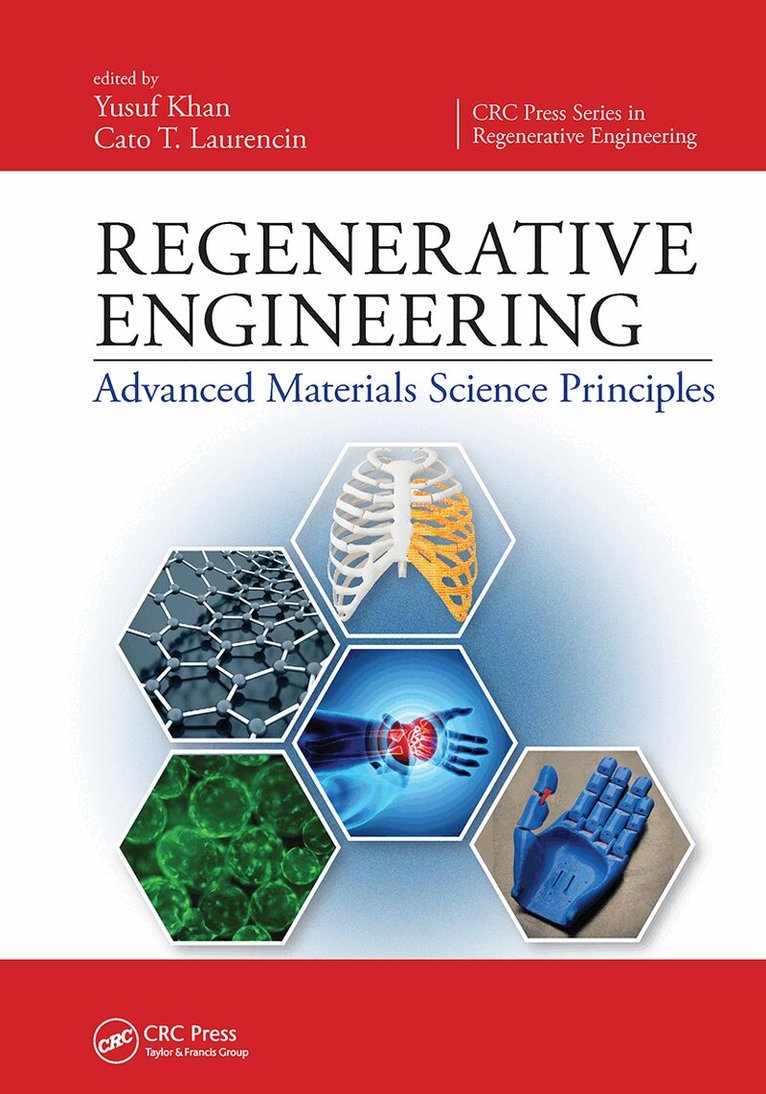
This book focuses on advances made in both materials science and scaffold development techniques, paying close attention to the latest and state-of-the-art research. Chapters delve into a sweeping variety of specific materials categories, from composite materials to bioactive ceramics, exploring how these materials are specifically designed for regenerative engineering applications. Also included are unique chapters on biologically-derived scaffolding, along with 3D printing technology for regenerative engineering.
Features:
Covers the latest developments in advanced materials for regenerative engineering and medicine.
Each chapter is written by world class researchers in various aspects of this medical technology.
Provides unique coverage of biologically derived scaffolding.
Includes separate chapter on how 3D printing technology is related to regenerative engineering.
Includes extensive references at the end of each chapter to enhance further study.
2 437 kr
Skickas inom 10-15 vardagar
3 937 kr
Skickas inom 10-15 vardagar
1 671 kr
Läs direkt efter köp
1 019 kr
Läs direkt efter köp
3 497 kr
Skickas inom 10-15 vardagar
886 kr
Läs direkt efter köp
This book focuses on advances made in both materials science and scaffold development techniques, paying close attention to the latest and state-of-the-art research. Chapters delve into a sweeping variety of specific materials categories, from composite materials to bioactive ceramics, exploring how these materials are specifically designed for regenerative engineering applications. Also included are unique chapters on biologically-derived scaffolding, along with 3D printing technology for regenerative engineering.
Features:
Covers the latest developments in advanced materials for regenerative engineering and medicine.
Each chapter is written by world class researchers in various aspects of this medical technology.
Provides unique coverage of biologically derived scaffolding.
Includes separate chapter on how 3D printing technology is related to regenerative engineering.
Includes extensive references at the end of each chapter to enhance further study.
218 kr
Tillfälligt slut
307 kr
Tillfälligt slut
455 kr
Tillfälligt slut