Chezare A. Warren - Böcker
Visar alla böcker från författaren Chezare A. Warren. Handla med fri frakt och snabb leverans.
4 produkter
4 produkter
483 kr
Skickas inom 3-6 vardagar
Improving education outcomes for Black students begins with resisting racist characterizations of blackness. Chezare A. Warren, a nationally recognized scholar of race and education equity, emphasizes the imperative that possibility drive efforts aimed at transforming education for Black learners. Inspired by the "freedom dreaming" of activists in the Black radical tradition, the book is comprised of nine principles that clarify how centering possibility actively refuses limitations for what Black people can create, accomplish, and achieve. This interdisciplinary volume also features over 30 original images, poems, and lyrics by Black artists from around the United States, each helping to breathe new life into the concept of possibility and its relevance to remaking Black children's experience of school. Warren draws on research in history, cultural studies, and sociology to cast a vision of Black education futures unencumbered by antiblackness and white supremacy. This justice-oriented text will inspire innovative solutions to eliminating harm and generating education alternatives Black students desire and deserve.Book Features:Describes practical, antideficit approaches to educating Black children, youth, and young adults.Focuses on productively reorienting visions, philosophies, and rationales guiding contemporary Black education transformation work.Includes relatable stories and anecdotes written in a conversational style.Filled with provocative pieces of original art by Black artists, such as paintings, drawings, photographs, mixed media, spoken word, poems, and song lyrics.
1 023 kr
Skickas inom 11-20 vardagar
Improving education outcomes for Black students begins with resisting racist characterizations of blackness. Chezare A. Warren, a nationally recognized scholar of race and education equity, emphasizes the imperative that possibility drive efforts aimed at transforming education for Black learners. Inspired by the "freedom dreaming" of activists in the Black radical tradition, the book is comprised of nine principles that clarify how centering possibility actively refuses limitations for what Black people can create, accomplish, and achieve. This interdisciplinary volume also features over 30 original images, poems, and lyrics by Black artists from around the United States, each helping to breathe new life into the concept of possibility and its relevance to remaking Black children's experience of school. Warren draws on research in history, cultural studies, and sociology to cast a vision of Black education futures unencumbered by antiblackness and white supremacy. This justice-oriented text will inspire innovative solutions to eliminating harm and generating education alternatives Black students desire and deserve.Book Features:Describes practical, antideficit approaches to educating Black children, youth, and young adults.Focuses on productively reorienting visions, philosophies, and rationales guiding contemporary Black education transformation work.Includes relatable stories and anecdotes written in a conversational style.Filled with provocative pieces of original art by Black artists, such as paintings, drawings, photographs, mixed media, spoken word, poems, and song lyrics.
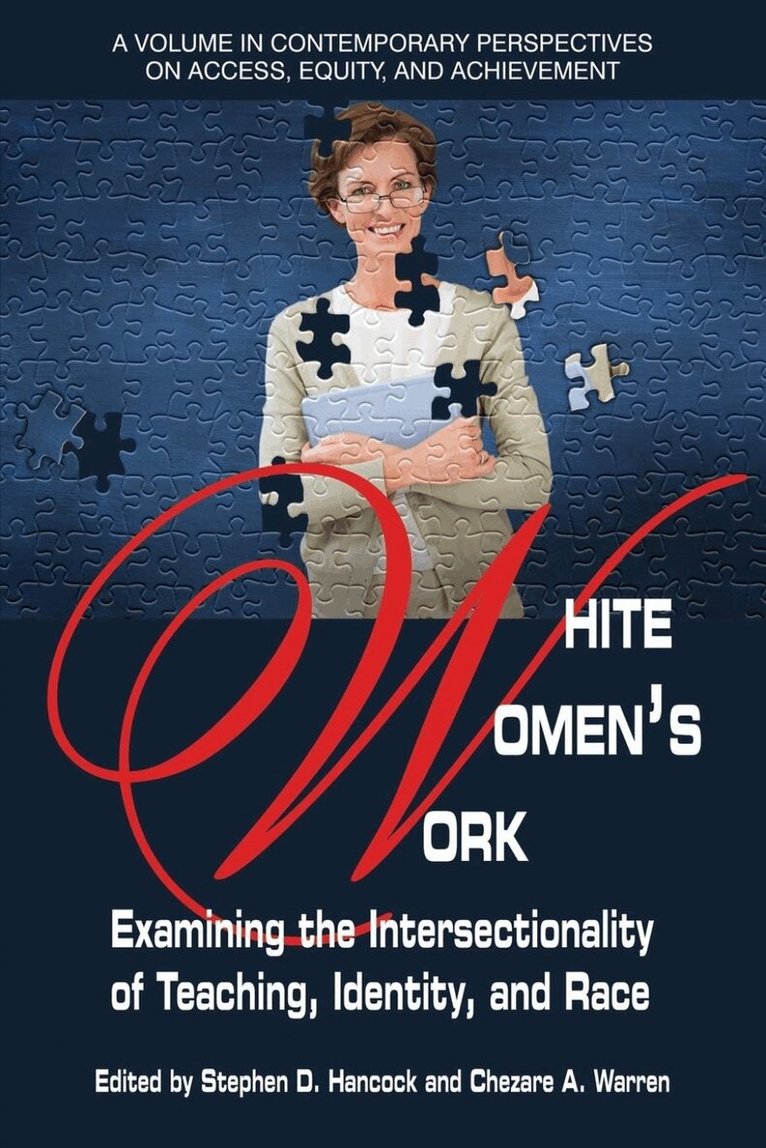
White Women's Work
Examining the Intersectionality of Teaching, Identity, and Race
Häftad, Engelska, 2016
533 kr
Skickas inom 7-10 vardagar
Historically, white women have had a tremendous influence on establishing the ideological, political, and cultural scaffold of American public schools. Pedagogical orientations, school policies, and classroom practices are underwritten by white, cisgender, feminine, and middle to upper class social and cultural norms. Labor trends suggest that students of color are likely to sit in front of many more white women teachers than males or non-white teachers, thus making it imperative to better understand the nature of white women’s work in culturally diverse settings and the factors that most profoundly impact their effectiveness. This book examines how white women teacher dispositions (i.e. knowledge, beliefs, and skills) intersect (and/or interact) with their racial identity development, the concept of whiteness, institutional racism, and cultural perspectives of racial difference. All of which, as the authors in this volume argue, matter for nurturing a teaching practice that leads to more equitable schooling outcomes for youth of color.While it is imperative that the field of education recruits and retains more nonwhite teachers, it is equally important to identify research-supported professional development resources for a white woman-dominated profession. To that end, the book’s contributors present critical insight for creating cultural contexts for learning conducive to effective cross-cultural and cross-racial teaching. Chapters in the first section explore white women’s role in establishing and maintaining school environments that cater to Eurocentric sensibilities and white racial preferences for learning and social interaction. Authors in the second section discern the implications of white images, whiteness, and white racial identity formation for preparing and professionally developing white women teachers to be effective educators. Chapters in the third section of the book emphasize the centrality of race in negotiating academic interactions that demonstrate culturally responsive teaching. Each chapter in this book is written to investigate the intersectionality of race, cultural responsive pedagogies, and teaching identities as it relate to teaching in multiethnic environments. In addition, the book offers solution-oriented practices to equip white women (and any other reader) to respond appropriately and adequately to the needs of racially diverse students in American schools.
White Women's Work
Examining the Intersectionality of Teaching, Identity, and Race
Inbunden, Engelska, 2016
981 kr
Skickas inom 7-10 vardagar
Historically, white women have had a tremendous influence on establishing the ideological, political, and cultural scaffold of American public schools. Pedagogical orientations, school policies, and classroom practices are underwritten by white, cisgender, feminine, and middle to upper class social and cultural norms. Labor trends suggest that students of color are likely to sit in front of many more white women teachers than males or non-white teachers, thus making it imperative to better understand the nature of white women’s work in culturally diverse settings and the factors that most profoundly impact their effectiveness. This book examines how white women teacher dispositions (i.e. knowledge, beliefs, and skills) intersect (and/or interact) with their racial identity development, the concept of whiteness, institutional racism, and cultural perspectives of racial difference. All of which, as the authors in this volume argue, matter for nurturing a teaching practice that leads to more equitable schooling outcomes for youth of color.While it is imperative that the field of education recruits and retains more nonwhite teachers, it is equally important to identify research-supported professional development resources for a white woman-dominated profession. To that end, the book’s contributors present critical insight for creating cultural contexts for learning conducive to effective cross-cultural and cross-racial teaching. Chapters in the first section explore white women’s role in establishing and maintaining school environments that cater to Eurocentric sensibilities and white racial preferences for learning and social interaction. Authors in the second section discern the implications of white images, whiteness, and white racial identity formation for preparing and professionally developing white women teachers to be effective educators. Chapters in the third section of the book emphasize the centrality of race in negotiating academic interactions that demonstrate culturally responsive teaching. Each chapter in this book is written to investigate the intersectionality of race, cultural responsive pedagogies, and teaching identities as it relate to teaching in multiethnic environments. In addition, the book offers solution-oriented practices to equip white women (and any other reader) to respond appropriately and adequately to the needs of racially diverse students in American schools.