Christian Körner – författare
Visar alla böcker från författaren Christian Körner. Handla med fri frakt och snabb leverans.
14 produkter
14 produkter
Inbunden, Engelska, 2021
1 198 kr
Skickas inom 10-15 vardagar
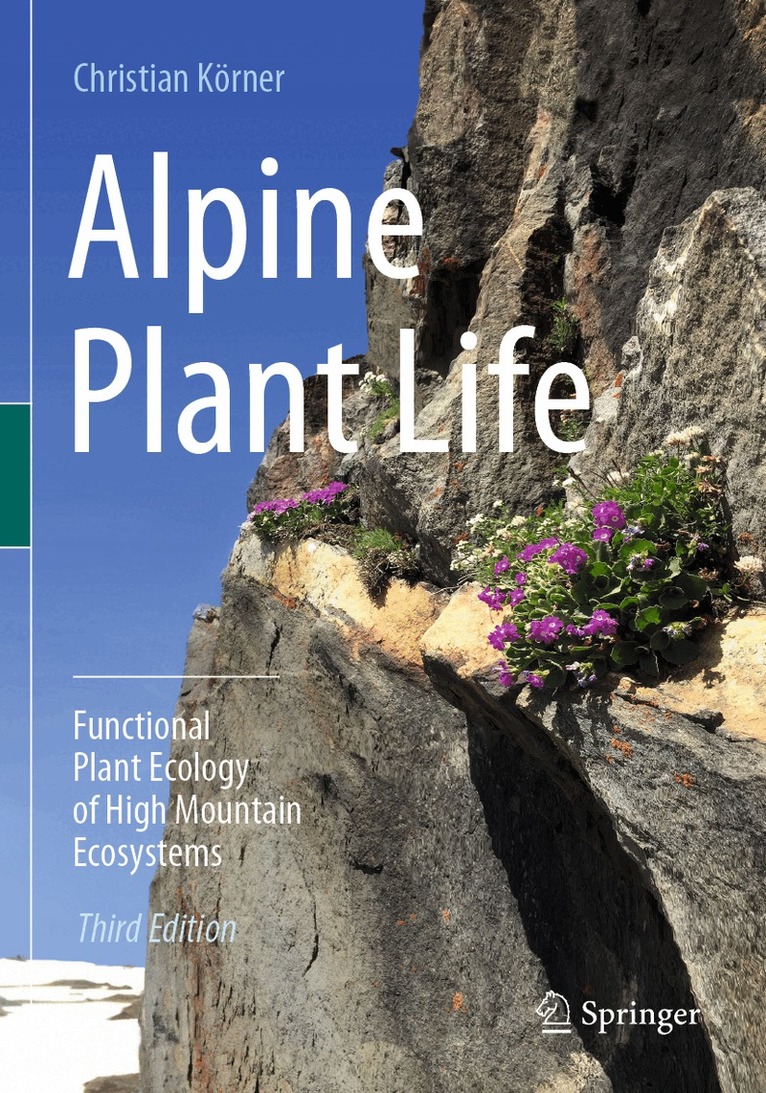
This book is a completely revised, substantially extended treatment of the physical and biological factors that drive life in high mountains. The book covers the characteristics of alpine plant life, alpine climate and soils, life under snow, stress tolerance, treeline ecology, plant water, carbon, and nutrient relations, plant growth and productivity, developmental processes, and two largely novel chapters on alpine plant reproduction and global change biology. The book explains why the topography driven exposure of plants to dramatic micro-climatic gradients over very short distances causes alpine biodiversity to be particularly robust against climatic change. Geographically, this book draws on examples from all parts of the world, including the tropics. This book is complemented with novel evidence and insight that emerged over the last 17 years of alpine plant research. The number of figures – mostly in color – nearly doubled, with many photographs providing a vividimpression of alpine plant life worldwide.Christian Körner was born in 1949 in Austria, received his academic education at the University of Innsbruck, and was full professor of Botany at the University of Basel from 1989 to 2014. As emeritus Professor he is continuing alpine plant research in the Swiss Alps.
Häftad, Engelska, 2022
765 kr
Skickas inom 10-15 vardagar
This book is a completely revised, substantially extended treatment of the physical and biological factors that drive life in high mountains. The book covers the characteristics of alpine plant life, alpine climate and soils, life under snow, stress tolerance, treeline ecology, plant water, carbon, and nutrient relations, plant growth and productivity, developmental processes, and two largely novel chapters on alpine plant reproduction and global change biology. The book explains why the topography driven exposure of plants to dramatic micro-climatic gradients over very short distances causes alpine biodiversity to be particularly robust against climatic change. Geographically, this book draws on examples from all parts of the world, including the tropics. This book is complemented with novel evidence and insight that emerged over the last 17 years of alpine plant research. The number of figures – mostly in color – nearly doubled, with many photographs providing a vividimpression of alpine plant life worldwide.Christian Körner was born in 1949 in Austria, received his academic education at the University of Innsbruck, and was full professor of Botany at the University of Basel from 1989 to 2014. As emeritus Professor he is continuing alpine plant research in the Swiss Alps.
Inbunden, Engelska, 2012
1 198 kr
Skickas inom 10-15 vardagar
Alpine treelines mark the low-temperature limit of tree growth and occur in mountains world-wide. Presenting a companion to his book Alpine Plant Life, Christian Körner provides a global synthesis of the treeline phenomenon from sub-arctic to equatorial latitudes and a functional explanation based on the biology of trees. The comprehensive text approaches the subject in a multi-disciplinary way by exploring forest patterns at the edge of tree life, tree morphology, anatomy, climatology and, based on this, modelling treeline position, describing reproduction and population processes, development, phenology, evolutionary aspects, as well as summarizing evidence on the physiology of carbon, water and nutrient relations, and stress physiology. It closes with an account on treelines in the past (palaeo-ecology) and a section on global change effects on treelines, now and in the future. With more than 100 illustrations, many of them in colour, the book shows alpine treelines from around the globe and offers a wealth of scientific information in the form of diagrams and tables.
Del 61 - Untersuchungen zur Antiken Literatur und Geschichte
Philippus Arabs
Ein Soldatenkaiser in der Tradition des antoninisch-severischen Prinzipats
Inbunden, Tyska, 2001
2 099 kr
Skickas inom 5-8 vardagar
Philippus Arabs war Kaiser des Römischen Reiches von 244 bis 249 n.Chr. Nun liegt, auf der Grundlage der erhaltenen Quellen, zum ersten Mal eine Darstellung dieses aus der Provinz Arabia stammenden Herrschers vor.Der Autor widmet sich insbesondere der unruhigen innen- und außenpolitischen Situation, der Herkunft und Familie des Kaisers, seiner Haltung zur Religion, vor allem zum Christentum. Schließlich wird die Position des Kaisers in den Veränderungen und Reformen des 3. Jh. herausgearbeitet und aufgezeigt, wie sehr er sich in seinem Herrschaftsverständnis an der Severischen Dynastie und an Marc Aurel orientierte. Die vorliegende Arbeit ist die erste Monographie zu Philippus Arabs; aufgrund der schlechten Quellenlage war das Interesse an den Kaisern dieser Periode bislang eher gering.
Inbunden, Engelska, 2017
1 631 kr
Skickas inom 10-15 vardagar
This book presents the first assessment of the high-elevation flora of the Central Caucasus with a community ecology emphasis. Following a geostatistical-climatological description of the region (in comparison to the European Alps), it describes the montane, alpine and nival plant assemblages on the basis of an ecological approach that combines moisture, soils and local habitat peculiarities. Highlights include the famous giant herb communities in treeless parts of the upper montane belt, the various facets of alpine turf, and the unique assemblages and settings in the nival region. Further chapters address potential niche conservation between the Caucasus and the Alps, as well as a compilation of plant species habitat preferences (indicator values) that applies to a concept developed for the Alps. Richly illustrated and featuring extensive quantitative data on species abundance, the book offers a unique guide to the plant species diversity of this prominent mountain range, and a valuable resource for comparative ecology and biodiversity assessments of warm temperate mountain systems.
Häftad, Engelska, 2018
1 198 kr
Skickas inom 10-15 vardagar
This book presents the first assessment of the high-elevation flora of the Central Caucasus with a community ecology emphasis. Following a geostatistical-climatological description of the region (in comparison to the European Alps), it describes the montane, alpine and nival plant assemblages on the basis of an ecological approach that combines moisture, soils and local habitat peculiarities. Highlights include the famous giant herb communities in treeless parts of the upper montane belt, the various facets of alpine turf, and the unique assemblages and settings in the nival region. Further chapters address potential niche conservation between the Caucasus and the Alps, as well as a compilation of plant species habitat preferences (indicator values) that applies to a concept developed for the Alps. Richly illustrated and featuring extensive quantitative data on species abundance, the book offers a unique guide to the plant species diversity of this prominent mountain range, and a valuable resource for comparative ecology and biodiversity assessments of warm temperate mountain systems.
Inbunden, Engelska, 2003
2 173 kr
Skickas inom 10-15 vardagar
The United Nations Conference on the Environment and Development (UNCED), held in Rio de Janeiro in 1992, spawned a multitude of pro grammes aimed at assessing, managing and conserving the earth's biological diversity. One important issue addressed at the conference was the mountain environment. A specific feature of high mountains is the so-called alpine zone, i. e. the treeless regions at the uppermost reaches. Though covering only a very small proportion of the land surface, the alpine zone contains a rela tively large number of plants, animals, fungi and microbes which are specifi cally adapted to cold environments. This zone contributes fundamentally to the planet's biodiversity and provides many resources for mountain dwelling as well as lowland people. However, rapid and largely man-made changes are affecting mountain ecosystems, such as soil erosion, losses of habitat and genetic diversity, and climate change, all of which have to be addressed. As stated in the European Community Biodiversity Strategy, "the global scale of biodiversity reduction or losses and the interdependence of different species and ecosystems across national borders demands concerted international action". Managing biodiversity in a rational and sustainable way needs basic knowledge on its qualitative and quantitative aspects at local, regional and global scales. This is particularly true for mountains, which are distributed throughout the world and are indeed hot spots of biodiversity in absolute terms as well as relative to the surrounding lowlands.
Inbunden, Engelska, 2004
3 256 kr
Skickas inom 10-15 vardagar
One of the central research themes in ecology is evaluating the extent to which biological richness is necessary to sustain the Earth's system and the functioning of individual ecosystems. In this volume, for the first time, the relationship between biodiversity and ecosystem processes in forests is thoroughly explored. The text examines the multiple effects of tree diversity on productivity and growth, biogeochemical cycles, animals, pests, and disturbances. Further, the importance of diversity at different scales, ranging from stand management to global issues, is considered. The authors provide both extensive reviews of the existing literature and own datasets. The volume is ideally suited for researchers and practitioners involved in ecosystem management and the sustainable use of forest resources.
Häftad, Engelska, 2010
3 256 kr
Skickas inom 10-15 vardagar
One of the central research themes in ecology is evaluating the extent to which biological richness is necessary to sustain the Earth's system and the functioning of individual ecosystems. In this volume, for the first time, the relationship between biodiversity and ecosystem processes in forests is thoroughly explored. The text examines the multiple effects of tree diversity on productivity and growth, biogeochemical cycles, animals, pests, and disturbances. Further, the importance of diversity at different scales, ranging from stand management to global issues, is considered. The authors provide both extensive reviews of the existing literature and own datasets. The volume is ideally suited for researchers and practitioners involved in ecosystem management and the sustainable use of forest resources.
6 393 kr
Skickas inom 10-15 vardagar
This famous book on botany was published for the first time in 1894 by Eduard Strasburger and his co-workers. The present edition is based on a translation of the 36th edition of the German "Strasburger" and contains additional contributions by renowned experts in the field.The “Strasburger” comprises a highly appealing and holistic approach to the structure, the systematics and evolution, the functioning, and ecology of plants. The book covers 14 chapters bundled into four main sections: (i) Molecular and morphological structure of plants and cells(ii) Physiology and metabolism(iii) Evolution and systematics of plants(iv) Ecology
Häftad, Engelska, 2012
2 389 kr
Skickas inom 10-15 vardagar
The United Nations Conference on the Environment and Development (UNCED), held in Rio de Janeiro in 1992, spawned a multitude of pro grammes aimed at assessing, managing and conserving the earth's biological diversity. One important issue addressed at the conference was the mountain environment. A specific feature of high mountains is the so-called alpine zone, i. e. the treeless regions at the uppermost reaches. Though covering only a very small proportion of the land surface, the alpine zone contains a rela tively large number of plants, animals, fungi and microbes which are specifi cally adapted to cold environments. This zone contributes fundamentally to the planet's biodiversity and provides many resources for mountain dwelling as well as lowland people. However, rapid and largely man-made changes are affecting mountain ecosystems, such as soil erosion, losses of habitat and genetic diversity, and climate change, all of which have to be addressed. As stated in the European Community Biodiversity Strategy, "the global scale of biodiversity reduction or losses and the interdependence of different species and ecosystems across national borders demands concerted international action". Managing biodiversity in a rational and sustainable way needs basic knowledge on its qualitative and quantitative aspects at local, regional and global scales. This is particularly true for mountains, which are distributed throughout the world and are indeed hot spots of biodiversity in absolute terms as well as relative to the surrounding lowlands.
Häftad, Engelska, 2012
1 090 kr
Skickas inom 10-15 vardagar
As human populations expand and have increasing access to technol ogy, two general environmental concerns have arisen. First, human pop ulations are having increasing impact on the earth system, such that we are altering the biospheric carbon pools, basic processes of elemental cycling and the climate system of the earth. Because of time lags and feedbacks, these processes are not easily reversed. These alterations are occurring now more rapidly than at any time in the last several million years. Secondly, human activities are causing changes in the earth's biota that lead to species extinctions at a rate and magnitude rivaling those of past geologic extinction events. Although environmental change is potentially reversible at some time scales, the loss of species is irrevo cable. Changes in diversity at other scales are also cause for concern. Habitat fragmentation and declines in population sizes alter genetic di versity. Loss or introduction of new functional groups, such as nitro gen fixers or rodents onto islands can strongly alter ecosystem processes. Changes in landscape diversity through habitat modification and frag mentation alter the nature of processes within and among vegetation patches. Although both ecological changes altering the earth system and the loss of biotic diversity have been major sources of concern in recent years, these concerns have been largely independent, with little concern for the environmental causes the ecosystem consequences of changes in biodiversity. These two processes are clearly interrelated. Changes in ecological systems cause changes in diversity.
Inbunden, Tyska, 2021
1 014 kr
Skickas inom 5-8 vardagar
Seit 120 Jahren liegt die Stärke des STRASBURGERs in der ausgewogenen Darstellung aller Teilgebiete der Pflanzenwissenschaften. In der vorliegenden 38. Auflage sind besonders die Teile Struktur und Entwicklung stark überarbeitet worden. • Der Teil Struktur beschreibt den pflanzlichen Aufbau ausgehend von der Ebene der Zelle über die Gewebe bis hin zur Ebene der Organe. Bei der Neufassung dieser Kapitel war es ein besonderes Anliegen, Struktur als Ausdruck von Funktion sichtbar zu machen. Neben einer Beschreibung der Formen wurde versucht, die Erklärung dieser Formen stärker zu gewichten. Der Teil Genetik wurde neustrukturiert und aktualisiert. •Der Teil Genetik wurde neustrukturiert und aktualisiert. Insbesondere die Bereiche Epigenetik und Gentechnik wurden erweitert. Hier spielen Weiterentwicklungen der Gentechnik zur gezielten Genomveränderung eine Rolle.Die methodischen Hintergründe werden im neuen Abschnitt Genomeditierung beschrieben.Der ebenfalls neu gestaltete Teil Entwicklung spiegelt die im Teil Strukturbehandelten Ebenen (Zelle, Gewebe, Organ, Organismus) wider, wobei das Werden dieser Ebenen im Mittelpunkt steht. Es werden zentrale Konzepte der Entwicklungsbiologie an Beispielen aus dem Pflanzenreich geschildert. In den anschließenden Kapiteln geht es dann um die Steuerung dieser Vorgänge durch Phytohormone und den Einfluss endogener und exogener regulatorischer Faktoren.•Im Teil Physiologie werden ausgehend von der Beschreibung grundlegender Transport- und Stoffwechselprozesse die Anpassung des pflanzlichen Stoffwechsels an entwicklungs- und umweltbedingte Veränderungen betrachtet. Die Abschnitte zum Primärstoffwechsel wurden ergänzt und überarbeitet und die übrigen Teile aktualisiert.•Der evolutionäre Prozess, die Phylogenie und Systematik der Pflanzen und anderer photoautotropher Eukaryoten sowie die Geschichte der Vegetation der Erde sind Inhalt des Teils Evolution und Systematik. •Im Ökologie-Teil wird die Pflanze in Beziehung zu den Lebensbedingungen am Wuchsort gesetzt. Pflanzliche Reaktionen auf Klima und Bodenfaktoren, Prozesse in Populationen und Artengemeinschaften sowie die großen Vegetationszonen der Erde werden erklärt. In dieser neu überarbeiteten Auflage wurden einige Abbildungen und Textstellen hinzugefügt sowie die Literatur aktualisiert.Der Tradition dieses einzigartigen Standardwerkes entsprechend soll es Studierenden als vierfarbig bebildertes Lehrbuch und Dozenten aller bio-, umwelt- und agrarwissenschaftlichen Fachrichtungen als verlässliches Nachschlage- und Referenzwerk dienen.
Häftad, Engelska, 2012
1 090 kr
Skickas inom 10-15 vardagar
Die 5. "Verhandlungen der Gesellschaft fur Okologie" enthalten die Vortrage der vom 22. bis 24. September 197 5 in Wien durchgefuhrten J ahrestagung. Schwer- punktsmassig behandeln die Referate alpine und arktische Okosysteme, die okologi- schen und genetischen Voraussetzungen fur das Leben in Trockengebieten sowie limnische Okosysteme. Durch die Berucksichtigung der diese Systeme tangierenden IBP- und MAB-Forschungsprogramme liefern sie zugleich auch aktuelle Informa- tionen uber laufende Forschungsprojekte unserer Osterreichischen und schweizer Kollegen. Struktudle und energetische Untersuchungen uber einzelne Okosysteme, Biozo- nosen und Populationen stehen dabei im Vordergrund. Die vorgelegten Arbeiten verdeutlichen, dass jedes lebendige System uber die Kenntnis seiner Struktur, Funk- tion und Geschichte Informationen zu einem tieferen Verstandnis des von ihm belebten Raumes liefert. Sie zeigen, dass letztlich jeder Suche nach "Belastungsindi- katoren" und "okologischen Kriterien" die Frage nach dem Informationsgehalt von Organismen und lebenden Systemen sowie deren Reaktionen auf endo- und exogene Faktoren zugrunde liegt.Sowohl aus Veranderungen der Areal- und Okosysteme, als auch aus Wandlungen von Biozonosen und deren Reaktionen wurden Ruckschlusse auf die diese Veranderungen auslosenden Faktoren gezogen. Populationen und Bio- zonosen reagieren naturgemass nach eigenen Regeln, konnen jedoch nur existieren, wenn sie bestandig auch Informationen uber andere Komponenten aus ihrem Ver- breitungsgebiet speichern und verarbeiten. Diese adaptiven Fahigkeiten der unter- suchten Arten und Systeme sind jedoch noch weitgehend unbearbeitet. Hier klafft eine echte Lucke, die den Transfer okologischer Daten z. B. in di. c Landesplanung erschwert. Die Qualitat jeder Planung hangt weitgehend von den eingesetzten okologischen, sozialen und wirtschaftlichen Erhebungsdaten ab.