Christina Lodder - Böcker
Visar alla böcker från författaren Christina Lodder. Handla med fri frakt och snabb leverans.
10 produkter
10 produkter
2 677 kr
Skickas inom 5-8 vardagar
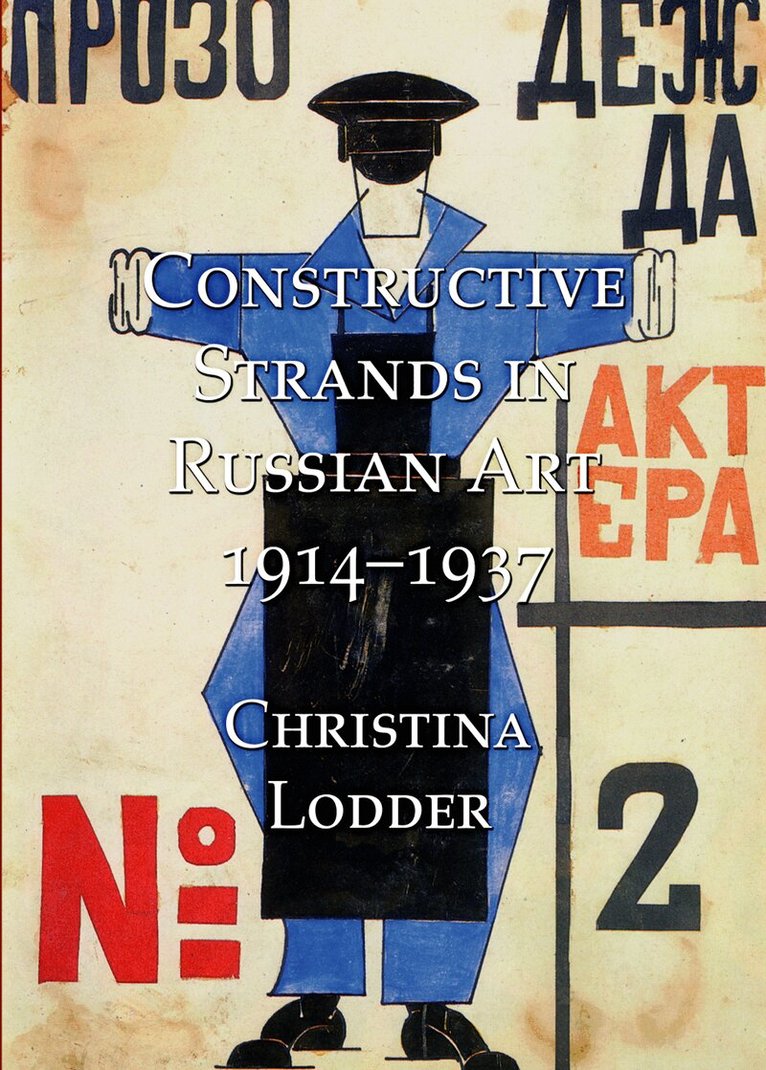
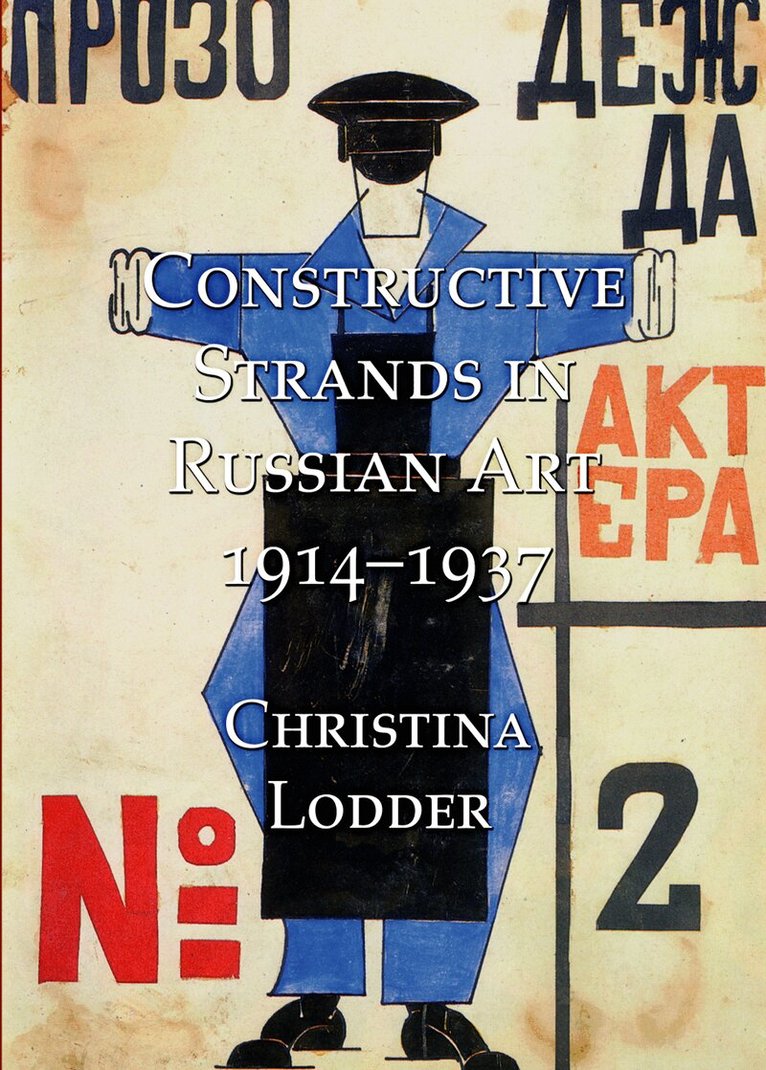
Professor Lodder is a leading specialist in art of the Russian avant-garde which flourished during the 1910s and 1920s. She is the author of a major study of Russian Constructivism, acclaimed as the standard work on the subject, and with her husband has written an important monograph on the Russian-born sculptor Naum Gabo and edited a collection of the artist's writings. The present volume brings together her articles of the past twenty years, many of which focus on particular aspects of avant-garde responses to the social and political upheavals of the period, especially the Russian Revolution of 1917. Her essays cover subjects such as Vladimir Tatlin's seminal structure, The Model for a Monument to the Third International of 1920, the evolution of public monuments, the cultural debates during the revolutionary period, the development of new teaching programmes, and the implementation of Constructivist ideas in photography and design for textiles, clothing and the theatre. Her interests extend to International Constructivism and to the impact that Russian ideas made on the theory and practice of avant-garde figures working in Central and Eastern Europe during the 1920s. More recently she has concentrated on developments in the 1910s, including the innovative work of Kazimir Malevich and the relationship between art and science. The author has supplied additional notes to the original articles, which draw attention to subsequent research. Since the collapse of Communism in the erstwhile Soviet Union, public collections and archives have become more accessible and the new information has substantially altered existing preconceptions of the period. Occasionally, the need to correct errors exposed by recent developments in the field has involved making some extensive changes to the main body of the text.
548 kr
Skickas inom 5-8 vardagar
Professor Lodder is a leading specialist in art of the Russian avant-garde which flourished during the 1910s and 1920s. She is the author of a major study of Russian Constructivism, acclaimed as the standard work on the subject, and with her husband has written an important monograph on the Russian-born sculptor Naum Gabo and edited a collection of the artist's writings. The present volume brings together her articles of the past twenty years, many of which focus on particular aspects of avant-garde responses to the social and political upheavals of the period, especially the Russian Revolution of 1917. Her essays cover subjects such as Vladimir Tatlin's seminal structure, The Model for a Monument to the Third International of 1920, the evolution of public monuments, the cultural debates during the revolutionary period, the development of new teaching programmes, and the implementation of Constructivist ideas in photography and design for textiles, clothing and the theatre. Her interests extend to International Constructivism and to the impact that Russian ideas made on the theory and practice of avant-garde figures working in Central and Eastern Europe during the 1920s. More recently she has concentrated on developments in the 1910s, including the innovative work of Kazimir Malevich and the relationship between art and science. The author has supplied additional notes to the original articles, which draw attention to subsequent research. Since the collapse of Communism in the erstwhile Soviet Union, public collections and archives have become more accessible and the new information has substantially altered existing preconceptions of the period. Occasionally, the need to correct errors exposed by recent developments in the field has involved making some extensive changes to the main body of the text.
Rethinking Malevich
Proceedings of a Conference in Celebration of the 125th Anniversary of Kazimir Malevich's Birth
Inbunden, Engelska, 2007
1 129 kr
Skickas inom 11-20 vardagar
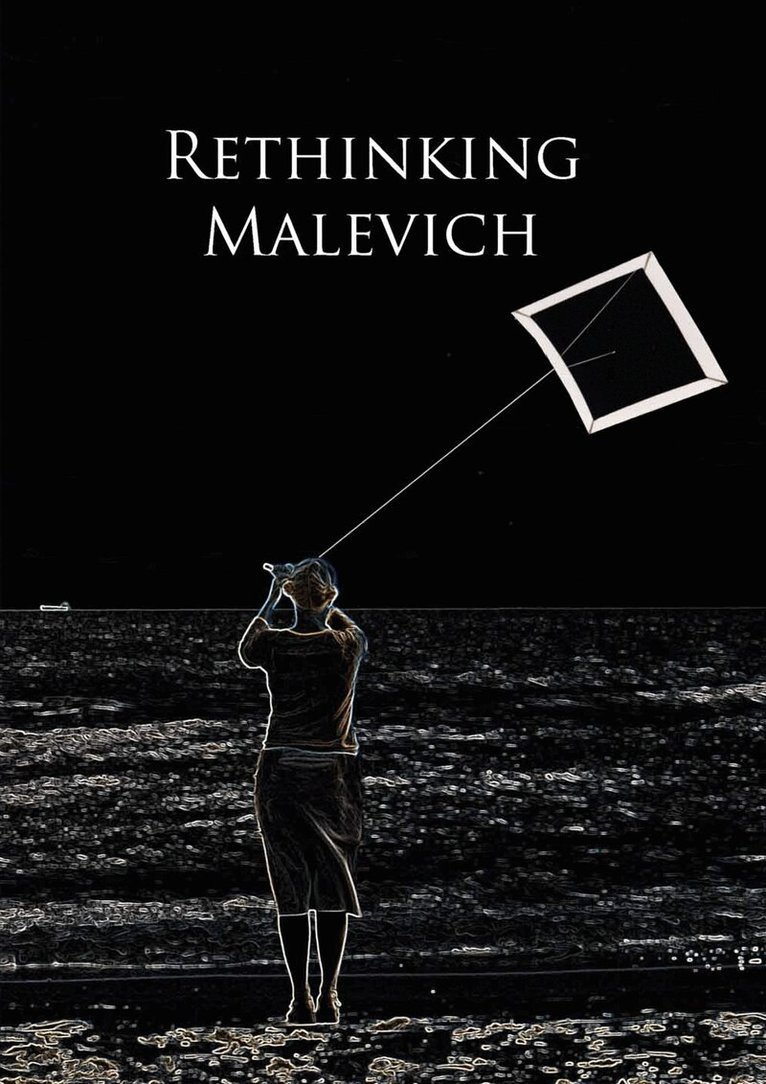
"Rethinking Malevich" is an English-language collection of sixteen innovative essays by leading international scholars that document new and intriguing aspects of Kazimir Malevich's art and biography. This latest research on the Russian modern artist appears after more than seventy years of political and cultural difficulties - including the East-West bifurcation of his artistic and written legacy - that impeded the study and understanding of his work. For the first time, the greater portion of Malevich's work and writings was available for the scholarly research and study undertaken here. The result is a wealth of new details about this pioneer of abstraction, including: explorations of his early art education; the differences in the reception of his abstract art by Western and Russian audiences; the appearance of his work in 1936 at the Museum of Modern Art; the artist's special relationship with Ukraine. The development of his art is considered alongside that of Vasily Kandinsky and Giorgio De Chirico, and his philosophy is examined in comparison with the ideas of Nikolai Fedorov and Ortega-y-Gasset. The history of Russian and Soviet art in the 1920s and 1930s is intricately interwoven with the revolutionary social changes taking place throughout the country. Here are details of the political maneuverings Malevich went through in Russia to protect his art and his friends, and his reaction to Lenin's death in 1924 and the subsequent growth of the "Lenin myth." Rethinking Malevich reveals the complex early interweaving of Suprematism and Constructivism, considers little-researched aspects of the artist's Post-Suprematist period, and the history of Malevich's literary legacy. Not least, it demonstrates the various ways in which Malevich's art continues to stimulate the highly unusual work of contemporary Russian artists.
Rethinking Malevich
Proceedings of a Conference in Celebration of the 125th Anniversary of Kazimir Malevichs Birth
Häftad, Engelska, 2007
456 kr
Skickas inom 11-20 vardagar
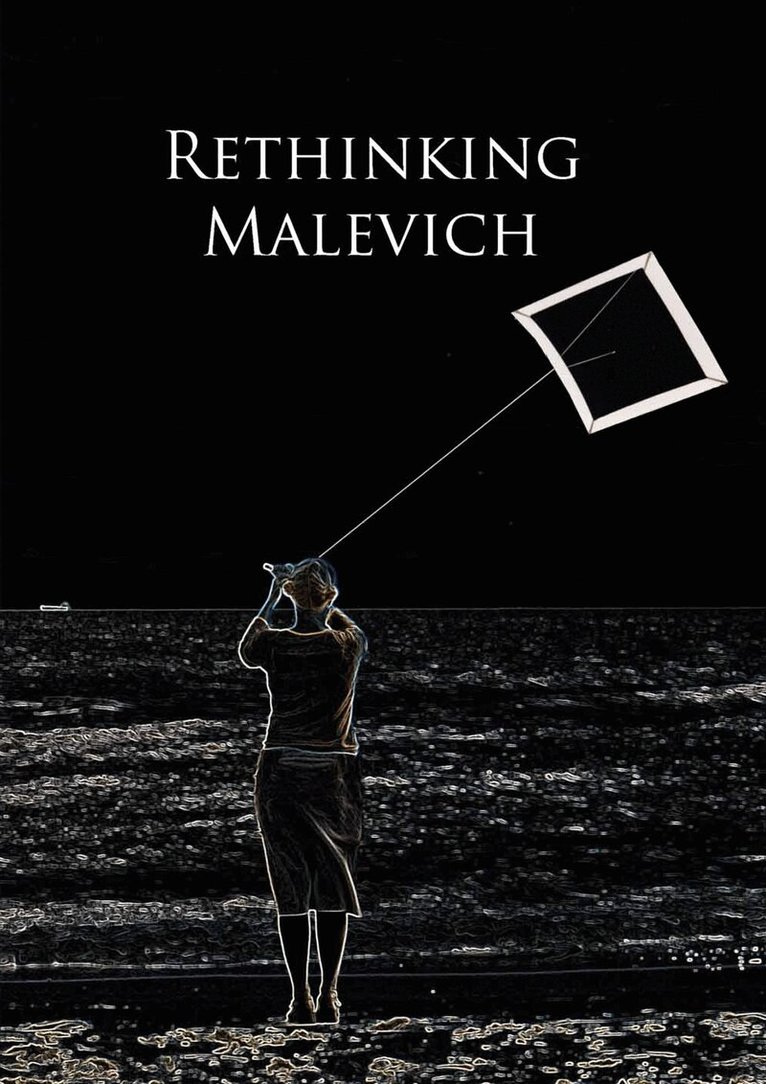
The Russian artist Kazimir Malevich was one of the great figures of twentieth-century art, and a pioneer of abstraction, whose painting The Black Square of 1915 has become an icon of modernism. Yet he is a creative figure about whom much still remains to be elucidated. Soviet scholarship ignored him for decades, and Western scholars were inevitably only able to work with the limited visual and documentary material that was available to them. It was only after the fall of Communism in 1991 that access to such material became easier. This book represents the fruits of the research that has been conducted since then by a range of Russian and Western scholars who have been able to shed vital new light on the artist's life, his training, his art, his career, his relationships with other artists and movements, and his theories.
2 334 kr
Skickas inom 5-8 vardagar
The ninth volume of the International Yearbook of Futurism Studies is dedicated to Russian Futurism and gathers ten studies that investigate the impact of F.T. Marinetti’s visit to Russia in 1914; the neglected region of the Russian Far East; the artist and writers Velimir Khlebnikov, Vasily Kamensky, Maria Siniakova and Vladimir Mayakovsky; the artistic media of advertising, graphic arts, cinema and artists’ books.
275 kr
Skickas inom 7-10 vardagar
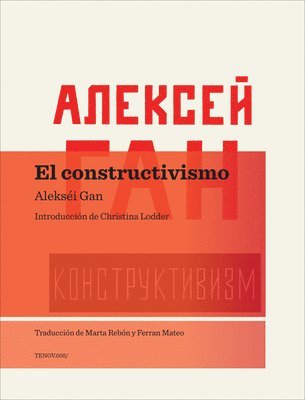
Published in 1922 in Russian, Aleksei Gan's Constructivism was the first theoretical treatise of postrevolutionary Russia's emergent Constructivist movement. Fired with revolutionary zeal, it was unquestionably a declaration of war on traditional bourgeois art. Constructivism recasts artists and architects as Constructors, turning away from aesthetic or speculative problems in art and instead focusing on the fusion of art with everyday life in order to create a functional system of design, one in keeping with the great task of building the new communist society. This edition replicates Gan's original layout, which was one of the first experiments in Constructivist typography and graphic design, and it also presents a substantial introductory essay by art historian Christina Lodder that examines Gan's own odd, mercurial character and the tracks he left across avant-garde Russian graphics, architecture, film, and theater. Nearly a century later, Constructivism remains a powerful manifesto, and this new translation will help scholars trace its enduring influence on twentieth-century art and design.
270 kr
Skickas inom 7-10 vardagar
Published in 1922 in Russian, Aleksei Gan’s Constructivism was the first theoretical treatise of postrevolutionary Russia’s emergent Constructivist movement. Fired with revolutionary zeal, it was unquestionably a declaration of war on traditional bourgeois art.Constructivism recasts artists and architects as Constructors, turning away from aesthetic or speculative problems in art and instead focusing on the fusion of art with everyday life in order to create a functional system of design, one in keeping with the great task of building the new communist society. This edition replicates Gan’s original layout, which was one of the first experiments in Constructivist typography and graphic design, and it also presents a substantial introductory essay by art historian Christina Lodder that examines Gan’s own odd, mercurial character and the tracks he left across avant-garde Russian graphics, architecture, film, and theater.Nearly a century later, Constructivism remains a powerful manifesto, and this new translation will help scholars trace its enduring influence on twentieth-century art and design.
299 kr
Skickas inom 11-20 vardagar
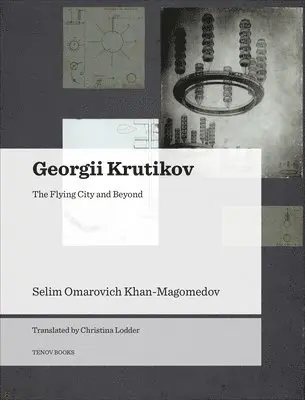
In 1927, while a student of architecture at the Moscow Vhutemas, Georgii Krutikov presented a vision for a flying city. More than just a flight of architectural fancy, Krutikov's flying city was a utopian dream, a plan to solve the seemingly intractable problems of overcrowding and resource depletion by moving humanity's living quarters to space. Inspired in equal parts by sci-fi dreams of space travel and the revolutionary idealism that still percolated in the Soviet Union at that time, Krutikov created an incredible amount of detailed information about his city: sketches, drawings, plans, and more. Krutikov's flying city has been cited as a major influence on Russian modernism for decades, yet little has been written about the design, its creator, or his subsequent architectural career. This beautifully illustrated book fills that gap, presenting a detailed study of Krutikov's scheme and its underlying ethos, then tracing Krutikov's later work as an architect. It will interest-and amaze-all fans of the avant-garde, architecture, and Russian history.
Del 14 - Russian History and Culture
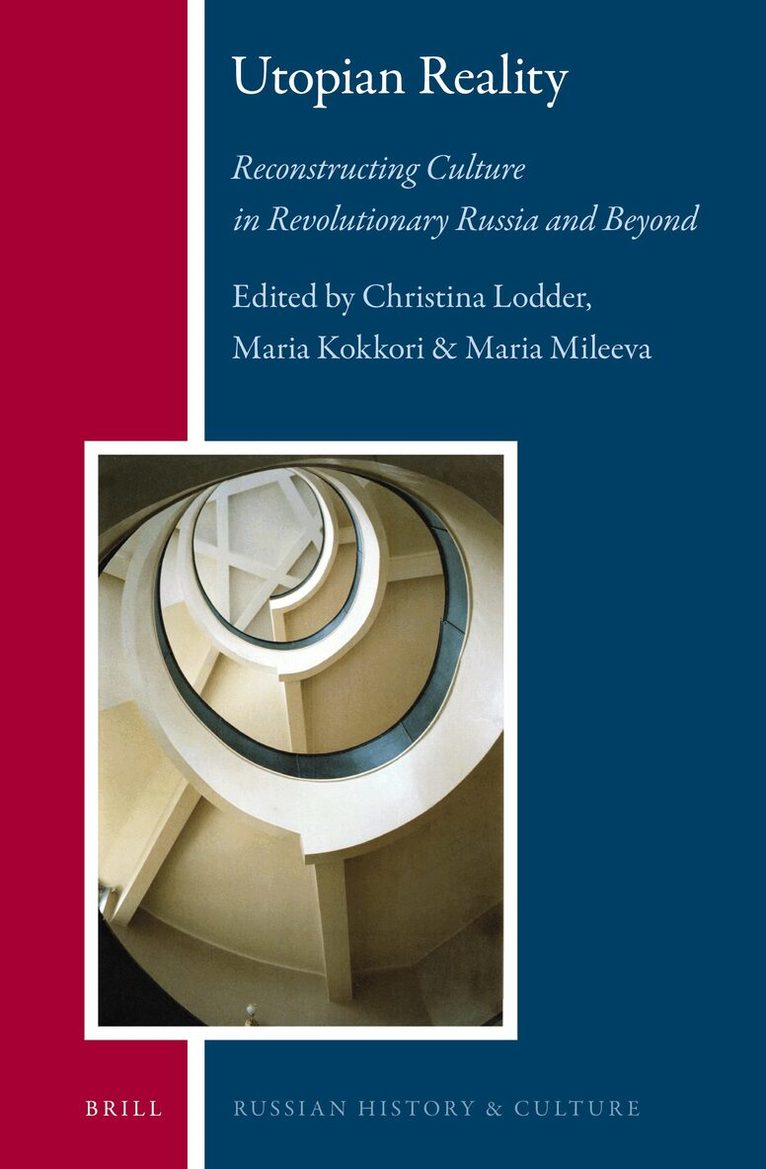
Utopian Reality
Reconstructing Culture in Revolutionary Russia and Beyond
Inbunden, Engelska, 2013
2 210 kr
Skickas inom 5-8 vardagar
This collection of essays deals broadly with the visual and cultural manifestation of utopian aspirations in Russia of the 1920s and 1930s, while examining the before- and after-life of such ideas both geographically and chronologically. The studies document the pluralism of Russian and Soviet culture at this time as well as illuminating various cultural strategies adopted by officialdom. The result serves to complicate the excessively simplistic narrative that avant-garde dreams were suddenly and brutally crushed by Soviet repression and to contest the notion of the avant-garde’s complicity in Stalinism. Naturally, some essays document episodes in the defeat and dismantling of utopian projects, but others trace the persistence of avant-garde ideas and the astonishing tenacity of creative individuals who managed to retain their personal integrity while continuing to serve the cause of Soviet power. Contributors include: John E. Bowlt, Natalia Budanova, David Crowley, Evgeny Dobrenko, Maria Kokkori, Christina Lodder, Muireann Maguire, Nicholas Bueno de Mesquita, Maria Mileeva, John Milner, Nicoletta Misler, Maria Starkova-Vindman, Brandon Taylor, and Maria Tsantsanoglou.
Del 22 - Russian History and Culture
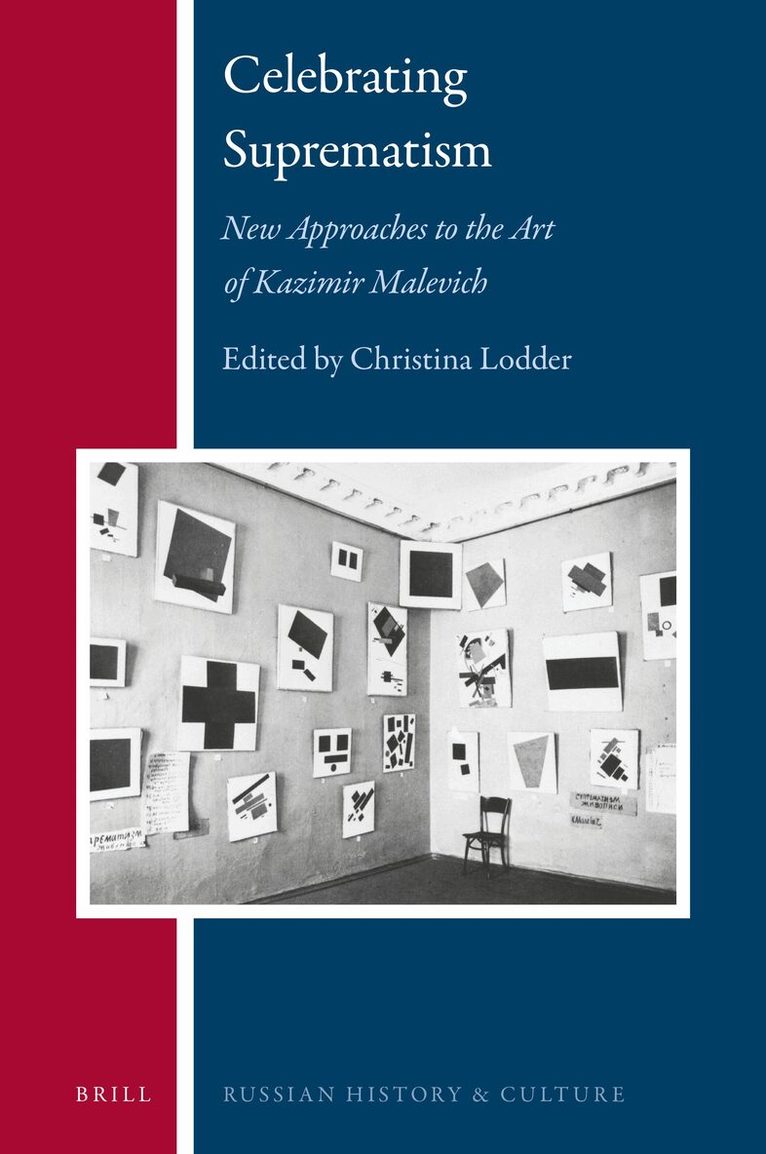
Celebrating Suprematism
New Approaches to the Art of Kazimir Malevich
Inbunden, Engelska, 2018
2 261 kr
Skickas inom 5-8 vardagar
Celebrating Suprematism throws vital new light on Kazimir Malevich’s abstract style and the philosophical, scientific, aesthetic, and ideological context within which it emerged and developed. The essays in the collection, which have been produced by established specialists as well as new scholars in the field, tackle a wide range of issues and establish a profound and nuanced appreciation of Suprematism’s place in twentieth-century visual and intellectual culture. Complementing detailed analyses of The Black Square (1915), Malevich’s theories and statements, various developments at Unovis, Suprematism’s relationship to ether physics, and the impact that Malevich’s style had on the design of textiles, porcelain and architecture, there are also discussions of Suprematism’s relationship to Russian Constructivism and avant-garde groups in Poland and Hungary.