Christoph Moellers - Böcker
Visar alla böcker från författaren Christoph Moellers. Handla med fri frakt och snabb leverans.
16 produkter
16 produkter
448 kr
Skickas inom 5-8 vardagar
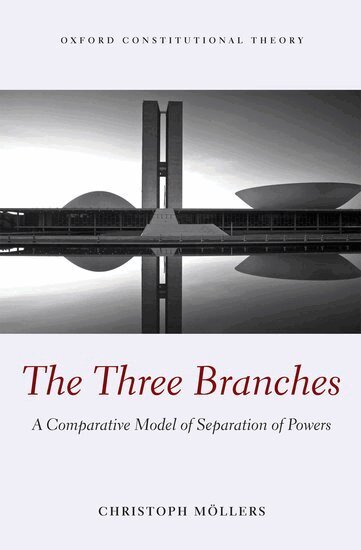
The idea of the separation of powers is still popular in much political and constitutional discourse, though its meaning for the modern state remains unclear and contested. This book develops a new, comprehensive, and systematic account of the principle. It then applies this new concept to legal problems of different national constitutional orders, the law of the European Union, and international institutional law. It connects an argument from normative political theory with phenomena taken from comparative constitutional law. The book argues that the conflict between individual liberty and democratic self-determination that is characteristic of modern constitutionalism is proceduralized through the establishment of different governmental branches. A close analysis of the relation between individual and collective autonomy on the one hand and the ways lawmaking through public institutions can be established on the other hand helps us identify criteria for determining how legislative, administrative, and judicial lawmaking can be distinguished and should be organized. These criteria define a common ground in the confusing variety of western constitutional traditions and their diverse use of the notion of separated powers. They also enable us to establish a normative framework that throws a fresh perspective on problems of constitutional law in different constitutional systems: constitutional judicial review of legislation, limits of legislative delegation, parliamentary control of the executive, and standing. Linking arguments from comparative constitutional law and international law, the book then uses this framework to offer a new perspective on the debate on constitutionalism beyond the state. The concept permits certain institutional insights of the constitutional experiences within states to be applied at the international level without falling into any form of methodological nationalism.
1 927 kr
Skickas inom 3-6 vardagar
This translation into English of the leading German-language work on the Federal Constitutional Court gives an overview of the court's history and role as one of the most influential constitutional courts in recent years. The book consists of four extended, free-standing essays written by each of the authors. The essays cover the historical development and political context of the Court; the Court and the constitution; the Court's approach to judicial reasoning; and the Court in contemporary constitutional theory.
1 503 kr
Skickas inom 5-8 vardagar
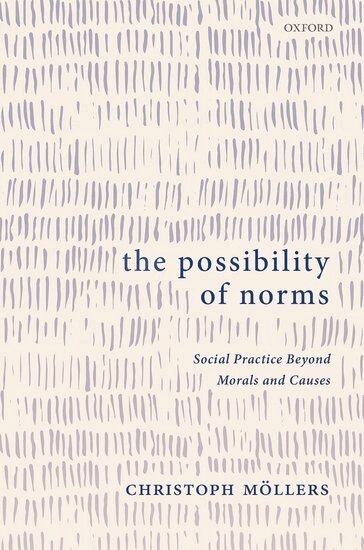
What defines the social practices we currently call norms? They make theft forbidden, eating with a fork advisable, and paintings beautiful. Norms are commonly thought of as moral justifications for doing one thing and not doing another. They are also described in terms of their outcomes or effects, serving as mere causal explanations.The Possibility of Norms proposes a broader view of how norms function, how they are articulated, and how they are realized. It may be asking too much if we expect norms to be effective or morally right. Many norms are simply ineffective and many are at most ineffectively justifiable. Drawing upon a rich array of texts - from law and jurisprudence to philosophy, aesthetics, and the social sciences - Möllers argues for conceiving of social norms as positively marked possibilities. Positively marking a possibility indicates that it should be realized. Normativity thus hinges on judging the world from a distance and acknowledging the possibility of divergent states of the world. Hence, it is no longer theoretically problematic that there are morally unjustified norms, nor that norms can be broken. On the contrary, allowing for breaches may be an important feature of normativity.Möllers's conceptual study sheds new light on a range of paradigms in the humanities, social sciences, and cultural studies, reframing several aspects of norm theory and questioning the theoretical assumptions underlying existing empirical work on normativity.
1 817 kr
Skickas inom 5-8 vardagar
The idea of the separation of powers is still popular in much political and constitutional discourse, though its meaning for the modern state remains unclear and contested. This book develops a new, comprehensive, and systematic account of the principle. It then applies this new concept to legal problems of different national constitutional orders, the law of the European Union, and international institutional law. It connects an argument from normative political theory with phenomena taken from comparative constitutional law. The book argues that the conflict between individual liberty and democratic self-determination that is characteristic of modern constitutionalism is proceduralized through the establishment of different governmental branches. A close analysis of the relation between individual and collective autonomy on the one hand and the ways lawmaking through public institutions can be established on the other hand helps us identify criteria for determining how legislative, administrative, and judicial lawmaking can be distinguished and should be organized. These criteria define a common ground in the confusing variety of western constitutional traditions and their diverse use of the notion of separated powers. They also enable us to establish a normative framework that throws a fresh perspective on problems of constitutional law in different constitutional systems: constitutional judicial review of legislation, limits of legislative delegation, parliamentary control of the executive, and standing. Linking arguments from comparative constitutional law and international law, the book then uses this framework to offer a new perspective on the debate on constitutionalism beyond the state. The concept permits certain institutional insights of the constitutional experiences within states to be applied at the international level without falling into any form of methodological nationalism.
Del 141 - Jus Publicum
Gewaltengliederung
Legitimation und Dogmatik im nationalen und internationalen Rechtsvergleich
Inbunden, Tyska, 2005
2 249 kr
Tillfälligt slut
Warum sind Staatsorganisationen traditionell in drei Gewalten gegliedert? Auf diese Frage gibt Christoph Möllers eine legitimationstheoretisch begründete Antwort und macht diese juristisch nutzbar: Moderne Verfassungen legitimieren sich durch den Schutz individueller Freiheit und die Ermöglichung demokratischer Selbstbestimmung, lassen jedoch den Vorrang zwischen beiden Legitimationsformen offen. Statt einer materiellen Vorrangregel dient das Prinzip der Gewaltengliederung dem Ausgleich beider Legitimationsansprüche durch Organisation und Verfahren. Auf Grundlage dieser Einsicht leitet der Autor Kriterien zur Bestimmung der drei Gewalten her, die die Auslegung von Art. 20 Abs. 2. S. 2 GG präzisieren, und im Vergleich mit dem Verfassungsrecht der USA auf Einzelprobleme Anwendung finden: Verfassungsgerichtsbarkeit, gerichtliche Kontrolle der Verwaltung und Delegation der Rechtsetzung. In einem zweiten Argumentationsgang bewährt sich dieses Modell auch bei föderalen Rechtsordnungen und übernationale Organisationen wie der EU, der Internationalen Arbeitsorganisation (ILO) und der Welthandelsorganisation (WTO). Probleme der Kompetenzbestimmung zwischen Ebenen, der Verbundverwaltung oder der Anwendbarkeit von internationalem Recht werden durch das Modell auf eine systematische Grundlage gestellt.
1 681 kr
Tillfälligt slut
Die unveränderte Neuauflage ist mit einer aktuellen Einleitung versehen, die die einschlägigen Entwicklungen des letzten Jahrzehnts darstellt und analysiert. "Staat als Argument" fragt nach der argumentativen Bedeutung des Staatsbegriffs im deutschen Verfassungsrecht. Christoph Möllers untersucht zunächst fünf Autoren der staatsrechtlichen Tradition vor Inkrafttreten des Grundgesetzes: Georg Jellinek, Hans Kelsen, Carl Schmitt, Rudolf Smend und Hermann Heller. Im zweiten Teil geht er anhand ausgesuchter staatstheoretischer Begrifflichkeiten - Staat als Einheit, als Träger des Gewaltmonopols, als Verfassungsvoraussetzung, Staatszwecke - methodisch zulässigen und problematischen Verwendungsweisen des Staatsbegriffs im Verfassungsrecht des Grundgesetzes nach. Abschließend widmet er sich Rechtsproblemen, in denen der Staatsbegriff Verwendung findet: Staatlichkeit als Schranke der Grundrechtsgeltung, als Eigenschaft föderaler Glieder und als Grenze der europäischen IntegrationDie erste Auflage ist bei C.H. Beck, München erschienen.
Demokratiesicherung in der Europäischen Union
Studie zu einem Dilemma. Im Auftrag und in Zusammenarbeit mit der Heinrich-Böll-Stiftung
Häftad, Tyska, 2018
315 kr
Tillfälligt slut
Die Studie untersucht die rechtlichen und politischen Mechanismen der mitgliedstaatlichen Demokratiesicherung durch die Europäische Union. Die Erwartung, mit dem Beitritt zur Union würden die demokratischen Ordnungen in den Mitgliedstaaten stabilisiert, wurde enttäuscht. Die Fälle Ungarns und Polens zeigen, wie demokratische Rechtsstaaten in autoritäre Ordnungen umschlagen können. In diesem Zusammenhang werden die bestehenden Reaktionsmechanismen der Europäischen Union kritisch analysiert, insbesondere das Verfahren des Art. 7 EUV und der EU-Rahmen zur Stärkung des Rechtstaatsprinzips, die bisherigen Interventionen der Unionsorgane untersucht und die aktuell in der Literatur vorgestellten institutionellen Lösungswege bewertet.Insbesondere widmet sich die Studie der bislang unterschätzten Frage, auf Grundlage welcher Kriterien und unter welchen Bedingungen es legitim sein kann, das politische Abgleiten eines Mitgliedstaats durch Intervention der Europäischen Union anzugehen. Hierfür wird ein demokratiespezifisches Kernelement herausgearbeitet: der Schutz potentieller künftiger Mehrheiten. Der Zustand der innerstaatlichen Ordnung ist danach anhand des Zustandes der Opposition und ihrer institutionellen Möglichkeiten, zu einer Mehrheit zu werden, zu bestimmen. Dieses Kriterium lässt sich wiederum mit Blick auf drei Rechtsgebiete entfalten: Wahlen, Freiheit der Berichterstattung und richterliche Unabhängigkeit.
5 512 kr
Skickas inom 3-6 vardagar
135 kr
Skickas inom 3-6 vardagar
215 kr
Skickas inom 3-6 vardagar
211 kr
Skickas inom 3-6 vardagar
275 kr
Skickas inom 3-6 vardagar
295 kr
Skickas inom 3-6 vardagar
Del 580 - WAT Wagenbachs andere Taschenbücher
Demokratie - Zumutungen und Versprechen
Häftad, Tyska, 2008
123 kr
Skickas inom 3-6 vardagar
Del 68 - Veröffentlichungen Der Vereinigung Der Deutschen Staatsrecht
Erosion von Verfassungsvoraussetzungen
Inbunden, Tyska, 2009
2 040 kr
Skickas inom 3-6 vardagar
184 kr
Skickas inom 3-6 vardagar