Committee on Progress in Preventing Childhood Obesity – författare
420 kr
Skickas
255 kr
Skickas
1 003 kr
Läs direkt efter köp
At this early phase in addressing the epidemic, actions have begun on a number of levels to improve the dietary patterns and to increase the physical activity levels of young people. Schools, corporations, youth-related organizations, families, communities, foundations, and government agencies are working to implement a variety of policy changes, new programs, and other interventions. These efforts, however, generally remain fragmented and small in scale.
Moreover, the lack of systematic monitoring and evaluation of interventions have hindered the development of an evidence base to identify, apply, and disseminate lessons learned and to support promising efforts to prevent childhood obesity.
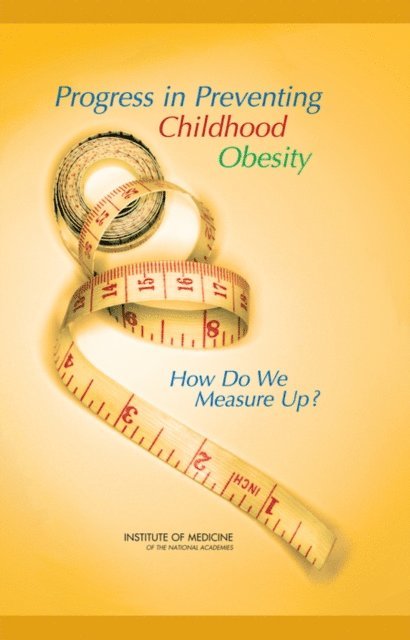
Progress in Preventing Childhood Obesity: How Do We Measure Up? examines the progress made by obesity prevention initiatives in the United States from 2004 to 2006. This book emphasizes a call to action for key stakeholders and sectors to commit to and demonstrate leadership in childhood obesity prevention, evaluates all policies and programs, monitors their progress, and encourages stakeholders to widely disseminate promising practices. This book will be of interest to federal, state, and local government agencies; educators and schools; public health and health care professionals; private-sector companies and industry trade groups; media; parents; and those involved in implementing community-based programs and consumer advocacy.
284 kr
Läs direkt efter köp
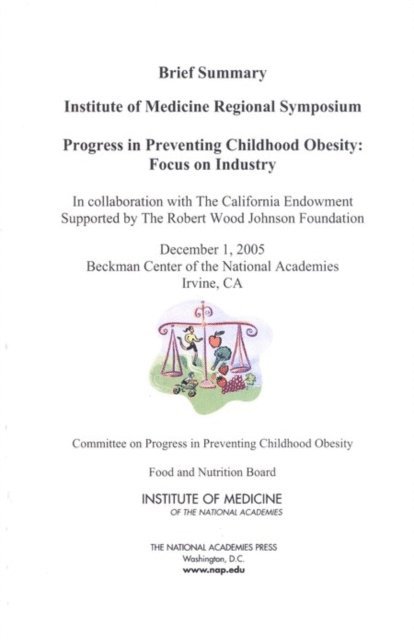
In 2002, Congress charged the Institute of Medicine (IOM) with developing a prevention-focused action plan to reduce the number of obese children and youth in the United States. In 2005, with support from The Robert Wood Johnson Foundation (RWJF), the IOM is building on its previous work by conducting a study to assess progress toward the obesity prevention recommendations in the original report. The IOM organized three regional meetings in the midwest, southeastern, and western United States to galvanize obesity prevention efforts of local, state, and national decision-makers, community and school leaders, grassroots organizations, and industry representatives including the food, beverage, restaurant, leisure, recreation, and entertainment industries. These three meetings will involve disseminating the findings and recommendations of the original IOM report and catalyzing dialogues that highlight best practices and identify assets and barriers to moving forward with obesity prevention efforts in each selected region. In collaboration with The California Endowment, the committee held its third regional symposium on December 1, 2005 in Irvine, California.The symposium included three plenary panels that focused on food and physical activity products, portfolio shifts, and packaging innovations; retailing healthy lifestyles with regard to food and physical activity; and the business response to childhood obesity. Participants also engaged in two break-out sessions. The first session focused on marketing communication strategies that promote both healthful products and physical activity opportunities. The second session focused on public and private education campaigns and industry self-regulation of advertising to children. A program agenda is at the end of this summary. The symposium provided a useful forum for stakeholders to explore viable strategies and exchange information about promising practices for addressing barriers to obesity prevention initiatives, and to identify how public health interests can coincide with the business interests of companies to have a positive impact on reversing the childhood obesity trend.This summary highlights the recurring themes for accelerating change and how industry collectively can move forward with obesity prevention efforts that emerged from the symposium. The themes include reverse the obesity trend; market health and nutrition; make a business commitment to health; change the food and physical activity environment; forge strategic partnerships; garner political support to ally public health and industry; educate stakeholders; collect, disseminate, and share local data; and evaluate programs and interventions. This summary, along with those of two other symposia summaries and a more detailed discussion of insights and regional examples, will be incorporated in the IOM committee''s final report on progress in preventing childhood obesity that will be released in the fall of 2006.
284 kr
Läs direkt efter köp
The nation faces a growing epidemic of childhood obesity that threatens the immediate health of our children and their prospects of growing up healthy into adulthood. During the past 30 years, obesity in the United States has more than doubled among young children aged 2-5 years and adolescents aged 12-19 years, and it has more than tripled among youth aged 6-11 years. Currently, more than 9 million children 6 years of age and older are considered to be obese. The sequelae of obesity among children and youth are also rapidly increasing, including an increased risk of type 2 diabetes, hypertension, metabolic syndrome, asthma, and social and psychological consequences including low self-esteem and depression.To develop a prevention-focused action plan to reduce the number of obese children and youth in the United States, the Institute of Medicine organized three regional symposia, and held its second regional symposium in Atlanta, Georgia on October 6-7, 2005.Progress in Preventing Childhood Obesity: Focus on Communities highlights the recurring themes that emerged from the symposium for accelerating change and moving forward with obesity prevention efforts: empower communities and neighborhoods, change the environment, forge strategic partnerships, garner and mobilize political support, educate stakeholders, identify leaders and build on cultural assets, collect and disseminate local data, evaluate programs and interventions, and translate successful interventions to other communities. Approximately 90 individuals active in childhood obesity prevention efforts in the southeastern region of the United States who represented a range of stake holder perspectives and innovative practices in local communities including students, community leaders, physicians, health educators, clergy, teachers, and state and federal government officials were invited to participate in the symposium. The contents of this summary reflect specific examples presented and discussed during the symposium, and unless otherwise noted, the general perspectives of the participants. This summary, along with two other symposia summaries, and a more detailed discussion of insights and regional examples, will be incorporated in the IOM committee''s final report on progress in preventing childhood obesity that will be released in the fall of 2006.
284 kr
Läs direkt efter köp
Obesity is now an epidemic among children and adolescents in the United States. Nationwide, roughly nine million children over six years of age are obese—with elevated risks of both health conditions, such as diabetes and hypertension, and poor quality of life, possibly throughout adulthood. The Institute of Medicine (IOM) report, Preventing Childhood Obesity: Health in the Balance, was released in September 2004 and identified promising approaches for obesity prevention efforts and a set of recommendations for a variety of stake holders and sectors. The IOM is building on its previous work by initiating a new study to assess progress in childhood obesity prevention efforts. In 2005, the IOM organized three regional meeting in the Midwest, South, and Western United States to galvanize obesity prevention efforts of local, state, and national decision-makers, community and school leaders, grassroots organizations, and industry including the food, beverage, restaurant, leisure, and entertainment industries. In collaboration with the Kansas health Foundation (KHF), the IOM held the study''s first regional symposium in Wichita, Kansas on June 27-28, 2005. The symposium was structured to include three panels that focused on challenges and innovations for obesity prevention and school policies, school programs, and additional steps that can be taken by numerous stakeholders to overcome barriers to progress. Three break-out sessions focused on creating and strengthening linkages with other sectors to promote childhood obesity prevention including links between schools and home, community, and health care; links between schools and industry; and links between schools and the built environment. This brief summary highlights the recurring themes for accelerating change and moving forward with obesity prevention efforts that emerged from the symposium; forge strategic partnerships; empower local schools and communities; educate stakeholders; evaluate obesity prevention efforts; document the benefits of obesity preventions; innovate to address barriers; use a systems approach; and develop a long-term strategic plan. The findings of this summary, along with those of two other symposia, and a more detailed discussion of insights and regional examples will be incorporated in the committee''s final report that will be released in 2006.
193 kr
Läs direkt efter köp
Obesity is now an epidemic among children and adolescents in the United States. Nationwide, roughly nine million children over six years of age are obese—with elevated risks of both health conditions, such as diabetes and hypertension, and poor quality of life, possibly throughout adulthood. The Institute of Medicine (IOM) report, Preventing Childhood Obesity: Health in the Balance, was released in September 2004 and identified promising approaches for obesity prevention efforts and a set of recommendations for a variety of stake holders and sectors. The IOM is building on its previous work by initiating a new study to assess progress in childhood obesity prevention efforts. In 2005, the IOM organized three regional meeting in the Midwest, South, and Western United States to galvanize obesity prevention efforts of local, state, and national decision-makers, community and school leaders, grassroots organizations, and industry including the food, beverage, restaurant, leisure, and entertainment industries. In collaboration with the Kansas health Foundation (KHF), the IOM held the study''s first regional symposium in Wichita, Kansas on June 27-28, 2005. The symposium was structured to include three panels that focused on challenges and innovations for obesity prevention and school policies, school programs, and additional steps that can be taken by numerous stakeholders to overcome barriers to progress. Three break-out sessions focused on creating and strengthening linkages with other sectors to promote childhood obesity prevention including links between schools and home, community, and health care; links between schools and industry; and links between schools and the built environment. This brief summary highlights the recurring themes for accelerating change and moving forward with obesity prevention efforts that emerged from the symposium; forge strategic partnerships; empower local schools and communities; educate stakeholders; evaluate obesity prevention efforts; document the benefits of obesity preventions; innovate to address barriers; use a systems approach; and develop a long-term strategic plan. The findings of this summary, along with those of two other symposia, and a more detailed discussion of insights and regional examples will be incorporated in the committee''s final report that will be released in 2006.
193 kr
Läs direkt efter köp
The nation faces a growing epidemic of childhood obesity that threatens the immediate health of our children and their prospects of growing up healthy into adulthood. During the past 30 years, obesity in the United States has more than doubled among young children aged 2-5 years and adolescents aged 12-19 years, and it has more than tripled among youth aged 6-11 years. Currently, more than 9 million children 6 years of age and older are considered to be obese. The sequelae of obesity among children and youth are also rapidly increasing, including an increased risk of type 2 diabetes, hypertension, metabolic syndrome, asthma, and social and psychological consequences including low self-esteem and depression.To develop a prevention-focused action plan to reduce the number of obese children and youth in the United States, the Institute of Medicine organized three regional symposia, and held its second regional symposium in Atlanta, Georgia on October 6-7, 2005.Progress in Preventing Childhood Obesity: Focus on Communities highlights the recurring themes that emerged from the symposium for accelerating change and moving forward with obesity prevention efforts: empower communities and neighborhoods, change the environment, forge strategic partnerships, garner and mobilize political support, educate stakeholders, identify leaders and build on cultural assets, collect and disseminate local data, evaluate programs and interventions, and translate successful interventions to other communities. Approximately 90 individuals active in childhood obesity prevention efforts in the southeastern region of the United States who represented a range of stake holder perspectives and innovative practices in local communities including students, community leaders, physicians, health educators, clergy, teachers, and state and federal government officials were invited to participate in the symposium. The contents of this summary reflect specific examples presented and discussed during the symposium, and unless otherwise noted, the general perspectives of the participants. This summary, along with two other symposia summaries, and a more detailed discussion of insights and regional examples, will be incorporated in the IOM committee''s final report on progress in preventing childhood obesity that will be released in the fall of 2006.
193 kr
Läs direkt efter köp
In 2002, Congress charged the Institute of Medicine (IOM) with developing a prevention-focused action plan to reduce the number of obese children and youth in the United States. In 2005, with support from The Robert Wood Johnson Foundation (RWJF), the IOM is building on its previous work by conducting a study to assess progress toward the obesity prevention recommendations in the original report. The IOM organized three regional meetings in the midwest, southeastern, and western United States to galvanize obesity prevention efforts of local, state, and national decision-makers, community and school leaders, grassroots organizations, and industry representatives including the food, beverage, restaurant, leisure, recreation, and entertainment industries. These three meetings will involve disseminating the findings and recommendations of the original IOM report and catalyzing dialogues that highlight best practices and identify assets and barriers to moving forward with obesity prevention efforts in each selected region. In collaboration with The California Endowment, the committee held its third regional symposium on December 1, 2005 in Irvine, California.The symposium included three plenary panels that focused on food and physical activity products, portfolio shifts, and packaging innovations; retailing healthy lifestyles with regard to food and physical activity; and the business response to childhood obesity. Participants also engaged in two break-out sessions. The first session focused on marketing communication strategies that promote both healthful products and physical activity opportunities. The second session focused on public and private education campaigns and industry self-regulation of advertising to children. A program agenda is at the end of this summary. The symposium provided a useful forum for stakeholders to explore viable strategies and exchange information about promising practices for addressing barriers to obesity prevention initiatives, and to identify how public health interests can coincide with the business interests of companies to have a positive impact on reversing the childhood obesity trend.This summary highlights the recurring themes for accelerating change and how industry collectively can move forward with obesity prevention efforts that emerged from the symposium. The themes include reverse the obesity trend; market health and nutrition; make a business commitment to health; change the food and physical activity environment; forge strategic partnerships; garner political support to ally public health and industry; educate stakeholders; collect, disseminate, and share local data; and evaluate programs and interventions. This summary, along with those of two other symposia summaries and a more detailed discussion of insights and regional examples, will be incorporated in the IOM committee''s final report on progress in preventing childhood obesity that will be released in the fall of 2006.
710 kr
Läs direkt efter köp
At this early phase in addressing the epidemic, actions have begun on a number of levels to improve the dietary patterns and to increase the physical activity levels of young people. Schools, corporations, youth-related organizations, families, communities, foundations, and government agencies are working to implement a variety of policy changes, new programs, and other interventions. These efforts, however, generally remain fragmented and small in scale.
Moreover, the lack of systematic monitoring and evaluation of interventions have hindered the development of an evidence base to identify, apply, and disseminate lessons learned and to support promising efforts to prevent childhood obesity.
Progress in Preventing Childhood Obesity: How Do We Measure Up? examines the progress made by obesity prevention initiatives in the United States from 2004 to 2006. This book emphasizes a call to action for key stakeholders and sectors to commit to and demonstrate leadership in childhood obesity prevention, evaluates all policies and programs, monitors their progress, and encourages stakeholders to widely disseminate promising practices. This book will be of interest to federal, state, and local government agencies; educators and schools; public health and health care professionals; private-sector companies and industry trade groups; media; parents; and those involved in implementing community-based programs and consumer advocacy.
420 kr
Tillfälligt slut
904 kr
Tillfälligt slut