2 418 kr
Skickas inom 10-15 vardagar
2 418 kr
Skickas inom 10-15 vardagar
876 kr
Skickas inom 10-15 vardagar
1 759 kr
Skickas inom 10-15 vardagar
252 kr
Läs direkt efter köp
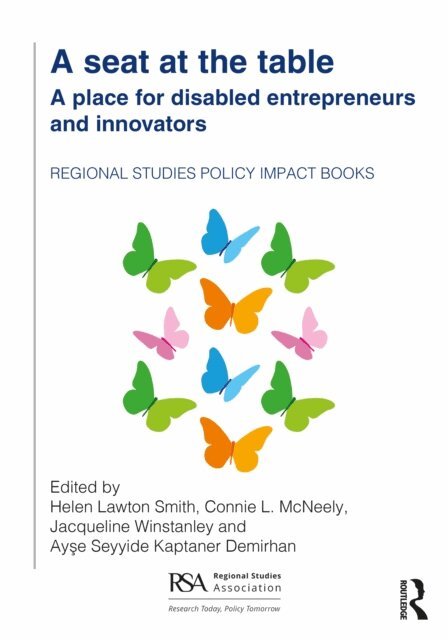
In today’s innovation-driven global economy, there is much to be learned from the lived experience of disabled entrepreneurs in respect of support, be it by governments, charitable organisations, professional bodies or universities. Addressing the ongoing problem of inequality in access and opportunities unites all these entities. The issue this book addresses is how the innovation and entrepreneurship created by disabled people are variously supported in different national contexts. What influences the availability of resources in support of entrepreneurship and innovation by disabled people – and what works?
Representative country case studies in this publication are India, Nigeria, Hungary, the United States and Türkiye. The book also draws on previous research in the UK. These countries illustrate the variations in how research into entrepreneurship undertaken by disabled people is focused on key national and regional issues. The contributions provide a summary and critique of existing legislative and policy approaches. These are detailed examples, but they are not unique and 14 different non-European countries have been identified where research on innovative entrepreneurs with disabilities has been undertaken. These include Brazil, China, Ecuador, Indonesia, Nepal and South Africa.
In this Policy Expo the authors consider how inequalities in participation, access and opportunity are addressed in different countries and regions. They consider the design and implementation of policies in support of disabled entrepreneurs in order to provide an impetus to include and improve larger entrepreneurship and innovation systems. The country chapters provide an analysis and critique of current national and policy provisions and also address overall socioeconomic benefits, beyond those of the individual. Examples are given of the experiences of disabled entrepreneurs to illustrate these points.
252 kr
Läs direkt efter köp
In today’s innovation-driven global economy, there is much to be learned from the lived experience of disabled entrepreneurs in respect of support, be it by governments, charitable organisations, professional bodies or universities. Addressing the ongoing problem of inequality in access and opportunities unites all these entities. The issue this book addresses is how the innovation and entrepreneurship created by disabled people are variously supported in different national contexts. What influences the availability of resources in support of entrepreneurship and innovation by disabled people – and what works?
Representative country case studies in this publication are India, Nigeria, Hungary, the United States and Türkiye. The book also draws on previous research in the UK. These countries illustrate the variations in how research into entrepreneurship undertaken by disabled people is focused on key national and regional issues. The contributions provide a summary and critique of existing legislative and policy approaches. These are detailed examples, but they are not unique and 14 different non-European countries have been identified where research on innovative entrepreneurs with disabilities has been undertaken. These include Brazil, China, Ecuador, Indonesia, Nepal and South Africa.
In this Policy Expo the authors consider how inequalities in participation, access and opportunity are addressed in different countries and regions. They consider the design and implementation of policies in support of disabled entrepreneurs in order to provide an impetus to include and improve larger entrepreneurship and innovation systems. The country chapters provide an analysis and critique of current national and policy provisions and also address overall socioeconomic benefits, beyond those of the individual. Examples are given of the experiences of disabled entrepreneurs to illustrate these points.
498 kr
Skickas inom 10-15 vardagar
654 kr
Läs direkt efter köp
656 kr
Läs direkt efter köp
1 010 kr
Läs direkt efter köp
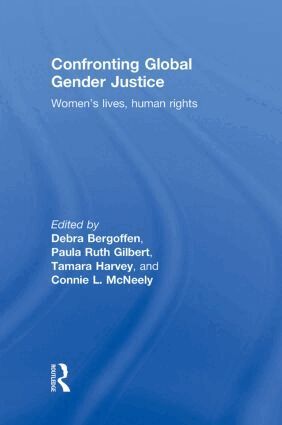
Confronting Global Gender Justice contains a unique, interdisciplinary collection of essays that address some of the most complex and demanding challenges facing theorists, activists, analysts, and educators engaged in the tasks of defining and researching women’s rights as human rights and fighting to make these rights realities in women’s lives.
With thematic sections on Complicating Discourses of Victimhood, Interrogating Practices of Representation, Mobilizing Strategies of Engagement, and Crossing Legal Landscapes, this volume offers both specific case studies and more general theoretical interventions. Contributors examine and assess current understandings of gender justice, and offer new paradigms and strategies for dealing with the complexities of gender and human rights as they arise across local and international contexts. In addition, it offers a particularly timely assessment of the effectiveness and limits of international rights instruments, governmental and nongovernmental organization activities, grassroots and customary practices, and narrative and photographic representations.
This book is a valuable resource for both undergraduate and graduate students in fields such as Gender or Women’s Studies, Human Rights, Cultural Studies, Anthropology, and Sociology, as well as researchers and professionals working in related areas.
1 010 kr
Läs direkt efter köp
Confronting Global Gender Justice contains a unique, interdisciplinary collection of essays that address some of the most complex and demanding challenges facing theorists, activists, analysts, and educators engaged in the tasks of defining and researching women’s rights as human rights and fighting to make these rights realities in women’s lives.
With thematic sections on Complicating Discourses of Victimhood, Interrogating Practices of Representation, Mobilizing Strategies of Engagement, and Crossing Legal Landscapes, this volume offers both specific case studies and more general theoretical interventions. Contributors examine and assess current understandings of gender justice, and offer new paradigms and strategies for dealing with the complexities of gender and human rights as they arise across local and international contexts. In addition, it offers a particularly timely assessment of the effectiveness and limits of international rights instruments, governmental and nongovernmental organization activities, grassroots and customary practices, and narrative and photographic representations.
This book is a valuable resource for both undergraduate and graduate students in fields such as Gender or Women’s Studies, Human Rights, Cultural Studies, Anthropology, and Sociology, as well as researchers and professionals working in related areas.
554 kr
Skickas inom 10-15 vardagar
1 084 kr
Skickas inom 10-15 vardagar
1 413 kr
Läs direkt efter köp
Many countries have implemented policies to increase the number and quality of scientific researchers as a means to foster innovation and spur economic development and progress. To that end, grounded in a view of women as a rich, yet underutilized knowledge and labor resource, a great deal of recent attention has focused on encouraging women to pursue education and careers in science — even in countries with longstanding dominant patriarchal regimes. Yet, overall, science remains an area in which girls and women are persistently disadvantaged. This book addresses that situation. It bridges the gap between individual- and societal-level perspectives on women in science in a search for systematic solutions to the challenge of building an inclusive and productive scientific workforce capable of creating the innovation needed for economic growth and societal wellbeing.
This book examines both the role of gender as an organizing principle of social life and the relative position of women scientists within national and international labor markets. Weaving together and engaging research on globalization, the social organization of science, and gendered societal relations as key social forces, this book addresses critical issues affecting women’s contributions and participation in science. Also, while considering women’s representation in science as a whole, examinations of women in the chemical sciences, computing, mathematics and statistics are offered as examples to provide insights into how differing disciplinary cultures, functional tasks and socio-historical conditions can affect the advancement of women in science relative to important variations in educational and occupational realities.
Edited by three social scientists recognized for their expertise in science and technology policy, education, workforce participation, and stratification, this book includes contributions from an intellectually diverse group of international scholars andanalysts and features compelling cases and initiatives from around the world, with implications for research, industry practice, education and policy development.
6 108 kr
Skickas inom 10-15 vardagar
7 889 kr
Läs direkt efter köp
20 864 kr
Kommande
1 084 kr
Skickas inom 10-15 vardagar