Willie Pearson, Jr. - Böcker
Visar alla böcker från författaren Willie Pearson, Jr.. Handla med fri frakt och snabb leverans.
6 produkter
6 produkter
Blueprint for the Future
Framing the Issues of Women in Science in a Global Context: Summary of a Workshop
Häftad, Engelska, 2012
460 kr
Tillfälligt slut
The scientific work of women is often viewed through a national or regional lens, but given the growing worldwide connectivity of most, if not all, scientific disciplines, there needs to be recognition of how different social, political, and economic mechanisms impact women's participation in the global scientific enterprise. Although these complex sociocultural factors often operate in different ways in various countries and regions, studies within and across nations consistently show inverse correlations between levels in the scientific and technical career hierarchy and the number of women in science: the higher the positions, the fewer the number of women. Understanding these complex patterns requires interdisciplinary and international approaches. In April 2011, a committee overseen by the National Academies' standing Committee on Women in Science, Engineering, and Medicine (CWSEM) convened a workshop entitled, "Blueprint for the Future: Framing the Issues of Women in Science in a Global Context" in Washington, D.C. CWSEM's goals are to coordinate, monitor, and advocate action to increase the participation of women in science, engineering, and medicine.The scope of the workshop was limited to women's participation in three scientific disciplines: chemistry, computer science, mathematics, and statistics. The workshop presentations came from a group of scholars and professionals who have been working for several years on documenting, analyzing, and interpreting the status of women in selected technical fields around the world. Examination of the three disciplines-chemistry, computer science, and mathematics and statistics-can be considered a first foray into collecting and analyzing information that can be replicated in other fields. The complexity of studying science internationally cannot be underestimated, and the presentations demonstrate some of the evidentiary and epistemological challenges that scholars and professionals face in collecting and analyzing data from many different countries and regions. Blueprint for the Future: Framing the Issues of Women in Science in a Global Context summarizes the workshop presentations, which provided an opportunity for dialogue about the issues that the authors have been pursuing in their work to date.
489 kr
Tillfälligt slut
For much of America's history, African Americans were discouraged or aggressively prevented from becoming scientists and engineers. Those who did enter STEM fields found that their inventions and discoveries were often neither recognized nor valued. Even today, particularly in the field of engineering, the participation of African American men and women is shockingly low, and some evidence indicates that the situation might be getting worse. In Changing the Face of Engineering, twenty-four eminent scholars address the under representation of African Americans in engineering from a wide variety of disciplinary and professional perspectives while proposing workable classroom solutions and public policy initiatives. They combine robust statistical analyses with personal narratives of African American engineers and STEM instructors who, by taking evidenced-based approaches, have found success in graduating African American engineers. Changing the Face of Engineering argues that the continued under representation of African Americans in engineering impairs the ability of the United States to compete successfully in the global marketplace.This volume will be of interest to STEM scholars and students, as well as policy makers, corporations, and higher education institutions.
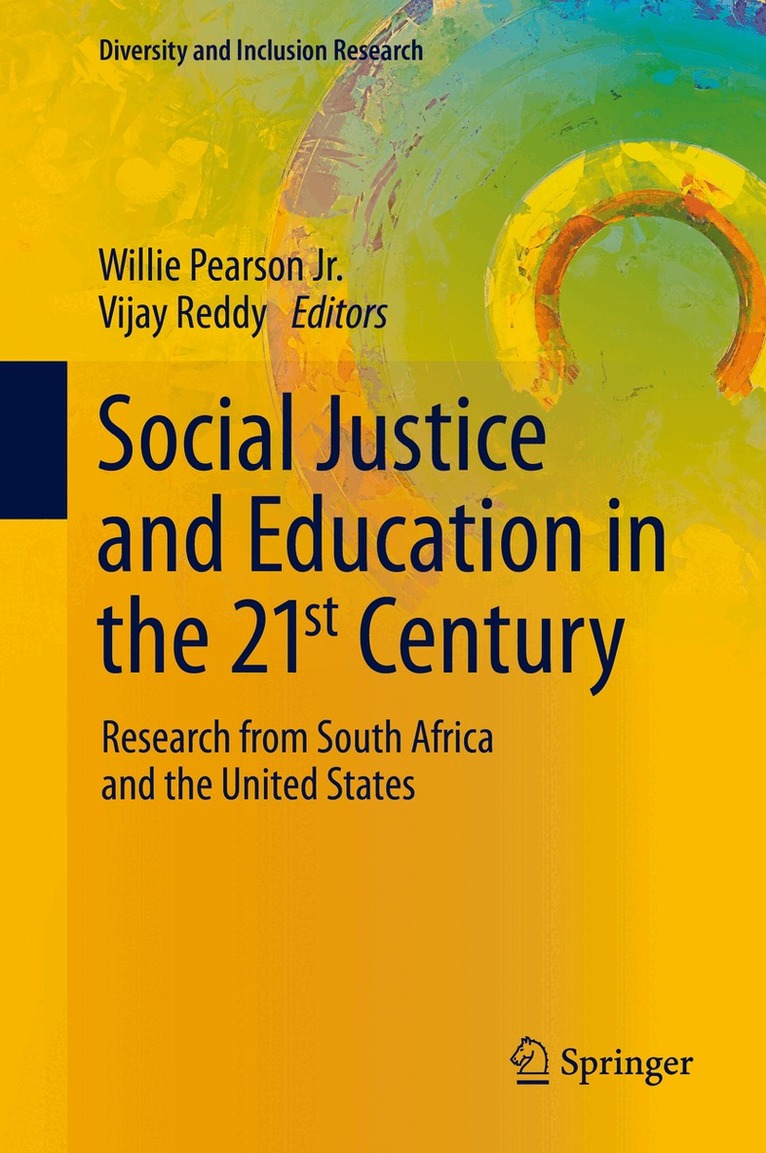
Social Justice and Education in the 21st Century
Research from South Africa and the United States
Inbunden, Engelska, 2021
2 042 kr
Skickas inom 10-15 vardagar
For each group, there are differential educational opportunities, leading to differential educational outcomes and differential labor market opportunities.
Social Justice and Education in the 21st Century
Research from South Africa and the United States
Häftad, Engelska, 2022
2 042 kr
Skickas inom 10-15 vardagar
For each group, there are differential educational opportunities, leading to differential educational outcomes and differential labor market opportunities.
1 064 kr
Skickas inom 10-15 vardagar
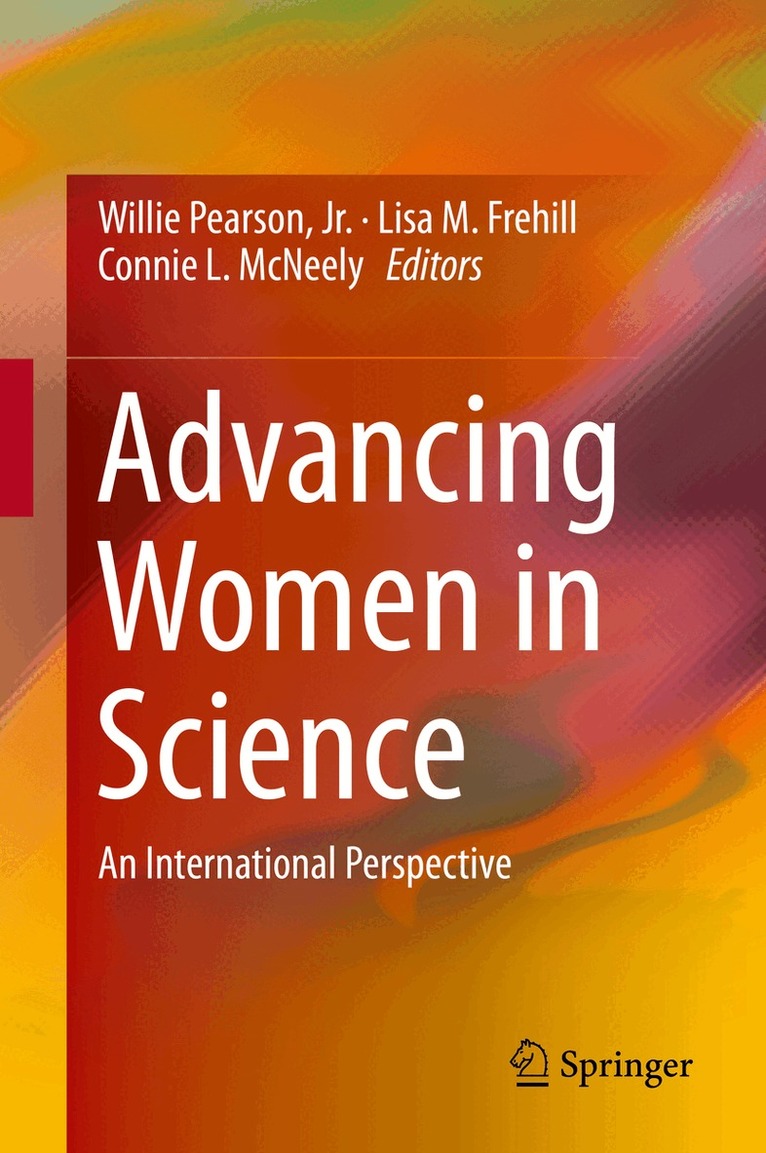
Many countries have implemented policies to increase the number and quality of scientific researchers as a means to foster innovation and spur economic development and progress. To that end, grounded in a view of women as a rich, yet underutilized knowledge and labor resource, a great deal of recent attention has focused on encouraging women to pursue education and careers in science — even in countries with longstanding dominant patriarchal regimes. Yet, overall, science remains an area in which girls and women are persistently disadvantaged. This book addresses that situation. It bridges the gap between individual- and societal-level perspectives on women in science in a search for systematic solutions to the challenge of building an inclusive and productive scientific workforce capable of creating the innovation needed for economic growth and societal wellbeing.This book examines both the role of gender as an organizing principle of social life and the relative position of women scientists within national and international labor markets. Weaving together and engaging research on globalization, the social organization of science, and gendered societal relations as key social forces, this book addresses critical issues affecting women’s contributions and participation in science. Also, while considering women’s representation in science as a whole, examinations of women in the chemical sciences, computing, mathematics and statistics are offered as examples to provide insights into how differing disciplinary cultures, functional tasks and socio-historical conditions can affect the advancement of women in science relative to important variations in educational and occupational realities.Edited by three social scientists recognized for their expertise in science and technology policy, education, workforce participation, and stratification, this book includes contributions from an intellectually diverse group of international scholars andanalysts and features compelling cases and initiatives from around the world, with implications for research, industry practice, education and policy development.
1 064 kr
Skickas inom 10-15 vardagar
Many countries have implemented policies to increase the number and quality of scientific researchers as a means to foster innovation and spur economic development and progress. To that end, grounded in a view of women as a rich, yet underutilized knowledge and labor resource, a great deal of recent attention has focused on encouraging women to pursue education and careers in science — even in countries with longstanding dominant patriarchal regimes. Yet, overall, science remains an area in which girls and women are persistently disadvantaged. This book addresses that situation. It bridges the gap between individual- and societal-level perspectives on women in science in a search for systematic solutions to the challenge of building an inclusive and productive scientific workforce capable of creating the innovation needed for economic growth and societal wellbeing.This book examines both the role of gender as an organizing principle of social life and the relative position of women scientists within national and international labor markets. Weaving together and engaging research on globalization, the social organization of science, and gendered societal relations as key social forces, this book addresses critical issues affecting women’s contributions and participation in science. Also, while considering women’s representation in science as a whole, examinations of women in the chemical sciences, computing, mathematics and statistics are offered as examples to provide insights into how differing disciplinary cultures, functional tasks and socio-historical conditions can affect the advancement of women in science relative to important variations in educational and occupational realities.Edited by three social scientists recognized for their expertise in science and technology policy, education, workforce participation, and stratification, this book includes contributions from an intellectually diverse group of international scholars andanalysts and features compelling cases and initiatives from around the world, with implications for research, industry practice, education and policy development.