Cristina Lafont - Böcker
Visar alla böcker från författaren Cristina Lafont. Handla med fri frakt och snabb leverans.
7 produkter
7 produkter
254 kr
Skickas inom 7-10 vardagar
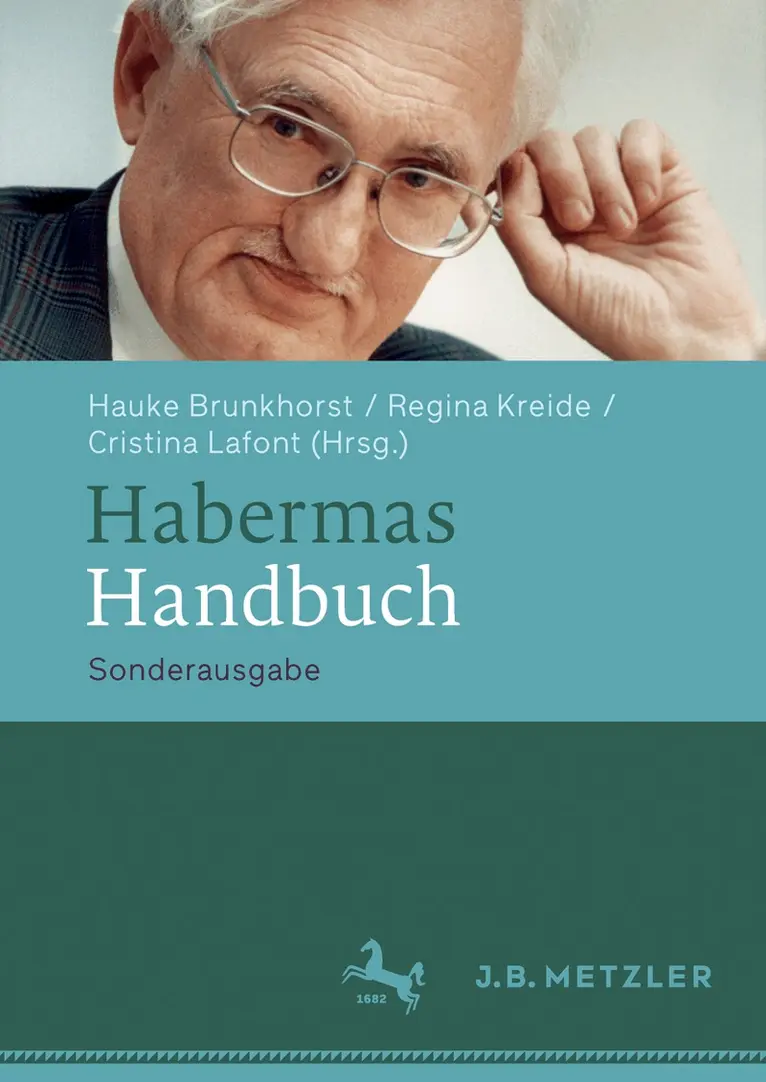
Bekanntester deutscher Philosoph der Gegenwart. Seit mehr als fünfzig Jahren prägt Jürgen Habermas das intellektuelle Leben Deutschlands und darüber hinaus. Mit seinem Werk nimmt er entscheidenden Einfluss auf die Wissenschaften, auf Politik und aktuelle gesellschaftliche Diskussionen. Neben einem Überblick zur Biografie stellt das Handbuch Habermas intellektuelle Kontexte, wie z. B. die Frankfurter Schule, vor und beleuchtet die wichtigsten Stationen seines komplexen Werkes. Der Schlussteil informiert über Begriffe und Konzepte, die sich durch das gesamte Werk ziehen.
Democracy without Shortcuts
A Participatory Conception of Deliberative Democracy
Häftad, Engelska, 2022
363 kr
Skickas
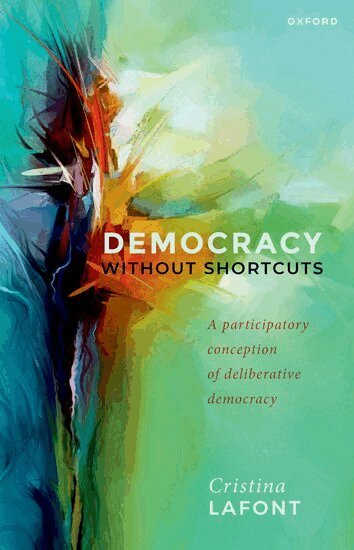
This book articulates a participatory conception of deliberative democracy that takes the democratic ideal of self-government seriously. It aims to improve citizens' democratic control and vindicate the value of citizens' participation against conceptions that threaten to undermine it. The book critically analyzes deep pluralist, epistocratic, and lottocratic conceptions of democracy. Their defenders propose various institutional ''shortcuts'' to help solve problems of democratic governance such as overcoming disagreements, citizens' political ignorance, or poor-quality deliberation. However, all these shortcut proposals require citizens to blindly defer to actors over whose decisions they cannot exercise control. Implementing such proposals would therefore undermine democracy. Moreover, it seems naive to assume that a community can reach better outcomes 'faster' if it bypasses the beliefs and attitudes of its citizens. Unfortunately, there are no 'shortcuts' to make a community better than its members. The only road to better outcomes is the long, participatory road that is taken when citizens forge a collective will by changing one another's hearts and minds. However difficult the process of justifying political decisions to one another may be, skipping it cannot get us any closer to the democratic ideal. Starting from this conviction, the book defends a conception of democracy ''without shortcuts''. This conception sheds new light on long-standing debates about the proper scope of public reason, the role of religion in politics, and the democratic legitimacy of judicial review. It also proposes new ways to unleash the democratic potential of institutional innovations such as deliberative minipublics.
465 kr
Skickas inom 5-8 vardagar
In recent years there has been great interest in new forms of citizen participation, such as citizens' assemblies or deliberative polls that involve ordinary citizens in political decision-making. Many see these innovations as the best solution to the current crisis of democracy. The most radical among them propose replacing elections with the random selection of ordinary citizens, transforming electoral democracy into a lottocracy. These developments are driven by a lottocratic mentality that is deeply transforming our understanding of democracy, political equality, representation, and more. In The Lottocratic Mentality, Lafont and Urbinati focus on this way of thinking, which is flourishing in public debates, inspiring the organization of citizens' assemblies worldwide, and bridging democratic and nondemocratic regimes in the vision of a unified global order based on problem-solving allotted assemblies, free from electoral competition. The authors' analysis shows that it amounts to a worrisome form of technopopulism that justifies conferring legislative power on randomly selected assemblies based on a mixture of populist and technocratic grounds. This lottocratic mentality legitimizes the anti-democratic idea that the many should be "ruled" by "the few" chosen by chance. Against this view, they show how lottery-based institutions could be used with the democratic aim of empowering the citizenry, but only if the lottocratic mentality is rejected.
Democracy without Shortcuts
A Participatory Conception of Deliberative Democracy
Inbunden, Engelska, 2019
611 kr
Skickas inom 5-8 vardagar
This book articulates a participatory conception of deliberative democracy that takes the democratic ideal of self-government seriously. It aims to improve citizens' democratic control and vindicate the value of citizens' participation against conceptions that threaten to undermine it. The book critically analyzes deep pluralist, epistocratic, and lottocratic conceptions of democracy. Their defenders propose various institutional ''shortcuts'' to help solve problems of democratic governance such as overcoming disagreements, citizens' political ignorance, or poor-quality deliberation. However, all these shortcut proposals require citizens to blindly defer to actors over whose decisions they cannot exercise control. Implementing such proposals would therefore undermine democracy. Moreover, it seems naive to assume that a community can reach better outcomes 'faster' if it bypasses the beliefs and attitudes of its citizens. Unfortunately, there are no 'shortcuts' to make a community better than its members. The only road to better outcomes is the long, participatory road that is taken when citizens forge a collective will by changing one another's hearts and minds. However difficult the process of justifying political decisions to one another may be, skipping it cannot get us any closer to the democratic ideal. Starting from this conviction, the book defends a conception of democracy ''without shortcuts''. This conception sheds new light on long-standing debates about the proper scope of public reason, the role of religion in politics, and the democratic legitimacy of judicial review. It also proposes new ways to unleash the democratic potential of institutional innovations such as deliberative minipublics.
1 323 kr
Skickas inom 3-6 vardagar
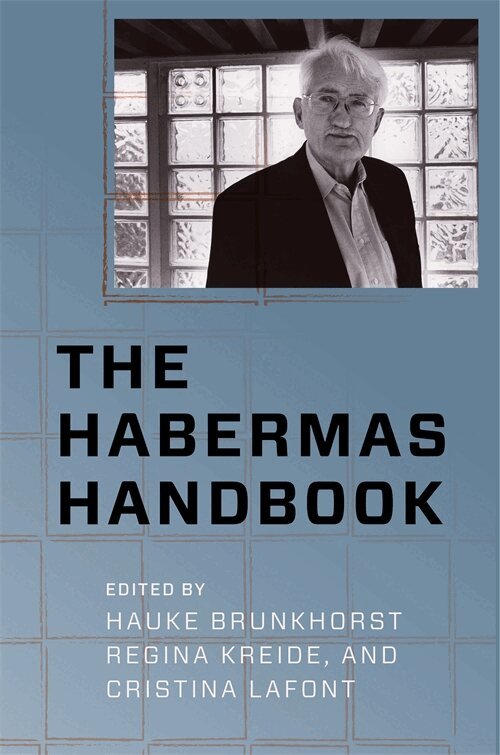
Jurgen Habermas is among the most influential philosophers of our time. His diagnosis of contemporary society and concepts such as the public sphere, communicative rationality, and cosmopolitanism have influenced virtually all academic disciplines, spurred political debates, and shaped intellectual life in Germany and beyond for more than fifty years. In The Habermas Handbook, leading Habermas scholars elucidate his thought, providing essential insight into his key concepts, the breadth of his work, and his influence across politics, law, the social sciences, and public life. This volume offers a comprehensive overview and in-depth analysis of Habermas's work in its entirety. Opening by examining his intellectual biography, it goes on to illuminate the social and intellectual context of Habermasian thought, such as the Frankfurt School, speech-act theory, and contending theories of democracy. The Handbook provides an extensive account of Habermas's individual texts, ranging from his dissertation on Schelling to his most recent writing about Europe.It illustrates the development of his thought and its not infrequently controversial reception while elaborating the central ideas of his work. The book also provides a glossary of key terms and concepts, making the complexity of Habermas's thought accessible to a broad readership.
Del 7 - New Directions in Critical Theory
Critical Theory in Critical Times
Transforming the Global Political and Economic Order
Inbunden, Engelska, 2017
849 kr
Tillfälligt slut
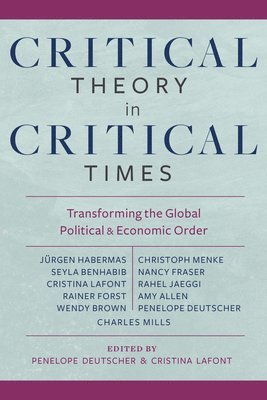
We live in critical times. We face a global crisis in economics and finance, a global ecological crisis, and a constant barrage of international disputes. Perhaps most dishearteningly, there seems to be little faith in our ability to address such difficult problems. However, there is also a more positive sense in which these are critical times. The world's current state of flux gives us a unique window of opportunity for shaping a new international order that will allow us to cope with current and future global crises. In Critical Theory in Critical Times, eleven of the most distinguished critical theorists offer new perspectives on recent crises and transformations of the global political and economic order. Essays from Jurgen Habermas, Seyla Benhabib, Cristina Lafont, Rainer Forst, Wendy Brown, Christoph Menke, Nancy Fraser, Rahel Jaeggi, Amy Allen, Penelope Deutscher, and Charles Mills address pressing issues including international human rights and democratic sovereignty, global neoliberalism, novel approaches to the critique of capitalism, critical theory's Eurocentric heritage, and new directions offered by critical race theory and postcolonial studies.Sharpening the conceptual tools of critical theory, the contributors to Critical Theory in Critical Times reveal new ways of expanding the diverse traditions of the Frankfurt School in response to some of the most urgent and important challenges of our times.
Del 7 - New Directions in Critical Theory
Critical Theory in Critical Times
Transforming the Global Political and Economic Order
Häftad, Engelska, 2017
258 kr
Skickas inom 7-10 vardagar
We live in critical times. We face a global crisis in economics and finance, a global ecological crisis, and a constant barrage of international disputes. Perhaps most dishearteningly, there seems to be little faith in our ability to address such difficult problems. However, there is also a more positive sense in which these are critical times. The world's current state of flux gives us a unique window of opportunity for shaping a new international order that will allow us to cope with current and future global crises. In Critical Theory in Critical Times, eleven of the most distinguished critical theorists offer new perspectives on recent crises and transformations of the global political and economic order. Essays from Jurgen Habermas, Seyla Benhabib, Cristina Lafont, Rainer Forst, Wendy Brown, Christoph Menke, Nancy Fraser, Rahel Jaeggi, Amy Allen, Penelope Deutscher, and Charles Mills address pressing issues including international human rights and democratic sovereignty, global neoliberalism, novel approaches to the critique of capitalism, critical theory's Eurocentric heritage, and new directions offered by critical race theory and postcolonial studies.Sharpening the conceptual tools of critical theory, the contributors to Critical Theory in Critical Times reveal new ways of expanding the diverse traditions of the Frankfurt School in response to some of the most urgent and important challenges of our times.