D Durand – författare
Visar alla böcker från författaren D Durand. Handla med fri frakt och snabb leverans.
6 produkter
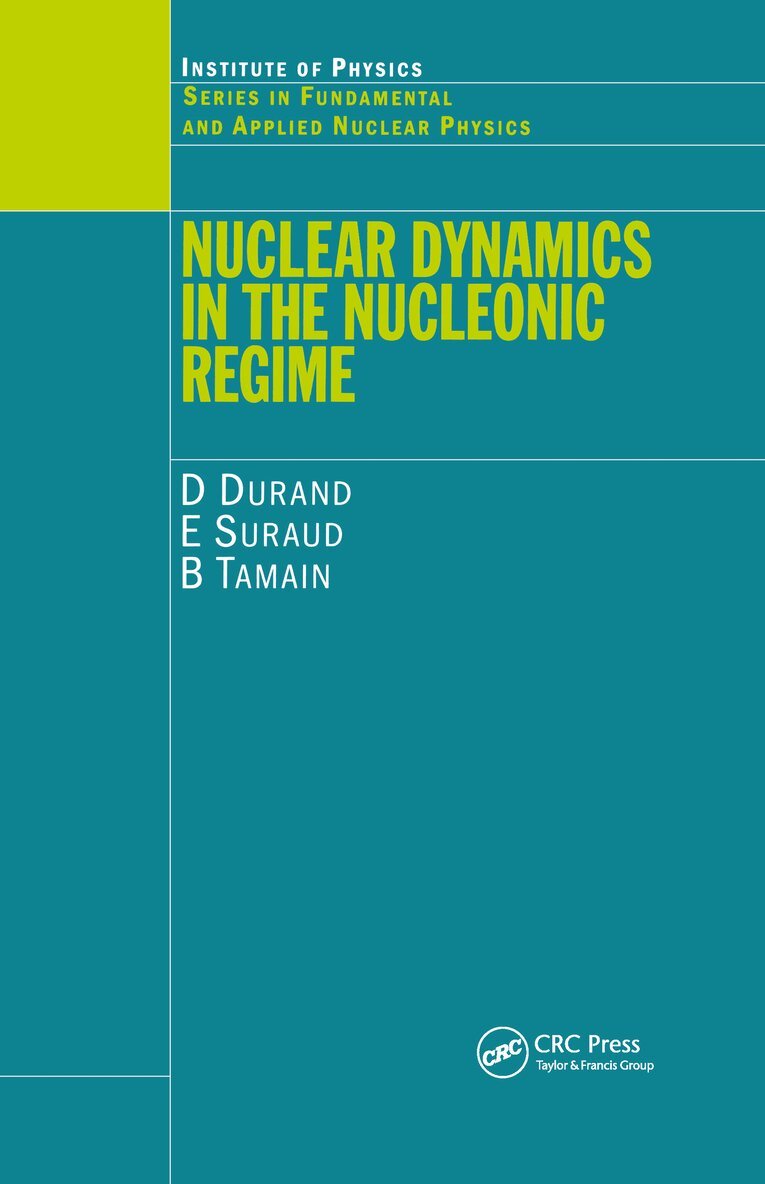
Nuclear Dynamics in the Nucleonic Regime
Inbunden, 2000
4228 kr
Lägg i varukorg
Over the last decade one of the most active areas of research in nuclear physics has been the study of systems of nucleons in various dynamical situations. Heavy-ion collisions at beam energies in the range 30-150 MeV per nucleon, where subnucleaonic degrees of freedom can be considered as frozen, …
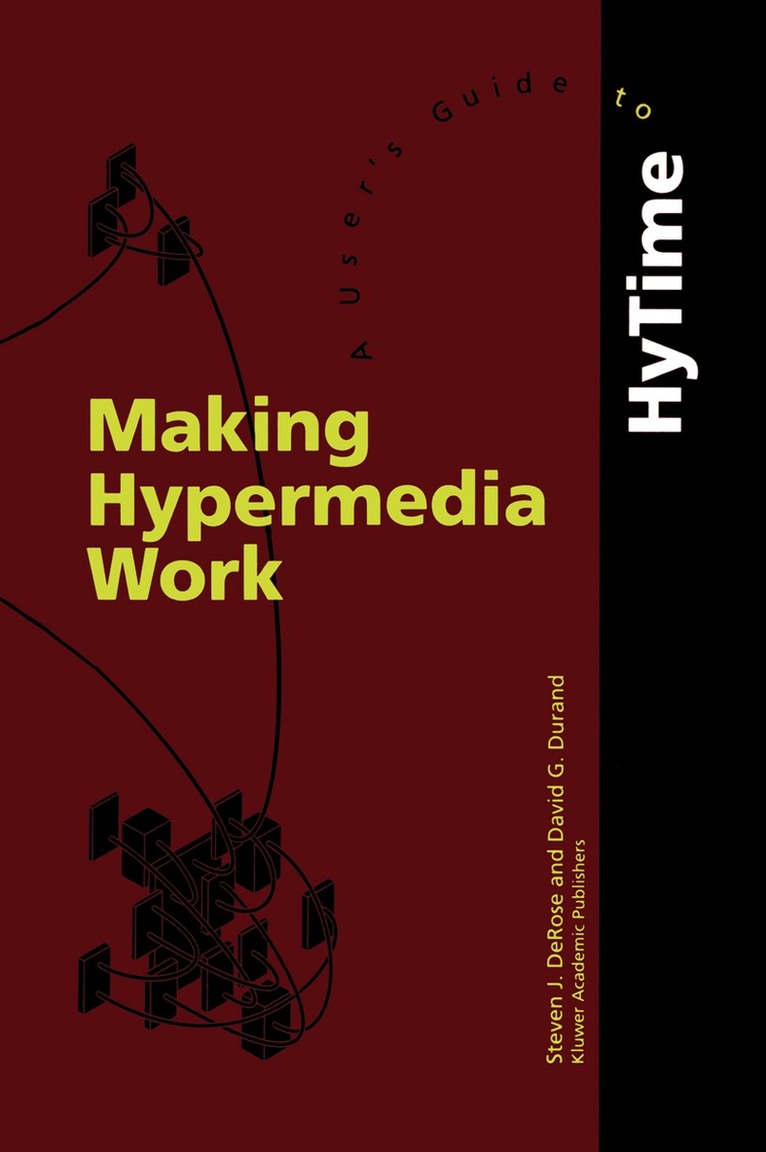
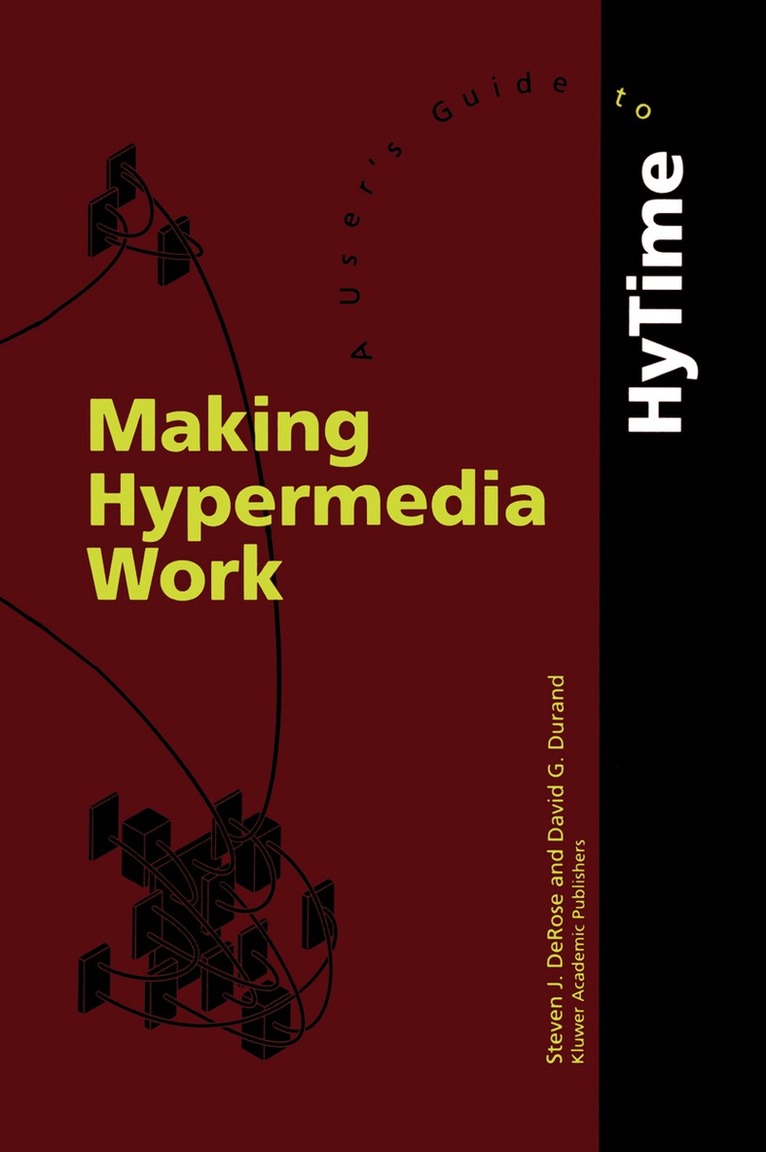
Making Hypermedia Work
A User’s Guide to HyTime
Av S.J. DeRose, D. Durand
Inbunden, 1994
1641 kr
Lägg i varukorg
Making Hypermedia Work: A User's Guide to HyTime discusses how the HyTime standard can be applied to real world problems of navigating from here to there in collections of documents. The HyTime standard itself provides enabling method and templates for various information structures such as links …
Nuclear Dynamics in the Nucleonic Regime
E-bok, 2000
4848 kr
Lägg i varukorg
Over the last decade one of the most active areas of research in nuclear physics has been the study of systems of nucleons in various dynamical situations. Heavy-ion collisions at beam energies in the range 30-150 MeV per nucleon, where subnucleaonic degrees of freedom can be considered as frozen, …
Nuclear Dynamics in the Nucleonic Regime
E-bok, 2000
4848 kr
Lägg i varukorg
Over the last decade one of the most active areas of research in nuclear physics has been the study of systems of nucleons in various dynamical situations. Heavy-ion collisions at beam energies in the range 30-150 MeV per nucleon, where subnucleaonic degrees of freedom can be considered as frozen, …
Making Hypermedia Work
A User’s Guide to HyTime
Av S.J. DeRose, D. Durand m. fl.
Häftad, 2012
1690 kr
Lägg i varukorg
Making Hypermedia Work: A User's Guide to HyTime discusses how the HyTime standard can be applied to real world problems of navigating from here to there in collections of documents. The HyTime standard itself provides enabling method and templates for various information structures such as links …
Making Hypermedia Work
A User’s Guide to HyTime
Av D. Durand, S.J. DeRose
E-bok, 2011
2174 kr
Lägg i varukorg
Making Hypermedia Work: A User''s Guide to HyTime discusses how the HyTime standard can be applied to real world problems of navigating from here to there in collections of documents. The HyTime standard itself provides enabling method and templates for various information structures such as links …