S.J. DeRose - Böcker
Visar alla böcker från författaren S.J. DeRose. Handla med fri frakt och snabb leverans.
4 produkter
4 produkter
1 577 kr
Skickas inom 10-15 vardagar
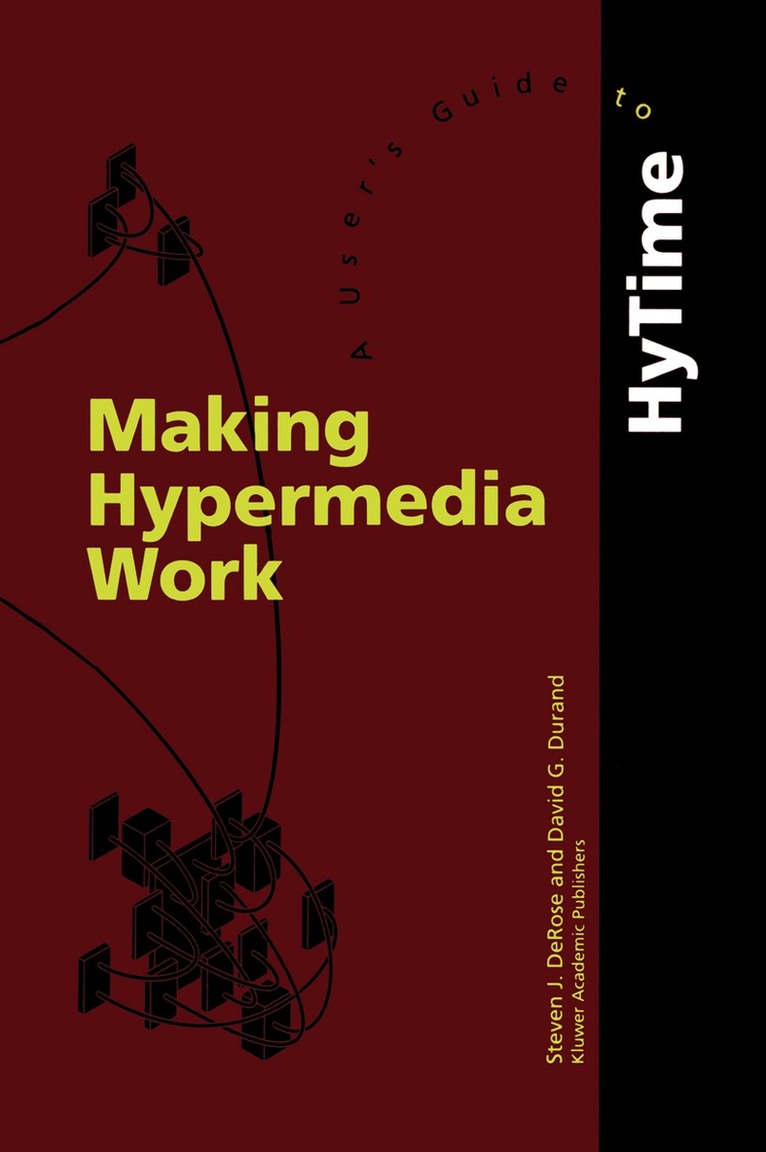
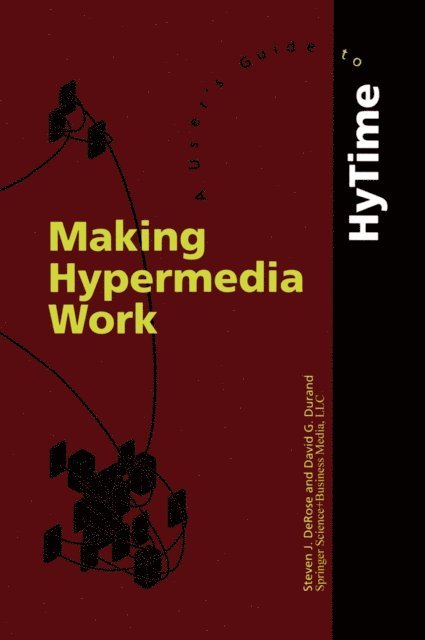
This work discusses how the HyTime standard can be applied to real world problems of moving from here to there in collections of documents. The HyTime standard itself provides methods and templates for various information structures such as links, and various kinds of location indicators. A HyTime application specifies how a group applies those templates to their particular requirements. This involves choosing which HyTime structures are needed, setting up conventions for how they are to be used and setting up management and processes for creation, conversion and updating of hypermedia documents. A HyTime engine is the last ingredient: actually using an application typically involves choosing software to support one's use of HyTime and customizing it as needed. This may be as simple as setting up hypertextual style sheets that determine how links and other things look and act. More specialized applications may require full-scale design and programming. This text is an in-depth guide to HyTime specifications, both describing its key features and providing guidelines on how it is used.The book begins by detailing the HyTime constructs and models used to identify, locate, and link data. It goes on to introduce some of HyTime's mechanisms for linking multidimensional, multimedia data, and for scheduling it in space and time. The authors help the reader become fluent in HyTime as it applies to the simpler and most widely understood data types. After mastering this level of HyTime, readers should be ready and able to explore the potential of HyTime for more sophisticated multimedia applications.
1 095 kr
Skickas inom 10-15 vardagar
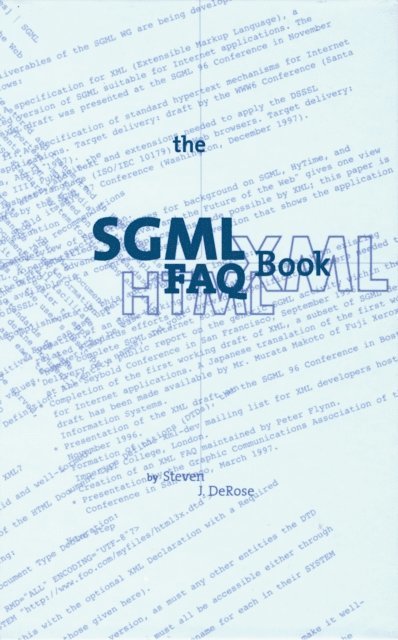
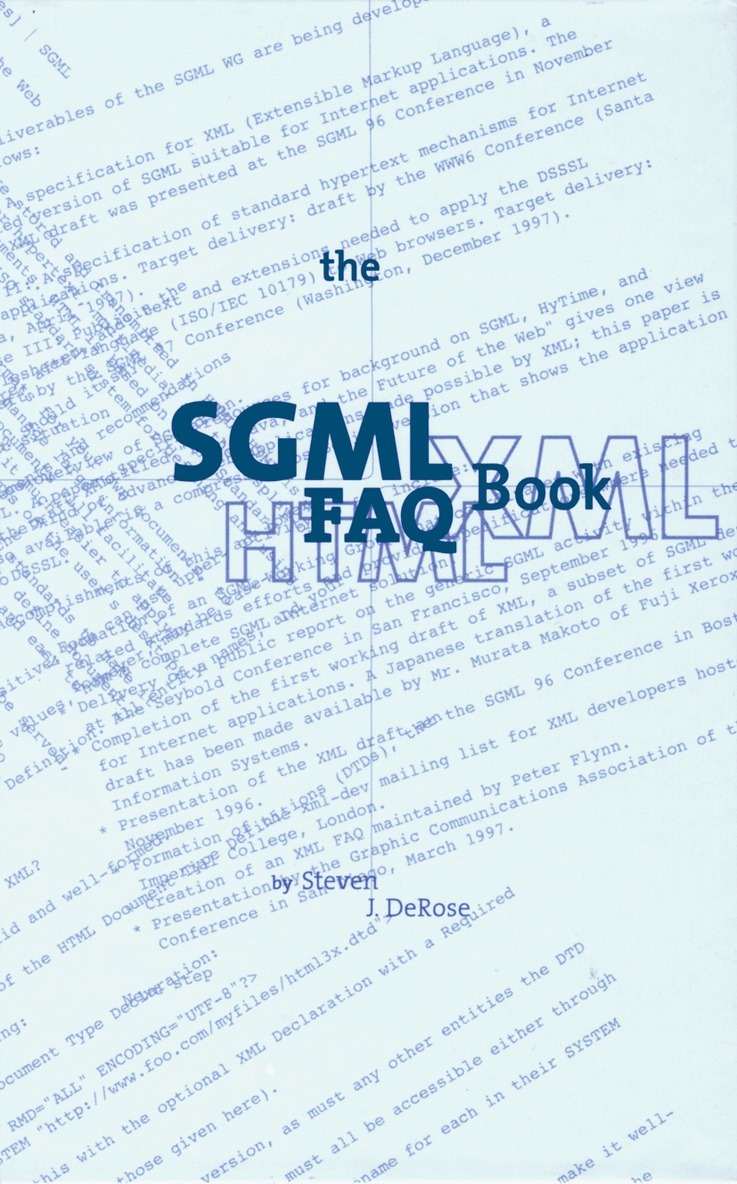
This work is similar, but not quite the same kind of thing as an online FAQ or "Frequently Asked Questions" list. It addresses questions from people who already actually use SGML in some way (including HTML authors), and people who are about to use it. It deals mainly with issues that arise when using SGML in practice. A very brief introduction to SGML is included as Appendix A. The questions discussed in the book are repeatedly heard by people who make their living serving the SGML community. SGML experts spend many hours teaching these details, sometimes repeatedly because some questions do not seem important - until you run into them. So one benefit of this book is learning more of the art of document creation and management, both by general reading before questions arise and by specific reference when a question arises. For the latter use, the appendices, glossary, and index are particularly important. A second benefit of this book is that it provides a common theme to its answers that can be applied in the use of SGML, HTML and related languages in general.The fundamental answer to many of the questions reduces to "simplify": many questions do not show up if you use the simple, elegant core of SGML without worrying about optional features. The credo of this book is simply, "SGML doesn't need to be complicated". SGML has the potential for complexity at certain points. But much of the complexity comes from optional parts and can be avoided. SGML methodology and its primary benefits suffer no loss even if you skip many features, which speaks well for the quality of SGML's overall design. Many of the questions discussed involve those optional parts, and therefore can be avoided by judicious designers and authors. The two main goals of this text are: to answer questions that SGML users may actually encounter, and to help them get "unstuck" and be as productive as possible in using the language; and to show proactive ways to simplify the use of SGML, and get its benefits with minimal complexity.
1 632 kr
Skickas inom 10-15 vardagar
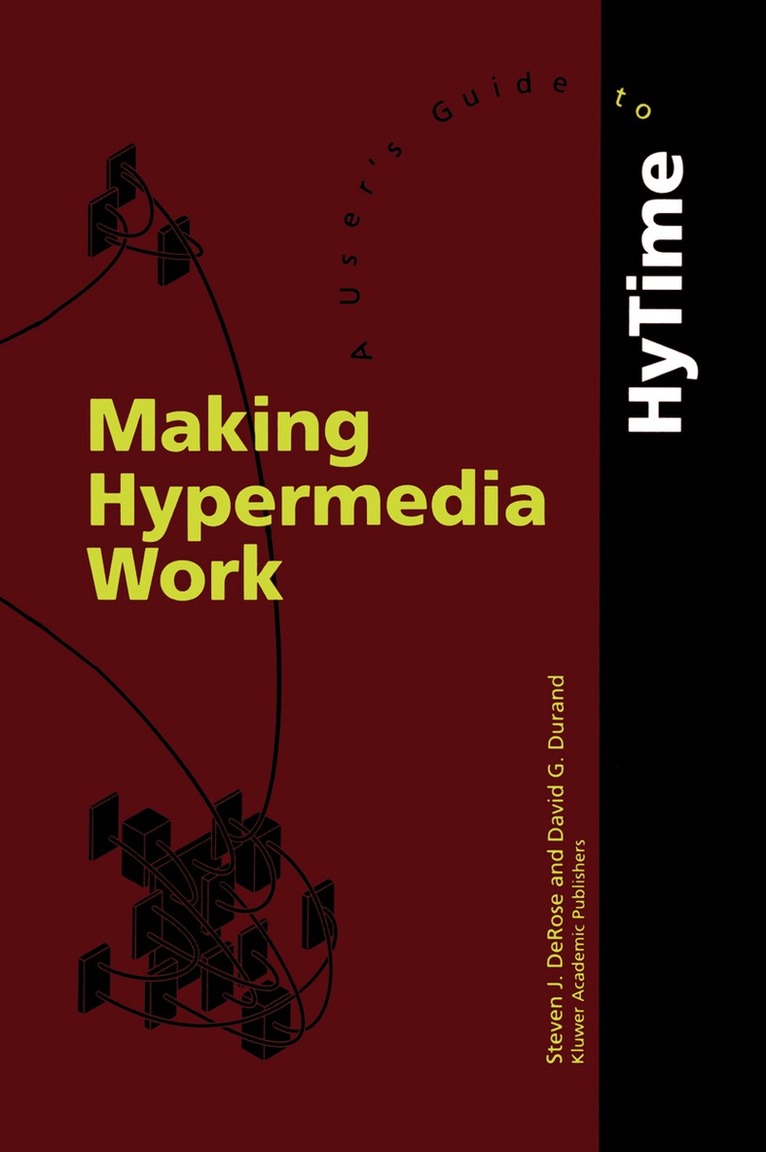
Making Hypermedia Work: A User's Guide to HyTime discusses how the HyTime standard can be applied to real world problems of navigating from here to there in collections of documents. The HyTime standard itself provides enabling method and templates for various information structures such as links and various kinds of location indicators. A HyTime application specifies how a group applies those templates to their particular requirements. This involves choosing which HyTime structures are needed, setting up conventions for how they are to be used and setting up management and processes for creation, conversion and update of hypermedia documents. A HyTime engine is the last ingredient: actually using an application typically involves choosing software to support one's use of HyTime and customizing it as needed. This may be as simple as setting up hypertextual style sheets that determine how links and other things look and act. More specialized applications may require full-scale design and programming. Making Hypermedia Work: A User's Guide to HyTime presents the first in-depth guide to the HyTime specifications, both describing its key features and providing guidelines on how it is used. The book begins with the more familiar structures of books, graphics and cross-references, detailing the HyTime constructs and models used to identify, locate, and link data. It goes on to introduce some of HyTime's mechanisms for linking multidimensional, multimedia data, and for scheduling it in space and time. The authors help the reader become fluent in HyTime as it applies to the simpler and most widely understood data types. After mastering this level of HyTime, readers will be ready and able to explore the exciting potential of HyTime for more sophisticated multimedia applications.
1 101 kr
Skickas inom 10-15 vardagar
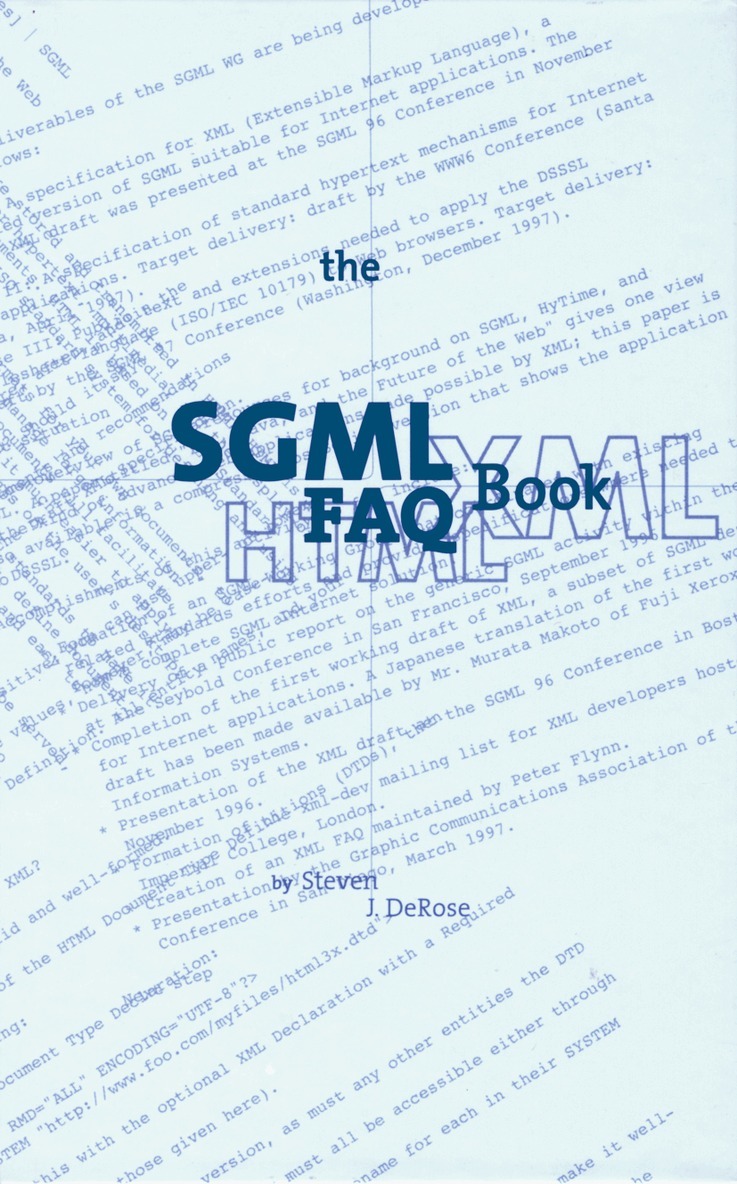
Although not evident to all, many people have been waiting more than a decade for The SGML FAQ Book by Steve DeRose. It has been "brewing" for a long time, with many hours, months, years of research talking to people, gathering their ideas, listening to their frustrations, applauding their successes. Only Steve with his experience, credentials, wit, and enthusiasm for the subject could have written this book. But it is also a measure of the success and maturity of ISO 8879 and its amazing longevity that allows an "SGMLer" to write such a book. We can now laugh at ourselves, even disclose our mistakes without fear of the other guy. While most would not recognize it, the revolution known as the World Wide Web would not have happened without a non-proprietary, easy, and almost "portable way to create and distribute documents across a widely disparate set of computers, networks, even countries. HTML, an SGML application, enabled this and as a result the world and the SGML community will never be the same. For some the term SGML means order, management, standards, discipline; to others, the term brings images of pain, confusion, complexity, and pitfalls. To all who have engaged in it, the Standard means hard work, good friends, savings in terms of time, money, and effort, a sense of accomplishment and best of all - fun. This book adds immeasurably to all of these. Enjoy the quote from Through Looking by Lewis Carroll as much as we have.