Dale T. McKinley – författare
Visar alla böcker från författaren Dale T. McKinley. Handla med fri frakt och snabb leverans.
12 produkter
12 produkter
Häftad, Engelska, 1997
294 kr
Skickas inom 5-8 vardagar
'Written from inside the movement of which it is so critical, McKinley's book iseloquent testimony of the continuing vitality of the South African left' Modern African Studies'Dale T. McKinley's succinct critical biography of the ANC offers the reader much food for thought. Written from a Marxist theoretical perspective, it examines the leadership strategies of the ANC from its birth through to the formation of the Transitional Executive in the lead up to the first deomcratic elections of 1994... McKinley's argument is throrough and rigorous, and raises many important questions for supporters of the ANC and similar liberation struggles around the world ... A valuable book.' Left Republican Review'A critical Marxist analysis of ANC strategy and tactics over the past decades...Thiswill be a controversial book, but one which should help refine the debate around theANC's performance in government.' Mail and Guardian (South Africa)The African National Congress, the ANC, negotiated a transition of government and power in South Africa in the early 1990s and gained widespread respect and legitimacy when Nelson Mandela was voted in as President in 1994.In this controversial and radical critique of the ANC and the struggle for liberation in South Africa, Dale T. McKinley challenges conventional public perceptions of the organisation and its celebrated rise to power. McKinley offers the first detailed analysis of the ANC's leadership, tactics and strategies from the 1920s, through the years of exile, to the 1990s, focusing on its close alliance with the South African Communist Party. he reveals that the organisation, despite historical claims to the contrary, failed to stay in touch with the south African masses. The ANC made fundamental compromises to gain political power, and in so doing has ensured that the economic power-base of the ruling elites in South Africa remains essentially unaltered.
269 kr
Skickas inom 3-6 vardagar
Häftad, Engelska, 2020
211 kr
Skickas inom 5-8 vardagar
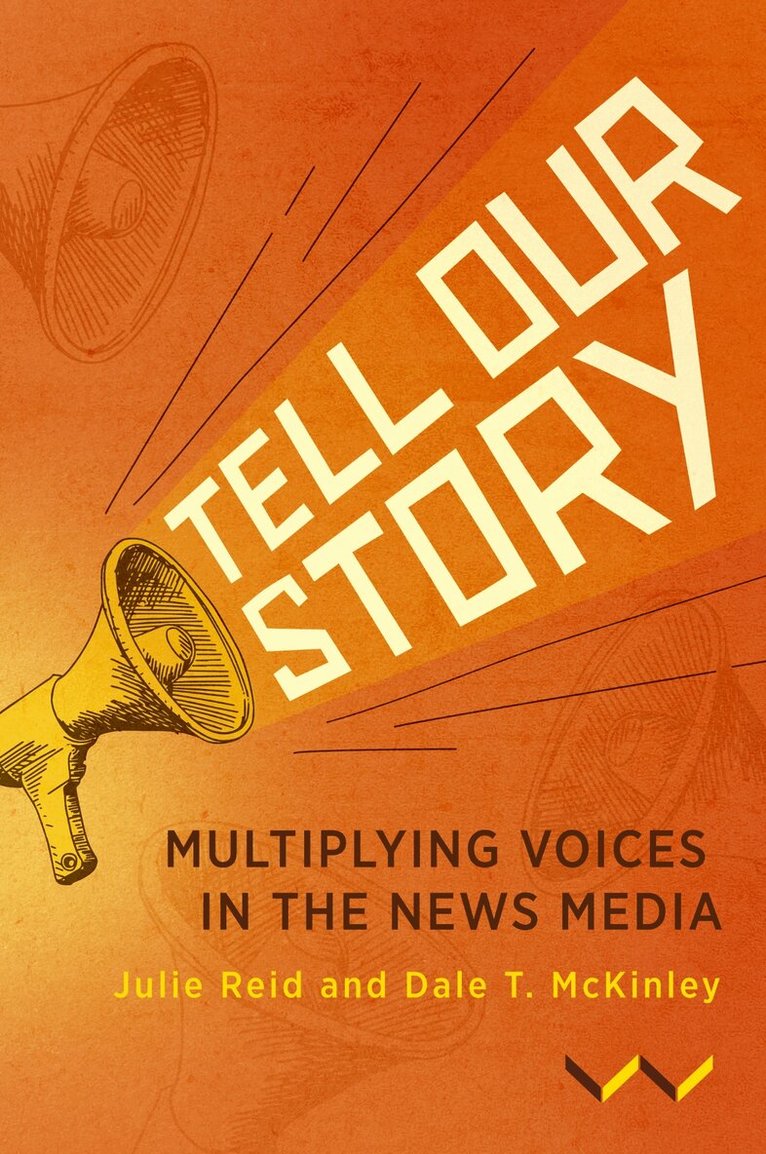
Focusing on three South African communities the authors dismiss the idea that some groups are voiceless, arguing that they are being deliberately ignored by dominant news mediaThe dominant news media are often accused of reflecting an 'elite bias', privileging and foregrounding the interests of a small segment of society while ignoring the narratives of the majority. The authors of Tell Our Story investigate this problem and offer a hands-on demonstration of listening journalism and research in practice. In the process they dismiss the idea that some groups are voiceless, arguing that what is often described in such terms is mostly a matter of those groups being deliberately ignored. Focusing their attention on three very different South African communities they delve into the life and struggle narratives of each, exposing the divide between the stories told by the people who actually live in the communities and the way in which those stories have been understood and shaped by the media. The three communities are those living in the Glebelands hostel complex in Durban where over 100 residents have been killed in politically motivated violence in the past few years; the Xolobeni community on the Wild Coast, which has been resisting the building of a new toll road and a dune mining venture; and Thembelihle, a settlement south-west of Johannesburg that has been resisting removal for many years. The book concludes with a set of practical guidelines for journalists on the practice of listening journalism.
E-bok
PDF, Engelska, 2020373 kr
Läs direkt efter köp
The dominant news media is often accused of reflecting an ‘elite bias’, privileging and foregrounding the interests of a small segment of society, while ignoring the narratives of the majority. Tell Our Story investigates the problem of disproportionate media representation and offers a hands-on demonstration of listening journalism and research in practice to promote a more active engagement between journalists and local communities. In the process the authors dismiss the idea that some groups are voiceless, arguing that what is often described is a matter of those groups being deliberately ignored. The authors focus on three communities in South Africa, each presenting with differing but crucial historical, geographical and socio-political ‘characteristics’ of the post-1994 period. Adopting an audience-centred approach, the authors delve into the life and struggle narratives of each community. They expose the divides between the stories as told by the people in the community who have lived experience of these events, and the way in which these stories are understood and shaped by the media. The implications of the media’s routine misrepresentation of the voices of the marginalised and poor for media diversity, media credibility and ethics, media education and training, as well as media research are unpacked and the authors offer a useful set of practical guidelines for journalists on the practice of listening journalism.
E-bok
Engelska, 2020373 kr
Läs direkt efter köp
The dominant news media is often accused of reflecting an ‘elite bias’, privileging and foregrounding the interests of a small segment of society, while ignoring the narratives of the majority. Tell Our Story investigates the problem of disproportionate media representation and offers a hands-on demonstration of listening journalism and research in practice to promote a more active engagement between journalists and local communities. In the process the authors dismiss the idea that some groups are voiceless, arguing that what is often described is a matter of those groups being deliberately ignored. The authors focus on three communities in South Africa, each presenting with differing but crucial historical, geographical and socio-political ‘characteristics’ of the post-1994 period. Adopting an audience-centred approach, the authors delve into the life and struggle narratives of each community. They expose the divides between the stories as told by the people in the community who have lived experience of these events, and the way in which these stories are understood and shaped by the media. The implications of the media’s routine misrepresentation of the voices of the marginalised and poor for media diversity, media credibility and ethics, media education and training, as well as media research are unpacked and the authors offer a useful set of practical guidelines for journalists on the practice of listening journalism.
Inbunden, Engelska, 2020
1 267 kr
Skickas inom 5-8 vardagar
Focusing on three South African communities the authors dismiss the idea that some groups are voiceless, arguing that they are being deliberately ignored by dominant news mediaThe dominant news media are often accused of reflecting an 'elite bias', privileging and foregrounding the interests of a small segment of society while ignoring the narratives of the majority. The authors of Tell Our Story investigate this problem and offer a hands-on demonstration of listening journalism and research in practice. In the process they dismiss the idea that some groups are voiceless, arguing that what is often described in such terms is mostly a matter of those groups being deliberately ignored. Focusing their attention on three very different South African communities they delve into the life and struggle narratives of each, exposing the divide between the stories told by the people who actually live in the communities and the way in which those stories have been understood and shaped by the media. The three communities are those living in the Glebelands hostel complex in Durban where over 100 residents have been killed in politically motivated violence in the past few years; the Xolobeni community on the Wild Coast, which has been resisting the building of a new toll road and a dune mining venture; and Thembelihle, a settlement south-west of Johannesburg that has been resisting removal for many years. The book concludes with a set of practical guidelines for journalists on the practice of listening journalism.
Del 6 - Democratic Marxisms
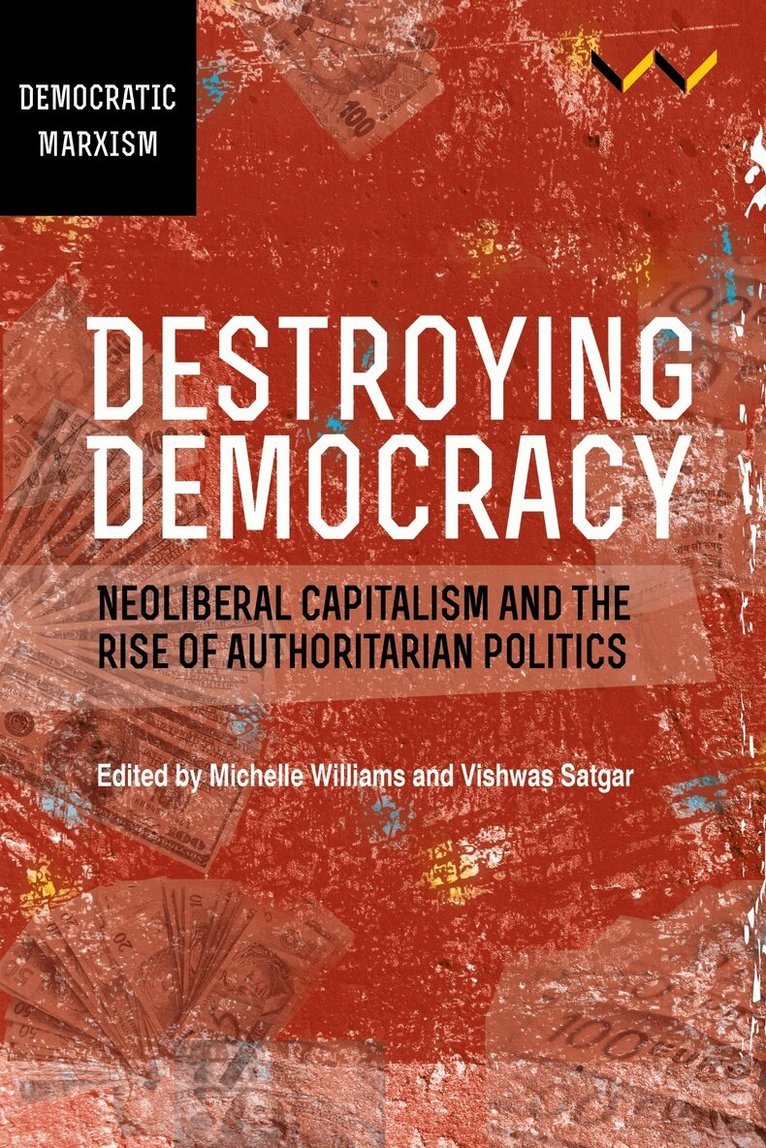
Destroying Democracy
Neoliberal Capitalism and the Rise of Authoritarian Politics
Häftad, Engelska, 2021
374 kr
Skickas inom 5-8 vardagar
A history of the erosion of democracy across the globeDemocracy is being destroyed. This is a crisis that expresses itself in the rising authoritarianism visible in divisive and exclusionary politics, populist political parties and movements, increased distrust in fact-based information and news, and the withering accountability of state institutions. Over the last four decades, democracy has radically shifted to a market democracy in which all aspects of human, non-human and planetary life are commodified, with corporations becoming more powerful than states and their citizens. This is how neoliberal capitalism functions at a systemic level and if left unchecked, is the greatest threat to democracy and a sustainable planet.Volume six of the Democratic Marxism series focuses on how decades of neoliberal capitalism have eroded the global democratic project and how, in the process, authoritarian politics are gaining ground. Scholars and activists from the political left focus on four country cases – India, Brazil, South Africa and the United States of America – in which the COVID-19 pandemic has fuelled and highlighted the pre-existing crisis. They interrogate issues of politics, ecology, state security, media, access to information and political parties, and affirm the need to reclaim and re-build an expansive and inclusive democracy.Destroying Democracy is an invaluable resource for the general public, activists, scholars and students who are interested in understanding the threats to democracy and the rising tide of authoritarianism in the global south and the global north.
Inbunden, Engelska, 2021
1 267 kr
Skickas inom 5-8 vardagar
A history of the erosion of democracy across the globeDemocracy is being destroyed. This is a crisis that expresses itself in the rising authoritarianism visible in divisive and exclusionary politics, populist political parties and movements, increased distrust in fact-based information and news, and the withering accountability of state institutions. Over the last four decades, democracy has radically shifted to a market democracy in which all aspects of human, non-human and planetary life are commodified, with corporations becoming more powerful than states and their citizens. This is how neoliberal capitalism functions at a systemic level and if left unchecked, is the greatest threat to democracy and a sustainable planet.Volume six of the Democratic Marxism series focuses on how decades of neoliberal capitalism have eroded the global democratic project and how, in the process, authoritarian politics are gaining ground. Scholars and activists from the political left focus on four country cases – India, Brazil, South Africa and the United States of America – in which the COVID-19 pandemic has fuelled and highlighted the pre-existing crisis. They interrogate issues of politics, ecology, state security, media, access to information and political parties, and affirm the need to reclaim and re-build an expansive and inclusive democracy.Destroying Democracy is an invaluable resource for the general public, activists, scholars and students who are interested in understanding the threats to democracy and the rising tide of authoritarianism in the global south and the global north.
373 kr
Läs direkt efter köp
Democracy is being destroyed. This is a crisis that expresses itself in the rising authoritarianism visible in divisive and exclusionary politics, populist political parties and movements, increased distrust in fact-based information and news, and the withering accountability of state institutions. Over the last four decades, democracy has radically shifted to a market democracy in which all aspects of human, non-human and planetary life are commodified, with corporations becoming more powerful than states and their citizens. This is how neoliberal capitalism functions at a systemic level and if left unchecked, is the greatest threat to democracy and a sustainable planet. Volume six of the Democratic Marxism series focuses on how decades of neoliberal capitalism have eroded the global democratic project and how, in the process, authoritarian politics are gaining ground. Scholars and activists from the political left focus on four country cases – India, Brazil, South Africa and the United States of America – in which the COVID-19 pandemic has fuelled and highlighted the pre-existing crisis. They interrogate issues of politics, ecology, state security, media, access to information and political parties, and affirm the need to reclaim and re-build an expansive and inclusive democracy. Destroying Democracy is an invaluable resource for the general public, activists, scholars and students who are interested in understanding the threats to democracy and the rising tide of authoritarianism in the global south and the global north.
E-bok
PDF, Engelska, 2014434 kr
Läs direkt efter köp
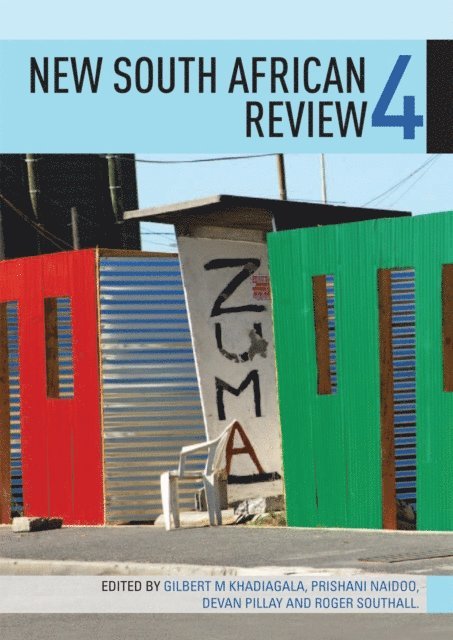
The death of Nelson Mandela on 5 December 2013 was in a sense a wake-up call for South Africans, and a time to reflect on what has been achieved since ‘those magnificent days in late April 1994’ (as the editors of this volume put it) ‘when South Africans of all colours voted for the first time in a democratic election’. In a time of recall and reflection it is important to take account, not only of the dramatic events that grip the headlines, but also of other signposts that indicate the shape and characteristics of a society. The New South African Review looks, every year, at some of these signposts, and the essays in this fourth volume of the series again examine and analyse a broad spectrum of issues affecting the country. They tackle topics as diverse as the state of organised labour; food retailing; electricity generation; access to information; civil courage; the school system; and – looking outside the country to its place in the world – South Africa’s relationships with north-east Asia, with Israel and with its neighbours in the southern African region. Taken together, these essays give a multidimensional perspective on South Africa’s democracy as it turns twenty, and will be of interest to general readers while being particularly useful to students and researchers.
E-bok
Engelska, 2014430 kr
Läs direkt efter köp
The death of Nelson Mandela on 5 December 2013 was in a sense a wake-up call for South Africans, and a time to reflect on what has been achieved since ‘those magnificent days in late April 1994’ (as the editors of this volume put it) ‘when South Africans of all colours voted for the first time in a democratic election’. In a time of recall and reflection it is important to take account, not only of the dramatic events that grip the headlines, but also of other signposts that indicate the shape and characteristics of a society. The New South African Review looks, every year, at some of these signposts, and the essays in this fourth volume of the series again examine and analyse a broad spectrum of issues affecting the country. They tackle topics as diverse as the state of organised labour; food retailing; electricity generation; access to information; civil courage; the school system; and – looking outside the country to its place in the world – South Africa’s relationships with north-east Asia, with Israel and with its neighbours in the southern African region. Taken together, these essays give a multidimensional perspective on South Africa’s democracy as it turns twenty, and will be of interest to general readers while being particularly useful to students and researchers.
Häftad, Engelska, 2016
195 kr
Tillfälligt slut
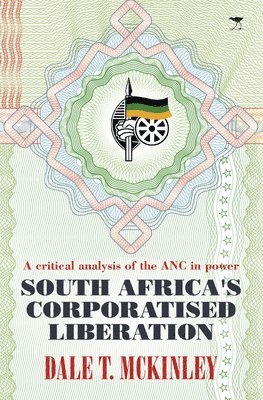
Despite the more general social, political and economic advances that have been made under the ANC's rule since 1994, power has not only remained in the hands of a small minority but has increasingly been exercised in service to capital. This has seen the ANC become the key political vehicle, in party and state form as well as application, of corporate capital; both domestic and international, black and white, local and national and constitutive of a range of different fractions. As a result, 'transformation' has largely taken the form of macro-acceptance of, combined with micro-incorporation into, the capitalist system, now minus its specific and formal apartheid frame. This book tells that 'story' by offering a critical, fact-based and actively informed holistic analysis of the ANC in power.