Daniel Druckman – författare
969 kr
Skickas inom 7-10 vardagar
290 kr
Skickas inom 5-8 vardagar
229 kr
Läs direkt efter köp
229 kr
Läs direkt efter köp
974 kr
Läs direkt efter köp
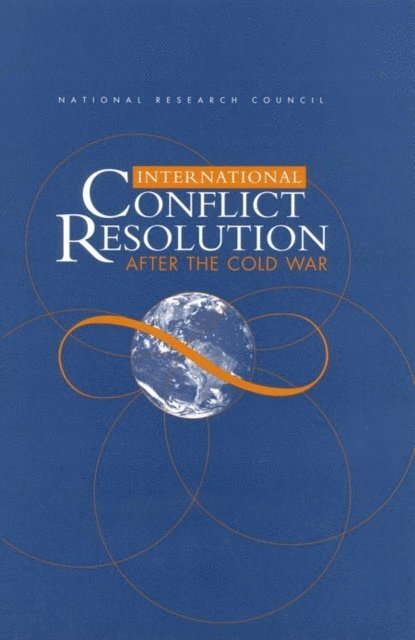
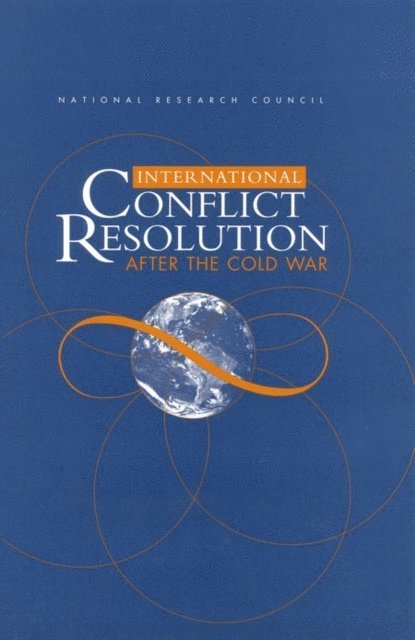
The end of the Cold War has changed the shape of organized violence in the world and the ways in which governments and others try to set its limits. Even the concept of international conflict is broadening to include ethnic conflicts and other kinds of violence within national borders that may affect international peace and security. What is not yet clear is whether or how these changes alter the way actors on the world scene should deal with conflict:
Do the old methods still work? Are there new tools that could work better? How do old and new methods relate to each other?International Conflict Resolution After the Cold War critically examines evidence on the effectiveness of a dozen approaches to managing or resolving conflict in the world to develop insights for conflict resolution practitioners. It considers recent applications of familiar conflict management strategies, such as the use of threats of force, economic sanctions, and negotiation. It presents the first systematic assessments of the usefulness of some less familiar approaches to conflict resolution, including truth commissions, "engineered" electoral systems, autonomy arrangements, and regional organizations. It also opens up analysis of emerging issues, such as the dilemmas facing humanitarian organizations in complex emergencies. This book offers numerous practical insights and raises key questions for research on conflict resolution in a transforming world system.
714 kr
Läs direkt efter köp
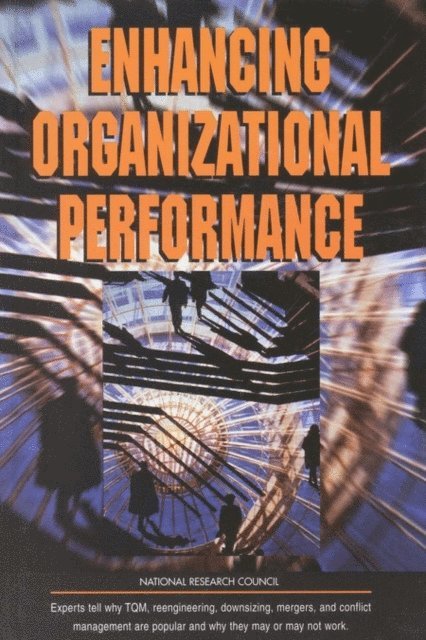
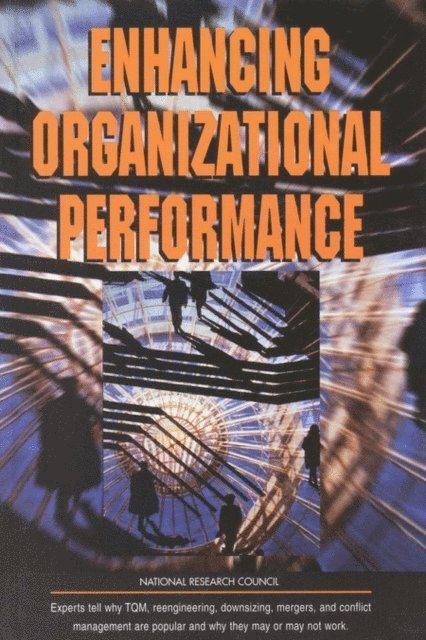
Total quality management (TQM), reengineering, the workplace of the twenty-first century—the 1990s have brought a sense of urgency to organizations to change or face stagnation and decline, according to Enhancing Organizational Performance. Organizations are adopting popular management techniques, some scientific, some faddish, often without introducing them properly or adequately measuring the outcome.
Enhancing Organizational Performance reviews the most popular current approaches to organizational change—total quality management, reengineering, and downsizing—in terms of how they affect organizations and people, how performance improvements can be measured, and what questions remain to be answered by researchers.
The committee explores how theory, doctrine, accepted wisdom, and personal experience have all served as sources for organization design. Alternative organization structures such as teams, specialist networks, associations, and virtual organizations are examined.
Enhancing Organizational Performance looks at the influence of the organization''s norms, values, and beliefs—its culture—on people and their performance, identifying cultural "levers" available to organization leaders. And what is leadership? The committee sorts through a wealth of research to identify behaviors and skills related to leadership effectiveness. The volume examines techniques for developing these skills and suggests new competencies that will become required with globalization and other trends.
Mergers, networks, alliances, coalitions—organizations are increasingly turning to new intra- and inter-organizational structures. Enhancing Organizational Performance discusses how organizations cooperate to maximize outcomes.
The committee explores the changing missions of the U.S. Army as a case study that has relevance to any organization. Noting that a musical greeting card contains more computing power than existed in the entire world before 1950, the committee addresses the impact of new technologies on performance.
With examples, insights, and practical criteria, Enhancing Organizational Performance clarifies the nature of organizations and the prospects for performance improvement.
This book will be important to corporate leaders, executives, and managers; faculty and students in organizational performance and the social sciences; business journalists; researchers; and interested individuals.
601 kr
Läs direkt efter köp
The end of the Cold War has changed the shape of organized violence in the world and the ways in which governments and others try to set its limits. Even the concept of international conflict is broadening to include ethnic conflicts and other kinds of violence within national borders that may affect international peace and security. What is not yet clear is whether or how these changes alter the way actors on the world scene should deal with conflict:
Do the old methods still work? Are there new tools that could work better? How do old and new methods relate to each other?International Conflict Resolution After the Cold War critically examines evidence on the effectiveness of a dozen approaches to managing or resolving conflict in the world to develop insights for conflict resolution practitioners. It considers recent applications of familiar conflict management strategies, such as the use of threats of force, economic sanctions, and negotiation. It presents the first systematic assessments of the usefulness of some less familiar approaches to conflict resolution, including truth commissions, "engineered" electoral systems, autonomy arrangements, and regional organizations. It also opens up analysis of emerging issues, such as the dilemmas facing humanitarian organizations in complex emergencies. This book offers numerous practical insights and raises key questions for research on conflict resolution in a transforming world system.
503 kr
Läs direkt efter köp
Total quality management (TQM), reengineering, the workplace of the twenty-first century—the 1990s have brought a sense of urgency to organizations to change or face stagnation and decline, according to Enhancing Organizational Performance. Organizations are adopting popular management techniques, some scientific, some faddish, often without introducing them properly or adequately measuring the outcome.
Enhancing Organizational Performance reviews the most popular current approaches to organizational change—total quality management, reengineering, and downsizing—in terms of how they affect organizations and people, how performance improvements can be measured, and what questions remain to be answered by researchers.
The committee explores how theory, doctrine, accepted wisdom, and personal experience have all served as sources for organization design. Alternative organization structures such as teams, specialist networks, associations, and virtual organizations are examined.
Enhancing Organizational Performance looks at the influence of the organization''s norms, values, and beliefs—its culture—on people and their performance, identifying cultural "levers" available to organization leaders. And what is leadership? The committee sorts through a wealth of research to identify behaviors and skills related to leadership effectiveness. The volume examines techniques for developing these skills and suggests new competencies that will become required with globalization and other trends.
Mergers, networks, alliances, coalitions—organizations are increasingly turning to new intra- and inter-organizational structures. Enhancing Organizational Performance discusses how organizations cooperate to maximize outcomes.
The committee explores the changing missions of the U.S. Army as a case study that has relevance to any organization. Noting that a musical greeting card contains more computing power than existed in the entire world before 1950, the committee addresses the impact of new technologies on performance.
With examples, insights, and practical criteria, Enhancing Organizational Performance clarifies the nature of organizations and the prospects for performance improvement.
This book will be important to corporate leaders, executives, and managers; faculty and students in organizational performance and the social sciences; business journalists; researchers; and interested individuals.
560 kr
Läs direkt efter köp
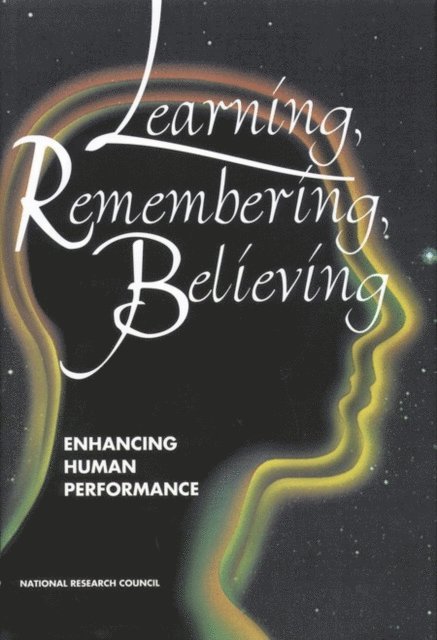
Can such techniques as sleep learning and hypnosis improve performance? Do we sometimes confuse familiarity with mastery? Can we learn without making mistakes? These questions apply in the classroom, in the military, and on the assembly line.
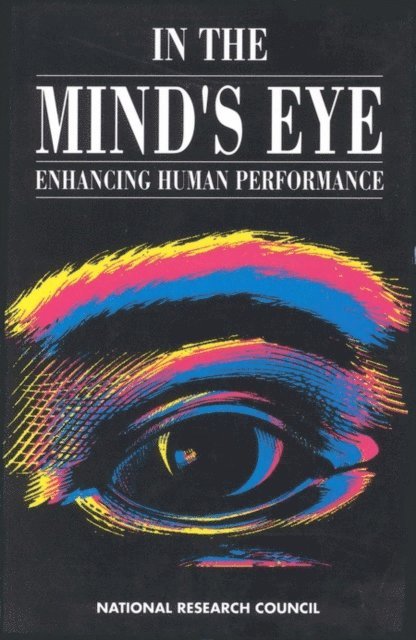
Learning, Remembering, Believing addresses these and other key issues in learning and performance. The volume presents leading-edge theories and findings from a wide range of research settings: from pilots learning to fly to children learning about physics by throwing beanbags. Common folklore is explored, and promising research directions are identified. The authors also continue themes from their first two volumes: Enhancing Human Performance (1988) and In the Mind''s Eye (1991).
The result is a thorough and readable review of:
Learning and remembering. The volume evaluates the effects of subjective experience on learning—why we often overestimate what we know, why we may not need a close match between training settings and real-world tasks, and why we experience such phenomena as illusory remembering and unconscious plagiarism. Learning and performing in teams. The authors discuss cooperative learning in different age groups and contexts. Current views on team performance are presented, including how team-learning processes can be improved and whether team-building interventions are effective. Mental and emotional states. This is a critical review of the evidence that learning is affected by state of mind. Topics include hypnosis, meditation, sleep learning, restricted environmental stimulation, and self-confidence and the self-efficacy theory of learning. New directions. The volume looks at two new ideas for improving performance: emotions induced by another person—socially induced affect—and strategies for controlling one''s thoughts. The committee also considers factors inherent in organizations—workplaces, educational facilities, and the military—that affect whether and how they implement training programs.Learning, Remembering, Believing offers an understanding of human learning that will be useful to training specialists, psychologists, educators, managers, and individuals interested in all dimensions of human performance.
954 kr
Läs direkt efter köp
978 kr
Läs direkt efter köp
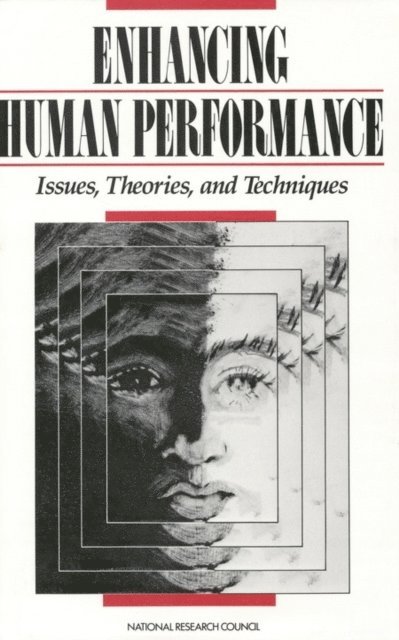
In its evaluation, Enhancing Human Performance reviews the relevant materials, describes each technique, makes recommendations in some cases for further scientific research and investigation, and notes applications in military and industrial settings. The techniques address a wide range of goals, from enhancing classroom learning to improving creativity and motor skills.
1 061 kr
Läs direkt efter köp
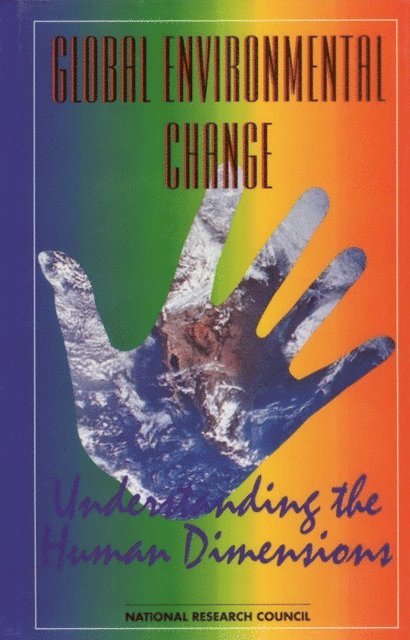
Global environmental change often seems to be the most carefully examined issue of our time. Yet understanding the human side—human causes of and responses to environmental change—has not yet received sustained attention. Global Environmental Change offers a strategy for combining the efforts of natural and social scientists to better understand how our actions influence global change and how global change influences us.
The volume is accessible to the nonscientist and provides a wide range of examples and case studies. It explores how the attitudes and actions of individuals, governments, and organizations intertwine to leave their mark on the health of the planet.
The book focuses on establishing a framework for this new field of study, identifying problems that must be overcome if we are to deepen our understanding of the human dimensions of global change, presenting conclusions and recommendations.
4 145 kr
Skickas inom 3-6 vardagar
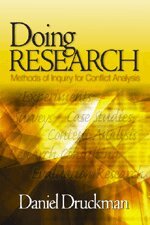
An award-winning book, Doing Research is a must read. Designed for students across a variety of social science disciplines, it is the first research methods text devoted to conflict analysis and resolution. It begins with a discussion of the philosophical foundations for doing research, providing guidelines on how to develop research questions and how these questions can be addressed with various methodologies. The book presents a wide-ranging treatment of both quantitative and qualitative approaches to the design and analysis of problems of conflict.
The approaches covered include experiments, simulations and models, surveys, single and comparative case studies, ethnographies, content analysis, narrative analysis, evaluation research, action research, and research consulting. These approaches come alive in a variety of applications culled from the published literature. A concluding chapter provides an integration of the various methodologies, including their complementary strengths. Throughout the book, author Daniel Druckman illustrates the value of a multi-method approach to doing research on conflict analysis and more generally across the social sciences.
Key Features
Guides readers through how to do literature reviews and ask research questions, easing students into the research process Weaves together qualitative and quantitative, as well as deductive and inductive, approaches to analysis, allowing for the widest possible diversity in methodology Includes numerous examples from published articles and dissertations and a discussion of research consultingDoing Research is perfectly suited as a text for research methods courses across the social sciences, especially those dealing with conflict analysis in departments of political science, communication, psychology, sociology, and management. Professional researchers and consultants will also want to add this book to their libraries for guidance on multi-method techniques."This is an extremely important book for our field because it is the first research methods book that focuses on techniques that are common in this area but transcends disciplines. I am confident that the book will be used widely in our field because it is both practical and engaging."-- William A. Donohoe, Michigan State University"Doing Research is a gem. It provides multiple research methods and models focusing on conflict analysis and resolution that can be used by any student in a variety of social science disciplines or fields of study. I wish this book had been written 20 years ago."—Brian Polkinghorn, Salisbury State University
"Doing Research is the most widely acclaimed book on research methods for conflict resolution students to appear in recent years. The book provides a wonderfully rich array of ideas about ways to do research for both the scholar and practitioner--pracademic--enriching the analysis and practice in the conflict resolution field. The author has a diverse intellectual background and his wide-ranging research experience informs the contributions made by this book to conflict analysis and resolution and to related social-science fields."—Sean Byrne, University of Manitoba
2 909 kr
Skickas inom 3-6 vardagar
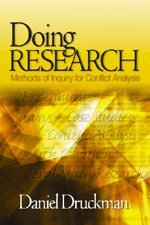
An award-winning book, Doing Research is a must read. Designed for students across a variety of social science disciplines, it is the first research methods text devoted to conflict analysis and resolution. It begins with a discussion of the philosophical foundations for doing research, providing guidelines on how to develop research questions and how these questions can be addressed with various methodologies. The book presents a wide-ranging treatment of both quantitative and qualitative approaches to the design and analysis of problems of conflict.
The approaches covered include experiments, simulations and models, surveys, single and comparative case studies, ethnographies, content analysis, narrative analysis, evaluation research, action research, and research consulting. These approaches come alive in a variety of applications culled from the published literature. A concluding chapter provides an integration of the various methodologies, including their complementary strengths. Throughout the book, author Daniel Druckman illustrates the value of a multi-method approach to doing research on conflict analysis and more generally across the social sciences.
Key Features
Guides readers through how to do literature reviews and ask research questions, easing students into the research process Weaves together qualitative and quantitative, as well as deductive and inductive, approaches to analysis, allowing for the widest possible diversity in methodology Includes numerous examples from published articles and dissertations and a discussion of research consultingDoing Research is perfectly suited as a text for research methods courses across the social sciences, especially those dealing with conflict analysis in departments of political science, communication, psychology, sociology, and management. Professional researchers and consultants will also want to add this book to their libraries for guidance on multi-method techniques."This is an extremely important book for our field because it is the first research methods book that focuses on techniques that are common in this area but transcends disciplines. I am confident that the book will be used widely in our field because it is both practical and engaging."-- William A. Donohoe, Michigan State University"Doing Research is a gem. It provides multiple research methods and models focusing on conflict analysis and resolution that can be used by any student in a variety of social science disciplines or fields of study. I wish this book had been written 20 years ago."—Brian Polkinghorn, Salisbury State University
"Doing Research is the most widely acclaimed book on research methods for conflict resolution students to appear in recent years. The book provides a wonderfully rich array of ideas about ways to do research for both the scholar and practitioner--pracademic--enriching the analysis and practice in the conflict resolution field. The author has a diverse intellectual background and his wide-ranging research experience informs the contributions made by this book to conflict analysis and resolution and to related social-science fields."—Sean Byrne, University of Manitoba
3 750 kr
Skickas inom 10-15 vardagar
1 368 kr
Skickas inom 10-15 vardagar
615 kr
Skickas inom 10-15 vardagar
682 kr
Läs direkt efter köp
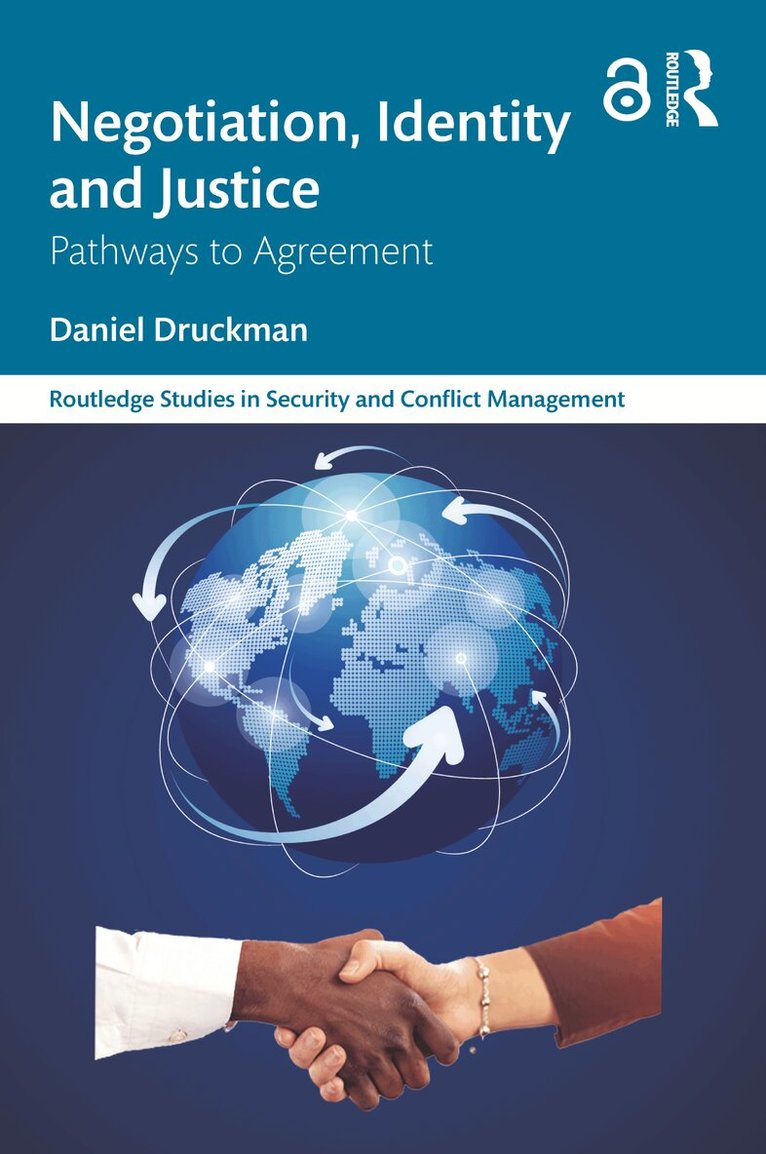
This volume presents contributions made by Daniel Druckman on the topics of negotiation, national identity, and justice.
Containing research conducted and published over a half century, the volume is divided into seven thematic parts that cover: the multifaceted career, flexibility in negotiation, values and interests, turning points, national identity, and process and outcome justice. It rounds off with a reflective and forward-looking conclusion. Each part is prefaced with an introduction that highlights the chapters to follow.
The chapters comprise empirical, theoretical, and state-of-the-art articles. These essays offer an array of research approaches, which include experiments, simulations, and case studies, with topics ranging from boundary roles and turning points in negotiation to nationalism and war, and the way that research is used in skills training for diplomats and in the development of government policies. In addition, the book provides rare glimpses of behind-the-scenes networks, sponsors, and events, with personal stories that also make evident that there is more to a career than what appears in print. The articles chosen for inclusion are a small set of the total number of career publications by the author but are the ones that made a substantial impact in their respective fields. The concluding section looks back at how the author’s career connects to classical ideas and the value of an evidence-based approach to scholarship and practice. It also looks forward to directions for future research in six areas.
This book will be of considerable interest to students of international negotiation, conflict resolution, security studies, and international relations.
Chapter 16 of this book is freely available as a downloadable Open Access PDF at http://www.taylorfrancis.com under a Creative Commons Attribution-Non Commercial-No Derivatives (CC-BY-NC-ND) 4.0 license.
682 kr
Läs direkt efter köp
This volume presents contributions made by Daniel Druckman on the topics of negotiation, national identity, and justice.
Containing research conducted and published over a half century, the volume is divided into seven thematic parts that cover: the multifaceted career, flexibility in negotiation, values and interests, turning points, national identity, and process and outcome justice. It rounds off with a reflective and forward-looking conclusion. Each part is prefaced with an introduction that highlights the chapters to follow.
The chapters comprise empirical, theoretical, and state-of-the-art articles. These essays offer an array of research approaches, which include experiments, simulations, and case studies, with topics ranging from boundary roles and turning points in negotiation to nationalism and war, and the way that research is used in skills training for diplomats and in the development of government policies. In addition, the book provides rare glimpses of behind-the-scenes networks, sponsors, and events, with personal stories that also make evident that there is more to a career than what appears in print. The articles chosen for inclusion are a small set of the total number of career publications by the author but are the ones that made a substantial impact in their respective fields. The concluding section looks back at how the author’s career connects to classical ideas and the value of an evidence-based approach to scholarship and practice. It also looks forward to directions for future research in six areas.
This book will be of considerable interest to students of international negotiation, conflict resolution, security studies, and international relations.
Chapter 16 of this book is freely available as a downloadable Open Access PDF at http://www.taylorfrancis.com under a Creative Commons Attribution-Non Commercial-No Derivatives (CC-BY-NC-ND) 4.0 license.
638 kr
Skickas inom 10-15 vardagar
2 042 kr
Skickas inom 10-15 vardagar
1 273 kr
Skickas inom 5-8 vardagar
1 376 kr
Läs direkt efter köp
1 670 kr
Tillfälligt slut
1 531 kr
Tillfälligt slut
1 398 kr
Tillfälligt slut
1 576 kr
Tillfälligt slut
1 553 kr
Tillfälligt slut
1 411 kr
Tillfälligt slut
12 559 kr
Tillfälligt slut