Dean T. Jamison – författare
Visar alla böcker från författaren Dean T. Jamison. Handla med fri frakt och snabb leverans.
9 produkter
Disease Control Priorities, Third Edition (Volume 1)
Essential Surgery
Av The World Bank, Haile T. Debas m. fl.
Häftad, 2015
415 kr
Lägg i varukorg
The evaluation of essential surgery by Disease Control Priorities, Third Edition (DCP3) focuses on a set of conditions that are primarily or extensively treated by surgery and: that have a large public health burden; for which there is a surgical procedure that is highly successful at treating the …
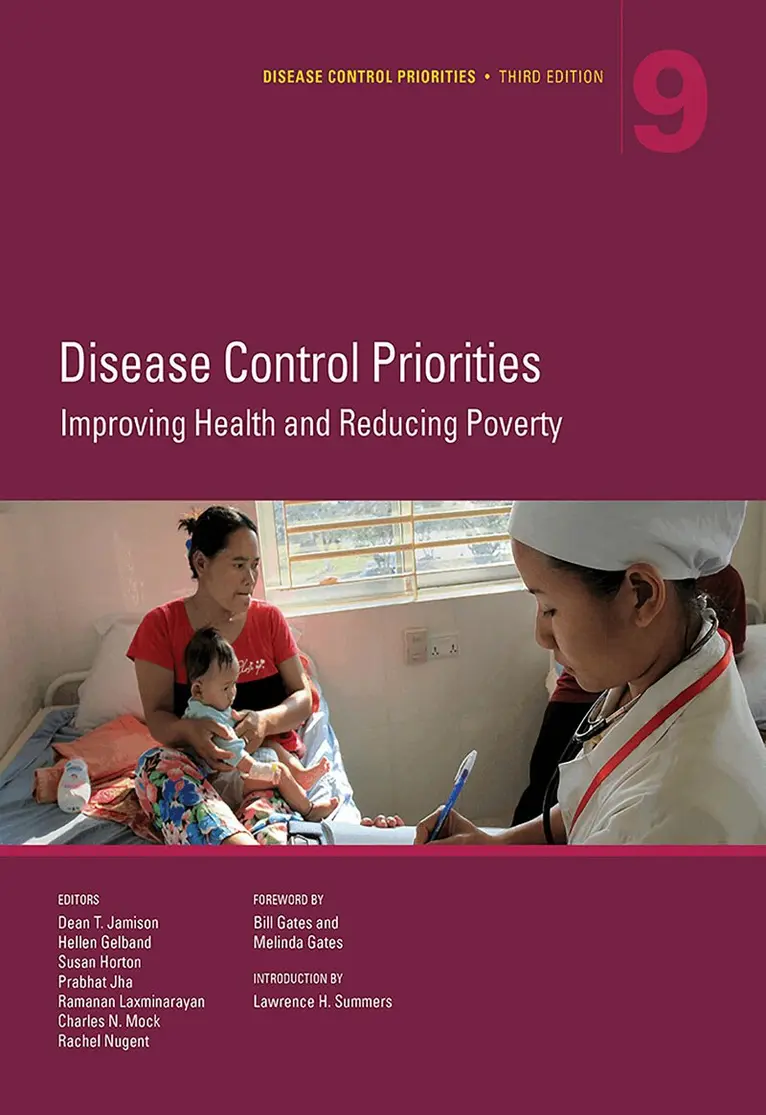
Disease Control Priorities, Third Edition (Volume 9)
Improving Health and Reducing Poverty
Av Dean T. Jamison, Hellen Gelband m. fl.
Häftad, 2017
415 kr
Lägg i varukorg
As the culminating volume in the DCP3 series, Volume 9 will provide an overview of DCP3 findings and methods, a summary of messages and substantive lessons to be taken from DCP3, and a further discussion of cross-cutting and synthesizing topics across the first eight volumes. The introductory …
Disease Control Priorities
Av World Bank Group, Dean T. Jamison m. fl.
Inbunden, 2006
1451 kr
Tillfälligt slut
This second edition of the 1993 bestseller that established the concepts of disease burden and cost-effectiveness as important inputs to health policy in developing countries continues the effort to support evidence-based decision making in public health. It presents updated and improved …
Priorities in Health
Av World Bank Group, Dean T. Jamison m. fl.
Häftad, 2006
152 kr
Tillfälligt slut
This 200 page companion to ""Disease Control Priorities in Developing Countries, 2nd edition (DCP2)"" makes the larger body of work readily accessible to policymakers and a wider non-technical audience by synthesizing the larger works major themes and findings. Via this companion volume, policy …
Global Burden of Disease and Risk Factors
Av World Bank Group, Alan D. Lopez m. fl.
Häftad, 2006
1047 kr
Tillfälligt slut
Focusing on global and regional health policy, this title provides a description of the global epidemiology of diseases, injuries and risk factors at the turn of the 21st century.
Disease Control Priorities, Third Edition (Volume 1)
Essential Surgery
Av The World Bank, Haile T. Debas m. fl.
Inbunden, 2015
642 kr
Tillfälligt slut
At the turn of the millennium, the world experienced a dramatic increase in funding for global health programs. Competing demands for these resources meant that policymakers needed access to valid, evidence-based information on the costs and consequences of a broad range of health interventions. By …
Disease Control Priorities, Third Edition (Volume 8)
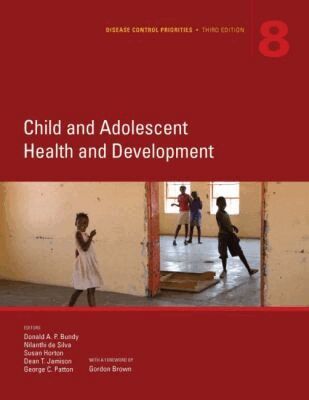
Child and Adolescent Health and Development
Av Donald A.P. Bundy, Nilanthi de Silva m. fl.
Häftad, 2017
411 kr
Tillfälligt slut
Child and Adolescent Health and Development explores the benefits that accrue from sustained and targeted interventions across the first two decades of life. The volume outlines the investment case for effective, costed, and scaleable interventions for low-resource settings, emphasising the …
Disease Control Priorities, Third Edition (Volume 8)
Child and Adolescent Health and Development
Av World Bank, Donald A.P. Bundy m. fl.
Inbunden, 2018
642 kr
Tillfälligt slut
More children born today will survive to adulthood than at any time in history. It is now time to emphasise health and development in middle childhood and adolescence — developmental phases that are critical to health in adulthood and the next generation.Child and Adolescent Health and Development …
Disease Control Priorities, Third Edition (Volume 9)
Improving Health and Reducing Poverty
Av Dean T. Jamison, Hellen Gelband m. fl.
Inbunden, 2018
642 kr
Tillfälligt slut
As the culminating volume in the DCP3 series, Volume 9 will provide an overview of DCP3 findings and methods, a summary of messages and substantive lessons to be taken from DCP3, and a further discussion of cross-cutting and synthesizing topics across the first eight volumes. The introductory …